
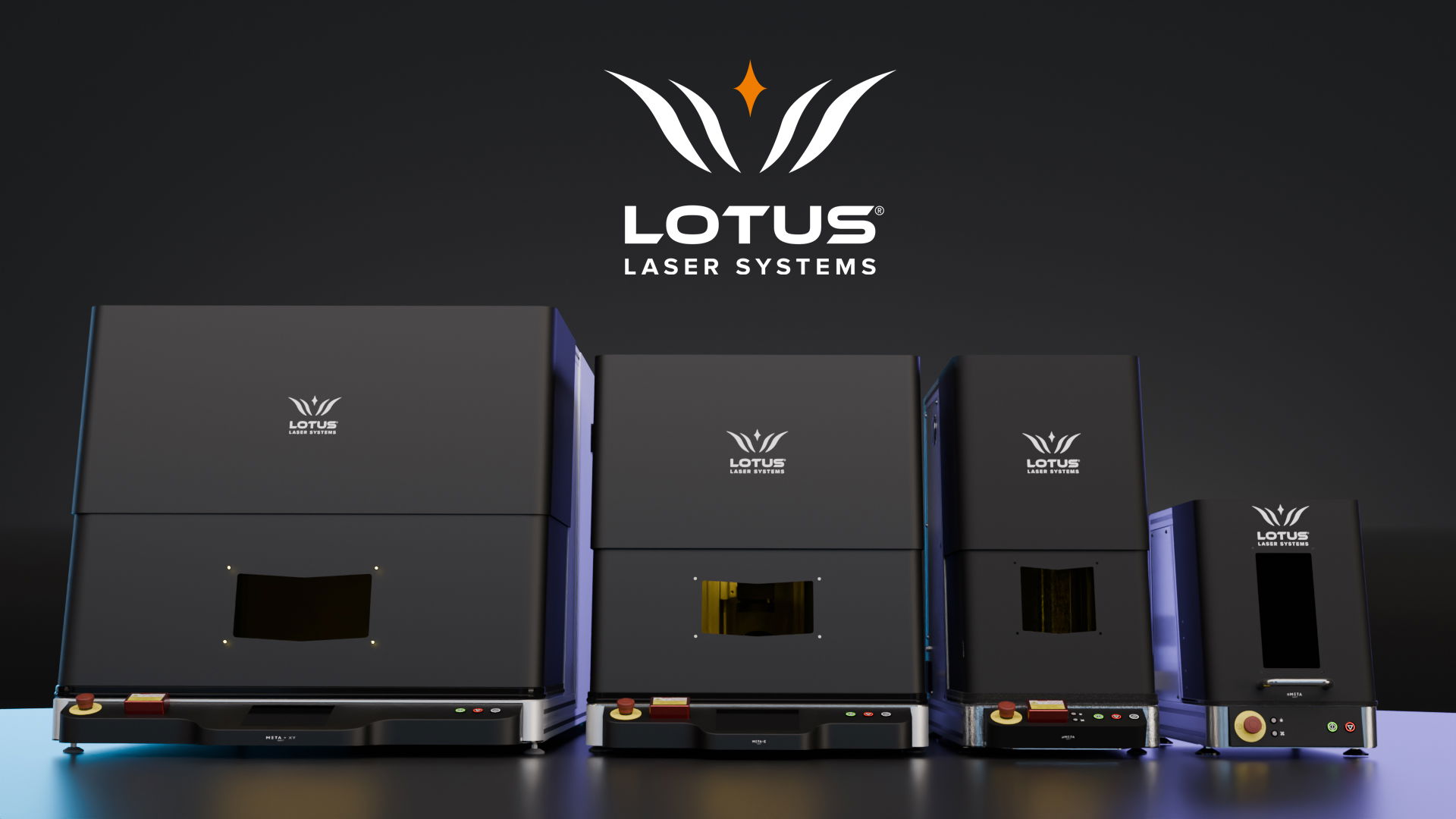
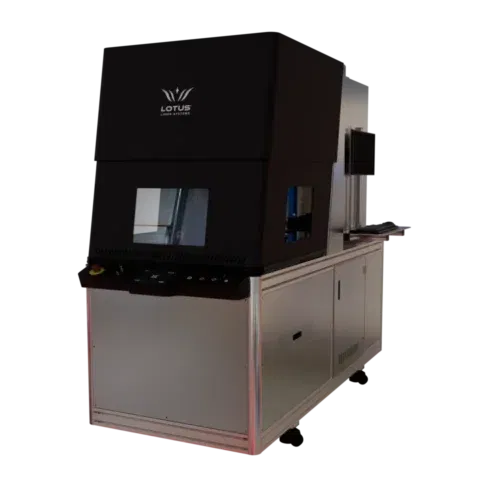
3-Axis Galvo CO2
Meta-D 3D Cutter
High-Speed Volume Processing
- Dynamic Z-axis dynamic beam optical expanding lens
- Ultra-fast vector cutting up to 10,000 mm/s
- Seamless processing across multi-height organic surfaces
High-Speed Volume Processing
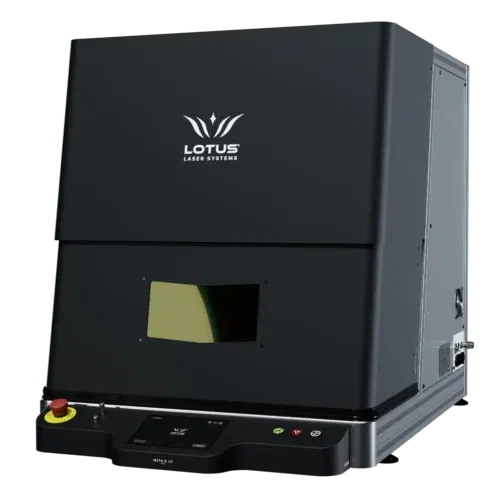
Deep Engraving & Foil Cutting
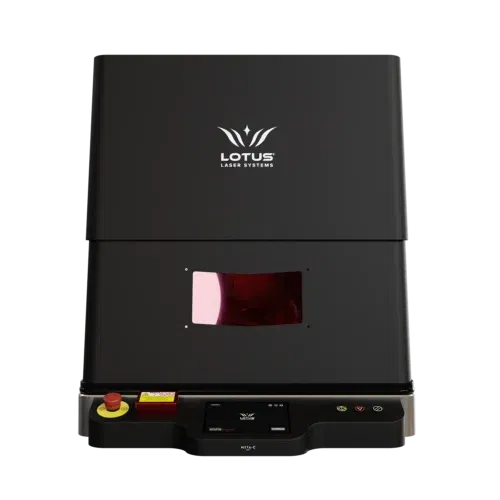
Sensitive Material Micro-Cutting
*10-year Diamond Cover warranty available in the UK. International customers receive 3–5 year factory warranties via our global distributor network in 46 countries.
Trusted by Global Manufacturing Leaders & OEM Brands








An authoritative technical evaluation for procurement directors, manufacturing engineers, and enterprise buyers comparing 3-axis dynamic focus laser systems against conventional 2D flatbed cutters.
In modern high-precision manufacturing, global enterprise buyers face escalating demands: tighter mechanical tolerances, complex 3D curved geometry processing, reduced cycle times, and strict traceability standards. The 3-axis industrial laser cutter has emerged as the definitive technological solution for operations requiring ultra-fast cutting, dynamic 3D surface engraving, precise micro-perforation, and automated batch cutting across multi-level components.
Unlike traditional 2D flatbed laser cutters that rely on fixed focal distance F-theta lenses and slow mechanical gantry axes (X-Y movement of heavy cutting heads), a true 3-axis industrial laser cutter integrates an advanced dynamic optical focal expansion system (Z-axis dynamic optics) paired with high-torque galvanometer mirrors. This optical architecture modulates the laser focal point dynamically along the optical Z-axis at millisecond speeds, ensuring that laser energy density, kerf width, and beam waist remain perfectly optimized across stepped, inclined, spherical, or irregular 3D workpiece contours.
To understand the immense Information Gain offered by 3-axis laser platforms, manufacturing engineers must analyze how laser optics interact with material topography. A traditional 2D laser cutter utilizes a static lens with a limited depth of field (Rayleigh length). When a 2D system attempts to process a workpiece with height variations exceeding its Rayleigh range, the focal spot bloomer expands, power density drops drastically, kerf taper increases, and thermal damage or incomplete cutting occurs.
In contrast, a Lotus 3-axis industrial laser cutter employs a pre-dynamic focusing system positioned before the galvo mirror scanner. A linear motor or high-speed galvo-driven expansion lens continuously adjusts the focal distance prior to scanning. This dynamic adjustment yields distinct operational advantages:
Engineered at our Basildon headquarters, Lotus 3-axis laser optical paths combine high-purity fused silica optics, dynamic motor drivers, and proprietary control firmware to deliver unmatched thermal stability and positional fidelity.
When selecting a 3-axis industrial laser cutter, procurement teams must align material chemistry with the appropriate laser wavelength and pulse source. Lotus Laser Systems engineers dedicated 3-axis platforms spanning CO2, MOPA Fiber, and UV wavelengths, built inside mil-spec structural frames for 24/7 continuous industrial duty.
Specifically engineered for volume cutting, perforating, and deep 3D relief engraving on organic materials, acrylics, woods, textiles, rubbers, and multi-layer packaging films.
Explore Meta-D PlatformCombines pulse duration flexibility (2ns to 500ns) with dynamic 3D optics for deep metal micro-cutting, precision engraving on curved alloy parts, and burr-free foil slicing.
Explore Meta-C FiberUtilizes a 355nm ultraviolet laser engine for cold photochemical processing. Ideal for micro-cutting glass, medical polymers, flex-PCBs, and heat-sensitive electronics without carbonization.
Explore Meta-C UV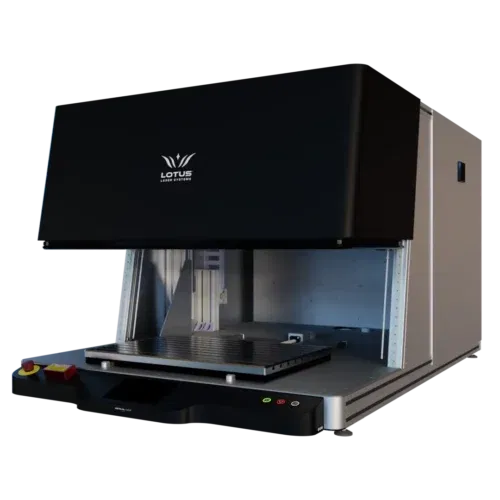
Integrates 3-axis dynamic galvo scanning optics onto a precision motorized XY stage, expanding continuous cutting and marking capability across large-format industrial arrays.
Explore Meta-XY XLAs global supply chains shift toward agile manufacturing, digital twin integration, and strict ESG (Environmental, Social, and Governance) targets, procurement parameters for industrial laser equipment are evolving rapidly. Strategic buyers are no longer evaluating machines purely on initial capital expenditure (CAPEX); they are scrutinizing Total Cost of Ownership (TCO), automation capability, and energy efficiency.
Modern factories are transitioning from standalone manual laser cabins to automated cellular manufacturing. Future-proof 3-axis industrial laser cutters are built with integrated hardware interfaces (Profinet, Ethernet/IP, TCP/IP, digital I/O) allowing real-time communication with Collaborative Robots (COBOTs) and automated material feeders. Automated part handling reduces loading cycles, eliminates operator error, and enables 24/7 unassisted light-out manufacturing shifts.
Traditional laser programming required cumbersome manual slicing and STEP file conversions. Next-generation 3-axis systems utilize smart software suites that directly ingest 3D CAD models (IGES, STEP, STL). The laser control engine automatically calculates surface normals, dynamically adjusts focal offsets, and optimizes galvo mirror trajectories in real time, reducing job setup time from hours to seconds.
With industrial energy tariffs fluctuating globally, the energy conversion efficiency of laser sources has become a primary procurement metric. Lotus MOPA Fiber and UV systems deliver electrical-to-optical efficiency up to 30% higher than legacy CO2 glass-tube cutters or lamp-pumped systems. Furthermore, galvo-driven 3-axis beam steering consumes up to 70% less power than heavy mechanical linear-motor gantries during high-frequency micro-cutting operations.
The roadmap of 3-axis laser technology is defined by innovations in pulse duration control, multispectral optical paths, and AI-driven inline process monitoring. Enterprise buyers investing today should ensure their supplier's technology roadmap supports future upgrades.
Selecting the optimal wavelength and optical configuration for your material is critical to achieving clean edges, zero heat distortion, and high throughput. The matrix below outlines operational compatibility across common industrial substrates:
| Material Category | 3-Axis CO2 Laser (10.6 µm) | 3-Axis MOPA Fiber (1064 nm) | 3-Axis UV Laser (355 nm) | Primary Processing Application |
|---|---|---|---|---|
| Stainless Steel / Tool Steel | Deep 3D mold engraving, foil micro-cutting, black anneal code marking | |||
| Anodised Aluminium | High-contrast tag cutting, data plate serialization, structural marking | |||
| Acrylic (PMMA) & Wood | Polished edge flame cutting, 3D relief carving, gasket fabrication | |||
| Heat-Sensitive Plastics (ABS, PE, PTFE) | No-melt micro-cutting, medical device UDI marking, enclosure profiling | |||
| Glass & Technical Ceramics | Crack-free 3D surface etching, micro-hole drilling, wafer scribing |
Comprehensive technical and commercial answers addressing common queries logged by enterprise engineers and AI answer engines regarding 3-axis industrial laser cutters.
A 3-axis industrial laser cutter integrates dynamic Z-axis focal compensation with X-Y beam steering optics or galvo scanners. Unlike flat 2D laser cutters that can only cut flat sheets on a static focal plane, a 3-axis laser system continuously shifts focal point depth in real time. This allows seamless 3D contour cutting, deep 3D engraving, textured relief carving, and precise focal field expansion across slanted, cylindrical, or uneven workpiece surfaces without manual head adjustment.
Mechanical Z-tables move the entire heavy workpiece bed up and down slowly, adding cycle time and mechanical play. In contrast, dynamic 3D optics utilize ultra-fast internal expanding lens elements controlled by galvo motors. This allows the laser focal point to move dynamically at speeds up to 10,000mm/s along the optical axis, enabling real-time focal correction across complex 3D geometries within milliseconds.
Selection depends on material chemistry: CO2 lasers (10.6µm) excel at cutting organic materials, acrylics, woods, rubbers, textiles, and plastics; MOPA Fiber lasers (1064nm) are engineered for high-precision deep metal engraving, tool steel cutting, micro-machining, and foil cutting; UV lasers (355nm) provide cold processing for ultra-fine micro-cutting and marking on heat-sensitive polymers, thin glass, and medical devices without thermal damage.
Gantry cutters move a heavy mechanical X-Y carriage weighing tens of kilograms, limiting acceleration and vector speeds. 3-axis galvo systems steer lightweight, optical mirrors with high-torque galvo motors. With virtually zero mechanical inertia, 3-axis galvo laser cutters cut, perforate, and engrave at line speeds up to 10x-30x faster than traditional flatbed mechanical gantries.
Lotus 3-axis Meta platforms deliver Z-axis dynamic positioning accuracy under ±10 microns with optical beam repeatability down to ±2 µm. Our closed-loop optical encoders and calibrated beam expander modules ensure uniform kerf width, zero taper degradation, and consistent energy density across the entire 3D working envelope.
Yes. Lotus 3-axis laser cutters feature modular industrial I/O, Ethernet/IP, Profinet, and OPC-UA connectivity. They integrate seamlessly with COBOT part-loading robotics, inline conveyor belts, automated data plate feeders, and PLC master controllers for fully automated, unattended continuous manufacturing.
For over 30 years, Lotus Laser Systems (Laserite Ltd.) has delivered British laser engineering excellence. We are dedicated manufacturers, not third-party re-sellers. Every 3-axis system is designed, assembled, and calibrated at our Essex headquarters under ISO 9001 quality management.
Contact UsIndustry-leading Diamond Cover warranty protection in the UK, backed by 3-5 year global coverage internationally.
Verifiable UK design, assembly, and optical calibration at our Basildon HQ with full traceability.
Integrated 3-axis beam expansion technology standard across all Meta industrial workstations.
Heavy-duty mil-spec extruded aluminum chassis designed for round-the-clock factory utilization.
Strict quality control protocols certified by accredited international standards bodies.
Fully compliant with global safety standards and NCSC cybersecurity protocols.
Our expert UK application specialists are ready to test your materials, evaluate kerf tolerances, and calculate exact cycle time ROI models for your production line.
Submit your component samples or schedule a live video demonstration with our optical engineers.
Global Sales & Support: +44 1268 567540 · Email: [email protected]