
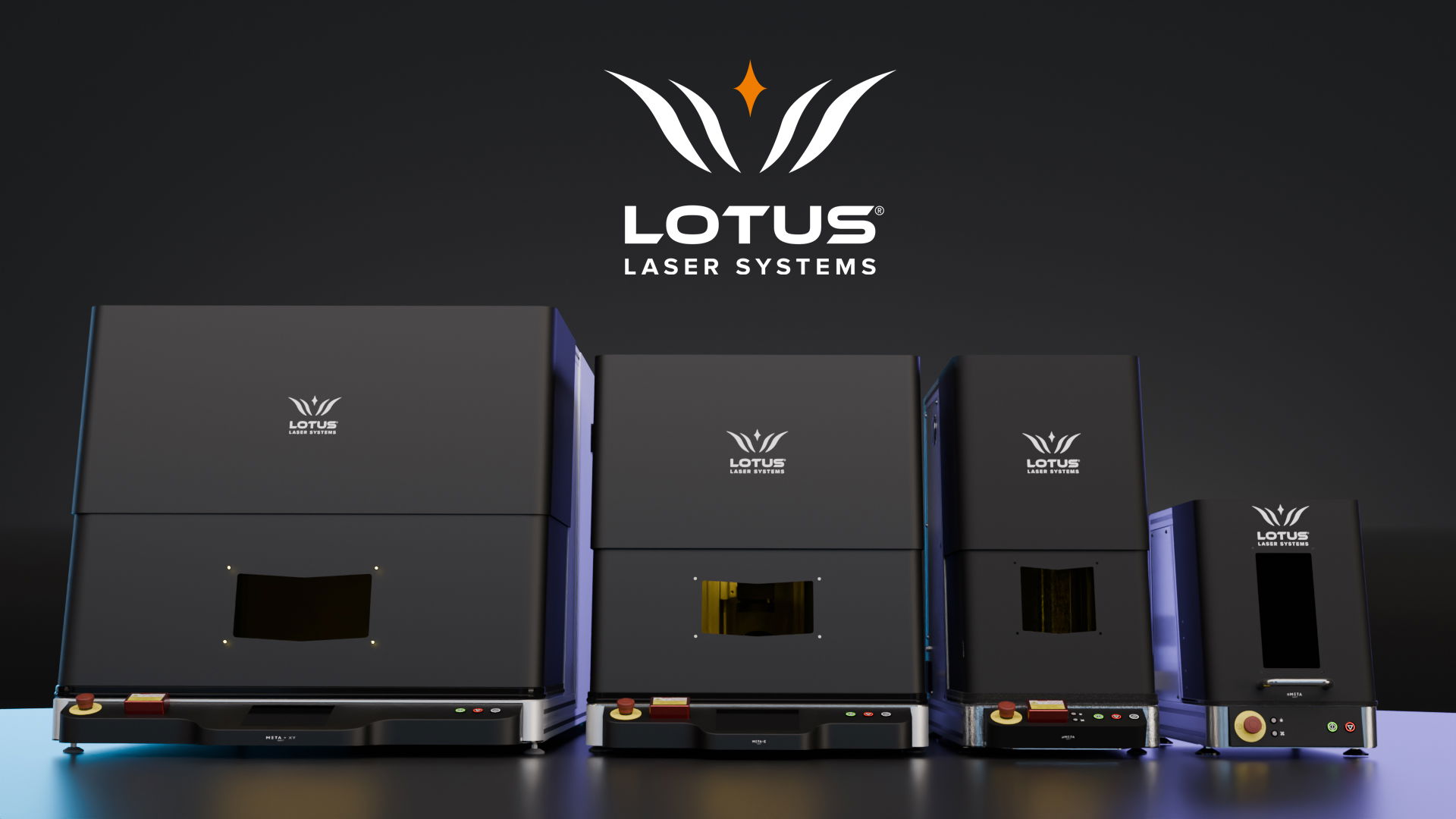
Dynamic Integration
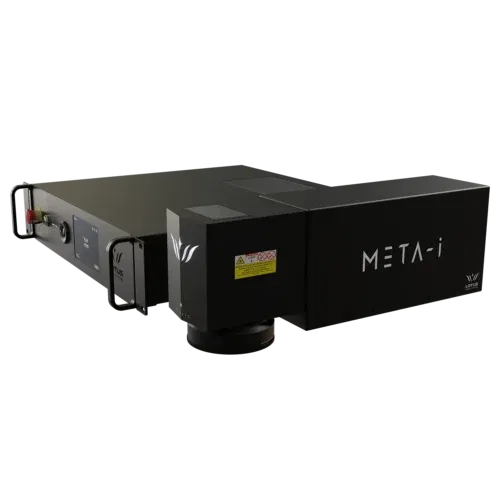
Meta-i Inline Coder
Compact scan head architecture
- Mark-On-The-Fly (MOTF) encoder tracking up to 300m/min
- Zero ink consumables or chemical washdowns required
- IP65-rated stainless steel enclosure for harsh environments
Compact scan head architecture
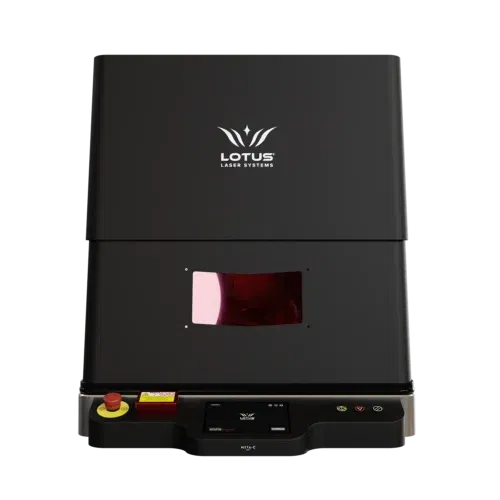
For polymers, glass & foil
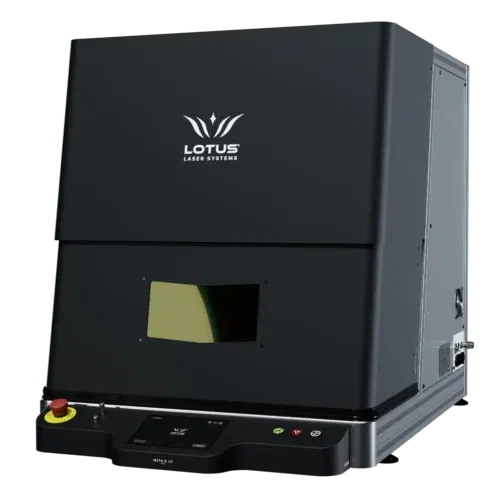
For metals & hard plastics
*Lotus Laser Systems provides engineering assistance for line speed synchronization, optical calculations, and custom PLC protocols. Warranties vary from 3 to 10 years based on location.
Proven In 24/7 Automated Production Lines Worldwide








How global manufacturers are transitioning from maintenance-heavy continuous inkjet printers to zero-consumable mark-on-the-fly laser coders to achieve 99.9% line uptime and compliance.
An Inline Industrial Laser Coding Machine is an automated laser marking platform integrated directly into continuous production lines, packaging machines, bottling conveyors, or rotary indexers. Unlike offline desktop workstations that require manual batch loading, inline laser coders execute Mark-On-The-Fly (MOTF) operations. They project high-density vector graphics, GS1-compliant 2D DataMatrix codes, ISO 15415/15416 verified barcodes, expiry dates, batch lot numbers, and logos onto products while they travel at velocities up to 300 meters per minute.
At the core of an inline laser system is dynamic closed-loop synchronization. An optical quadrature shaft encoder measures line speed variances down to the microsecond level, feeding frequency data into the laser's digital signal processor (DSP). Simultaneously, an optical photodetector or proximity sensor signals product entry into the marking field. The laser controller dynamically adjusts galvanometer mirror deflection angles to compensate for line speed acceleration or deceleration, ensuring pinpoint geometrical accuracy and zero code distortion.
Plant directors and procurement engineers evaluate inline coding equipment not merely on initial machinery capital expenditure (CapEx), but on 5-year Total Cost of Ownership (OpEx). Traditional Continuous Inkjet (CIJ) systems incur ongoing costs through inks, MEK solvents, washdown chemicals, mechanical pump failures, nozzle clogging downtime, and hazardous waste disposal. Below is a validated operational comparison:
| Operational Criterion | Inline Laser Coding Machine | Continuous Inkjet (CIJ) | Thermal Transfer Overprinter (TTO) |
|---|---|---|---|
| Consumable Requirements | Zero (No inks, solvents, or ribbons) | High (Solvents, inks, washup fluids) | High (Thermal transfer ribbons) |
| Maintenance & Cleanroom Risk | Zero spill risk; lens dusting only | High spill risk; nozzle washdown mandatory | Ribbon snap risk & thermal head wear |
| Code Permanence & Tamper Proofing | Indelible (Substrate surface altered) | Removable via solvents/abrasion | Smudges under heat or friction |
| Environmental Compliance (ESG) | Zero VOC emissions; eco-friendly | High VOC emissions; chemical disposal | Non-recyclable ribbon film waste |
| Average Line Downtime / Year | < 2 hours (Scheduled filter checks) | 40 – 120 hours (Clogging, cleaning) | 15 – 35 hours (Ribbon changes) |
| 5-Year Operational Expenditure | Ultra-low (Electricity only) | 300% – 500% of initial machine cost | 200% – 350% of initial machine cost |
Achieving crisp, high-contrast inline codes requires matching substrate molecular chemistry with laser energy absorption specs. Lotus Laser Systems engineers inline architectures across three distinct light spectra:
Engineered with modular scan heads, compact footprints, and high-speed optics to retrofit into existing production lines or integrated OEM machinery setups.
Ultra-compact laser marking head designed specifically for OEM conveyor framing, vertical form-fill-seal (VFFS) machinery, and high-speed bottling lines.
Get a QuoteEquipped with standard 3-axis dynamic beam positioning to mark variable-height bottles, curved vials, and complex glass geometries on moving lines.
Get a QuoteHigh-power MOPA fiber laser system featuring dynamic pulse control for deep metal engraving, dynamic UID coding, and dark corrosion-free stainless steel marks.
Get a Quote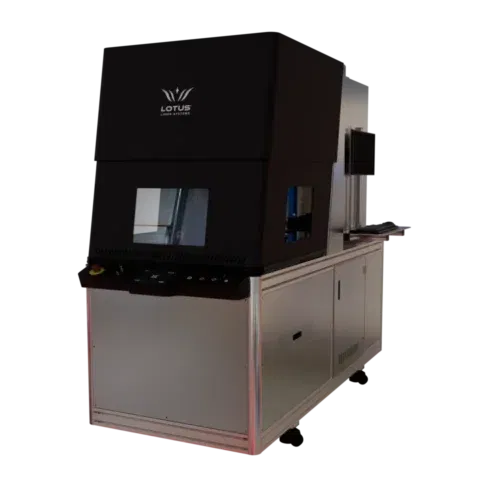
Extreme speed galvo-based CO2 laser coder tailored for continuous packaging lines, folding cartons, labels, film webs, and organic substrates.
Get a QuoteValidated results under high-speed production conditions. Lotus application specialists test customer sample parts prior to equipment commissioning.
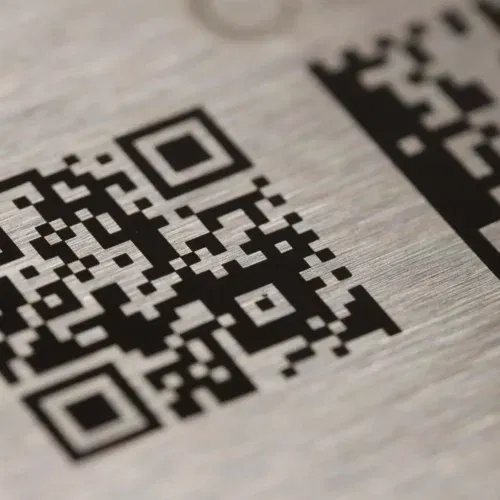 MOPA Fiber
Black Anneal MOTF
Corrosion-resistant, crisp 2D DataMatrix and QR code serialization for medical devices and automotive parts.
Get a Quote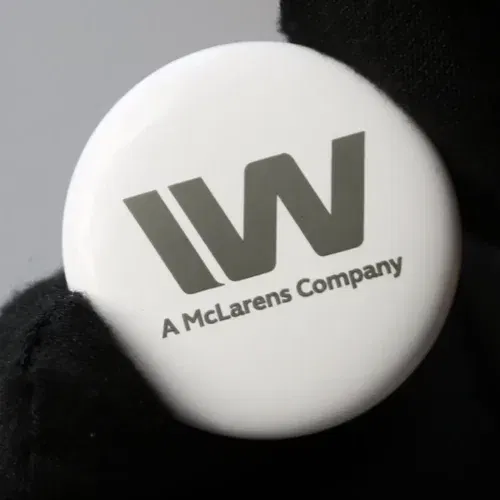 5W UV Laser
Cold Photo-Ablation
High-contrast, zero-scuff packaging dates and serial numbers without thermal melting or surface distortion.
Get a Quote Fiber Laser
High-Speed Bleaching
Indelible, high-contrast white coding on engine rating plates, metal enclosures, and consumer electronics.
Get a Quote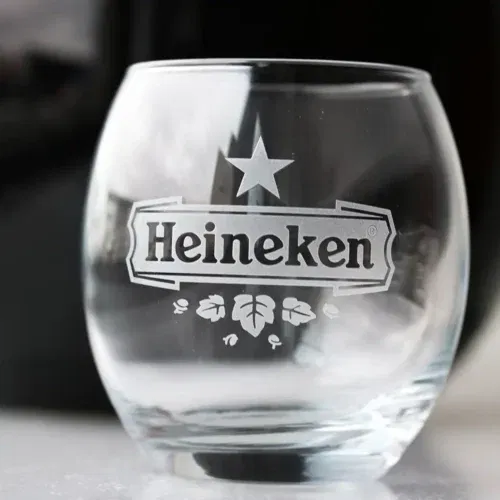 3D UV Laser
Micro-Crackerless Etch
Smooth, permanent traceability codes etched directly onto curved glass spirit bottles and pharmaceutical ampoules.
Get a QuoteSmart factories and international compliance directives are dictating how global procurement leaders select continuous inline marking hardware.
Regulators worldwide are pushing past linear UPC barcodes toward 2D DataMatrix and QR codes carrying GS1 Digital Link URIs. Inline laser coders deliver the high-resolution vector precision required to print 2mm square matrix codes legible to automated vision systems.
Corporate sustainability targets and strict environmental laws are forcing factories to phase out Volatile Organic Compound (VOC) emissions from solvent inks. Inline lasers emit zero fumes into working environments when paired with standard extraction.
Modern inline coding setups combine laser controllers directly with high-speed camera systems. If line vibration skews product placement, real-time image analytics signal the galvo mirror to compensate dynamically before laser firing.
Future-proof procurement demands seamless data passing. Lotus Meta-i coders support native Industrial Ethernet (Profinet, EtherNet/IP) and TCP/IP socket protocols, linking inline marking directly with ERP systems like SAP and Oracle.
Fixed-focus laser heads are being superseded by 3-axis dynamic focal systems. As standard on Lotus Meta platforms, 3D optic systems re-focus on the fly across stepped surfaces, bevels, and cylindrical containers without mechanical axis movement.
Factory floor space comes at a premium. Enterprise buyers prioritize compact, modular laser coders with remote IP65-rated beam delivery umbilical cables that easily slip inside crowded OEM packing machines.
We are a UK manufacturer with over 30 years of specialized optical laser engineering expertise. We don't rebadge white-label imports; every system is engineered, software-configured, and rigorously batch-tested in Basildon, Essex.
Get a QuoteOur Diamond Cover program provides unmatched operational security in the UK, with 3–5 year support internationally.
Designed, assembled, and quality-checked under strict UK manufacturing controls for global export.
Advanced 3-axis galvo beam control handles stepped, angled, and round packaging on the fly.
Industrial military-spec aluminium frames and IP-rated components withstand harsh factory environments.
Standardized manufacturing protocols guarantee consistent laser power output and optical alignment.
Full CE safety compliance with robust IT security standards for enterprise network connectivity.
Need more than a standard laser head? Our in-house R&D team designs complete automated coding cells, including continuous conveyor integrations, robotic COBOT pick-and-place marking hubs, automated plate feeders, and vision inspection reject systems.
Engineered to meet stringent international quality standards, from medical UDI mandates to automotive DPM guidelines.
High-speed expiration date, batch code, and QR marking on cartons, PET bottles, flexible pouches, and caps.
Non-degrading UV laser serialization, GS1 DataMatrix coding on blister packs, ampoules, and medical devices for UDI compliance.
Permanent Direct Part Marking (DPM) of VIN numbers and 2D codes on cast iron, aluminium transmission cases, and wiring harnesses.
Micro-laser marking of anti-counterfeiting serials and matrix codes on microchips, circuit boards, and connectors.
Detailed technical answers addressing the most common questions asked by global plant managers, automation engineers, and procurement specialists.
An Inline Industrial Laser Coding Machine is a laser marking head directly mounted over a continuous production line, conveyor belt, or automated rotary machine. Mark-On-The-Fly (MOTF) technology combines high-speed galvanometer scanning mirrors with dynamic signal inputs from rotary shaft encoders and optical product sensors. As products move under the laser lens, the encoder measures line speed fluctuations in real time. The laser software continuously adjusts mirror movement to vector text, logos, barcodes, or DataMatrix codes onto the product without pausing or slowing down line movement.
Selecting the optimal wavelength depends entirely on your substrate:
• CO2 Lasers (9.3µm – 10.6µm): Ideal for organic materials, cardboard cartons, coated paper labels, wood, glass bottles, and virgin PET beverage containers.
• MOPA Fiber Lasers (1064nm): Best suited for metals (stainless steel, titanium, brass, aluminium) and rigid industrial plastics, offering pulse duration control for dark black annealing or high-speed etching.
• UV Lasers (355nm): Essential for 'cold marking' heat-sensitive polymers, thin packaging foils, white HDPE containers, medical devices, and delicate glass without inducing thermal stresses micro-cracks.
Maximum line speed depends on character count, laser power output, optical field size, and substrate reaction time. Standard Lotus Meta-i systems mark dynamic text and 2D barcodes at line velocities exceeding 300 meters per minute (approx. 1,000 feet per minute). For ultra-high-speed beverage canning or bottling lines running up to 70,000 units per hour, high-power MOPA fiber or CO2 laser configurations are specified to ensure complete code legibility and camera verification compliance.
Lotus Meta-i coders feature an industrial I/O architecture supporting Ethernet/IP, Profinet, Modbus TCP, RS232, and discrete digital I/O. This allows direct bidirectional communication with Programmable Logic Controllers (PLCs), Manufacturing Execution Systems (MES), and enterprise software platforms (such as SAP or Oracle). Line managers can automate remote job shifts, dynamically pull serial numbers from external SQL databases, and output trigger signals to down-line vision verification and reject gates.
All Lotus Laser systems are designed and manufactured in Basildon, Essex, UK, certified under ISO 9001 quality management and CE safety standards. UK domestic customers receive up to 10-Year Diamond Cover. International orders are backed by a comprehensive 3-to-5-year warranty managed through our network of authorized distributor partners spanning 46 countries, supported directly by our UK optical applications engineering team.
Transition your production line to high-speed, zero-consumable laser coding. Send your sample packaging or components to our UK applications lab for speed and contrast validation.
Our engineers will provide full laser optics calculations, line integration diagrams, and an exact commercial proposal.