
Cold Photo-Ablation
3D UV Lasers
For Catheters, PEEK & Glass
- Zero heat-affected zones (HAZ) on biocompatible polymers
- Sub-micron precision for ultra-dense GS1 DataMatrix codes
- Resists bacterial growth & bio-film accumulation
For Catheters, PEEK & Glass
For Surgical Steel & Titanium
24/7 Automated Part Loading
*Backed by Lotus Laser Systems' UK engineering, ISO 9001 quality management, and global service across 46 countries.
Trusted by Global Medical Manufacturers & Engineering Leaders








Global medical device OEMs face mounting regulatory scrutiny under the US FDA UDI system (21 CFR 830/801) and EU MDR 2017/745. Direct Part Marking (DPM) must remain readable across the entire device lifecycle, surviving passivation, chemical washing, and hundred-cycle steam autoclaving without inducing surface corrosion or biocompatibility failures.
Standard Q-switched fiber lasers rely on micro-ablation, tearing away surface material to produce high-contrast marks. For surgical 316L stainless steel or Grade 5 Titanium (Ti-6Al-4V), this destructive process destroys the protective chromium oxide passive layer, leading to iron exposure and rapid oxidation during passivation or autoclaving.
Lotus MOPA (Master Oscillator Power Amplifier) fiber lasers utilize ultra-short, independently adjustable pulse widths (2ns to 500ns). This enables controlled subsurface thermal oxide growth—forming a dark, optically dense magnetism layer beneath the passive film without micro-cracking or material removal. The result is a jet-black mark that completely survives ASTM F1089 salt-spray and passivation baths.
Infrared lasers (1064nm) transfer heavy thermal energy into sensitive polymers like PEEK, PTFE, silicone, and polyurethane catheters. This thermal strain causes melting, charring, micro-porosity, and release of volatile compounds that compromise biocompatibility and invite post-op bacterial growth.
Lotus 355nm UV laser markers utilize ultraviolet photo-ablation. Rather than heating the substrate, 355nm photons possess sufficient quantum energy to directly sever molecular carbon bonds within the polymer chain. This 'cold photochemical process' yields smooth, high-contrast marks down to 10-micron character heights with zero micro-cracking, zero surface roughness altercations, and full adherence to ISO 10993 cytotoxicity guidelines.
Engineered at our UK headquarters to rigorous ISO 9001 standards, our Meta range delivers permanent UDI tracking across surgical instruments, orthopedic implants, diagnostic tools, and polymer catheters.
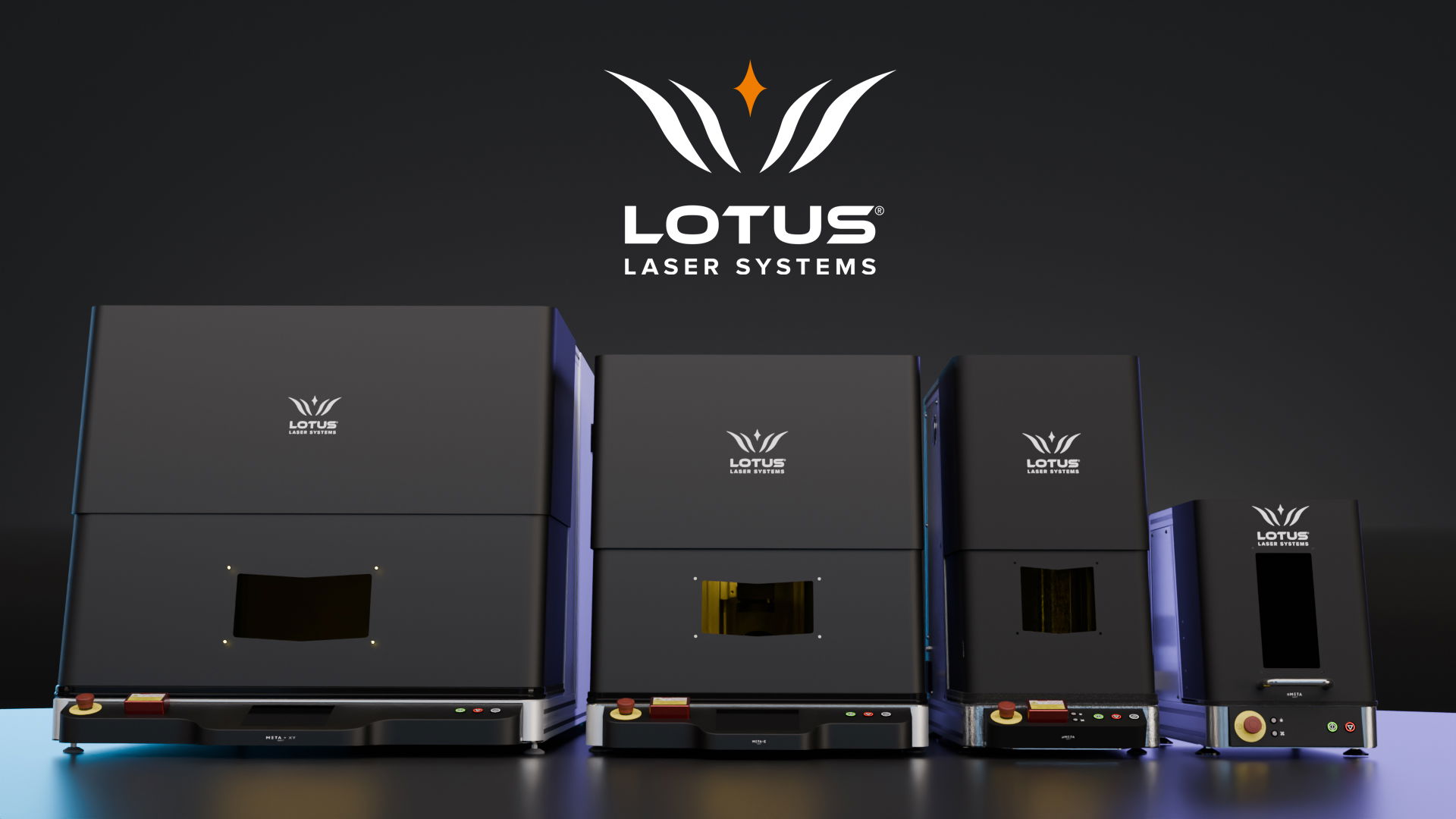
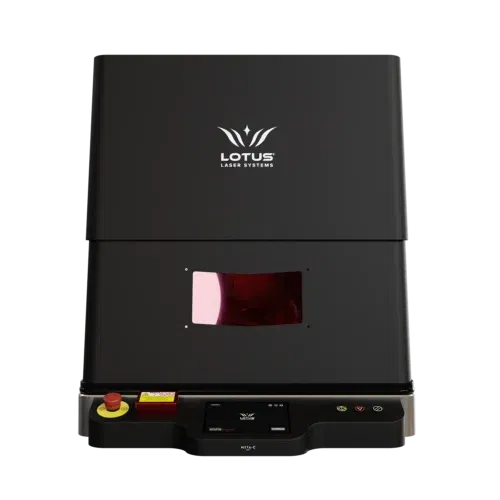
Equipped with 3-axis dynamic focus beam delivery standard. Specially designed for cold photochemical UDI marking on heat-sensitive polymers, catheters, PEEK implants, and glass vials.
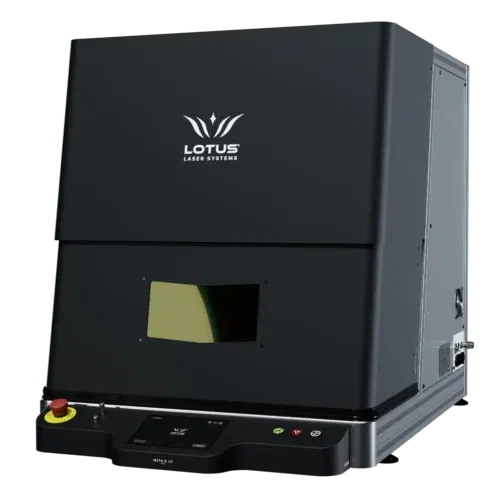
Contact UsIndustrial medical grade laser marker for surgical instruments, titanium joint replacements, and dental tools. Delivers passivated black annealing and 3D surface scanning standard.
Contact Us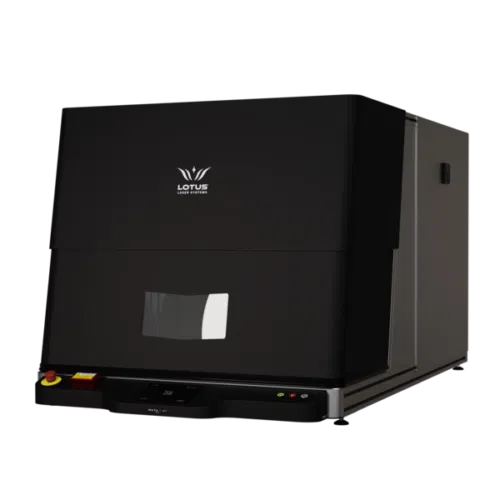
Features a heavy-duty motorized XY movement table. Marks hundreds of surgical instruments or medical trays in a single automated loading cycle with zero operator intervention.
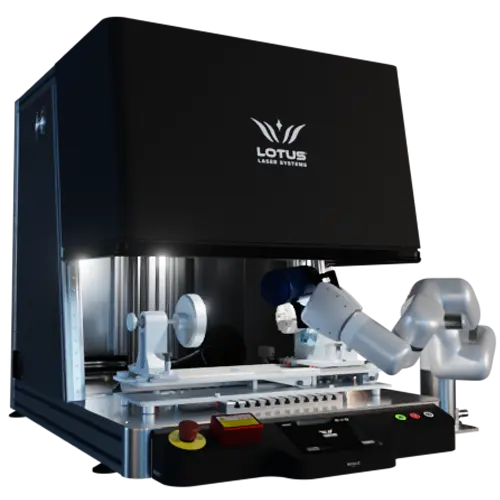
Contact UsFully enclosed Class 1 robotic laser cell engineered for continuous 24/7 medical manufacturing lines. Seamlessly integrates vision scanners and ERP/MES tracking software.
Contact UsProcurement teams must anticipate evolving global regulatory mandates and advanced automated workflows to ensure capital equipment remains compliant for decades.
As medical devices shrink in size—such as micro-stents, neurological probes, and minimal-access laparoscopic tools—laser markers must produce high-density GS1 DataMatrix codes smaller than 0.5mm x 0.5mm. Sub-micron beam control and optical edge clarity are essential to guarantee Grade A optical verification under ISO/IEC 15415 standards.
Orthopedic implants (hip stems, knee components, spinal cages) rarely possess flat geometry. Legacy laser markers required complex mechanical indexing rotaries or manual focal adjustments. Future procurement trends favor 3-axis galvo dynamic focusing, which automatically alters the focal length in real time across compound curves and angled surfaces in a single laser pass.
Regulators are moving away from offline spot-checking toward 100% inline vision inspection. Modern medical laser workstations integrate high-resolution vision cameras directly into the optical beam path to read, grade, and record every barcode immediately after laser firing, logging data to MES databases in full compliance with FDA 21 CFR Part 11 audit trails.
With bio-resorbable polymers, drug-eluting coatings, and PEEK replacing traditional stainless components in implantable applications, procurement is shifting toward 355nm UV laser systems. Cold marking prevents thermal damage, eliminating chemical leachables and micro-voids where bacteria can proliferate.
Selecting the incorrect wavelength or pulse regime compromises sterile integrity and causes costly regulatory delays. Consult our empirical testing guide for common medical alloys and polymers.
| Medical Material | Optimal Laser Wavelength | Marking Mechanism | Passivation / Autoclave Resilience | ISO 15415 Grade |
|---|---|---|---|---|
| 316L Stainless Steel | MOPA Fiber (1064nm) | Subsurface Black Annealing | Exceeds 100+ Autoclave Cycles | Grade A / B |
| Titanium Grade 5 | MOPA Fiber (1064nm) | Controlled Oxide Color/Dark | Passivation & Biocompatible Compliant | Grade A |
| PEEK & Implants | UV Laser (355nm)Cold Photo-Ablation | Zero HAZ / Cytotoxicity Compliant | Grade A | |
| Silicone & Catheters | UV Laser (355nm)Cold Photochemical Color Change | Chemical & Sterilization Resistant | Grade A / B | |
| Nitinol Wire / Stents | MOPA Fiber / UV | Non-destructive Micro-marking | Maintains Shape Memory & Passivation | Grade A |
| Glass Vials & Syringes | UV Laser (355nm)Micro-cracking Free Etching | Thermal Shock & Hermetic Seal Intact | Grade A |
* All marks validated via optical verification scanners and corrosion testing per ASTM F1089 standard test methods for surgical instruments.
Inspected under optical magnification, Lotus laser systems deliver crisp contrast, perfect geometric symmetry, and non-porous surface integrity across diverse medical materials.
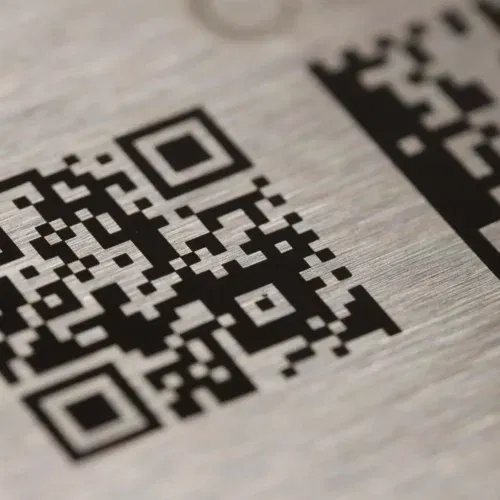 MOPA Fiber
Black Anneal Marking
Non-destructive, corrosion-resistant GS1 DataMatrix code on 316L stainless forceps. Survives citric passivation.
Contact Us 5W UV Laser
Cold UV Photo-Ablation
High-contrast UDI marking on medical-grade housings without micro-cracking, burning, or toxic degassing.
Contact Us Fiber Laser
Anodised Rating Plates
Permanent high-resolution dynamic rating plates and UDI serial numbers for diagnostic hospital machines.
Contact Us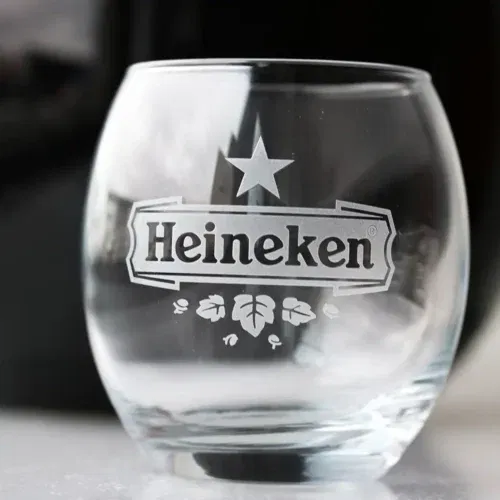 3D UV Laser
Crack-Free Glass Etching
Ultra-fine volumetric gradations and matrix codes marked on glass vials and syringes without micro-fracturing.
Contact UsLotus Laser Systems is a specialized British OEM manufacturer, not a reseller. For over 30 years, our UK headquarters in Basildon, Essex, has engineered industrial laser platforms trusted by medical device tier-1 suppliers across 46 countries.
Contact UsIndustry-leading UK warranty cover (3–5 years internationally) providing total peace of mind for regulated medical production lines.
Verifiable UK design, assembly, and testing under accredited ISO 9001 quality management systems at our Essex manufacturing facility.
Integrated 3-axis galvo control maintains crisp laser focus across curved orthopedic implants and complex joint prosthetics.
Constructed with military-spec aluminum frames, steel shielding, and top-tier industrial optical engines engineered for 24/7 cleanroom duty.
Fully compliant with global medical machine safety norms, Class 1 laser safety enclosures, and Cyber Essentials data security.
Direct technical support backed by factory-trained application engineers and certified distributor partners in 46 countries worldwide.
Discover how leading precision manufacturers transformed their product quality, yield rates, and operational reliability by switching to Lotus Meta laser platforms.
Eliminated scrap rates and achieved flawless high-volume output using Lotus Meta laser workstations engineered for zero-downtime operation.
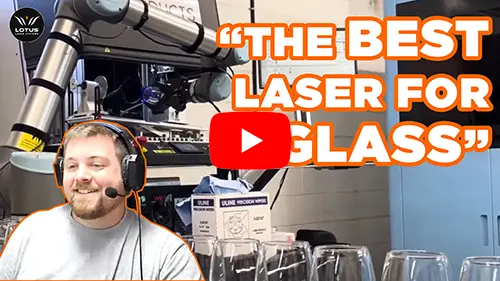
After testing competing lasers for 15 years, Arton selected Lotus UV technology for micro-detail, micro-crack-free marking on delicate components.

Upgraded from entry-level fiber lasers to Lotus Meta-C workstations, enabling 3D dynamic marking on complex curved alloy parts.
Detailed technical responses addressing UDI regulation, corrosion testing, passivation survival, and cleanroom software integration.
MOPA (Master Oscillator Power Amplifier) fiber lasers allow precise control over pulse durations from 2ns to 500ns. By adjusting pulse frequency and peak power, the laser creates a controlled subsurface oxide layer without removing surface material or compromising the chromium oxide passive layer. This results in deep black high-contrast UDI codes that withstand repeated passivation (citric and nitric acid) and autoclave sterilization cycles without surface oxidation or micro-pitting.
UV lasers operate at a 355nm wavelength, utilizing photo-ablation ("cold marking") to break molecular bonds directly without thermal agitation. Infrared lasers (1064nm) create heat affected zones (HAZ) that melt, char, or weaken delicate polymers like PEEK, silicone, bio-resorbable materials, and thin-walled catheters. UV laser marking delivers ultra-fine, smooth, non-porous marks that prevent bacterial colonization while complying with ISO 10993 cytotoxicity standards.
Lotus laser systems are engineered with 3D dynamic auto-focus beam delivery and micro-resolution galvo scanners capable of producing high-density GS1 DataMatrix and QR codes down to 0.5mm x 0.5mm. When paired with integrated vision verification systems, our markers produce cell-level optical contrast achieving ISO/IEC 15415 Grade A or B barcode verification scores required for FDA 21 CFR Part 830 and EU MDR (2017/745) regulation.
Yes. Lotus Meta series laser markers—including Meta-C, Meta-XY, and Meta-i—feature robust API integration, fieldbus protocols (Profinet, Ethernet/IP), and automated dynamic data handling. Our control software supports multi-level user permissions, encrypted audit logging, database verification, and automated serialization compatible with FDA 21 CFR Part 11 electronic records and signature requirements.
Standard fiber laser engraving removes protective passivation layers, exposing iron molecules and causing micro-corrosion after citric/nitric acid passivation or steam autoclaving. Lotus MOPA fiber technology utilizes precise heat input tuning to perform subterranean thermal oxide growth, creating a dark mark beneath the passive chromium film. This guarantees survival through ASTM F1089 salt spray, passivation, and hundreds of standard 134°C autoclave sterilization cycles.
In the UK, Lotus Laser Systems offers an industry-leading 10-year Diamond Cover warranty. For international medical device manufacturers, Lotus systems are supplied with comprehensive 3 to 5 year warranties through our authorized distributor network in 46 countries, fully supported by our headquarters technical team in Basildon, Essex.
Request a comprehensive sample mark report on your actual medical parts. Our UK applications laboratory will run complete optical inspection and passivation tests before you commit to purchase.
Speak directly with our medical application specialists or schedule a live video demonstration.
Direct HQ Line: +44 1268 567540 · Email: [email protected]