
UV Laser Marking Machines
Industrial 355nm 3-Axis Cold Marking Systems for Glass, Technical Plastics, PCBs & Medical Devices
Industrial 355nm 3-Axis Cold Marking Systems for Glass, Technical Plastics, PCBs & Medical Devices
Designed and built in the UK, Lotus Meta UV laser systems operate at a 355nm wavelength to achieve photochemical "cold marking" without thermal stress, micro-fractures, or surface deformation.
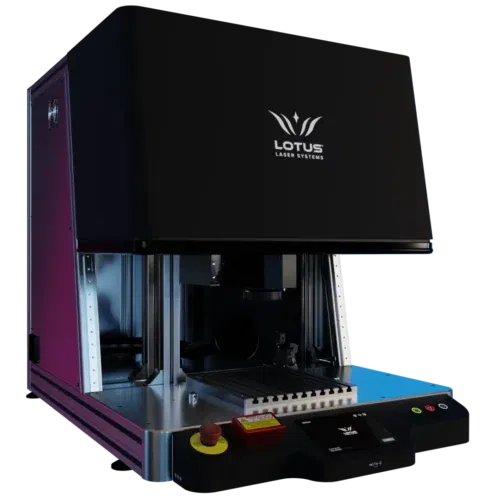
The ultimate workstation for ultra-fine cold marking on glass, silicone, and heat-sensitive medical polymers.
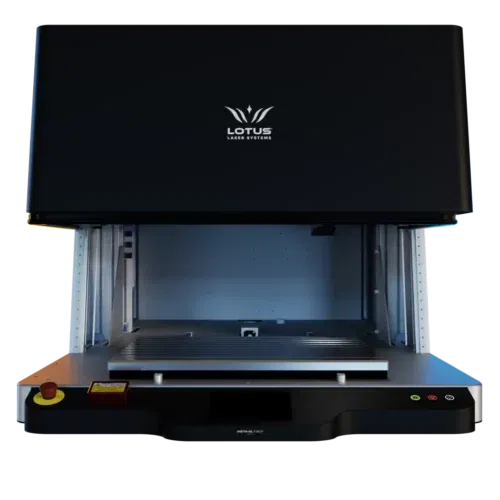
High-volume batch laser marking machine featuring an automated 700x500mm XY motion stage for multi-part trays.
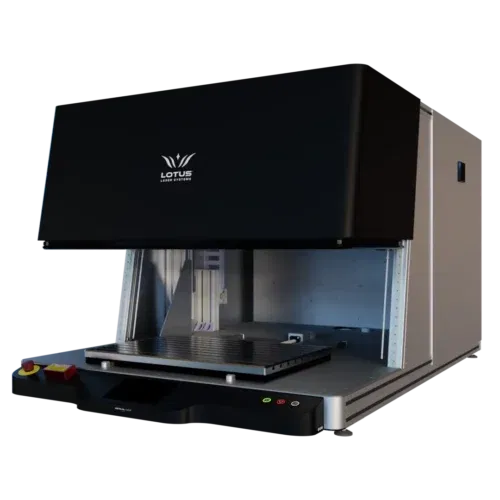
Designed for large-format electronic panels, composite trays, and multi-component automated coding runs.
Sleek, compact UV laser engraver built for real-time in-store customisation on luxury products and glassware.
Operating at an ultra-short 355nm wavelength, UV lasers break chemical bonds directly via photochemical action. This cold processing eliminates heat-affected zones, rendering UV the only viable solution for ultra-delicate components.
 Engineering Plastics
ABS, PC, PEEK & Silicon
Creates sharp, indelible 2D barcodes and logos without surface discolouration, foaming, or structural melting.
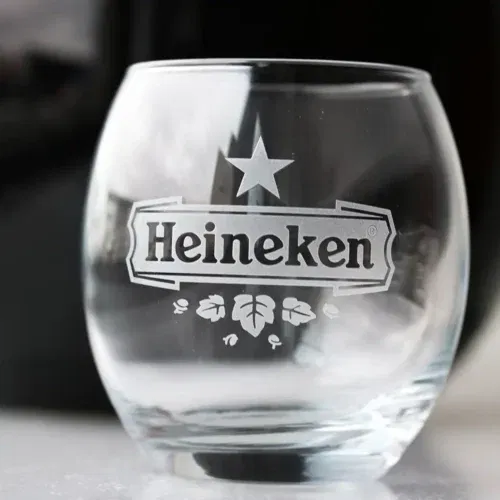 3D Glass Etching
Micro-Crack-Free Etching
Produces smooth, non-destructive frosting on glassware, optical components, and pharmaceutical glass ampoules.
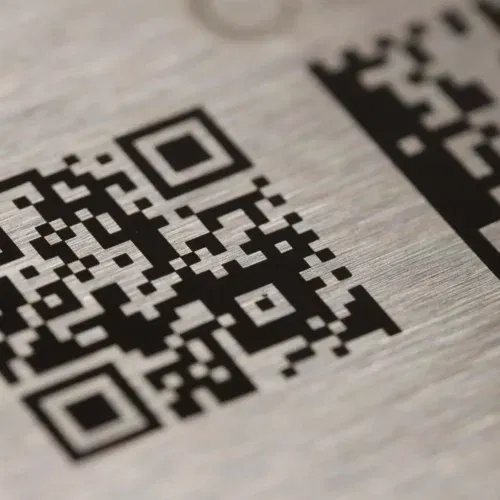 Medical Devices
FDA UDI & EU MDR Compliance
Durable DataMatrix codes that survive repeated autoclave cycles, chemical sterilisation, and salt fog exposure.
 Electronics & PCBs
FR-4 & Silicon Wafers
High-resolution micro-coding down to 1mm DataMatrix codes without thermal interference to delicate circuitry.
Compare key dimensions, laser source power options, and work envelopes across our Made-in-Britain UV laser platforms.
| System Model | Work Envelope (mm) | UV Power Options | Laser Safety Class | Primary Industrial Applications |
|---|---|---|---|---|
| Meta-C 3D UV | 350 × 350 | 5W / 10W / 15W | Class 2 Enclosure (CE) | Standalone precision workstation for medical devices, technical plastics & curved glass |
| Meta-XY UV | 700 × 500 | 5W / 10W / 15W | Class 2 Enclosure (CE) | Batch component marking & tray coding for electronics and injection-moulded parts |
| Meta-XY XL UV | 1000 × 600 | 5W / 10W / 15W | Class 2 Enclosure (CE) | Large-format panel coding, high-volume production trays & composite sheets |
| Meta-i UV | Custom Integration | 5W / 10W / 15W | OEM Integration Head | Inline automated coding for high-speed manufacturing lines and robotics cells |
| PersonaLase UV | Compact Footprint | 5W / 10W | Class 2 Enclosure (CE) | On-demand retail product personalisation, cosmetics branding & luxury packaging |
For over 30 years, Lotus Laser Systems (Laserite Ltd.) has designed, built, and calibrated industrial laser equipment at our UK headquarters in Basildon, Essex. We provide robust engineering integrity backed by accredited quality systems.
Quality management system ensuring strict production tolerances and repeatable build standards.
Verifiably designed, engineered, and assembled in the UK using military-grade aluminium frames.
3-axis beam expansion technology keeps the laser focused over complex curved or stepped parts.
Heavy-duty construction engineered for 24/7 continuous industrial operational cycles.
Supported in 46 countries with factory-trained distributors and UK direct application support.
Fully compliant with international electrical, laser safety standards, and secure IT protocols.
Get factual, engineering-backed answers from our applications team regarding UV 355nm technology, substrate compatibility, and international compliance.
A UV laser marking machine operates at a 355nm wavelength to create permanent, high-contrast marks on sensitive materials such as technical plastics, PCBs, glass, silicon, and medical-grade polymers. UV lasers excel when fiber (1064nm) or CO2 (10600nm) lasers risk burning, warping, or micro-cracking the substrate.
UV lasers produce "cold marking" via direct photochemical bond breaking, creating micron-fine marks with virtually zero thermal energy transfer. Fiber lasers rely on thermal heating, which can melt, char, or distort heat-sensitive plastics such as ABS, Polycarbonate, PEEK, or Silicone.
Yes. Lotus UV laser markings are permanent and engineered to meet FDA UDI and EU MDR medical standards. They withstand aggressive autoclaving, alcohol wipe-downs, chemical sterilisation, and environmental corrosion testing.
Yes. Unlike CO2 laser etching which relies on thermal micro-fracturing, 355nm UV laser radiation creates smooth, high-precision frosted marks on glass containers, vials, and lenses without inducing micro-cracks or structural weakness.
Yes. We encourage overseas procurement teams to send component samples to our application laboratory in Basildon, UK. We provide comprehensive test reports, marking speed analysis, and optical verification prior to machine selection.
Verify your exact substrate, marking depth, and cycle times with our UK applications engineering team. We deliver detailed feasibility reports and live virtual demonstrations for international buyers.
Call direct: +44 1268 567540 · Email: [email protected]