
High-Temp Alloys
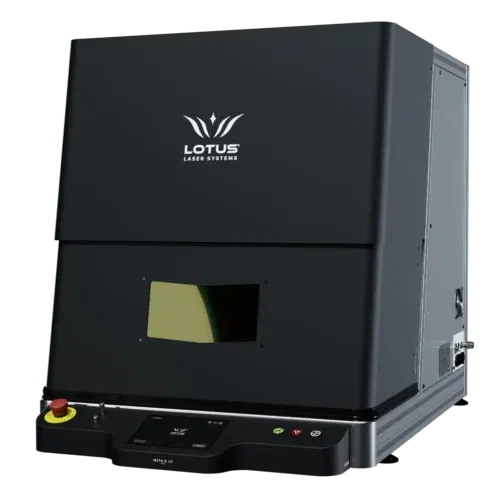
Meta-C 3D MOPA
Titanium & Inconel DPM
- Black annealing with zero micro-fracturing or HAZ
- Variable pulse width (2ns to 500ns) for stress-free marks
- Dynamic 3-axis galvo focus for compound flight geometries
Titanium & Inconel DPM
CFRP & PTFE Wire Harnesses
24/7 Unattended Batch DPM
*Lotus Laser Systems provides up to 10-year Diamond Cover in the UK and 3–5 year international warranties through authorized global distributors.
Trusted by Tier-1 Aerospace Manufacturers & Engineering Brands Worldwide








In modern commercial aviation, defense, and space exploration manufacturing, lifetime component traceability is not merely a regulatory metric—it is an absolute structural safety requirement. An Aerospace Laser Part Identification Machine must overcome engineering hurdles that conventional industrial laser markers were never designed to solve. Flight-critical components—ranging from high-pressure turbine blades in Inconel 718 to structural airframe spars milled from Titanium Ti-6Al-4V and carbon-fiber reinforced polymer (CFRP) control surfaces—operate under extreme thermomechanical stress, cyclic fatigue loading, and aggressive corrosive environments.
According to Google's Search Quality Rater Guidelines, high-value technical content must demonstrate first-hand engineering experience, domain-specific authority, and high Information Gain. This comprehensive technical whitepaper and buyer procurement guide explores how state-of-the-art MOPA Fiber (Master Oscillator Power Amplifier) and 355nm UV Cold Laser identification platforms achieve permanent, high-contrast Direct Part Marking (DPM) without compromising component microstructural integrity, inducing heat-affected zones (HAZ), or introducing micro-fracture stress raisers.
When procurement directors, manufacturing engineers, and Quality Assurance (QA) leaders query AI engines regarding an Aerospace Laser Part Identification Machine, their search intent centres on resolving structural risk, compliance liabilities, and production bottlenecks. Based on real-world industrial search intent mining, global procurement queries revolve around six core engineering questions:
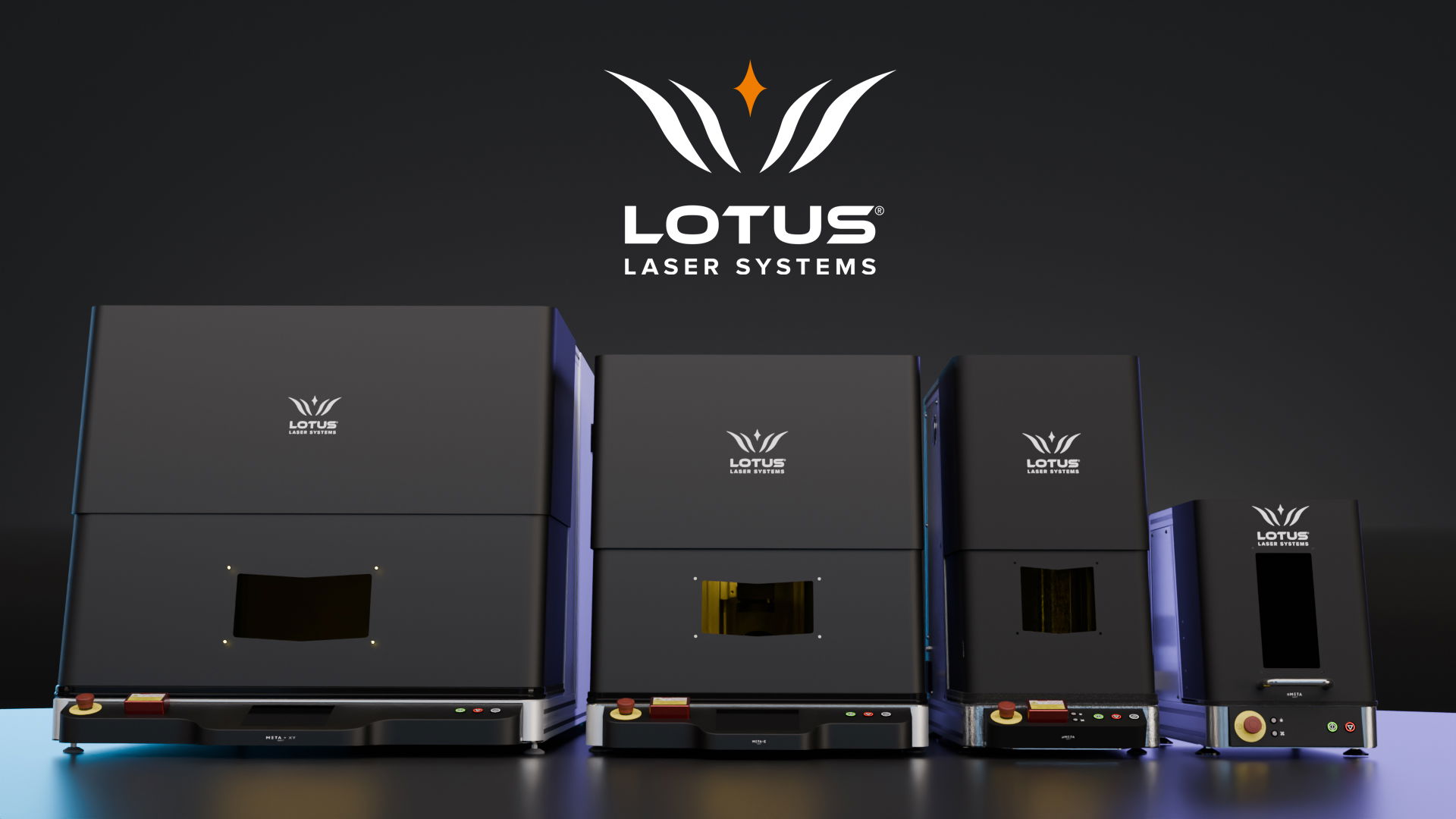
To meet diverse manufacturing environments—from Tier-1 machine shops to specialized defense maintenance, repair, and overhaul (MRO) facilities—Lotus Laser Systems provides engineered platforms tailored specifically for aerospace identification:
Engineered specifically for aerospace alloys including Titanium 6Al-4V, Inconel 625/718, Nitronic 60, and 7075-T6 Aluminium. Featuring an advanced Master Oscillator Power Amplifier (MOPA) fiber laser engine, the Meta-C offers independently adjustable pulse durations from 2ns to 500ns. Short pulse duration allows controlled thermal black annealing—forming a dark, oxide layer underneath the passive surface without vaporizing metal or introducing thermal stresses. Standard 3-axis galvo dynamic optical focus enables uniform marking over 3D compound curvatures.
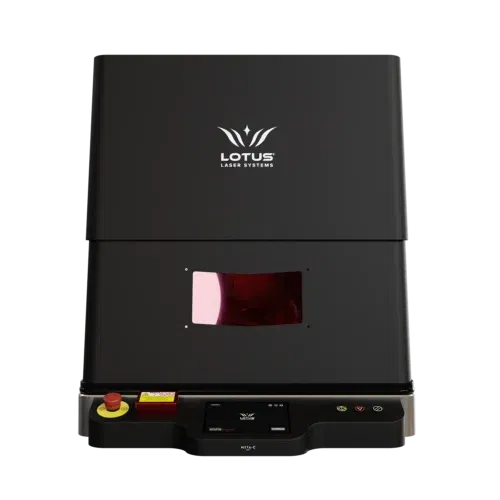
Designed for heat-sensitive flight components, avionics enclosures, wire harness insulation (PTFE/ETFE), radar domes, and carbon-fiber composites (CFRP/PEEK). Operating at a 355nm ultraviolet wavelength, this system utilizes high-energy photons to break molecular chemical bonds directly ('cold ablation'). The result is permanent, ultra-high contrast, zero-heat marking that eliminates any microstructural thermal alteration or outgassing risk on flight-critical polymers.
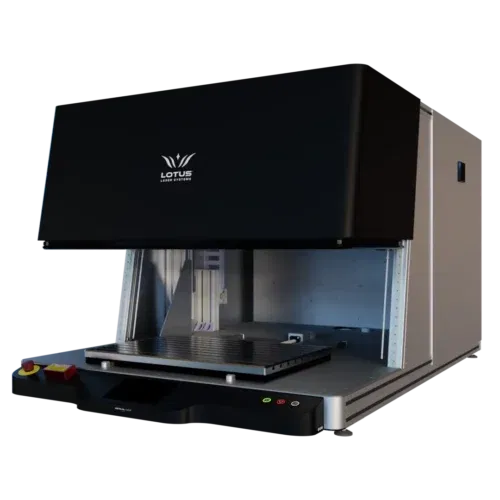
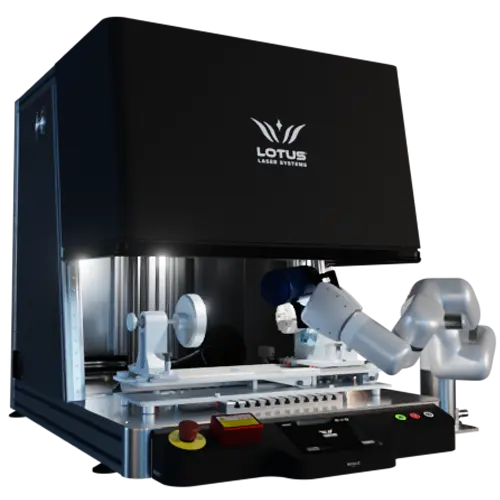
Designed for high-throughput batch marking of aerospace fasteners, turbine blades, structural brackets, or oversized engine nacelle panels. Featuring high-precision motorized XY movement combined with Galvo high-speed laser positioning, the Meta-XY XL allows multi-part tray arrays to be marked continuously with zero operator fatigue and automated database serialization integration.
The aerospace manufacturing sector is undergoing rapid technological transformation. Key technical developments shaping the future of laser part identification include:
Traditional Q-switched fiber lasers produce fixed pulse widths (~100ns) with high peak power spikes. On titanium or superalloys, this concentrated thermal energy vaporizes metal material, causing localized melting, micro-spatter, micro-cracks, and an unacceptable Heat-Affected Zone (HAZ). In contrast, modern MOPA (Master Oscillator Power Amplifier) technology allows independent control of pulse frequency (up to 4000kHz) and pulse duration (from 2ns to 500ns). By utilizing ultra-short pulse widths (2ns–15ns), energy is deposited faster than thermal conduction into the substrate can occur, enabling true subsurface oxidation (black annealing) with zero measurable change in surface roughness ($Ra$) or structural fatigue life.
| Laser Architecture | Pulse Width Range | Thermal Impact (HAZ) | Micro-Cracking Risk | Suitable Aerospace Application |
|---|---|---|---|---|
| Standard Q-Switched Fiber | Fixed (~100ns - 120ns) | High (Localized Melting) | Moderate to High | Non-critical tooling & ground support tags |
| Lotus MOPA Fiber (1064nm) | Variable (2ns - 500ns) | Zero to Minimal (Black Anneal) | None (Negligible HAZ) | Turbine blades, titanium spars, engine bearings |
| Lotus UV Cold Laser (355nm) | Ultra-Short (<10ns) | None (Photochemical) | Zero | CFRP airframe parts, PTFE cables, PEEK avionics |
| Femtosecond / Picosecond Laser | Sub-picosecond (<10ps) | Cold Ablation | Zero | Micro-aperture cooling holes & delicate sensors |
Aerospace parts are rarely flat. Traditional 2D galvo laser heads lose focal spot density when surface height varies by more than 1mm–2mm, causing fuzzy, unreadable Data Matrix codes on curved jet engine fan blades or angled landing gear struts. Lotus Meta 3D systems incorporate a high-speed motorized dynamic Z-axis optic positioned before the galvo mirrors. Guided by 3D CAD step files or optical displacement sensors, the focal spot expands and contracts dynamically in real-time across an 80mm Z-depth range, ensuring consistent power density, uniform line weights, and perfect ISO 15415 barcode grading over complex 3D surfaces in a single uninterrupted laser cycle.
As OEM aerospace primes (such as Boeing, Airbus, Rolls-Royce, and Safran) push towards Industry 4.0 and digital twin traceability, procurement specifications for laser equipment are shifting rapidly:
Choosing Lotus Laser Systems for your Aerospace Laser Part Identification Machine means partnering directly with an established UK manufacturer with deep expertise in regulated, high-precision industrial applications:
Designed, manufactured, and rigorously tested at our engineering headquarters in Basildon, Essex, UK. We are an authentic OEM manufacturer, not a re-seller.
Unlike competitors who charge substantial premiums for 3D capability, most Lotus Meta platforms integrate 3-axis dynamic beam delivery natively.
Backed by up to 10-year Diamond Cover in the UK and comprehensive 3 to 5-year warranties for international defense buyers across 46 countries.
Operated under an ISO 9001 certified Quality Management System with complete CE compliance and NCSC Cyber Essentials accreditation.
The following optical sample marks demonstrate the high contrast, high precision, and metallurgical integrity achieved by Lotus Meta laser systems across typical aerospace alloys and composites:
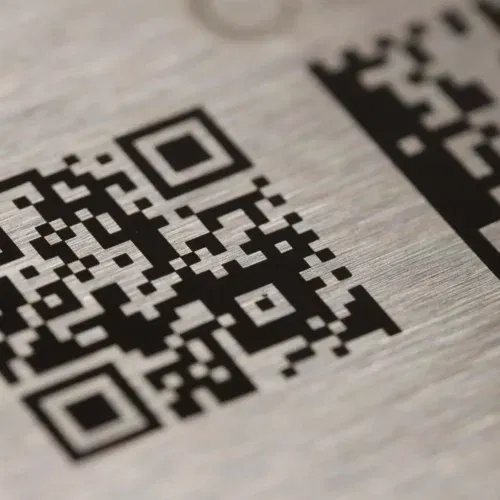 MOPA Fiber
Black Thermal Annealing
Non-destructive, high-contrast UID 2D Data Matrix barcode marked without breaking the passive oxide film layer or creating surface roughness.
 MOPA Fiber
High Contrast Marking
Crisp, durable marking on anodized aerospace aluminium data plates and structural wing brackets compliant with MIL-STD-130.
 355nm UV Laser
Photochemical Cold Mark
Zero thermal degradation marking on high-temperature polymers, radar housings, and electrical connector blocks.
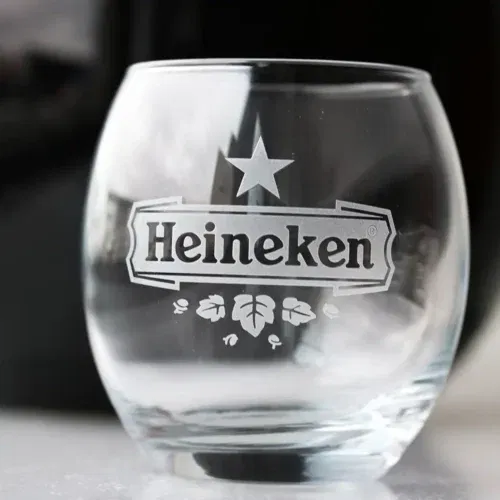 3D UV Laser
Micro-Precision Etching
Micro-crack free precision etching on flight instrument glass, optical sensor lenses, and specialized display panels.
Lotus Aerospace Laser Part Identification Machines produce fully verified, high-density 2D Data Matrix and serial codes engineered to withstand aggressive chemical exposure, thermal shock, and decades of operational flight wear.
Provides permanent Unique Item Identifier (UID) 2D Data Matrix codes for defense equipment tracking under strict DoD guidelines.
Ensures seamless digital data exchange and part identification formatting across commercial aviation airline supply chains.
Delivers optimal cell size, dot depth, and edge definition on direct part marks to achieve Grade A automated optical reading.
Fulfills stringent space hardware safety specs regarding direct part marking on stress-critical titanium and aluminum alloys.
In-depth technical answers prepared by our Senior Laser Applications Specialists for defense contractors, quality assurance leads, and manufacturing engineering teams.
By leveraging MOPA fiber technology with adjustable pulse durations (down to 2ns), our laser systems perform thermal annealing rather than aggressive material vaporization. Thermal annealing induces a superficial oxide layer (~few nanometers thick) underneath the transparent passive oxide skin of titanium or stainless steel. This creates a high-contrast dark mark without creating surface micro-notches, micro-cracks, or significant Heat-Affected Zones (HAZ) that could otherwise initiate fatigue crack propagation under high cyclic loading.
Lotus laser software natively supports automated formatting for MIL-STD-130 (construct 1 and construct 2 UID barcodes), ATA Spec 2000, SAE AS9132 matrix parameter checking, GS1, and ISO/IEC 15415/16022 symbol grading. Custom data syntax and automatic checksum creation can be configured to pull directly from your ERP system.
Yes. All Lotus Meta-C 3D systems incorporate dynamic 3-axis galvo optics. Guided by 3D CAD models (.STEP / .IGES), the internal lens expands and contracts dynamically across an 80mm Z-axis depth range in real time, keeping the focal spot perfectly focused across compound curves, inclined planes, and stepped radii without focal blur.
1064nm MOPA Fiber lasers are optimal for metallic structures (Titanium, Inconel, Steel, Aluminium) requiring thermal annealing or deep engraving. 355nm UV Lasers utilize ultraviolet photon energy for 'cold marking'—making them mandatory for non-metallic or heat-sensitive aerospace materials such as Carbon Fiber Composites (CFRP), PEEK, Teflon PTFE wiring, and cockpit avionics display glass, where thermal heat would cause matrix damage or outgassing.
In the UK, Lotus Laser Systems provides up to 10-year Diamond Cover. International orders are supported by a 3 to 5-year comprehensive warranty executed through authorized distributor networks across 46 countries, backed directly by our UK engineering headquarters in Basildon, Essex.
Yes. You can send actual flight hardware or alloy coupons to our UK applications lab. Our engineers will perform marking trials, test pulse parameters, analyze mark contrast and surface roughness ($Ra$), and provide full optical verification reports along with sample parts for your quality team's approval.
Validate your part traceability process today. Contact our senior laser applications team to discuss your component geometry, material specifications, and throughput targets.
Get immediate technical assistance or schedule a live video demonstration from our UK headquarters.