
Blog
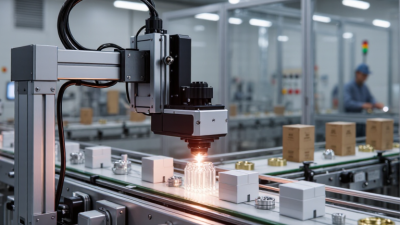
7 Best Inline Industrial Laser Coding Machines in 2026
Inline Industrial Laser Coding Machine technology is becoming a practical choice for high-speed, traceable production lines in 2026. It marks dates, batch numbers, barcodes, and QR codes directly onto bottles, cartons, films, caps, and metal components. No ink cartridge is required. That matters in dusty factories, chilled rooms, and fast-moving packaging halls.
Industry research supports this shift. MarketsandMarkets estimates the global laser marking market will grow from about USD 3.0 billion in 2023 to USD 4.5 billion by 2028, representing an annual growth rate above 8%. Grand View Research also identifies automation, product traceability, and permanent marking as major market drivers. Packaging and manufacturing reports from PMMI repeatedly highlight the value of integrated coding, inspection, and data management. These findings are useful, but market forecasts vary by research method and product definition.
Real production experience adds another layer. A laser can produce crisp codes at conveyor speeds where traditional contact methods may struggle. However, “maintenance-free” is an imperfect description. Operators still need to manage lens cleanliness, extraction, software permissions, material compatibility, and safety interlocks. Small details matter. A dusty lens can turn a sharp QR code into a rejected carton.
This guide compares seven leading Inline Industrial Laser Coding Machine options for 2026. Each machine is considered through marking quality, line speed, integration, operating cost, service support, and safety design. The best choice is not always the most powerful model. It is the one that reliably fits the substrate, production rhythm, compliance needs, and long-term maintenance plan.
Read more »
 By:Ethan Parker
- October 14, 2026
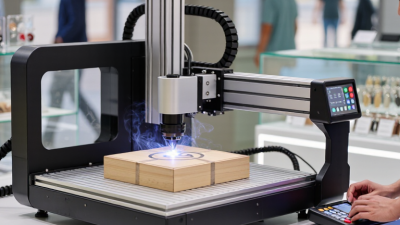
China Best In Store Retail Laser Engraver for Global Buyers?
China has become a major manufacturing base for laser engraving equipment, but choosing the right In-Store Retail Laser Engraver requires more than comparing prices. Retail buyers must examine engraving speed, safety design, software stability, training, warranty support, and material compatibility. A machine may look impressive in a showroom and still disappoint during a busy personalization campaign.
Market evidence supports this opportunity. Grand View Research reports continued growth in the global laser technology market, driven by automation, customization, and manufacturing efficiency. Fortune Business Insights also identifies rising demand for laser engraving machines across commercial and industrial applications. Meanwhile, the National Retail Federation has highlighted personalization as an important part of modern customer experience. These reports do not guarantee every retail investment. They show the direction of the market.
Theodore Maiman, the laser inventor, famously said, “The laser is a solution looking for a problem.” Retailers should remember that warning. The best In-Store Retail Laser Engraver is not automatically the most powerful model. It is the model that fits a store’s queue length, product range, ventilation plan, operator skills, and service expectations. Picture a customer waiting beside a counter while a name is engraved on a wooden gift. Every second matters. Small details matter more.
China’s strongest suppliers can offer competitive engineering, flexible configurations, and export experience. Yet quality varies. Certifications, factory testing, sample verification, and after-sales response deserve careful review. This guide examines those practical differences for global buyers. Some recommendations may still need adjustment. Retail environments are rarely identical.
Read more »
By:Ethan Parker
- October 9, 2026
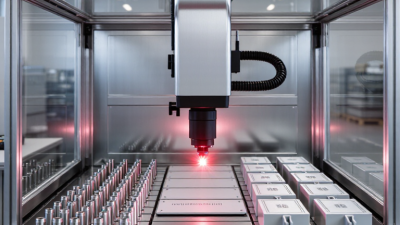
Why Choose a Large Format Batch Laser Marker?
Why Choose a Large Format Batch Laser Marker?
A Large Format Batch Laser Marker can change how manufacturers handle high-volume identification. Instead of marking one component at a time, it processes several parts within one working field. A tray may hold dozens of stainless-steel fittings, aluminum panels, or molded plastic housings. Each part can receive a serial number, QR code, logo, or production date. This reduces repeated loading and saves valuable operator time.
Professor Stefan Nolte, a recognized laser-processing researcher, emphasizes, “Reliable laser processing depends on controlled energy delivery, not power alone.” That principle matters here. A large marking field needs stable focus, accurate positioning, and consistent software control. A powerful source alone cannot correct poor fixture design or uneven part heights. In real production, small errors become expensive quickly.
The practical advantage is consistency. A well-designed system can mark an entire fixture before the next batch arrives. Operators spend less time opening doors, aligning parts, and checking individual positions. Traceability also becomes easier when every code follows the same digital template. However, larger is not automatically better. Very small parts may lose detail across a wide field, and complex fixtures can increase setup time. That trade-off deserves honest testing.
Factories should examine sample materials, marking speed, code readability, fume extraction, and maintenance access before purchasing. A short trial often reveals problems that brochures hide. The best Large Format Batch Laser Marker is not simply the fastest machine. It is the system that delivers readable marks, repeatable placement, and dependable output during ordinary production pressure. Reliability is built on details. Sometimes, those details are overlooked.
Read more »
 By:Clara Bennett
- October 4, 2026
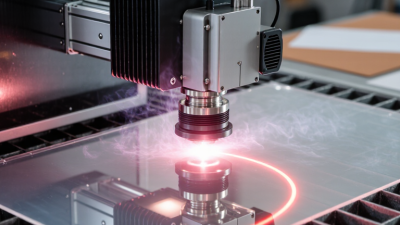
What Is a CO2 Galvo Laser Cutting System?
A CO2 Galvo Laser Cutting System combines a carbon dioxide laser source with galvanometer-driven mirrors. The mirrors steer the beam rapidly across a marked work area. Unlike a conventional gantry machine, the laser head often stays in place while the beam moves. This setup can make small, detailed cuts and markings quickly. Think of a focused red guide dot moving over a sheet of acrylic, though the working laser beam itself is invisible.
The system is commonly used for materials such as paper, thin plastics, leather, and selected fabrics. Actual results depend on the laser’s power, lens, material thickness, and settings. A clean edge is not guaranteed. Smoke, heat, and material variation can change the finish, so ventilation and material checks matter. Never assume an unfamiliar sheet is suitable just because it looks similar to a known one.
This guide explains the main components, how the scanning process works, and what affects cutting performance. It also compares galvo systems with gantry-style CO2 machines and outlines practical selection factors, including work area and maintenance. There are trade-offs. Galvo speed is useful, but a compact scan field may limit the size of a single job. Even experienced operators can misjudge a material or setting. A careful test cut is often more informative than a specification sheet.
Read more »
By:Clara Bennett
- September 29, 2026
What Is the Best Desktop Fiber Laser Engraver?
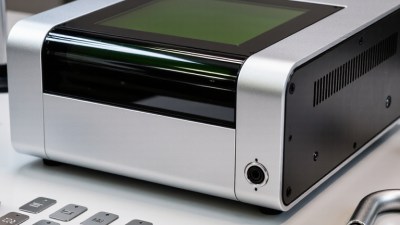
A Desktop Fiber Laser Engraver can mark small metal parts with crisp detail, but the “best” machine depends on the work you actually plan to do. A nameplate, a batch of stainless-steel tags, and a curved tool handle place different demands on the laser, work area, and fixture. One detail is easy to miss: a larger advertised work field does not automatically produce better results. Focus, material settings, software, and repeatable positioning matter just as much.
Laser pioneer Theodore Maiman is often credited with the line, “The laser is a solution looking for a problem.” For buyers, it is a useful reminder to define the job before comparing machines. Ask which materials you will mark, how large the parts are, and how often production must be repeated. Then compare practical specifications, including source power, lens options, enclosure design, setup support, and service access. Numbers alone can mislead. A compact engraver may suit careful, occasional work, while a production shop may need faster cycles and dependable fixtures. There is no universal winner. This guide examines the trade-offs behind choosing a Desktop Fiber Laser Engraver, while recognizing that published specifications cannot replace a hands-on sample test. Small differences matter.
Read more »
 By:Harper
- September 25, 2026
Which Is the Best 3D UV Laser Marking Machine in 2026?
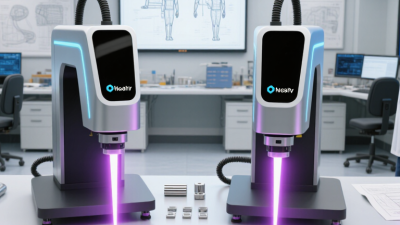
Choosing the best 3D UV Laser Marking Machine in 2026 takes more than comparing wattage or advertised speed. Buyers need to test how consistently a system marks curved surfaces, fine text, and heat-sensitive materials. A sample part tells a clearer story than a polished brochure.
Grand View Research’s laser-marking market report points to continued growth in the broader sector. That trend is useful context, but it does not prove that every 3D UV system will suit your production line. The report covers laser marking overall, not this specific machine category. Compare verified specifications, application trials, warranty terms, and service support before deciding.
Prof. Reinhart Poprawe, a prominent laser-technology researcher and former director of Fraunhofer ILT, offers a useful expert lens on laser processing: material and process fit matter. Put that into a practical buying question: “Does the mark stay crisp without damaging the surface?” Check the answer on your actual parts, including edges and recessed areas. Then review cycle time and repeatability across multiple samples. Small variations matter.
This guide compares 3D UV Laser Marking Machine options using those checks. It also looks at marking quality, system configuration, usability, and support. Some specifications can be difficult to compare directly. That deserves caution, not guesswork. The right choice is the machine that meets your real production needs—not simply the one with the strongest headline claim.
Read more »
By:Ethan Parker
- September 25, 2026
7 Best MOPA Fiber Laser Marking Machines in 2026
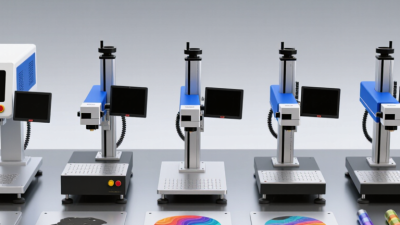
A MOPA Fiber Laser Marking Machine uses adjustable pulse settings to mark metals and some plastics with greater control over heat and contrast. That flexibility can help create dark marks on stainless steel, subtle colors on titanium, or fine details on small components. Results still depend on the material, surface finish, lens, and chosen settings. Small differences matter.
This guide looks at seven machines available in 2026, focusing on practical factors such as laser power, pulse-width range, work area, software, cooling, and support. These specifications help narrow a shortlist, but they cannot predict every result on your own parts. A sample test is still important. Even a polished product photo tells only part of the story.
The right choice depends on what you mark each day. A workshop handling small batches may value easy setup and a compact footprint. A production line may need faster processing, reliable integration, and clear service options. This comparison uses manufacturer information and practical selection criteria, while recognizing that configurations can vary by supplier. I would not treat any single model as best for every shop. Check the current specification sheet, ask about compatible materials, and test representative samples before committing.
Read more »
By:Ethan Parker
- September 25, 2026