0%

A CO2 Galvo Laser Cutting System combines a carbon dioxide laser source with galvanometer-driven mirrors. The mirrors steer the beam rapidly across a marked work area. Unlike a conventional gantry machine, the laser head often stays in place while the beam moves. This setup can make small, detailed cuts and markings quickly. Think of a focused red guide dot moving over a sheet of acrylic, though the working laser beam itself is invisible.

The system is commonly used for materials such as paper, thin plastics, leather, and selected fabrics. Actual results depend on the laser’s power, lens, material thickness, and settings. A clean edge is not guaranteed. Smoke, heat, and material variation can change the finish, so ventilation and material checks matter. Never assume an unfamiliar sheet is suitable just because it looks similar to a known one.

This guide explains the main components, how the scanning process works, and what affects cutting performance. It also compares galvo systems with gantry-style CO2 machines and outlines practical selection factors, including work area and maintenance. There are trade-offs. Galvo speed is useful, but a compact scan field may limit the size of a single job. Even experienced operators can misjudge a material or setting. A careful test cut is often more informative than a specification sheet.
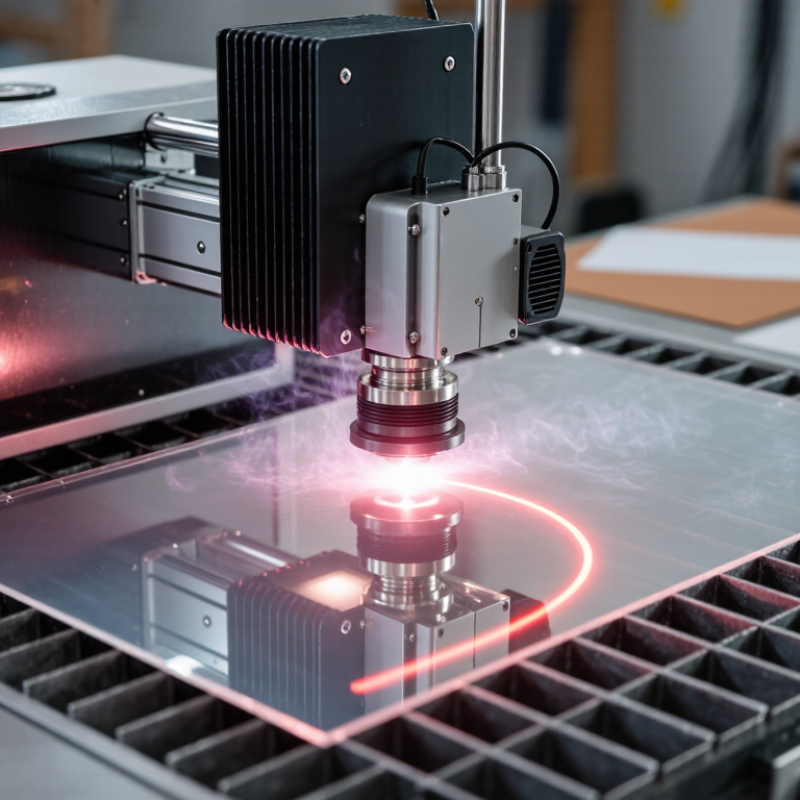
What Is a CO2 Galvo Laser Cutting System?

What Is a CO2 Galvo Laser Cutting System?

A CO2 galvo laser cutting system uses a carbon-dioxide laser and fast, motor-driven mirrors to guide its beam. The mirrors steer the beam across the work area without moving a large cutting head. A focusing lens concentrates the energy into a small spot. Control software sets the path, speed, and power.

The beam’s wavelength is well suited to many non-metallic materials, including paper, fabrics, and some thin acrylic sheets. Actual results depend on material type, thickness, lens, and machine settings. A narrow kerf can create crisp details, such as small lettering or closely spaced cutouts. That matters. But a galvo system’s working field may be limited, and it may not suit every large-format job.

Operators usually test settings on a scrap piece before cutting a finished part. They check edge quality, focus, and whether material shifts during processing. Ventilation is essential because cutting can produce smoke and fumes; use appropriate extraction and follow the equipment’s safety guidance. Not every job. A fast scan speed does not guarantee a clean cut, and excessive power can char edges or distort thin stock. I would treat sample results as a starting point, not a promise.

What Are Its Main Components?

What Is a CO2 Galvo Laser Cutting System?
What Are Its Main Components?

A CO2 galvo laser cutting system uses a carbon dioxide laser source to create an infrared beam. Two small, motorized mirrors steer the beam across the work area. A focusing lens concentrates it into a fine spot, heating the material along a programmed path. That moving spot makes the cut. The scan head can change direction quickly, though its working field is often smaller than a moving gantry’s.

The controller translates design files into mirror movements and laser settings. The worktable supports the sheet and helps keep its surface at a consistent focus distance. Cooling equipment protects the laser source from excess heat, while an extraction system removes smoke and debris. An enclosed housing and interlocks help limit exposure to the beam. These parts must work together. A lens with residue, for example, can affect cut quality even when the settings look correct. Alignment also deserves regular checks; small errors may show up as uneven edges. It is easy to overlook that detail. The system’s useful materials and thickness range depend on its power, optics, and setup, so a sample cut is a sensible check before a full production run.

How Does the Galvo Laser Cutting Process Work?

What Is a CO2 Galvo Laser Cutting System?

How Does the Galvo Laser Cutting Process Work?

A CO2 galvo laser cutting system directs a focused infrared beam using two fast-moving mirrors. One mirror steers the beam along the X axis; the other controls the Y axis. A focusing lens concentrates the energy onto the material, following a programmed path. The CO2 laser’s wavelength is absorbed by many non-metallic materials, such as paper, wood, and some plastics. Small details matter.

As the beam moves, its heat melts, vaporizes, or chars a narrow line, depending on the material and settings. The laser may follow a contour once or make several passes for thicker stock. Assistive airflow and extraction help clear smoke and debris from the cutting area. Operators typically test focus, speed, and power on a scrap piece before production. In practice, a neat digital path can still leave a rough edge if the material varies in thickness or the focus is slightly off. Galvo systems can move quickly, but their working area is often limited by the scan lens. That trade-off is easy to overlook.

What Is a CO2 Galvo Laser Cutting System? - How Does the Galvo Laser Cutting Process Work?
System Element or Step How It Works Role in Cutting Practical Notes
CO2 laser source Produces an infrared laser beam; common CO2 laser systems operate at a wavelength of approximately 10.6 micrometres. Supplies the energy used to heat, melt, or vaporize material along a programmed path. Cutting capability depends on the source power, material, thickness, focus, and process settings.
Galvanometer scanner Two motor-driven mirrors rapidly steer the beam across a defined working field. Moves the focused beam along the design path without moving the workpiece for every line or curve. The usable field and achievable detail depend on the scanner optics and focusing lens.
Focusing lens Concentrates the beam into a small spot on or near the material surface. Creates the energy density needed for the selected cutting or engraving operation. Correct focus is important; the focal position can affect cut quality and edge appearance.
Design and path preparation Vector paths or other supported artwork are prepared in software and assigned process settings. Defines the geometry, scan order, and laser commands used by the controller. Closed paths are commonly used for cut outlines; artwork and machine settings must be compatible.
Beam scanning and material interaction The scanner follows the programmed path while the focused beam heats the material locally. Material is removed along the path through melting, vaporization, or thermal decomposition, depending on the material and settings. A galvo system is often used for marking and engraving; cutting suitability varies with material and thickness.
Assist gas and fume extraction Where the machine is configured for them, assist gas helps clear the cutting area, while extraction removes fumes and particulates. Can support a cleaner process and improve visibility around the work area. Requirements vary by material and machine. Use suitable ventilation and follow material safety guidance.
Typical material considerations CO2 lasers are commonly used with many non-metallic materials, including suitable paper, wood, acrylic, and textiles. Material response determines whether a clean cut, engraving, or another result is achievable. Compatibility is material-specific. Some plastics can release hazardous fumes, and reflective metals are generally not standard applications for a CO2 source.
Cut quality and throughput Results depend on laser power, scan speed, focus, path design, material properties, and the size of the scan field. These factors influence edge quality, kerf, processing time, and the ability to cut through a workpiece. Test settings on representative material before production; there is no single setting that suits every job.

Which Materials Can It Cut or Engrave?

A CO2 galvo laser focuses infrared energy through rapidly moving mirrors. Material response depends on wavelength, thickness, coating, and moisture—not just the machine’s rated power. It can cut or engrave many non-metallic materials, but results vary.

Acrylic is a strong candidate: the beam can cut clear sheets and create bright, polished edges, while engraving produces a frosted surface. Wood, plywood, paper, cardboard, textiles, and some leather can also be cut or marked. The USDA Forest Products Laboratory’s Wood Handbook reports large differences in wood density across species, roughly 160 to over 1,000 kilograms per cubic meter. That spread helps explain why identical settings may char thin balsa but barely mark dense hardwood. Test scraps. Tiny changes matter.

CO2 systems generally do not cut bare metals effectively; coated metals may accept surface marking, depending on the coating. Avoid PVC and unknown plastics: laser heating can release hazardous gases, and an uncertain material label is not a safe specification. For production work, check the supplier’s safety data sheet and run a small sample before processing a full sheet. Thin paper may ignite. Keep extraction and fire monitoring active, even during short jobs.

What Are Its Common Applications and Limitations?

What Is a CO2 Galvo Laser Cutting System?

A CO2 galvo laser system uses mirrors to steer a focused infrared beam across a material, rather than moving a heavy cutting head along rails. This fast scanning action suits detailed work on thin, non-metallic sheets. Common applications include engraving and cutting paper, cardboard, wood veneer, acrylic, leather, and some fabrics. A workshop might use it to mark serial numbers on wooden panels or cut small decorative shapes from acrylic. Results depend on material composition, thickness, focus, and settings, so test pieces matter.

Speed has limits. A galvo system often has a smaller working field than a gantry cutter, and deep cuts may require repeated passes. Thick materials can develop charred edges, while some plastics release hazardous fumes when processed. Material safety data and effective extraction are essential; unknown plastics should not be tested casually. Reflective metals are generally not suitable for direct processing with a standard CO2 source. There is a trade-off. The beam can mark a wide area quickly, but precise, clean cutting may require slower settings and careful setup. Even experienced operators can misjudge a material’s response, so record results and inspect both the cut edge and the underside.

CO₂ Galvo Laser Cutting: Wavelengths, Applications & Limitations

CO₂ lasers commonly emit at 10.6 μm, a wavelength well suited to processing many non-metallic materials, including wood, paper, acrylic, and textiles. Galvo scanners steer the beam rapidly across a defined working area, making these systems useful for fast cutting, engraving, and marking. The wavelength comparison below shows typical values for three laser types; actual specifications vary by laser source. CO₂ systems are generally not the first choice for directly cutting bare metals, and their working area and cut depth depend on the optics, power, and material.

FAQS

How does a CO2 galvo laser cut material?

Two fast-moving mirrors steer a focused infrared beam along programmed X and Y paths. The beam heats a narrow line, melting, vaporizing, or charring it.

What materials can a CO2 galvo laser process?

It can cut or engrave many non-metallic materials, including acrylic, wood, paper, cardboard, textiles, and some leather. Results vary by material.

What does laser engraving look like on acrylic?

Engraving can leave a frosted surface. Cutting clear acrylic may produce bright, polished edges, though settings and sheet quality affect the finish.

Why do identical settings produce different results on wood?

Wood density varies widely between species. A setting that chars thin balsa may barely mark dense hardwood. Test a scrap piece.

Can a standard CO2 galvo laser cut metal?

It generally cannot cut bare metal effectively. Some coated metals may accept surface marking, depending on the coating.

Why should unknown plastics be avoided?

Laser heating can release hazardous gases from some plastics. Check the material safety data before processing, and avoid uncertain materials.

What limits a galvo laser’s cutting area and depth?

Its scan lens often limits the working field. Thick stock may need repeated passes, which can slow work and leave charred edges.

What helps produce cleaner, safer cuts?

Check focus and settings on a scrap piece. Keep extraction and fire monitoring active. Small setup errors can still roughen an edge.

Conclusion

A CO2 Galvo Laser Cutting System uses a carbon dioxide laser and fast-moving galvanometer mirrors to direct the beam across a work surface. Its main components typically include the laser source, mirror scanner, focusing lens, control system, worktable, and suitable exhaust or cooling equipment. Together, these parts guide and focus the laser so it can cut or engrave designs with speed and precision.

During operation, software sends a design to the controller, which steers the mirrors to trace the required paths while the focused beam heats and removes material. Depending on the machine’s power and setup, it can process materials such as paper, wood, acrylic, leather, fabric, and some plastics. Common uses include signage, packaging, crafts, decorative products, and prototyping. Its limitations may include restricted material thickness, uneven results on reflective or unsuitable materials, and the need for careful ventilation and parameter adjustment. It is best suited to non-metallic materials and tasks that benefit from detailed, high-speed marking or cutting.

Clara Bennett

Clara Bennett

Clara Bennett is a professional marketing specialist with a strong understanding of the company’s products, their practical applications, and the needs they are designed to address. She regularly contributes expert articles to the company website, translating product knowledge into clear, useful......