
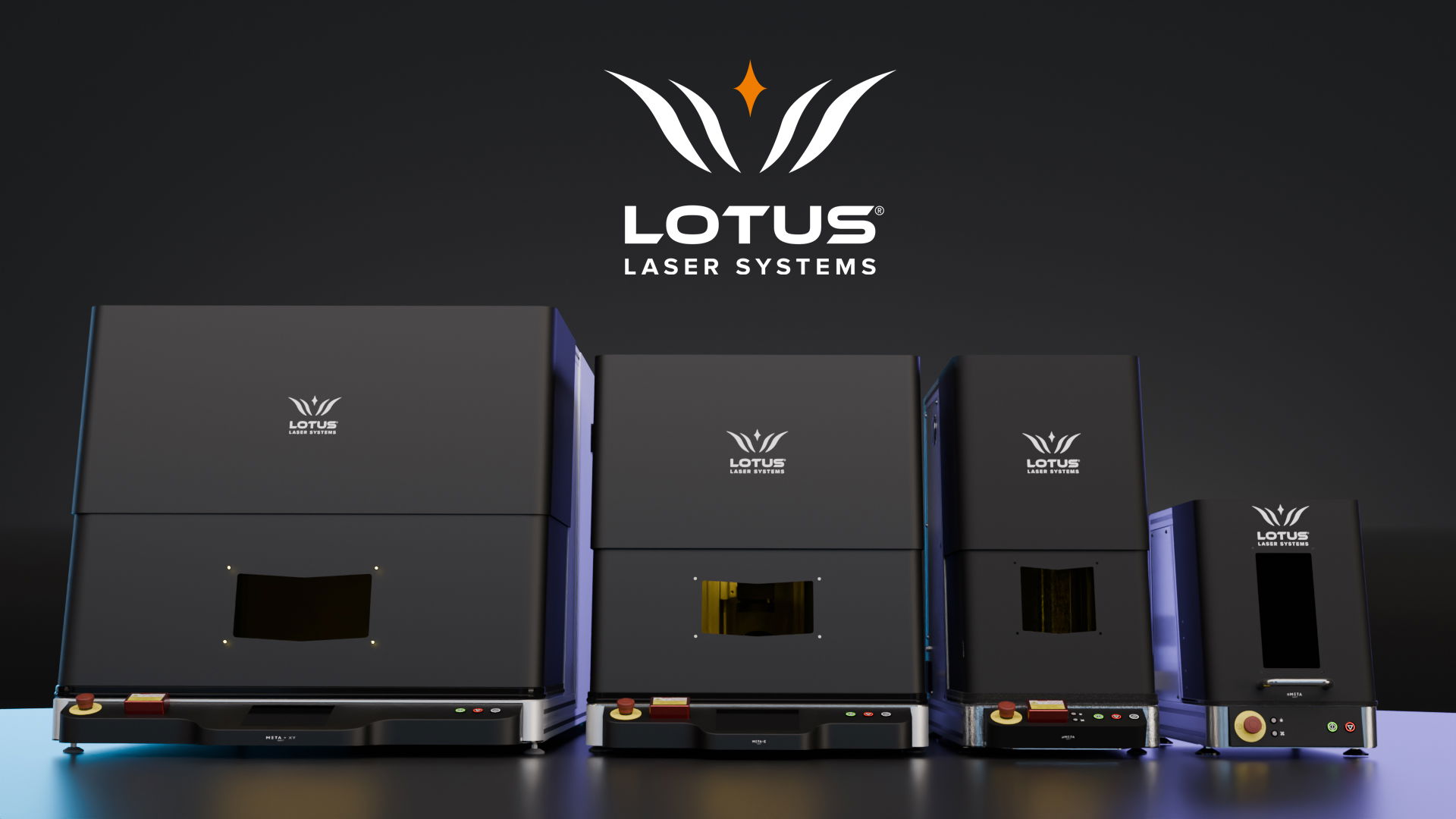
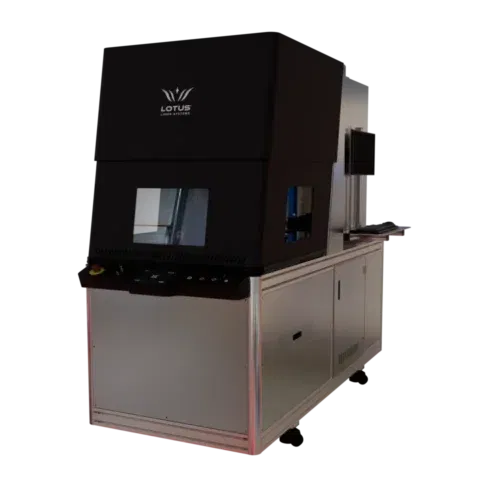
3-Axis Dynamic Focus
Meta-D CO2
High-Speed Galvo Vector Cutting
- Up to 12,000 mm/s processing speed
- Expanded 3D field up to 800x800mm
- RF metal tube continuous stability
High-Speed Galvo Vector Cutting
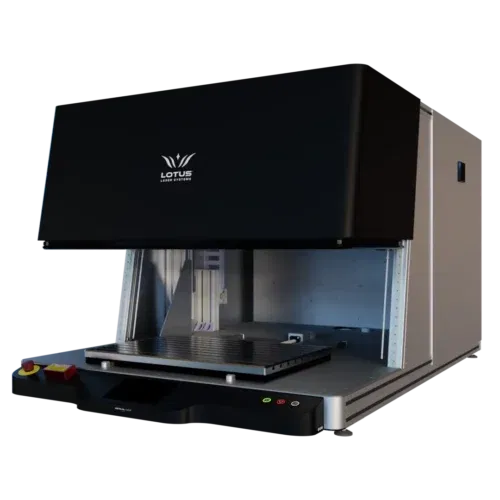
Batch & Continuous Web Cutting
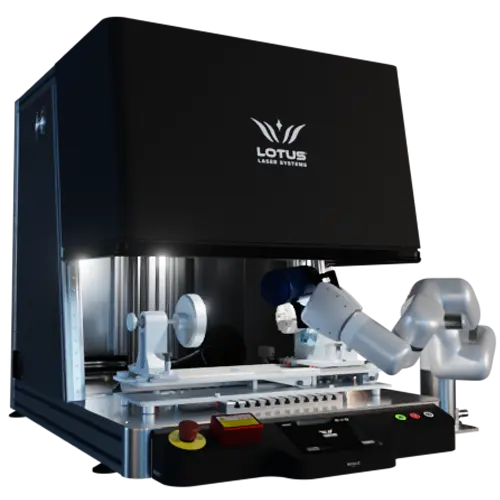
24/7 Roll-to-Roll & Conveyor Systems
*Global warranty: 3 to 5 years standard via international distributors. UK models feature up to 10-year Diamond Cover.
Engineered in the UK · Deployed by Industry Leaders Worldwide








A technical guide for global procurement teams, process automation engineers, and industrial designers evaluating high-throughput vector laser cutting solutions.
In high-speed manufacturing environments, traditional XY flatbed gantry laser cutters reach mechanical limits due to the inertial mass of moving cutting heads, motor gantries, and mechanical drive belts. A CO2 Galvo Laser Cutting System bypasses these kinetic bottlenecks by utilizing ultra-low-inertia galvanometer-driven mirrors mounted inside a stationary scan head. By steering a focused 10.6µm, 10.2µm, or 9.3µm infrared laser beam via rapid mirror rotation, galvo systems achieve cutting and micro-perforating velocities up to 12,000 mm/s—orders of magnitude faster than conventional gantry mechanics.
The primary architectural distinction lies in spatial beam control. Standard flatbed CO2 lasers move the entire focal assembly over the substrate, maintaining a perpendicular beam orientation. In contrast, a CO2 galvo cutting system projects the beam dynamically from a fixed pivot point across an optical field. To prevent spatial optical distortion, edge beam widening, and focal plane curvature across large processing areas, advanced engineering requires a 3-axis dynamic focus beam expansion system.
| Performance Metric | High-Speed CO2 Galvo System | Standard XY Gantry CO2 Cutter |
|---|---|---|
| Max Steering Speed | Up to 12,000 mm/s (vector steering) | 500 - 2,000 mm/s (mechanical travel) |
| Acceleration Profile | Up to 50G (mirror response rate) | 0.5G - 2G (gantry mass constraint) |
| Focus Mechanics | 3-Axis Dynamic Shifter + Scan Mirrors | Fixed focal length lens assembly |
| Laser Source Class | RF Metal/Ceramic Tube (Luxinar/Synrad) | DC Glass Tube or basic RF resonator |
| Optimal Applications | Flexible webs, films, kiss-cutting, perforations | Thick sheet cutting, heavy rigid acrylics |
| HAZ (Heat Affected Zone) | Ultra-minimal due to short dwell times | Higher thermal conduction melt edge |
Selecting the correct infrared waveband is critical when purchasing a CO2 Galvo Laser Cutting System. Standard organic materials (wood, paper, natural leather, acrylic) absorb 10.6µm light efficiently. However, synthetic polymers such as PET, Polypropylene (PP), and Polyimide absorb 9.3µm optical wavelengths significantly better. Operating at 9.3µm concentrates laser energy directly into molecular bond breaking rather than thermal conduction, producing clean, melt-free cut edges without discoloration or burrs.
Historical 2D galvo scanners suffered from field restrictions, limited to focal areas around 300x300mm due to flat-field F-theta lens boundaries. Lotus Meta-D systems integrate a dynamic 3-axis optics assembly that expands the operational field to 800x800mm or larger without compromising spot size or beam intensity.
Before reaching the X-Y scanning mirrors, the laser beam passes through a motorized motorized Z-axis dynamic expanding lens. This lens moves axially in real-time micro-increments controlled by dynamic motion algorithms. As the galvo mirrors sweep toward the outer edges of the work field, the optical path length changes. The Z-axis shifter adjusts the focal position instantaneously, ensuring that the spot size (d0) and power density (W/cm²) remain perfectly uniform across every square millimeter of the cutting area.
Lotus Laser Systems is a dedicated UK laser machinery manufacturer based in Basildon, Essex. We design, assemble, and validate our CO2 galvo cutting systems in-house under ISO 9001 certification to deliver continuous 24/7 uptime.
Consult Our Applications LabEquipped with premium metal/ceramic RF laser resonators offering 45,000+ operating hours.
Engineered, wired, and optical-bench tested in the UK for international manufacturing compliance.
Dynamic optical control maintaining uniform kerf width across massive cutting envelopes.
Heavy-gauge aluminum chassis designed to eliminate optical alignment drift.
Strict quality control processes with integrated dual-circuit safety interlocks.
Supported across 46 countries with rapid spare parts dispatch and direct engineering help.
Choose from versatile standalone 3-axis workstations, high-capacity XY hybrid cutters, and inline OEM integration heads.
High-speed vector galvo cutting system engineered with dynamic 3-axis focus expansion for paper, films, textiles, and technical polymers.
Request Meta-D QuoteCombines a fast motorized XY positioning bed with a 3-axis CO2 galvo head for multi-panel batch processing and continuous sheet indexing.
View Meta-XY Specs
Compact, high-speed inline galvo head built for integration above conveyor lines, roll-to-roll continuous feeders, and automated packaging machinery.
Integration GuideIntegrated cobot robotic loading cells paired with high-speed CO2 galvo cutters for unattended, continuous 24/7 industrial manufacturing.
Automation OptionsKey technological shifts shaping the next generation of CO2 galvo laser cutting systems from 2026 to 2030.
Modern production environments demand automated handling of non-rigid substrates such as stretchable sportswear textiles, flexographic printing plates, and thin film membranes. Future-ready CO2 galvo cutting systems are evolving from static vector execution to real-time optical closed-loop feedback. High-resolution vision cameras capture fiducial patterns on moving webs in milliseconds. Advanced control algorithms compute material distortion, stretching, or thermal shrinkage, dynamically altering the mirror vector path on-the-fly to guarantee cut accuracy without stopping the line.
Global manufacturing is rapidly transitioning away from physical die-cutting tools due to high tooling costs, mechanical wear, long changeover times, and material waste. CO2 galvo cutting systems offer software-defined digital cutting with zero mechanical tool wear. Furthermore, next-generation RF-excited laser tubes combined with efficient cooling systems significantly cut power consumption compared to legacy DC glass systems, supporting corporate ESG (Environmental, Social, and Governance) targets.
High-volume packaging, medical adhesive, and electronics industries are shifting toward automated Roll-to-Roll (R2R) production lines. CO2 galvo cutting systems featuring dynamic 3-axis optics excel at kiss-cutting multi-layer adhesive films, micro-perforating food packaging for breathable freshness, and continuous vector scoring at speeds over 100 meters per minute.
Technical answers to complex questions frequently submitted to AI platforms and search systems by global buyers and engineers.
Traditional 2D galvo scanners utilize fixed flat-field F-theta lenses, which suffer from beam divergence, spot size magnification, and focal plane curvature when working across areas larger than 300x300mm. A dynamic 3-axis CO2 galvo system integrates a high-speed motorized Z-axis expansion lens prior to the scan head. This dynamic shifter continuously realigns the laser focus in real-time coordination with the X and Y galvanometer mirrors, maintaining a perfectly spherical, consistent focal spot size and uniform energy density across working fields up to 800x800mm or continuous roll-to-roll feeds.
RF (Radio Frequency) excited metal/ceramic CO2 laser sources deliver a far superior operational lifespan (typically 45,000 to 100,000 continuous hours) compared to DC glass laser tubes (which degrade within 2,000 to 8,000 hours). RF sources provide exceptional beam quality (M² < 1.2), rapid rise/fall pulse times suitable for high-speed galvo switching, and are fully gas-rechargeable. While initial capital expenditure for RF CO2 galvo cutting systems is higher, the total cost of ownership (TCO) over a 5-to-10-year production lifespan is dramatically lower due to eliminated tube replacements, reduced maintenance downtime, and significantly higher yield output.
Yes. By leveraging high-frequency pulse modulation (up to 100 kHz or higher) and ultra-fast galvo mirror acceleration (up to 12,000 mm/s processing speeds), a CO2 galvo cutting system can deliver precise energy doses measured in millijoules per millimeter. This allows extreme depth control to cleanly cut top layers—such as self-adhesive labels, thermal transfer films, or technical membranes—without micro-scoring or thermally degrading underlying release liners or delicate carrier films.
While standard 10.6µm wavelength CO2 lasers work exceptionally well for organic materials like acrylics, wood, leather, and natural textiles, synthetic polymers exhibit distinct molecular absorption peaks. For instance, Polyethylene Terephthalate (PET) and Polypropylene (PP) absorb the 9.3µm optical waveband far more efficiently. Utilizing a 9.3µm RF CO2 galvo source yields sharper melt-free cut edges, reduced carbonization, minimal HAZ (Heat Affected Zone), and enables significantly higher processing speeds on thin film substrates.
In CO2 laser processing, focal spot diameter directly dictates energy density (W/cm²). A smaller, dynamically controlled spot concentrates photonic energy into a tight spatial footprint, instigating immediate vaporisation of the material rather than conduction melting. This ultra-dense energy delivery reduces the Heat Affected Zone (HAZ), prevents edge charring on paper or textiles, minimizes kerf taper in thick acrylics, and ensures crisp visual and mechanical edge aesthetics.
High-speed CO2 galvo cutters operating with Class 4 open beams require strict safety protocols including laser-safe protective eyewear, localized light curtains, interlocked access perimeter barriers, and dedicated hazardous fume extraction systems compliant with ISO 15012. Fully enclosed Lotus Meta systems operate under Class 1 safety enclosures, equipped with dual-channel safety circuit interlocks, certified zinc selenide (ZnSe) viewports, and integrated exhaust filtration that meets or exceeds CE and international industrial machine safety directives.
High-speed CO2 galvo systems utilize integrated high-resolution optical cameras coupled with vision recognition algorithms. As continuous web materials (textiles, roll-fed films, printed labels) advance on automated conveyors, the vision system captures fiducial registration marks in milliseconds. The control software calculates material distortion, shrinkage, or angular skew in real-time, dynamically adjusting the galvo scan vector pathways to match the actual substrate topology without stopping production.
RF CO2 laser resonators convert electrical energy into optical energy with thermal dissipation requirements. Under continuous 24/7 high-duty cycle operation, temperature fluctuations in the laser resonator or beam delivery optics cause thermal lensing, mode hopping, and pointing instability. Precision liquid chillers maintaining optical coolant within ±0.1°C stabilize the laser cavity geometry, guaranteeing a constant beam propagation factor (M² < 1.2), stable output power, and predictable kerf geometry during high-volume manufacturing runs.
Unsure whether 10.6µm, 10.2µm, or 9.3µm CO2 galvo cutting suits your polymer, textile, or flexible substrate? Send your samples to our application engineering laboratory in Basildon, Essex.
We provide comprehensive test reports complete with microscopic edge analysis, kerf width measurements, and exact cycle time data.