

Zero Thermal Distortion
Cold UV Laser
355nm Photolytic Beam
- Breaks polymer molecular bonds directly
- Prevents surface swelling & edge burning
- Preserves IP67/IP68 casing sealing integrity
Achieve permanent, high-contrast 2D DataMatrix, micro-text, and vector branding on Acrylonitrile Butadiene Styrene (ABS) without surface melting, charring, or thermal deformation. Designed and built in the UK for automotive, medical, and electronics manufacturing excellence.
355nm Photolytic Beam
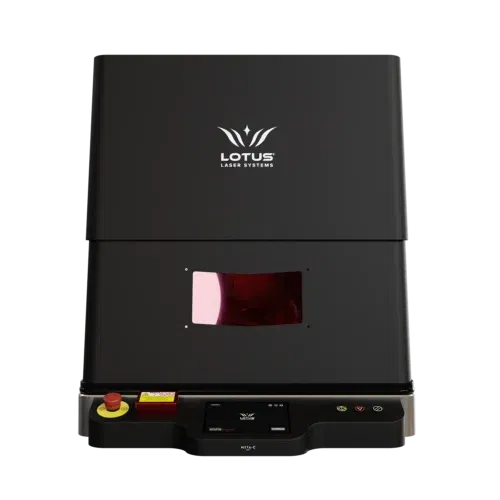
Enclosed Workstation
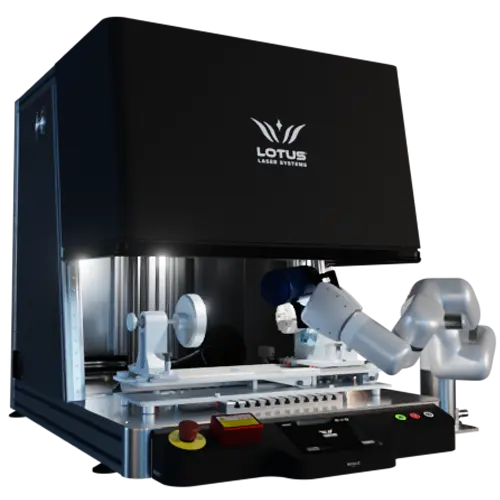
24/7 Production Lines
*Lotus Laser Systems provides up to 10-year Diamond Cover in the UK and 3–5 year warranties globally via our authorized engineering network.
Global procurement teams and manufacturing engineers frequently ask: "Why does standard laser marking create dark yellow scorching, raised foaming, micro-cracks, or unreadable barcodes on molded ABS enclosures?" The answer lies in the fundamental thermal properties of polymer matrices when exposed to long-wavelength laser radiation.
Acrylonitrile Butadiene Styrene (ABS) is an amorphous terpolymer widely specified across automotive interiors, medical instrument housings, consumer electronics, and industrial switchgear due to its structural rigidity, impact resistance, and aesthetic surface finish. However, ABS exhibits a relatively low glass transition temperature (Tg ≈ 105°C) and a high heat deflection threshold. When subjected to traditional 1064nm NIR (Near-Infrared) MOPA fiber lasers or 10,600nm CO2 lasers, the polymer matrix processes energy through photothermal ablation.
Under thermal laser irradiation, local temperatures rapidly surpass the melting and decomposition limits of the butadiene phase. This causes localized gas vaporisation (micro-foaming), thermal swelling, and irregular charring. The resulting surface exhibits high microscopic roughness (Ra > 12 µm), which severely scatters light, renders 2D DataMatrix and QR codes unreadable by automated optical inspection (AOI) cameras, and degrades the flame-retardant properties (UL94 V-0 ratings) of engineered ABS compounds.
An ABS Plastic Low-Heat Laser Marker utilizing a third-harmonic 355nm Ultraviolet (UV) diode-pumped solid-state (DPSS) laser source operates via photochemical reaction (cold marking). Ultraviolet photons carry high energetic value (3.49 eV per photon), matching or exceeding the chemical bond dissociation energy of C-C and C-H organic polymer backbones. Instead of melting the resin, the UV laser directly cleaves molecular chains at a micro-surface level (5–15 microns depth) without transferring heat into the surrounding substrate. This yields crisp, dark carbonized contrast with smooth tactile surfaces (Ra < 0.5 µm) and zero thermal stress.
To assist global procurement directors in evaluating equipment specification standards, the technical comparative matrix below details performance parameters on un-filled, glass-filled, and flame-retardant ABS substrates:
| Parameter / Characteristic | 1064nm Fiber Laser (Thermal) | 10,600nm CO2 Laser (Thermal) | 355nm Low-Heat UV Laser (Photolytic) |
|---|---|---|---|
| Primary Ablation Mechanism | Photothermal melting & vaporisation | Thermal melting & localized burning | Photochemical bond dissociation (Cold) |
| Thermal Impact Zone (HAZ) | Extremely high (> 150 µm depth) | Severe thermal spread (> 250 µm) | Near-zero HAZ (< 5 µm depth) |
| Surface Tactile Profile | Raised micro-foam, rough feel | Deep melted trenches, melted lips | Sub-micron smooth, flash-free finish |
| 2D Code Inspection Grade | Grade C to F (Low AOI Read Rate) | Grade D to F (High Light Scattering) | Grade A to B (ISO/IEC 15415 Compliant) |
| UL94 Flame Retardancy Impact | Risk of degrading flame retardants | High risk of melting additives | Zero degradation to bulk additive chemistry |
| Additives Required? | Requires expensive laser masterbatch | Requires color-change additives | Markable directly on standard raw ABS resin |
Lotus Laser Systems engineers specialized 355nm UV laser platforms in Basildon, UK, explicitly optimized for low-heat polymer direct-part marking across low-volume prototyping labs to 24/7 continuous industrial assembly lines.
Our premier fully enclosed Class 1 laser marking workstation. Powered by a 3W, 5W, or 10W 355nm DPSS UV source with standard 3-axis dynamic focus for zero-heat marking on complex 3D ABS housings.
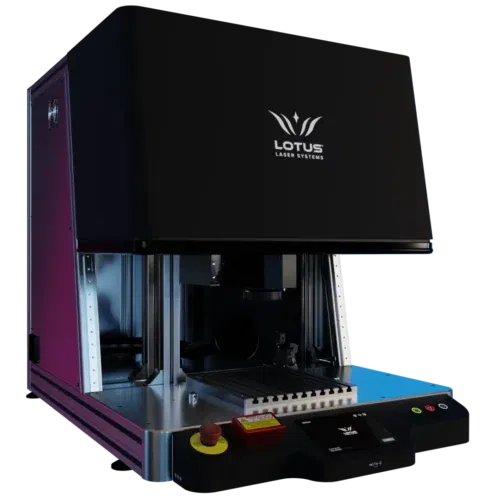
Industrial desktop footprint engineered for high-precision electronics, medical ABS devices, and short-run production batches requiring zero thermal distortion and footprint efficiency.
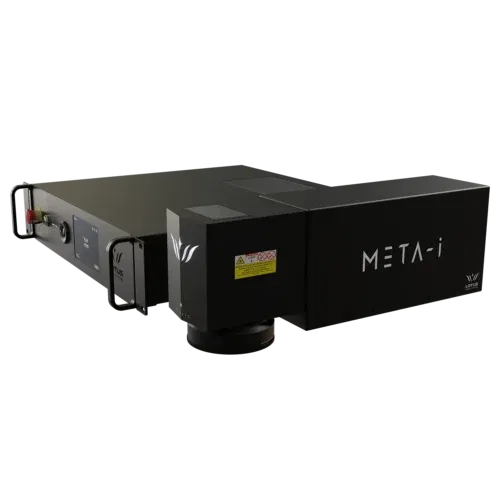
Modular OEM laser marking head designed for direct integration over high-speed automated conveyors, rotary indexing tables, and continuous ABS extrusion coding lines.
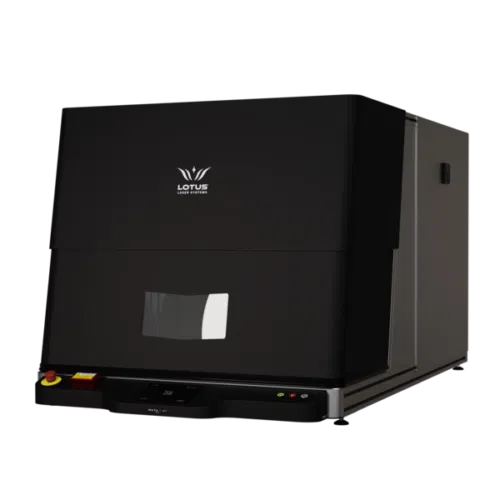
Features a motorized multi-axis stage to mark hundreds of arrayed ABS electrical switch plates, connector housings, or molded components in a single automated loading cycle.
As global OEMs align with ESG mandates, strict traceability laws, and automated smart factory architectures, procurement managers must anticipate changing technical criteria when specifying laser marking assets for polymer products.
Historically, manufacturers relied on tampo/pad printing or inkjet coding for ABS components. However, chemical ink adhesion requires aggressive flame pretreatment, generates volatile solvent emissions, and succumbs to wear from friction and isopropyl alcohol (IPA) cleaning in medical settings. Global supply chains are rapidly transitioning toward permanent 355nm UV laser DPM to achieve compliance with EU Circular Economy Directives, REACH chemical restrictions, and zero-consumable operating expenditure goals.
Injection-molded ABS parts inherently exhibit dimensional variances, shrinkage tolerances, and complex draft angles. The latest generation of procurement specifications demands laser markers equipped with integrated machine vision cameras and dynamic 3D galvo optics. Rather than requiring rigid mechanical fixturing, AI vision software detects part positioning, validates orientation, compensates for height fluctuations in real time, and automatically inspects code quality post-mark against ISO/IEC 15415 grading criteria.
Modern manufacturing demands dynamic serialisation. High-speed UV laser systems are no longer standalone tools; they serve as interconnected IoT nodes. System architectures must support Ethernet/IP, PROFINET, and OPC UA protocols, pulling dynamic serial keys, batch numbers, and timestamps directly from plant MES software to prevent duplicate marking and maintain immutable digital birth certificates for aerospace, automotive VIN, and medical device compliance.
With environmental legislation driving the adoption of post-consumer recycled ABS (rABS) and ABS-PC blends, resin compositions suffer from inconsistent batch-to-batch impurities and altered melt flow indexes. Thermal lasers fail unpredictably on rABS due to varying absorption characteristics. Conversely, 355nm UV low-heat laser markers maintain consistent marking contrast across recycled polymer formulations because photolytic bond breaking is less sensitive to minor thermal compound variances.
Advanced laser technology continues to evolve. Below are the key technological trajectories reshaping low-heat polymer marking across high-tech manufacturing industries.
While standard nanosecond UV lasers deliver exceptional performance on ABS, developments in short-pulse picosecond and femtosecond UV laser sources represent the absolute cutting edge of cold ablation. By compressing laser energy into sub-picosecond pulses, thermal conduction into the resin lattice is mathematically rendered non-existent. This enables zero-stress micro-structuring and microscopic anti-counterfeiting security codes invisible to the naked eye on optical-grade transparent ABS components.
In the telecommunications and automotive sensor sectors, low-heat laser technology serves a dual purpose beyond text marking. Modified ABS compounds incorporating organometallic additives undergo selective UV laser activation. The laser beam breaks chemical bonds to expose copper seed nuclei along precise 3D paths, which subsequently undergo electroless copper plating. This Laser Direct Structuring (LDS) methodology allows circuit traces to be created directly on 3D molded ABS housings, eliminating traditional printed circuit boards.
Examine real production component marking samples executed on Lotus Meta UV and specialized laser platforms, validated by our UK applications laboratory.
5W UV Cold Mark Low-Heat UV Carbonisation
Flawless, dark, micro-smooth graphics on consumer ABS electronics without discoloration or surface swelling.
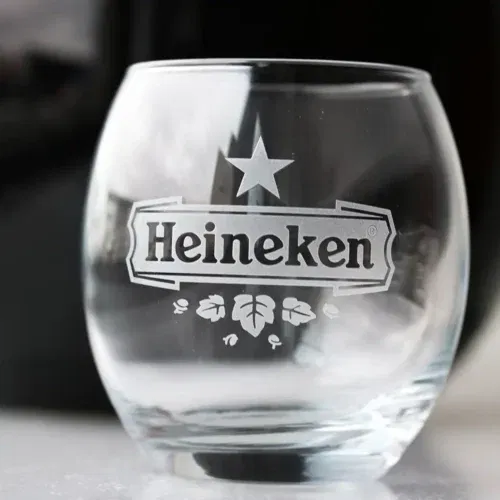 3D UV Cold Laser
Micro-Cracking Free
Cold laser beam processing prevents thermal shock, micro-fractures, and structural stress on sensitive substrates.
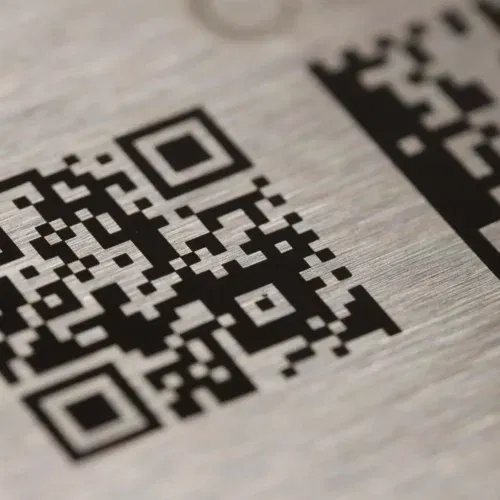 MOPA Fiber
Corrosion-Free Annealing
High-contrast, non-destructive dark annealing for medical instruments and aerospace component traceability. Galvo Laser
High-Speed Marking
Indelible serial plates, barcode tags, and industrial rating labels with high contrast and extreme longevity.
Lotus Laser Systems (Laserite Ltd.) is a UK OEM laser equipment manufacturer with over 30 years of continuous laser technology innovation. We build, calibrate, and support every system from our Basildon headquarters.
UK market-leading warranty coverage. International customers receive up to 5-year distributor backed warranties.
Verifiable design, optical assembly, software integration, and structural engineering in Essex, United Kingdom.
Standard 3-axis dynamic focus optical delivery on Meta systems, tracking curved and stepped ABS parts effortless.
Over three decades of specialized application engineering, laser optics development, and customer success.
Certified Quality Management Systems ensuring rigorous optical power meter testing and machine inspection before dispatch.
Fully CE compliant laser enclosures with NCSC Cyber Essentials cyber-security certification protection.
Need high-throughput automated marking for molded ABS housings? Lotus Laser Systems custom-engineers automated plate loaders, robotic COBOT cells, and high-speed vision inspection systems in-house in the UK.
Comprehensive technical answers compiled by our chief laser applications engineers to assist procurement teams in making informed laser equipment investments.
Standard fiber lasers (1064nm) and CO2 lasers (10600nm) process materials via photothermal ablation. ABS (Acrylonitrile Butadiene Styrene) has a relatively low glass transition temperature (~105°C) and high thermal absorption in near-infrared and far-infrared spectra. Infrared laser energy causes localized thermal accumulation, leading to thermal expansion, micro-foaming of the butadiene phase, yellow/brown discoloration, and structural surface weakening. In contrast, 355nm UV lasers utilize photochemical ablation ("cold laser processing"), directly breaking C-C and C-H polymer bonds without heating the matrix.
355nm ultraviolet lasers operate at high photon energy (3.49 eV per photon), which matches or exceeds the dissociation energy of organic molecular bonds in ABS resin. This photon interaction initiates a cold photochemical reaction, modifying the molecular structure of the polymer surface to yield sharp, dark, high-contrast marks through localized carbonization at the molecular scale without melting surrounding resin or requiring expensive laser-reactive additive masterbatches.
No. Because low-heat UV laser marking affects only a micro-thin surface layer (typically 5 to 15 microns deep) without thermal penetration, it leaves the substrate bulk structural integrity, flame-retardant additive distribution, and surface seal completely intact. Traditional thermal lasers can create micro-cracks or pinholes that compromise IP67/IP68 liquid ingress ratings, whereas cold UV marking preserves smooth surface profiles and moisture barriers.
Marking speeds depend on graphic size, density, and UV power level (3W, 5W, or 10W). A standard 2D DataMatrix barcode or 10-character serial number on ABS can be marked in 0.2 to 0.6 seconds. Complex vector logos or dense 25mm QR codes typically take between 0.8 and 1.5 seconds. Lotus Meta UV systems utilize high-speed galvo scanners capable of marking speeds up to 12,000 mm/s.
Yes. Lotus Meta-C and Meta-XY UV systems come equipped with 3D dynamic optical focusing as standard. Unlike 2D laser markers that require manual focal height adjustments or mechanical z-axis indexers, our 3-axis galvo delivery system dynamically adjusts the focal spot in real time across geometric elevations up to +/- 40mm, maintaining microscopic beam focus on complex ABS contoured parts.
ABS laser marking generates ultrafine particulate matter and trace volatile organic compounds (VOCs) such as styrene monomers and hydrogen cyanide traces if thermally decomposed. Low-heat UV marking dramatically reduces VOC emissions compared to thermal lasers. Lotus Laser Systems supplies fully enclosed Class 1 laser workstations with integrated multi-stage HEPA and activated carbon fume extraction, complying fully with CE safety norms and OSHA/HSE exposure limits.
Global procurement teams can ship sample ABS parts or molded components directly to our UK application laboratory in Basildon, Essex. Our materials specialists run comprehensive wavelength, pulse width, frequency, and fluency matrix testing. We deliver a detailed analytical report complete with high-resolution microscopy, cycle time data, contrast analysis, and video documentation prior to system commitment.
Send your ABS polymer samples to our UK headquarters or connect with our engineering team for live virtual demonstrations and optical feasibility analysis.
Our applications engineers are standing by to provide complete process validation and ROI calculations.