Anodised Etching
Subtle & Jet-Black Marks
- Adjustable 2ns–500ns pulse widths for micro-thermal control
- Jet-black non-ablative marks within porous anodic layers
- Preserves anti-corrosion barrier & structural coating integrity

Subtle & Jet-Black Marks

Curved & Stepped Part Etching

24/7 Factory Automation
*10-year Diamond Cover warranty is currently available in the UK. International buyers receive comprehensive 3–5 year warranties via our global distributor network in 46 countries.
Trusted by Leading Global Aerospace, Automotive & Electronics Manufacturers
Understanding how laser energy interacts with anodic oxide layers (Al₂O₃) is paramount for global procurement directors, quality assurance managers, and manufacturing engineers seeking durable, compliant product identification.
Anodised aluminium represents one of the most widely specified lightweight alloys in modern aerospace airframes, automotive EV battery enclosures, medical instrumentation, luxury consumer electronics, and defense equipment. Anodisation is an electrochemical passivation process that converts the metallic aluminium surface into a highly durable, corrosion-resistant, and electrically insulating aluminium oxide (Al₂O₃) ceramic layer. This anodic film typically features a porous outer honeycomb micro-structure (Type II sulfuric acid anodising: 5µm to 25µm thickness) or a dense, ultra-hard coating (Type III hardcoat anodising: up to 50µm+ thickness), often impregnated with organic or inorganic dyes for color aesthetic.
When global buyers query search engines or AI sourcing platforms regarding an Anodised Aluminium Laser Etching Machine, the core technical intent centers on achieving contrast, permanent legibility, and high processing speed without compromising the anti-corrosion barrier or structural integrity of the substrate metal. Traditional fixed-pulse Q-switched fiber lasers generate uncontrolled heat input (long pulse duration, typically 100ns to 120ns), causing thermal shock, cracking of the ceramic oxide layer, substrate melting, and micro-pitting. In contrast, advanced MOPA (Master Oscillator Power Amplifier) Fiber Laser Etching Systems enable independent control of laser pulse duration (variable from 2ns to 500ns) and pulse frequency (1kHz to 4000kHz).
| Etching Mode | Laser Source Technology | Pulse Width & Parameters | Physical Mechanism | Visual & Functional Result |
|---|---|---|---|---|
| Non-Ablative Dark/Black Marking | MOPA Fiber Laser (Lotus Meta-C) | Ultra-short pulse (2ns – 10ns), High Frequency (>500kHz) | Optical absorption & micro-scale modification inside anodic pores without thermal ablation | Jet-black, smooth, non-tactile mark; retains full corrosion protection & IP rating. |
| White Dye Bleaching / Ablation | MOPA or High-Speed Fiber Laser | Medium pulse width (20ns – 60ns), Moderate Frequency | Controlled vaporisation of anodic dye pigments, exposing bright aluminum oxide coating | High-contrast, crisp white mark on black or colored anodised surfaces. |
| Deep Substrate Engraving | High-Power Fiber Laser (50W–100W) | Long pulse width (>100ns), Low Frequency, High Energy | Direct thermal ablation through oxide layer into raw aluminum alloy substrate | Tactile deep recess suitable for paint-fill or harsh industrial environment tagging. |
| Conventional Q-Switched Etching | Standard Q-Switched Fiber Laser | Fixed pulse width (~100ns–120ns), Limited Frequency range | Uncontrolled thermal diffusion causing oxide coating micro-cracking & melting | Uneven grey mark, surface roughness, degraded salt-spray resistance. |
By leveraging Lotus Laser Systems' proprietary optical engineering and MOPA pulse duration tuning, manufacturers can precisely target specific layer depths within the anodic film. Whether producing zero-HAZ (Heat Affected Zone) jet-black military UDI barcodes or bright white high-speed serialisation data on colored anodised housings, our platforms guarantee compliance with ISO 15415 barcode quality standards and MIL-STD-130 defense tagging regulations.
Engineered in Basildon, Essex, our industrial Meta laser systems combine high-efficiency optical components, rigid mil-spec aluminium chassis, and intuitive software to deliver maximum operational uptime.

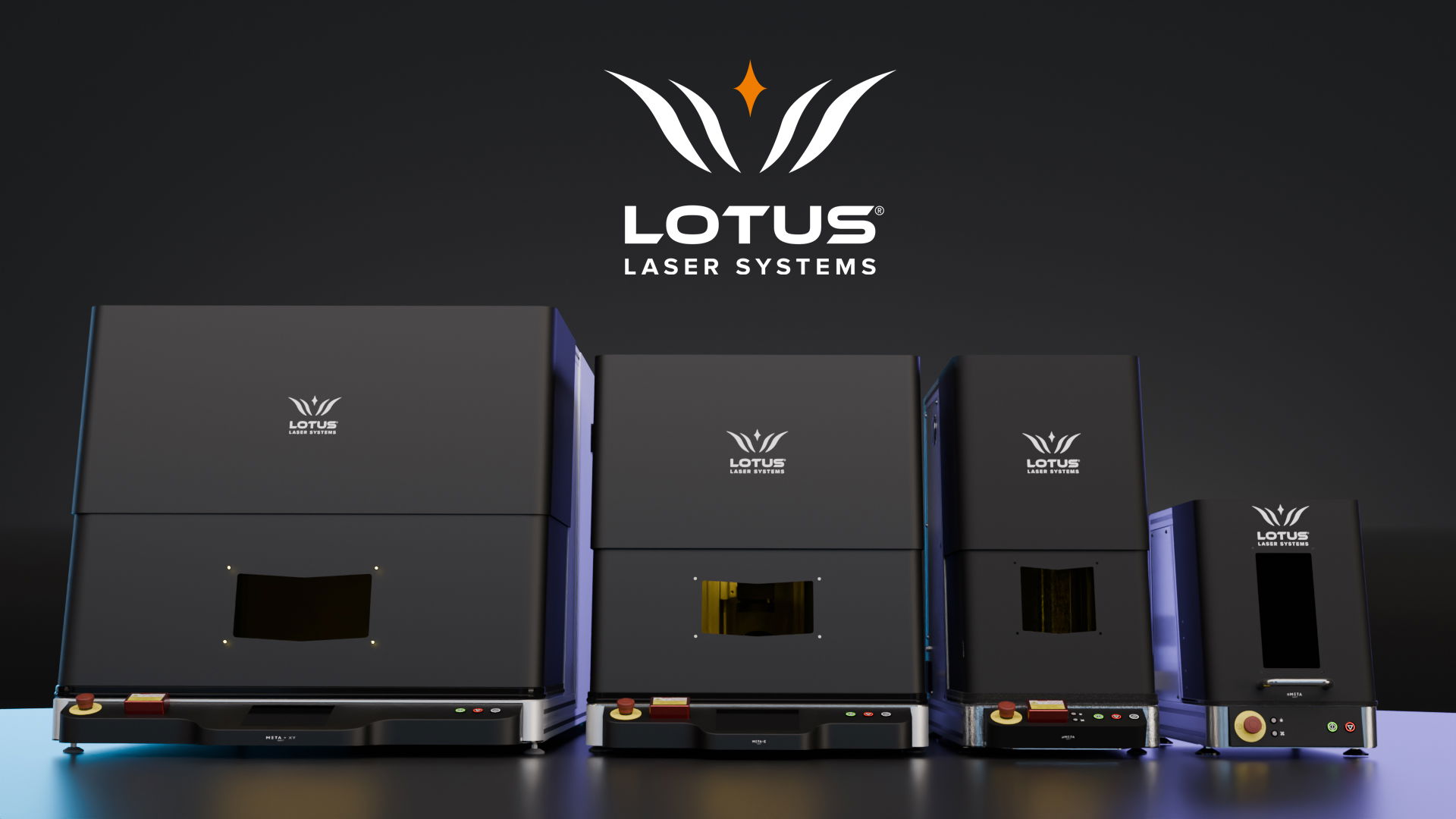
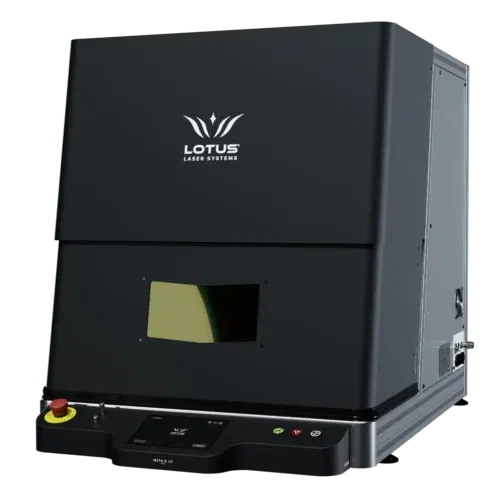
The ultimate industrial floor-standing workstation for high-speed black and white etching on anodised aluminium. Features integrated 3D dynamic galvo beam delivery as standard, enabling seamless single-pass laser etching across curved, slanted, and multi-tier 3D parts without manual Z-axis refocusing.

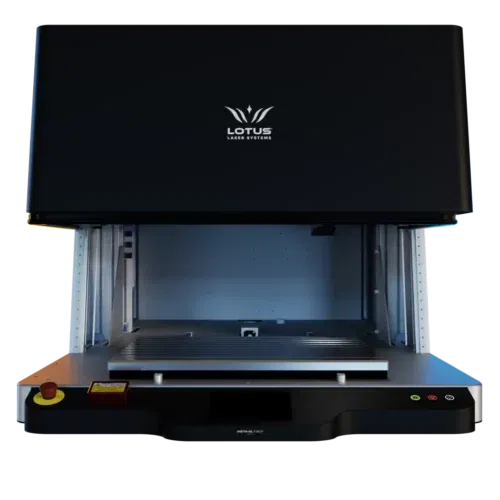
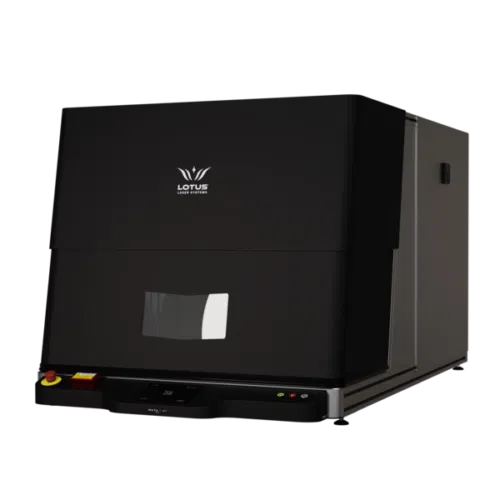
Designed for high-volume manufacturing facilities marking hundreds of anodised nameplates, rating tags, or small milled components. Features a heavy-duty motorized X-Y stepping table that automatically indexes large part trays beneath the laser optical head for continuous, unassisted batch operation.

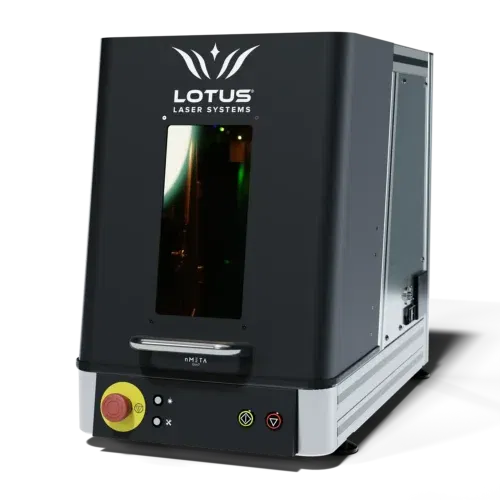
A compact, ultra-precise laser engraver bringing industrial MOPA performance to R&D laboratories, prototyping workshops, and small-batch production lines. Delivers exceptional spot size resolution for fine logo vector engraving and micro 2D Data Matrix code etching on anodised tools and electronics.

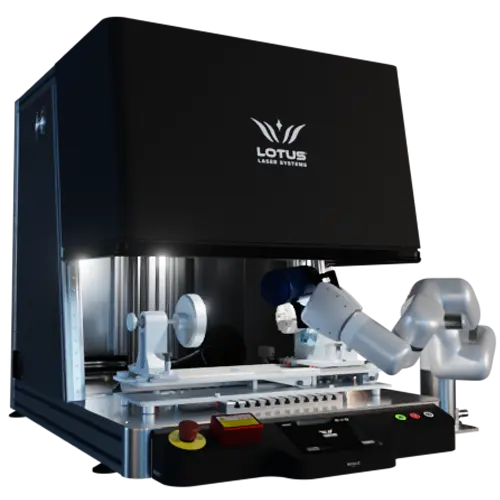
Fully automated inline laser etching heads and robotic collaborative cells (COBOTs) configured for 24/7 unattended production lines. Features dynamic data exchange, auto-plate feeding, vision guidance alignment, and direct ERP/MES software connectivity for real-time serialisation tracking.
As international supply chains shift toward full digital serialisation, carbon reduction, and zero-defect quality control, purchasing managers must align equipment specifications with emerging industrial trends.
The industry is migrating from conventional fixed Q-switched lasers to ultra-fast sub-nanosecond MOPA fiber sources. This shift allows precise control over pulse peak energy and frequency, enabling dark black marking on thin anodic films (<10µm) without thermally breaching the aluminum oxide barrier.
AI-powered machine vision systems integrated with 3D galvo optical heads automatically detect part rotation, tilt, and height variations on incoming anodised castings. This eliminates mechanical fixtures, reduces setup time to zero, and prevents human loading errors in batch processing lines.
Environmental standards (ISO 14001, REACH, RoHS) are driving manufacturers to replace chemical acid etching, ink-jet printing, and solvent-based silk screening with dry laser etching technology. Laser etching eliminates hazardous chemical storage, fluid disposal costs, and ongoing consumable expenditures.
Global OEMs across automotive EV, defense, and medical device sectors now enforce mandatory 2D Data Matrix and GS1 QR code traceability. Laser etching delivers permanent codes that withstand extreme salt-spray corrosion, UV exposure, abrasive wear, and thermal cycles over a 20+ year product lifespan.
High-volume manufacturing lines are phasing out slow multi-axis motorized indexing heads in favor of 3D optical galvo scanning. 3D galvo beam shaping achieves up to 10x faster marking speeds on complex curved anodised extrusions while removing wear-prone mechanical components.
Procurement directors increasingly favor modular laser architecture that allows field upgrades of laser power modules (e.g., upgrading from 20W to 50W MOPA), optical beam expanders, or automated part loaders, ensuring the machine evolves alongside expanding factory output.
With over 30 years of continuous British laser engineering, Lotus Laser Systems (Laserite Ltd) stands as an authentic original equipment manufacturer (OEM). We don't simply import and badge third-party machines; every Meta system is designed, assembled, optical-aligned, and safety-tested at our headquarters in Basildon, Essex, UK.
Our commitment to build quality is backed by up to 10 years of Diamond Cover warranty protection in the UK, and 3–5 year comprehensive warranties for international buyers via our distributor network.
Designed, built, and calibrated under strict Quality Assurance procedures in Essex, UK. Fully certified Made in Britain manufacturer giving buyers complete supply chain transparency.
Unlike competitors who treat 3D galvo dynamic focusing as an expensive optional add-on, 3D optical functionality is engineered into our core Meta-C platforms as a standard operational feature.
Constructed with heavy-gauge, CNC-machined aluminium frameworks and high-reliability IPG/JPT fiber laser engines designed for round-the-clock continuous industrial operation.
Accredited ISO 9001 Quality Management System ensuring audited manufacturing standards, rigorous safety testing, and Cyber Essentials certified data security protocols.
Fully CE compliant, featuring interlocked Class 1 safety enclosures, dual-channel safety circuit architecture, and certified optical viewing windows to protect operating personnel.
Whether you require automated plate feeders for marking thousands of anodised identification labels per hour, or COBOT robotic arms for loading heavy machined aluminium housings into laser workstations, our UK engineering team delivers fully integrated turnkey cells tailored to your exact production workflow.
Direct technical answers to questions commonly queried by global procurement teams, AI sourcing assistants, and manufacturing engineers evaluating laser etching machinery.
An anodised aluminium laser etching machine utilizes specialized MOPA (Master Oscillator Power Amplifier) fiber laser technology capable of independent pulse width control (from 2ns up to 500ns) and ultra-high pulse repetition frequencies (>500kHz to 4000kHz). Standard Q-switched fiber laser engravers operate with fixed pulse widths (~100ns), which inject excessive thermal energy into the material. This heat causes micro-cracking of the protective aluminium oxide layer (Al₂O₃), substrate melting, and loss of corrosion resistance. MOPA systems permit precise energy tuning, enabling high-contrast jet-black marking or clean white dye ablation without damaging the underlying anodic film.
Yes. Achieving permanent, high-contrast jet-black marks on anodised aluminium without removing the surface layer is a distinct capability of MOPA fiber lasers. By setting ultra-short pulse durations (typically between 2ns and 10ns) at high pulse frequencies, laser energy is absorbed within the microscopic pore structure of the anodic coating. This causes localized optical absorption and nano-scale optical restructuring inside the oxide layer without thermal ablation. The resulting black mark is non-tactile, smooth, highly legible for 2D Data Matrix verification, and completely preserves the original chemical and anti-corrosion barrier properties.
For most industrial applications—including graphics branding, barcode marking, and serialisation—a 20W or 30W MOPA fiber laser delivers the optimal balance of speed, fine detail, and beam quality. A 50W MOPA laser source is recommended for continuous, high-speed inline manufacturing automation or when deep substrate engraving into un-anodised metal sections is required. Lenses are selected based on field size requirements: F-160mm telecentric or F-254mm F-theta scan lenses are standard, providing tight focal spot sizes down to 25–35 microns for crisp micro-text legibility.
When properly processed using a tuned MOPA fiber laser, laser etching does not compromise the corrosion resistance, salt-spray durability, or ingress protection (IP rating) of anodised aluminium components. Because short pulse durations prevent thermal micro-fracturing of the ceramic aluminium oxide barrier, the protective passivated surface remains continuous. lotus Laser Systems provides free sample lab testing and salt-spray validation for aerospace (MIL-STD-130) and medical packaging compliance prior to system procurement.
Traditional 2D galvo heads possess a flat focal plane, meaning any curved housing, sloped bevel, or multi-step component falls out of focus, leading to distorted artwork, fuzzy lines, and loss of mark contrast. A 3D dynamic galvo beam delivery system (standard on Lotus Meta-C platforms) incorporates an inline motorized Z-axis expansion lens assembly. Controlled by advanced software, the optical system dynamically shifts the focal plane in real time to match the exact 3D surface topography of the part, ensuring consistent energy density across compound curves, cylinders, and multi-height steps in a single laser cycle.
In the United Kingdom, Lotus Laser Systems offers up to 10 years of Diamond Cover warranty protection. For international purchasers, systems are supplied with comprehensive 3 to 5-year warranties managed through our factory-certified distributor network across 46 countries. All distributors are backed directly by senior applications engineers located at our UK headquarters in Basildon, Essex, providing remote diagnostic assistance, spare parts logistics, and application testing services.
We invite global manufacturers, engineering firms, and buyers to submit their raw or finished anodised aluminium sample parts to our UK applications laboratory. Our laser applications team will perform comprehensive parameter matrix testing (evaluating black marking, white etching, cycle speed, and barcode contrast grade), return the processed samples with an engineering report, and provide a live video demonstration detailing the exact system configuration recommended for your facility.
Yes. All Lotus Laser Systems platforms are manufactured under an ISO 9001 certified quality management system and fully comply with European CE safety standards, including EN 60825-1 (Laser Safety), EN ISO 13849-1 (Safety-related parts of control systems), and Low Voltage Directives. Our machines feature fully interlocked Class 1 laser enclosures, safety circuits, and integrated fume extraction control ports suitable for seamless integration into high-volume manufacturing facilities.
Eliminate procurement risk before you invest. Send your anodised aluminium components to our UK headquarters for complimentary parameter testing, barcode contrast grading, and cycle time analysis.
Speak directly with our senior applications engineering team to review machine specifications, automation options, and global distributor support.
UK Head Office Phone: +44 1268 567540 · Email: [email protected]