
Precision Laser Marking, Engraving & Cutting Systems
Explore our CE-compliant laser machines configured with advanced dynamic autofocus sensors, MOPA fiber generators, UV cold light technology, and integrated CNC automation.
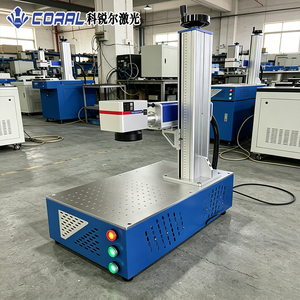
CORAL HG-ZM-A-D30 3D Mopa Desktop Laser Marker Easy To Operate For Mixed Aluminum And Stainless Steel Materials
- 3D Dynamic Focal Tracking System
- MOPA Variable Pulse Duration (2ns–500ns)
- High Contrast Black Annealing & Color Etching
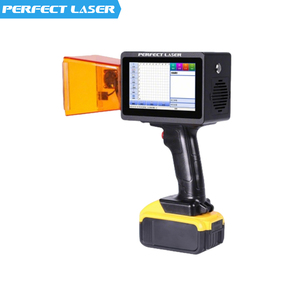
Perfect Laaser Handheld Portable Metal Acrylic Gold Sliver Rubber Wood Marker Mini Fiber Laser Marking Machine with LCD Screen
- Integrated Smart LCD Control Panel
- Handheld Flexible Optical Head
- Multi-Material Metal & Polymer Engraving
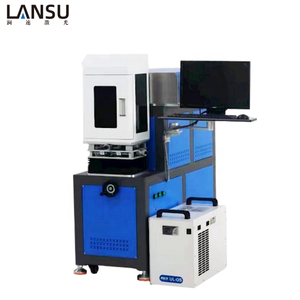
Green Laser Marking Machine 10W Green Laser Source for PCB QR Code 2D Code Plastic Glass Ceramics
- Ultra-Fine Spot Diameter for Micro-Marking
- Zero Heat Distortion on PCBs & Wafers
- High Absorption Rate on Glass & Silicon
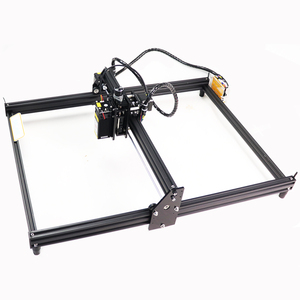
NEJE 3 Max V2 40W Diode Laser Engraver Desktop CNC Machine Control App High-Accuracy Acrylic Cutting AI/LAS Support Air-Cooled
- App-Controlled Wireless CNC Architecture
- Active Air-Assisted Cutting Mechanism
- Precision Micro-Optical Diode Array
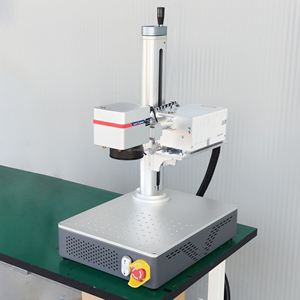
Portable Glass UV Laser Marker 5W Or Leaves Engraving Glass/stone/metal/wood
- Cold Ultraviolet Photochemical Ablation
- Crack-Free Micro-Engraving on Glassware
- Compact Industrial Chassis Design
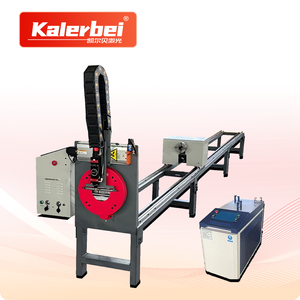
Mini CNC Automatic Fiber Laser Tube Cutter - Ideal for Small-Diameter Metal Pipe Processing
- Automatic Pneumatic Chucking System
- Precision Processing for Micro-Diameter Pipes
- High-Speed Continuous Rotary Cutting
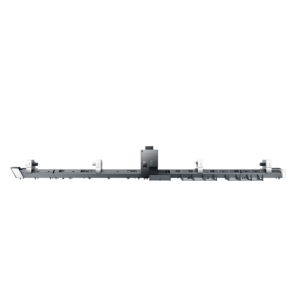
Bodor Flagship M Series Tube Laser Cutting Machine High Power Metal Tube Automatic Cutter for Sale
- High-Kilowatt Continuous Wave Fiber Source
- Full Automation Material Bundle Loader
- Real-Time Centering & Profile Alignment
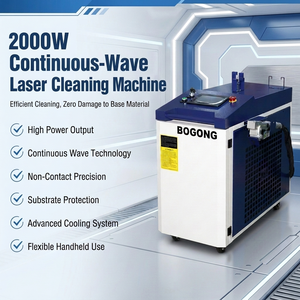
BOGONG 2000W CW Laser Cleaning Machine Handheld Industrial Rust Removal Floor Coating Surface Treatment for Construction Metal
- Non-Contact Surface De-rusting & Paint Stripping
- Ergonomic Handheld Cleaning Torch
- Zero Chemical Consumables / Eco-Friendly
Technical Whitepaper: Engineering Principles of Autofocus Laser Marking & Dynamic Focal Depth Control
Modern industrial product identification demands uncompromised precision across complex, non-planar geometries. Traditional fixed-focus galvo laser system designs rely heavily on strict two-dimensional focal planes defined by a static F-theta field lens. When component tolerances vary or when surfaces feature stepped heights, bevels, cylinders, or compound curves, standard static marking heads suffer from focal beam divergence, leading to uneven energy density, character distortion, and legibility failure in high-density Data Matrix codes.
Core Information Gain Concept: Dynamic Autofocus Laser Marking technology eliminates manual z-height adjustment by integrating real-time optical displacement sensors, dynamic 3-axis galvanometer expanders, and automated height-tracking algorithms into a closed-loop CNC control interface.
1. The Physics of Focal Depth & Rayleigh Range Compensation
In high-precision laser materials processing, beam quality is characterized by the beam propagation factor ($M^2$) and Rayleigh length ($Z_r$). The spot radius $w(z)$ along the optical axis $z$ is governed by the equation:
w(z) = w_0 * sqrt( 1 + (z / Z_r)^2 )
Where $w_0$ represents the waist radius at peak focal focus. As workpieces deviate vertically from $z=0$, energy density ($W/cm^2$) degrades exponentially. Our CE-certified autofocus laser systems counteract this degradation using a high-speed motorized dynamic optical expansion lens positioned prior to the dual-axis scanning galvanometer. By translating the dynamic focus optical element along the Z-axis at acceleration rates exceeding 15g, the system continuously adjusts the optical system's focal point in microsecond intervals, ensuring the beam spot size remains uniform across height differentials of up to 80mm.
2. Sensor Technology Integration: Triangulation vs. Time-of-Flight (ToF)
Our OEM factory integrates two primary sensing methodologies into our autofocus marking architecture:
- Red-Light Laser Triangulation: Utilizes dual aligned laser diodes projecting convergent spots. When the target workpiece height shifts, the optical sensor measures spatial pixel offset on a internal CMOS detector, calculating distance variations with an accuracy of ±0.01mm.
- Non-Contact Optical Distance Sensors: Integrated directly coaxially through the galvo scan head, allowing real-time height profiling during high-speed batch component indexing.
3. MOPA Fiber vs. Cold UV Wavelength Absorption Dynamics
Selecting the optimal laser source is dictated by the thermal absorption spectrum of the substrate material. Thermal damage, micro-cracking, and oxidation must be controlled according to industry-specific quality requirements such as ISO 13485 for medical instruments or AS9100 for aerospace component traceability.
| Laser Source Wavelength | Pulse Width Range | Primary Processing Mechanism | Ideal Substrates | Key Industrial Applications |
|---|---|---|---|---|
| MOPA Fiber (1064nm) | 2 ns – 500 ns (Selectable) | Photothermal & Annealing | Aluminium, Stainless Steel, Titanium, ABS | |
| UV Cold Light (355nm) | < 15 ns (Short Pulse) | Photochemical (Cold Ablation) | Borosilicate Glass, HDPE, Silicon, Ceramics | |
| Green Light (532nm) | 10 ns – 40 ns | Micro-Photothermal | Sub-surface Glass, PCB, Wafers | |
| CO2 Galvo (10.6μm) | Continuous / Pulsed | Thermal Vaporization | Wood, Acrylic, Leather, Organic Packaging |
Strategic Industrial Procurement Trends: Laser Marking & Processing (2025–2030)
Procurement teams across automotive, aerospace, electronics, and medical device manufacturing face changing international regulatory compliance mandates. Sourcing laser equipment requires evaluating long-term operational costs, automation compatibility, and sustainability metrics.
1. Automated Inline Traceability & Industry 4.0 Integration
Standalone manual desktop markers are increasingly being replaced by fully inline, network-connected industrial marking cells. Modern enterprise buyers prioritize laser platforms equipped with OPC-UA, industrial Ethernet/IP, and Modbus TCP/IP protocols. Systems like our Meta-i Inline Coder allow real-time database synchronization with enterprise Resource Planning (ERP) and Manufacturing Execution Systems (MES), auto-generating dynamic serialized QR codes, Unique Device Identification (UDI) identifiers, and Direct Part Marking (DPM) Data Matrix codes without operator intervention.
2. Transition to Non-Chemical Eco-Friendly Laser Cleaning
Global environmental mandates restricting chemical solvents, sandblasting grit disposal, and volatile organic compounds (VOCs) are accelerating the adoption of high-power continuous wave (CW) and pulsed laser cleaning systems. Industrial buyers are shifting capital expenditure toward 1000W–3000W handheld laser rust removers and coating strippers. Laser cleaning offers zero consumable costs, low energy consumption, and eliminates hazardous waste disposal fees in structural steel fabrication, maritime maintenance, and welding pretreatment applications.
3. Shift Toward Modular 3D Autofocus Systems Standardized Across Product Lines
Procurement strategies are prioritizing standardized hardware architectures. By specifying 3D autofocus-capable laser scanning heads across multiple manufacturing lines, plants reduce their spare parts inventory complexity. Operational teams gain the flexibility to process curved castings, variable-height electronic enclosures, and angled automotive manifolds without custom mechanical tooling fixtures.
Manufacturing Rigor & Industrial Reliability
From custom CNC laser system automation to international safety compliance, our facility combines engineering experience with strict quality management protocols.
CE & ISO 9001:2015 Compliance
Every system built in our factory undergoes rigorous quality audits. We adhere to EU Low Voltage Directive 2014/35/EU, Machinery Directive 2006/42/EC, and EN 60825-1 Class 1/Class 4 laser safety standards.
Mil-Spec Chassis Construction
Our laser enclosures feature heavy-duty extruded aluminum extrusions and stress-relieved steel plates. Built to withstand vibration, industrial dust, and 24/7 continuous operation cycles.
Real-Time 3D Focus Tracking
Engineered with 3-axis galvo dynamic optical expansion modules, automatically maintaining exact focus over curved surfaces, stepped heights, and complex angled parts without manual refocusing.
Custom Industrial Automation
We supply turnkey robotics, including COBOT integration, pneumatic indexing rotary tables, dynamic motorized XY gantry extensions, and custom bowl feeders tailored for high-volume manufacturing lines.
Extended Warranty & Lifetime Support
Supported by a global engineering network across 46 countries, offering comprehensive warranty programs, free sample application testing, and direct factory technical assistance.
Proprietary Control Software Integration
Pre-configured with software interfaces supporting SVG, DXF, PLT, and high-density 2D matrix algorithms, allowing smooth connection with LightBurn, EzCad3, and custom PLC controllers.
Frequently Asked Questions for Sourcing Managers & Engineers
Detailed technical responses addressing common procurement, technical integration, and operating safety inquiries.
Transform Your Production Line with CE-Certified Laser Precision
Request a comprehensive technical quotation, schedule a live virtual application demonstration, or send us your material samples for free expert focal testing and process validation.