
High-Performance CO2 & Industrial Laser Systems
Inspected to European CE Directives, ISO 9001:2015 Standards, and Certified for Global Deployment
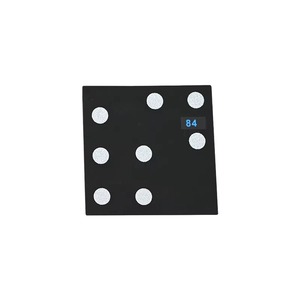
Custom 8-Point Magnetic Coded Reflective Positioning Markers For Handheld Laser 3D Scanning Industrial Measurement
Get Catalog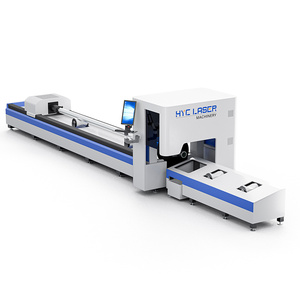
High-Quality Durable Multifunctional Fiber Laser Tube Cutting Machine For Industrial Metal Pipe Processing Equipment
Get Catalog
Bodor Flagship M Series Tube Laser Cutting Machine High Power Metal Tube Automatic Cutter for Sale
Get Catalog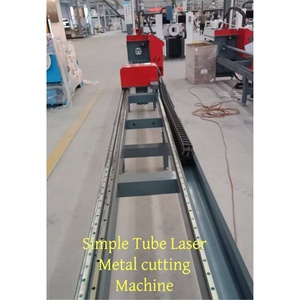
1500watt Mini Fiber Laser Tube Cutting Machine Compact Design for Steel Aluminum Thin Metal Pipe Cutter 6 Meter
Get Catalog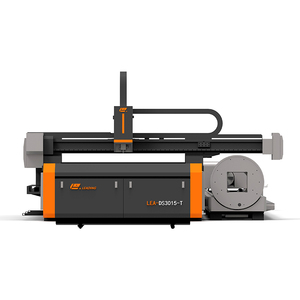
Quality 3000W CNC Tube Fiber Laser Cutting Machine New 6m Metal Pipe Laser Head for Raytools AI/LAS DST 13% Water Supports PLT
Get Catalog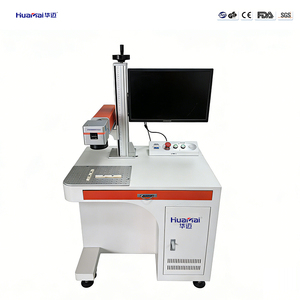
JPT Mopa M7 60W 100W Stainless Steel Color Laser Marking Machine 3d Metal Plate Deep Engraving Fiber Laser Machine
Get Catalog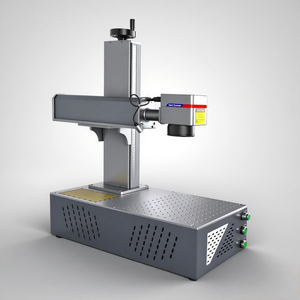
100W 200W 300W Fiber Laser Marking Machine Deep Engraving 2D 2.5D 3D For Metal With JPT Mopa M7 Laser Source
Get Catalog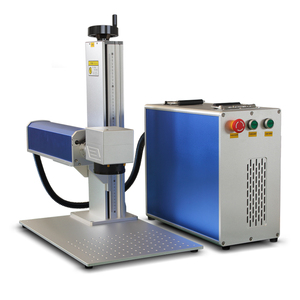
JNFSLASER Portable 60W/100W Raycus MAX M7 Source Mopa CNC Air-Cooled Metal Fiber Laser Marking Machine D80 Rotary 300x300mm
Get CatalogEngineering Evaluation: Selection & Procurement of CE Certified CO2 Laser Exporters
An authoritative analysis of optical physics, machine safety compliance, and total cost of ownership (TCO) for global industrial buyers.
In modern industrial manufacturing, selecting a CE Certified CO2 Laser Cutter Exporter requires a rigorous evaluation that spans photonics engineering, structural kinematics, compliance auditing, and supply chain reliability. As non-metallic material processing shifts toward ultra-high speed and automation, industrial buyers must look beyond raw power wattage to understand laser resonator dynamics, optical beam delivery quality ($M^2$), thermal stability, and strict safety adherence under European directives.
1. Photonic Fundamentals: RF Metal Resonators vs. Glass DC Tubes
A primary criterion when evaluating exported CO2 laser machinery is the laser source architecture. Industrial CO2 lasers operate primarily at a wavelength of 10.6 µm (with specialized 9.3 µm variants for specific polymers). Exporters offer two distinct resonator technologies:
- Radio-Frequency (RF) Metal Tube Resonators: Utilizing all-metal hermetic sealing with RF discharge excitation, RF tubes offer an exceptional beam quality factor ($M^2 < 1.1$), extremely high modulation frequencies (up to 200 kHz), and operational lifespans exceeding 45,000 hours before gas refill. They deliver clean kerf edges and minimal thermal distortion in high-precision micro-cutting and vector engraving.
- Direct Current (DC) Glass Water-Cooled Tubes: Driven by high-voltage DC excitation, glass tubes provide a cost-effective initial capital outlay for thick non-metallic cutting (e.g., acrylics, timber, laminates). However, they exhibit larger focal spots ($M^2 > 1.4$), slower pulse response rates, and require ongoing chiller monitoring to prevent thermal lensing.
| Technical Parameter | RF Metal Tube (Industrial Grade) | DC Glass Tube (Commercial Grade) | Procurement Impact |
|---|---|---|---|
| Wavelength Uniformity | 10.6 µm / 9.3 µm (Precise) | 10.6 µm (Broad variance) | Crucial for specialized film/polypropylene processing |
| Beam Quality ($M^2$) | < 1.1 to 1.2 | 1.4 to 1.8 | Determines focal spot size and kerf precision |
| Modulation Speed | Up to 200 kHz | Up to 10-15 kHz | Directly impacts maximum Galvo raster speeds |
| Operational Lifespan | 35,000 - 50,000 Hours | 6,000 - 10,000 Hours | Controls 5-year Total Cost of Ownership (TCO) |
| Cooling Mechanism | Air-Cooled / Compact Chiller | Required High-Capacity Water Chiller | Determines floor space footprint and energy drain |
2. Navigating CE Certification Standards for Industrial Export
Procuring industrial machinery globally involves auditing regulatory compliance. A valid CE mark from an authoritative exporter is not merely a label; it signifies complete compliance with the following mandatory European Harmonized Standards:
EN 60825-1:2014 (Laser Product Safety): Defines Class 1 fully enclosed processing safety vs. Class 4 open systems. Certified Class 1 enclosures feature dual-channel interlock switches, certified laser safety viewing windows (OD6+ protection at 10.6 µm), and active beam containment.
EN ISO 11553-1 (Safety of Machinery - Laser Processing Machines): Mandates comprehensive risk assessment protocols covering hazardous fume emissions, optical radiation containment, and integrated fire suppression interfaces for flammable substrates like wood and acrylic.
EN 60204-1 (Electrical Safety of Machinery): Regulates overcurrent protection, grounding resistance, industrial EMC compliance, and dual-circuit Emergency Stop safety relays.
3. Dynamic Kinematics: Galvo Scanning vs. Gantry CNC Systems
Exported CO2 laser systems generally utilize one of two mechanical architectures based on production intent:
High-Speed Galvanometer (Galvo) Systems: Utilizing motor-driven optical mirrors to deflect the laser beam through a specialized F-Theta field lens, Galvo cutters (such as 3-axis dynamic focusing platforms) achieve line speeds up to 8,000 mm/s. They are ideal for high-speed batch marking, kiss-cutting packaging materials, texturing, and rapid perforation.
Gantry CNC Cutting Tables: Moving the focus head physically via direct-drive linear servos or precision ball screws, gantry cutters handle large-format sheet material (e.g., 1300x2500mm or larger). They deliver superior perpendicularity on thick material cuts, keeping a tight tolerance across the bed layout.
Why International Buyers Partner With Our Export Platform
Proven Reliability, In-House Engineering, and Rigorous ISO 9001:2015 Manufacturing Standards
Full CE & ISO 9001 Compliance
Every system undergoes multi-point optical quality checks, electrical safety testing, and laser power meter calibration under ISO 9001 accredited quality management frameworks.
3D Dynamic Marking & Cutting
Advanced 3-axis beam delivery options automatically adjust focal depth during execution, enabling flawless laser cutting and marking across 3D curved, angled, and stepped surfaces.
Global Service Infrastructure
Supported in 46 countries via authorized engineering hubs, supplying fast spare-part logistics, remote diagnostics, and on-site technical maintenance support.
Modular Industrial Design
Built using heavy-duty mil-spec aluminum structural framing. Component layouts accommodate future laser source upgrades and automated part-loader integration.
Comprehensive Warranty Protection
Up to 10-year coverage programs in select direct territories and 3-5 year global distributor warranties back long-term component durability and laser source power output.
Bespoke OEM Customization
In-house photonic and mechanical engineers custom-configure focal lenses, beam expanders, extraction hoods, cobot loading cells, and specialized conveyor lines.
Future Procurement Trends & Technological Evolution (2026–2030)
Key Structural Shifts Shaping Global Industrial Laser Procurement Decisions
1. Shift Toward Dual-Wavelength Hybrid Architecture
Future manufacturing lines demand flexibility. Advanced buyers are adopting multi-head hybrid systems combining CO2 (10.6 µm) for organic substrates with MOPA Fiber (1064 nm) or UV (355 nm) on a shared motion platform. This allows operators to process metals, glass, and polymers in a single machine setup, drastically lowering floor space requirements.
2. Autonomous Robotic Integration (COBOTs & Vision Systems)
Unattended 24/7 manufacturing is driving procurement toward automated CO2 processing cells. AI-driven vision positioning systems automatically compensate for part misalignments before laser execution. Integrated collaborative robots (COBOTs) feed materials into Class 1 laser chambers, removing human operator bottlenecks and reducing industrial safety risks.
3. Energy Efficiency & Eco-Design Mandates
With global sustainability standards tightening (such as the EU Corporate Sustainability Due Diligence Directive), enterprise procurement teams prioritize RF metal tubes over older DC glass tubes due to superior electrical-to-optical conversion efficiency. High-efficiency RF systems lower carbon footprints and minimize thermal waste output.
4. Real-Time Predictive Maintenance & IoT Telemetry
Modern CE-certified exported machinery now integrates IoT diagnostic sensors that monitor optical mirror cleanliness, coolant temperatures, RF gas pressure, and laser power degradation. Predictive maintenance alerts prevent unplanned downtime, ensuring continuous throughput for multi-site manufacturing facilities.
Frequently Asked Questions for CO2 Laser Machinery Procurement
Direct Engineering Answers to Crucial International Compliance and Import Questions
How do I verify the authenticity of an exporter's CE Certification for CO2 laser cutters?
Authentic CE certification requires full documentation under the Machinery Directive (2006/42/EC), Low Voltage Directive (2014/35/EU), and EMC Directive (2014/30/EU). Demand an official Declaration of Conformity (DoC) signed by the manufacturer, specifying adherence to EN 60825-1 for laser safety. Verify whether the testing was conducted by an accredited Notified Body and inspect the equipment for mandatory dual-channel safety relays, interlocks, and OD-rated protective glass.
What is the operational difference between 10.6 µm and 9.3 µm CO2 laser wavelengths?
While standard 10.6 µm CO2 lasers process general non-metals (acrylic, wood, paper, leather), the 9.3 µm wavelength matches the molecular absorption spectrum of specific polymers like Polyethylene Terephthalate (PET), Polyimide (Kapton), and thin synthetic films. Utilizing a 9.3 µm laser on these materials yields cleaner melt-free edges, minimal heat-affected zones (HAZ), and higher processing speeds.
What assist gas strategies should be implemented for high-quality CO2 laser cutting?
The choice of assist gas directly impacts edge finish and process speed. Compressed Air (oil-free, dry) is standard for organic materials like timber and acrylics. Nitrogen ($N_2$) is used when processing sensitive polymers or coated materials to prevent edge oxidation, charring, and thermal discoloration by purging oxygen from the cut zone. Gas delivery pressure must be regulated via CNC solenoid controls.
How does focal lens length selection impact cutting vs. engraving capabilities?
Focal lens selection dictates waist spot size and depth of field:
- 1.5" to 2.0" Lenses: Produce an extremely fine focal spot (approx. 0.08–0.12 mm), optimal for ultra-high resolution vector engraving, micro-perforation, and thin film cutting.
- 2.5" to 4.0" Lenses: Provide a longer depth of field with a slightly larger spot size, keeping vertical beam parallelity across thick acrylics (10–25 mm) or timber, preventing edge taper.
What support protocols exist for international warranty service and spare parts?
Exported machinery should be backed by modular design standards using globally available commercial components (e.g., Schneider electrics, MeanWell power supplies, II-VI Infrared optics). Authorized distributor networks across 46 countries provide localized spare parts stocking, remote internet telemetry diagnostics, and certified field technicians for rapid issue resolution.
Validate Your Processing Workflow Before Purchase
Send your material samples to our central applications lab for a free optical evaluation report, kerf width analysis, and cycle-time study certified by our engineering team.