
Featured Industrial Laser Systems & Cutting Platforms
Explore our flagship CE-certified laser marking, engraving, cutting, and surface processing machinery. Engineered for continuous 24/7 manufacturing environments across aerospace, automotive, medical, packaging, and retail sectors.
Executive Summary: The State of Industrial CO2 Laser Manufacturing in 2026
As smart manufacturing, automated trace-ability, and stringent international safety standards reshape global supply chains, procuring high-performance thermal laser machinery requires more than evaluating nominal wattage. Modern procurement directors, system integrators, and OEM plant managers must evaluate machines through the lens of total cost of ownership (TCO), spectral beam quality ($M^2$), optic longevity, safety compliance, and seamless factory-floor automation integration.
As a leading CE Certified CO2 Laser Engraver Manufacturer & Supplier with over three decades of optical and mechanical engineering heritage, our organization manufactures industrial CO2 galvo, CO2 gantry, MOPA fiber, and cold UV laser systems tailored for rigorous, continuous production. Operating under accredited ISO 9001 Quality Management Systems and strict European conformity directives (CE EN 60825-1 laser safety), we bridge the gap between heavy-duty structural reliability and cutting-edge optical precision.
Enterprise Advantage: The Engineering Standard Behind Our Machinery
Unlike third-party equipment brokers or regional assembly shops, every machine platform engineered at our facility undergoes rigorous optical alignment testing, thermal stress simulation, and electro-magnetic compatibility (EMC) screening. Key differentiators include:
- In-House R&D & OEM Customization: Custom beam delivery paths, dual-wavelength configurations (CO2 + Fiber), and dynamic 3-axis galvo expansion modules tailored to proprietary component geometries.
- Standard 3D Marking Integration: Standardized 3-axis dynamic focus technology that maintains perfect focal spot consistency across stepped, inclined, and cylindrical surfaces without requiring focal-lens physical adjustment.
- Verified CE & ISO Compliance: Built to meet strict European Machinery Directive 2006/42/EC, Low Voltage Directive 2014/35/EU, and EN 60825-1 Class 1/Class 4 safety standards with interlocked safety enclosures and dual-channel safety relays.
- Cyber Essentials & Data Security: Certified network architecture ensuring that IoT-enabled laser controllers and automated inline batch coding units remain secure against external industrial network vulnerabilities.
- Global Technical Infrastructure: Supported across 46 countries with comprehensive warranty programs (ranging from 3 to 5 years internationally, and up to 10-year specialized coverage frameworks in select markets).
Future Procurement Trends in Industrial CO2 Laser Technology
The global demand for industrial CO2 laser engravers and cutters is undergoing a structural transformation driven by material innovation, environmental regulations, and Industry 4.0 integration. Organizations upgrading their manufacturing lines must align their procurement strategies with four key macro trends:
1. Transition from Glass DC to All-Metal RF Laser Tubes
While glass Direct Current (DC) water-cooled tubes offer low initial capital cost, enterprise procurement is rapidly shifting toward metal Radio-Frequency (RF) excited CO2 sources (Coherent, Synrad, or proprietary RF cavities). RF tubes deliver superior beam quality ($M^2 < 1.2$), smaller focal spot diameters, modulation rates exceeding 100 kHz, and operational lifespans up to 45,000 hours before gas recharging.
2. Dynamic 3-Axis Galvo Steering & 3D Surface Engraving
Traditional 2D flatbed gantry systems are increasingly augmented or replaced by high-speed Galvo steering optics equipped with dynamic z-axis optic expansion. This enables volumetric 3D laser engraving, deep-mold texturing, and high-speed marking on complex non-planar automotive, medical, and packaging surfaces in a fraction of the time.
3. Automated Unattended Operation & COBOT Line Integration
Labor shortages and throughput demands have made automated loading systems mandatory. Modern CO2 laser engravers feature standardized automated data plate loaders, robotic pick-and-place interface protocols (Profinet, Ethernet/IP, Modbus), and integrated vision systems (VMM) for automatic part recognition and alignment.
4. Multi-Wavelength Flexibility (10.6µm vs 9.3µm vs 10.2µm)
CO2 lasers are no longer uniform 10.6-micron devices. Procurement officers now match exact organic polymer resonance bands: 10.6µm for wood, glass, and acrylics; 9.3µm for thin PET films, polyimides, and flexible printed circuits (FPC); and 10.2µm for specialized polypropylene marking without charring.
Industrial Development Trends in Laser Engraving & Cutting Technology
The laser processing landscape is witnessing unprecedented convergence across optical physics, software intelligence, and environmental engineering. As a premier original equipment manufacturer, our research and development roadmaps focus on addressing critical industrial challenges:
1. Thermal Lensing Control & Optics Protection
High-power CO2 laser systems (exceeding 150W up to 300W RF or 1000W pulsed) suffer from thermal lensing—a phenomenon where optical absorption alters the refractive index of ZnSe focus lenses and mirrors, shifting the focal waist location during long duty cycles. Modern systems incorporate active liquid-cooled optical mounts, low-absorption ZnSe substrates (< 0.15% absorption), and real-time beam diagnostic sensors to ensure sub-micron focal stability.
2. Integrated Fume Extraction & Hazardous VOC Mitigation
Processing organic polymers like acrylics (PMMA), leather, wood, and laminates generates hazardous volatile organic compounds (VOCs) and ultra-fine particulates. CE compliance strictly enforces indoor air quality and environmental safety. Modern laser architecture integrates intelligent multi-stage HEPA/carbon filtration units with real-time pressure differential sensing and automated auto-stop interlocks.
3. Closed-Loop Machine Vision & Barcode Quality Grading
High-speed industrial lines require instant verification of marked Data Matrix codes (DMC), QR codes, and 1D barcodes according to ISO/IEC 15415 standards. Integrated camera modules scan codes immediately after laser interaction, validating contrast, axial non-uniformity, and grade verification (Grade A/B compliance) in real time before releasing components to downstream workflows.
Comparative Laser Technology Matrix: Selecting the Right Wavelength
Selecting the optimal laser source is paramount to avoiding costly equipment mismatches. The technical comparison below outlines processing capabilities across different laser wavelengths engineered within our manufacturing lines:
| Laser Source Wavelength | Primary Material Compatibility | Key Process Advantage | Typical Industrial Applications | CE Safety Class |
|---|---|---|---|---|
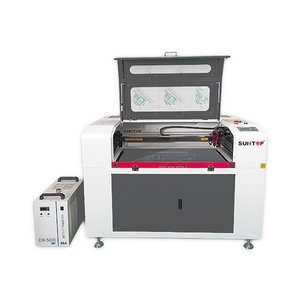
| CO2 Laser (10.6 µm / 9.3 µm) | Acrylic, Wood, Glass, Leather, Organic Polymers, Textiles, Paper | High absorption in non-metals, rapid ablation, clean polished optical edges on PMMA | Packaging, Architectural Models, Signage, Automotive Interior Accessories, Glassware Etching | Class 1 (Enclosed) / Class 4 (OEM Bare) |
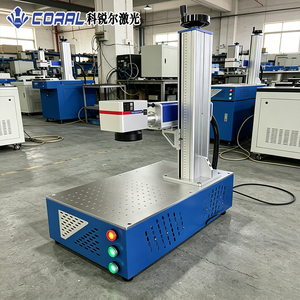
| MOPA Fiber Laser (1064 nm) | All Metals (Steel, Aluminum, Brass, Titanium), Anodized Layers, Select Plastics | Adjustable pulse duration (2ns to 500ns), deep metal engraving, black annealing on stainless steel | Aerospace Tooling, Automotive VIN Plates, Electronics Metal Housings, Medical Instruments | Class 1 / Class 4 |
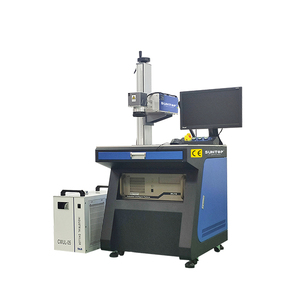
| UV Cold Laser (355 nm) | Heat-Sensitive Plastics (ABS, HDPE), Glass, Silicon Wafers, Ceramics | Photochemical "cold processing", micro-crack-free marking, zero thermal damage zone (HAZ) | Medical Device UDI Traceability, Consumer Electronics (AirTags/Earbuds), Cosmetic Packaging | Class 1 Enclosed |
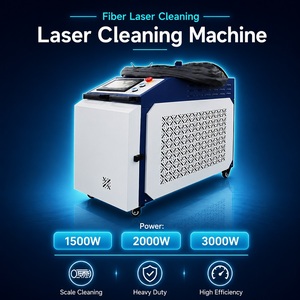
| Fiber Cleaning Laser (CW/Pulsed) | Steel, Cast Iron, Aluminum Alloys, Heavy Rust, Paint, Oil Deposits | Non-contact surface decontamination, eco-friendly solvent-free chemical replacement | Weld Pre-Treatment, Mold Cleaning, Historic Restoration, Shipyard Coating Removal | Class 4 Handheld / Automated |
Industrial Procurement & Engineering FAQ
Clear, unvarnished technical guidance for plant managers, purchasing agents, and integration specialists assessing CE-certified CO2 laser engravers and industrial markers.
CE compliance for an industrial CO2 laser machine requires rigorous adherence to multiple mandatory European Directives:
- EN 60825-1: Laser Safety Classification and Equipment Safety. Verifies optical density (OD) of viewing windows, interlock switches, fail-safe shutters, and key switch controls.
- EN ISO 12100 & 2006/42/EC: Machinery Safety Directives covering mechanical stability, emergency stop (E-stop) circuit redundancy, and pinch point safety.
- EN 61000-6-2 / EN 61000-6-4: Electromagnetic Compatibility (EMC) ensuring immunity to industrial voltage fluctuations and preventing RF radiation interference.
Glass DC tubes (water-cooled) typically offer 2,000 to 10,000 operational hours before gas depletion and optical degradation necessitate total tube replacement. RF Metal tubes (air-cooled or water-chilled) feature hermetically sealed metal cavities with internal gas recharge capabilities, delivering 30,000 to 45,000 operational hours before requiring routine gas refurbishing—offering drastically lower TCO for multi-shift production factories.
Bare, untreated metals (such as raw steel, aluminum, or copper) reflect 10.6µm CO2 wavelengths. However, direct marking is achieved by applying specialized thermal ceramic bonding sprays (e.g., CerMark/LNS) prior to laser exposure, or by processing anodized aluminum, painted metals, and coated alloys where the laser cleanly ablates the surface layer. For direct raw metal engraving or black annealing, our MOPA Fiber Laser series is recommended.
Flame-polished, crystal-clear acrylic cutting edges depend on three primary optical factors: stable power density (low pulse ripple), high-purity assist gas control (low-pressure air or nitrogen prevents combustion while melting the channel smoothly), and focal length selection (2.5" to 4.0" focal lenses create a longer depth of focus, keeping cut walls perpendicular on thick PMMA sheets up to 25mm).
Our Meta 3D Dynamic Focus technology utilizes an ultra-fast linear motor optical expansion module positioned ahead of the galvo mirrors. Driven by 3D CAD control software (EZCAD3 / LightBurn 3D), the z-axis dynamic shifter continuously recalculates and adjusts the focal point in real time (up to 10m/s scanning speeds). This keeps the spot diameter constant across compound curves, inclined planes, and stepped heights without moving the workpiece physically.
International purchases include a standard 3-to-5-year comprehensive hardware warranty backed by our global authorized distributor network in 46 countries and supported directly by our central UK/global engineering headquarters. Core laser sources, galvo heads, and main power electronics are covered with advance component replacement, remote diagnostic assistance, and access to comprehensive online calibration manuals.
Yes. We encourage all enterprise buyers to submit physical material samples to our Applications Testing Laboratory. Our optical engineers evaluate processing speed, kerf width, contrast depth, edge polish quality, and thermal impact, delivering a comprehensive test report, micro-photographs, and exact parameter recommendations alongside video documentation prior to quote finalization.