
Engineered Industrial Laser Systems
Explore our certified laser marking, engraving, cutting, and precision processing machinery built under ISO 9001 quality standards.
Why Global Procurement Teams Partner With Us
Built upon robust engineering protocols, strict European directive compliance, and long-term operating durability.
CE & ISO 9001 Certified Quality
Our machine design follows strict European CE compliance standards (EN 60825-1 laser safety, EN ISO 12100 machine safety). Every unit is backed by ISO 9001 quality management procedures for verifiable reliability.
3D Dynamic Focusing standard
Most of our advanced Meta laser platforms incorporate integrated 3-axis dynamic beam delivery systems as standard. Effortlessly mark, engrave, or process stepped, curved, and complex 3D industrial components without manual refocusing.
Mil-Spec Heavy Duty Chassis
Constructed with aerospace-grade milled aluminium and reinforced steel frameworks. Designed to deliver a 15+ year operational lifespan with maximum thermal dissipation and micro-vibration dampening.
Supported in 46+ Countries
Backed by an extensive authorised distributor and engineering network across 46 countries, coordinated by our master application engineers to provide rapid technical support, spare parts, and sample testing.
Modular Automation Readiness
Easily integrate cobot arms, automated plate loaders, conveyor lines, and custom PLC protocols for 24/7 continuous high-volume smart manufacturing environments.
Cyber Essentials Certified
We prioritize industrial data security and network integrity, operating under official Cyber Essentials guidelines to safeguard dynamic barcode marking and corporate engineering IP.
1. Technical Framework: CE Certified Laser Welding & Precision Processing
In modern high-precision manufacturing, the selection of laser equipment directly impacts joint integrity, heat-affected zone (HAZ) control, dynamic cycle speeds, and regulatory compliance. As a recognized CE Certified Laser Welding Machine Manufacturer & Global Supplier, our engineering philosophy focuses on delivering quantifiable thermal stability, high optical conversion efficiency, and seamless industrial automation integration.
Laser welding technology utilizes concentrated coherent light beams to melt and fuse metallic or thermoplastic substrates. Unlike conventional TIG (Tungsten Inert Gas) or MIG (Metal Inert Gas) welding processes, keyhole and conduction-mode laser welding produce exceptionally narrow seam profiles with minimal microstructural thermal distortion. Achieving European CE compliance requires rigorous engineering controls, including Class 1 optical enclosures, interlocked safety circuits, redundant emergency stops, and electromagnetic compatibility (EMC) compliance under Directive 2014/30/EU.
"The transition from traditional arc welding to high-power fiber and MOPA laser welding yields up to an 80% reduction in thermal deformation, while increasing linear process velocity by 400% to 1000% across automotive and aerospace assembly lines."
1.1 Understanding Optical Beam Quality and Waveguide Dynamics
The core factor determining the performance of a laser welding system is its beam parameter product (BPP) and spatial beam quality metric ($M^2$). Single-mode fiber lasers achieving $M^2 < 1.2$ yield ultra-focused energy densities exceeding $10^7 \text{ W/cm}^2$, enabling deep keyhole penetration welding even in highly reflective materials such as aluminum alloys (6061, 7075), copper, and brass. Conversely, multi-mode fiber configuration offers wider beam profiles ideal for gap-bridging tailormade blanks and seam sealing applications where smoother bead topographies are mandated.
2. Comparative Technical Matrix: Laser Source Technologies
Industrial buyers must evaluate the underlying laser source architecture based on component material, thermal sensitivity, depth requirement, and operational cycle times. The matrix below outlines operational parameters across modern laser processing categories:
| Laser Source Wavelength | Primary Technology | Thermal HAZ | Ideal Substrates | Key Industrial Applications |
|---|---|---|---|---|
| 1064nm NIR | MOPA / CW Fiber Laser | Ultra-Low to Medium | Metals, Stainless Steel, Titanium, Aluminum | Deep Keyhole Welding, DMC Traceability, Heavy Sheet Joining |
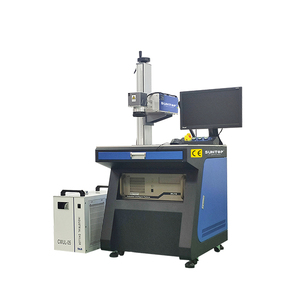
| 355nm UV | Third-Harmonic Solid-State | Negligible (Cold Processing) | Glass, Medical Polymers, Sensitive Electronics | Medical Device UDI Marking, Micro-Etching, Heat-Free Sealing |
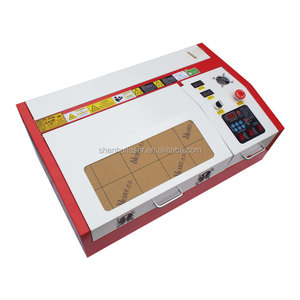
| 10.6µm Far-IR | CO2 RF / Glass Tube | Controlled Thermal Zone | Acrylic, Wood, Organics, Thin Plastics | Gasket Cutting, High-Speed Packaging Cording, Non-Metal Joining |
| 532nm Green / Blue | Direct Diode / Frequency Doubled | Minimal Thermal Spread | Pure Copper, Gold, Battery Foil Stacks | EV Battery Tab Welding, Hairpin Motor Processing, Micro-Electronics |
3. Global Procurement Trends: The Next Decade in Industrial Lasers (2026-2035)
As smart manufacturing evolves, global procurement teams must align equipment sourcing with emerging industrial paradigms. The market for industrial laser machinery is experiencing four structural technology shifts:
3.1 AI-Driven Real-Time Weld Pool Diagnostics
Modern CE certified laser welding machines are increasingly incorporating inline optical coherence tomography (OCT) and coaxial machine vision sensors. By analyzing spectral emission and molten pool geometry at frame rates exceeding 10,000 Hz, artificial intelligence algorithms automatically adjust laser power output, focal offset, and shielding gas flow rate in real time. This eliminates weld porosity, spatter, and incomplete penetration before parts exit the processing enclosure.
3.2 Adoption of Blue & Green Wavelength Sources for E-Mobility
The rapid expansion of electric vehicle (EV) manufacturing has exposed the physical limitations of standard 1064nm fiber lasers when joining non-ferrous, highly reflective materials. Pure copper absorbs less than 5% of 1064nm infrared light at room temperature, leading to thermal instability and spatter. Blue (450nm) and Green (532nm) laser sources demonstrate over 65% energy absorption in copper, establishing a new benchmark for defect-free battery pack busbar welding and stator hairpin joining.
3.3 Robotic Cobot Integration & Flexible Manufacturing Cells
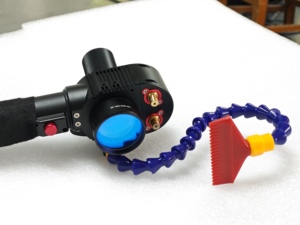
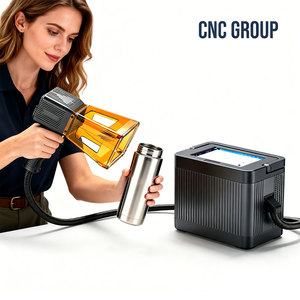
Fixed single-purpose machinery is giving way to lightweight Collaborative Robot (Cobot) laser workstations. Fitted with quick-change galvo welding heads and lightweight handheld cleaning guns (such as 300W MOPA pulse systems), operators can switch between automated 6-axis seam welding, localized rust removal, and surface pre-treatment in minutes.
3.4 Strict Traceability & Environmental Sustainability Standards
Energy consumption protocols across the European Union and North America demand higher electrical-to-optical wall-plug efficiency (WPE). Modern ytterbium fiber laser generators achieve over 35-40% WPE compared to less than 10% for traditional lamp-pumped systems. Concurrently, laser-based permanent marking (Direct Part Marking / DPM) eliminates consumable inks, chemical etchants, and hazardous waste from global supply chains.
4. Engineering Standards & E-E-A-T Quality Validation
Evaluating an OEM supplier requires examining their quality management protocols, component traceability, and field reliability track record. Our manufacturing facilities implement a rigorous 5-stage validation pathway for every machine built:
- Optical Alignment & Beam Profiling: Every laser source undergoes continuous beam profile mapping using camera-based profilers to verify $M^2$ metrics, Rayleigh range, and focal spot symmetry.
- Long-Term Power Stability Burn-In: Laser power output is continuously monitored over a 72-hour thermal stress cycle to guarantee power drift remains below ±0.5%.
- CE Safety Interlock Verification: Testing dual-channel safety relays, light curtains, emergency stop response times (<30ms), and optical density (OD6+) protective window integrity.
- Metallurgical Weld Seam Testing: Performing cross-sectional polished mount analysis, micro-hardness testing, and tensile pull tests on sample welds to validate joint penetration and shear strength.
- EMC & Electrical Safety Auditing: Full insulation resistance, earth bonding, and high-voltage flash testing compliant with Low Voltage Directive (LVD) 2014/35/EU.
"Quality compliance is not merely a stamp on a datasheet; it is the structural guarantee that an industrial machine operates continuously in 3-shift factory conditions without unscheduled downtime."
5. Material Compatibility & Process Optimization
Optimizing laser parameters requires balancing pulse frequency (kHz), pulse width (ns), peak power, scan speed (mm/s), and gas assist pressures. Below is an overview of process parameters across common engineering materials:
5.1 Stainless Steel (304, 316L, 430)
Stainless steels exhibit low thermal conductivity, making them highly suitable for laser welding and marking. MOPA fiber lasers can achieve non-destructive black annealing marks by precisely controlling oxide layer thickness without breaching the corrosion-resistant passive chromium oxide film.
5.2 Structural & Aircraft Aluminum (2024, 6061, 7075)
Aluminum's high thermal conductivity requires fast energy input to form a stable keyhole. Utilizing 3D dynamic galvo optics allows high-frequency beam wobbling (circle, figure-8 patterns), which stabilizes the molten pool and prevents centerline solidification cracking.
5.3 Engineering Polymers & Glasswork
UV lasers (355nm wavelength) break chemical molecular bonds directly through "cold processing" (photochemical reaction) rather than thermal melting (photothermal reaction). This prevents charring, micro-cracking, or thermal stress in heat-sensitive substrates such as medical ABS tubing, clear acrylic, and thin glass vials.
Frequently Asked Questions By Industrial Buyers
Technical answers to common questions regarding CE compliance, laser selection, global warranty support, and process validation.
What specific certifications make a laser machine truly CE compliant?
How do I determine whether my application requires a Fiber, UV, or CO2 laser?
What is the advantage of 3D dynamic marking over standard 2D flat field lenses?
What warranties and technical support services are provided for international buyers?
Can we send our sample materials for pre-purchase process validation?
Are these laser platforms capable of integrating into automated factory lines?
Validate Your Laser Processing Application Today
Speak directly with our senior application engineers. Request a free feasibility study, custom quotation, or live video demonstration tailored to your exact manufacturing requirements.