
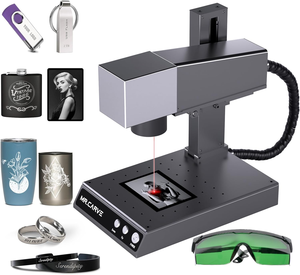
DAJA M1 Pro Small Fiber Laser Jewelry Cutting and Graving Metallic Metal Laser Engraver
- Jewelry & Metal Logo Engraving
- Compact Desktop Footprint
- High-Speed Galvo Scanner
Explore our flagship fiber, UV, and MOPA metal laser machines engineered for extreme durability, micrometer precision, and 24/7 industrial production lines.
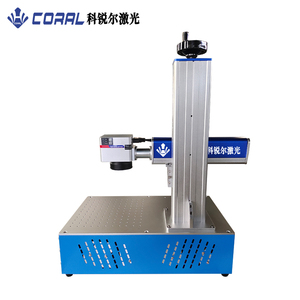
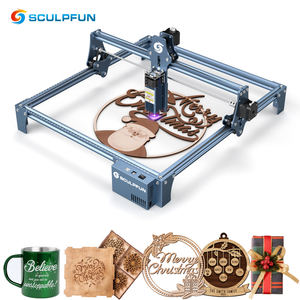
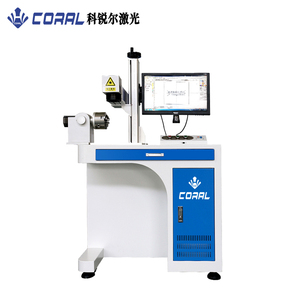
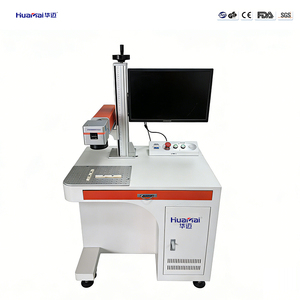
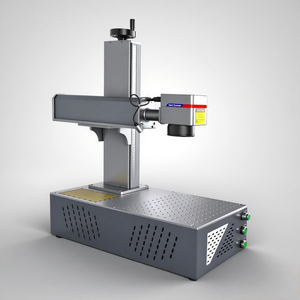
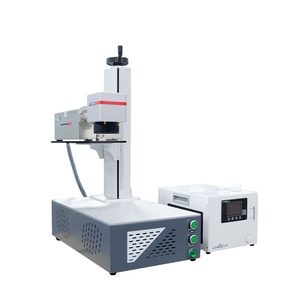
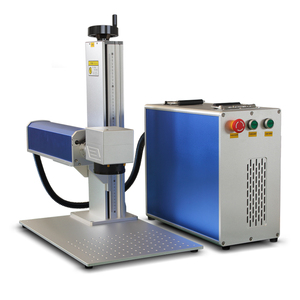
We design, build, and calibrate precision laser marking systems in-house under strict ISO 9001 quality management standards. Unlike white-label resellers, our engineering integrity guarantees zero compromises on beam stability and laser safety.
Every metal laser engraver exported is verified for Low Voltage (2014/35/EU) and EMC Directives (2014/30/EU), equipped with interlocked Class 1 optical enclosures and dual-channel safety relay circuitry.
Integrated 3-axis galvanometer beam delivery dynamically adjusts focal distance on curved, stepped, or angled metallic surfaces without requiring complex mechanical z-height readjustments during batch production.
We partner directly with leading optical engine manufacturers—incorporating JPT MOPA M7, Raycus, Maxphotonics, and Lotus Laser UV sources—to guarantee M² < 1.3 beam quality and up to 100,000-hour diode lifespans.
A comprehensive procurement framework analyzing laser wavelength physics, thermal ablation mechanics, and global international export compliance standards.
In modern industrial manufacturing—spanning aerospace part identification, automotive VIN serialization, and UDI compliant medical device marking—selecting a certified laser marking workstation requires analyzing structural optical dynamics. CE Certification is not merely a label; it represents rigorous validation against international standards, preventing electromagnetic interference, optical radiation leaks, and operational electrical failures.
The core mechanism of laser metal engraving relies on focused photon energy density overcoming the metallic reflection barrier. Solid-state fiber lasers operate at an infrared wavelength of 1064nm, which yields optimal absorption coefficients across carbon steel, stainless steel, titanium, brass, and aluminum alloys. Conversely, UV laser engravers utilize third-harmonic generation (THG) to emit a cold-processing beam at 355nm.
While 1064nm fiber lasers induce photothermal ablation (rapidly heating metal to vaporization points), 355nm UV lasers break molecular bonds via photochemical reaction. This distinction is critical for engineers choosing between high-speed deep metal engraving (Fiber/MOPA) and non-damaging marking on thin foil substrates, coated metals, or delicate electronic housings (UV).
Conventional Q-switched fiber lasers feature fixed pulse duration parameters (typically 100ns–120ns). In contrast, advanced JPT MOPA M7 series sources enable independent tuning of pulse width (ranging from 2ns to 500ns) and repetition rates (1kHz to 4000kHz). This parameter flexibility provides decisive manufacturing advantages:
| Technology Platform | Wavelength | Pulse Duration | Substrate Compatibility | Primary Application | CE Compliance Safety Level |
|---|---|---|---|---|---|
| MOPA Fiber Laser (JPT M7) | 1064 nm | 2 ns – 500 ns (Adjustable) | Steel, Al, Brass, Titanium, Plastics | Color marking, Deep relief, Annealing | Class 1 Enclosed / Class 4 Open |
| Q-Switched Fiber Laser | 1064 nm | 100 ns – 120 ns (Fixed) | Ferrous & Non-Ferrous Metals | Part serialization, Barcodes, 2D DataMatrix | Class 1 Enclosed / Class 4 Open |
| UV Cold Laser Engine | 355 nm | < 15 ns | Coated Metals, Glass, Heat-Sensitive Polymers | Medical UDI, Micro-electronics, Glass Etching | Class 1 Interlocked Recommended |
| 3-Axis 3D Galvo Fiber | 1064 nm | Dynamic Pulse Modulated | Complex Curved & Stepped Metal Parts | Automotive Molds, Turbine Blades, Tooling | Class 1 Fully Automated |
Global export compliance demands adherence to European safety mandates. When procuring metal laser engravers, procurement teams must verify three primary compliance frameworks:
Machinery Directive 2006/42/EC & LVD 2014/35/EU: Requires emergency shutdown circuits, key-switch locks, safe optical path alignment, and grounding protection preventing high-voltage electrical arc hazards.
Laser Safety Standard EN 60825-1: Metal laser engravers operating at 1064nm or 355nm emit invisible or high-intensity radiation capable of causing instantaneous ocular injuries. Fully enclosed Class 1 systems integrate certified optical filter glass (OD6+ attenuation) and safety interlock switches that instantly terminate laser discharge if the housing doors are opened during cycle execution.
How Industry 4.0 automation, high-power MOPA fiber architecture, and environmental compliance are reshaping enterprise machinery investments.
Enterprise buyers are transitioning away from standalone manual desktop engravers toward fully integrated robotic cells. Collaborative robots (COBOTs) coupled with automated data plate loaders and conveyor-line galvo heads enable 24/7 unassisted batch marking, dramatically reducing unit labor overhead.
While 20W and 30W fiber engravers remain standard for superficial surface marking, global heavy industries (coin minting, mold making, oil & gas valve tracking) are shifting to 100W–300W MOPA platforms. These high-power engines accelerate deep relief engraving cycles by up to 800% while maintaining thermal accuracy.
Modern CE-certified laser markers are increasingly equipped with coaxial machine vision cameras. AI vision software automatically detects part orientation, dynamically shifts galvo coordinates, executes precision marking, and reads/verifies DataMatrix barcode quality scores (ISO 15415 standard) in real time.
Compared to legacy chemical etching, ink-jet coding, or mechanical dot-peen marking, fiber laser engravers operate cleanly without consumables, hazardous solvents, or tool wear. The transition to high-efficiency air-cooled laser engines aligns with corporate ESG net-zero carbon initiatives.
Expert insights on laser selection, international export compliance, warranty coverage, and operational setup.
Send us your metal samples for a free technical application test, optical evaluation report, and custom factory-direct quotation tailored to your throughput requirements.