
Industrial Laser Marking & Engraving Product Matrix
Explore our CE-compliant, ISO 9001 certified laser marking platforms, featuring advanced MOPA fiber sources, UV cold processing, and high-speed galvo scanners engineered for global export.
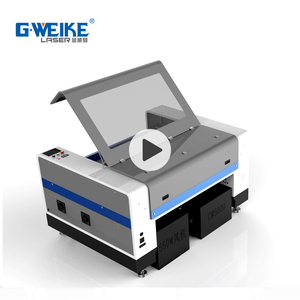
G.WEIKE 150 Watts 400 Watt Acrylic CO2 Laser Cutting Machine
Contact Us
Industrial Fiber Laser Marking and Engraving Machine Split-type 0.001mm Ultra-High Precision Color Marking for All Metals
Contact Us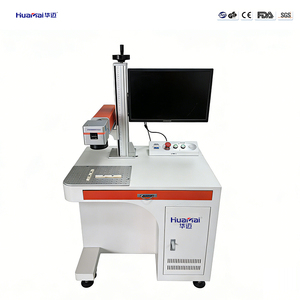
JPT Mopa M7 60W 100W Stainless Steel Color Laser Marking Machine 3d Metal Plate Deep Engraving Fiber Laser Machine
Contact Us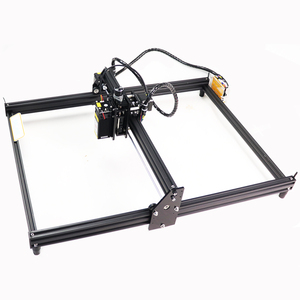
NEJE 3 Max V2 40W Diode Laser Engraver Desktop CNC Machine Control App High-Accuracy Acrylic Cutting AI/LAS Support Air-Cooled
Contact Us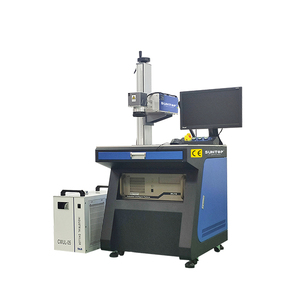
10w Uv Laser Engraving Machine for Glass, 3w/5w/8w/10w/15w/20w, Laser Marking Machine, for Metal/wood/acrylic/leather/cloth
Contact Us
Green Laser Marking Machine 10W Green Laser Source for PCB QR Code 2D Code Plastic Glass Ceramics
Contact Us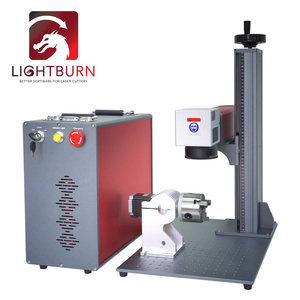
100W Jpt M7 Mopa CO2/Fiber Laser Marking Machine New Portable Bench-Top Air-Cooled 300x300mm 80mm Rotary Axis Supporting DXF/PLT
Contact Us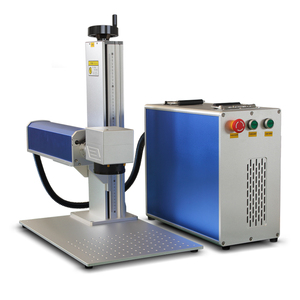
JNFSLASER Portable 60W/100W Raycus MAX M7 Source Mopa CNC Air-Cooled Metal Fiber Laser Marking Machine D80 Rotary 300x300mm
Contact UsIndustrial Executive Summary: The Technical Evolution of MOPA Laser Systems
In modern industrial manufacturing, permanent product identification, micro-structuring, and non-destructive surface marking have transitioned from operational preferences to strict regulatory requirements. As aerospace, automotive, medical device (UDI compliance), and consumer electronics industries demand higher precision and zero thermal deformation, traditional Q-switched fiber lasers encounter fundamental thermodynamic limits. This white paper examines the technological architecture of Master Oscillator Power Amplifier (MOPA) fiber laser markers, evaluating why certified OEM manufacturing facilities are pivoting toward MOPA architectures to unlock unprecedented control over peak power, pulse duration, and thermal deposition.
1. Understanding MOPA Architecture vs. Standard Q-Switched Fiber Lasers
To evaluate the technical superiority of MOPA laser markers, industrial procurement officers must analyze the underlying laser dynamics. Standard Q-switched fiber lasers generate laser pulses via Q-switches (acousto-optic modulators) within the resonant cavity. While highly robust for general deep engraving on carbon steel or structural alloys, Q-switched architectures suffer from fixed pulse durations (typically ranging between 80 ns and 120 ns) and limited frequency adjustability (typically restricted to 20 kHz – 100 kHz). When processing heat-sensitive substrates such as thin stainless steel foils, anodized aluminum, or engineered polymers, long pulse widths induce excessive Heat-Affected Zones (HAZ), resulting in material warping, edge micro-cracking, or structural oxidation degradation.
Conversely, MOPA fiber laser markers separate pulse generation from power amplification. A master semiconductor laser diode acts as the seed source—generating laser pulses with independently adjustable width and frequency—which are subsequently amplified through a series of double-clad fiber amplifiers. This decoupled paradigm delivers transformative operational advantages:
- Independently Variable Pulse Duration (2 ns to 500 ns): Operators can fine-tune pulse lengths. Ultra-short pulses (2 ns – 15 ns) minimize dwell time and thermal dissipation, enabling damage-free ablation of thin films and high-resolution black annealing on medical-grade stainless steel without altering the underlying corrosion resistance layer.
- Extended Frequency Modulations (1 kHz to 4000 kHz): High-frequency pulse repetition ensures seamless line overlap during high-speed galvo scanning, critical for uniform color marking on titanium and carbon-free dark marking on anodized aluminum.
- Constant Peak Power Optimization: Unlike Q-switched sources whose peak power degrades sharply at higher frequencies, MOPA seed sources maintain peak optical power across broader frequency spectrums, preserving depth accuracy during high-throughput inline production.
Core Industrial Capabilities of CE Certified MOPA Systems
Engineered for high-volume OEMs, contract manufacturers, and precision exporters requiring uncompromising repeatability and absolute regulatory compliance.
Vibrant Stainless Steel Color Marking
By finely adjusting pulse widths between 10 ns and 60 ns at high frequencies, MOPA lasers control the exact oxide layer thickness (thin-film interference) on 304/316 stainless steel and titanium, producing repeatable, high-contrast spectrum colors (blues, purples, golds, greens) without surface melting.
Deep Black Anodized Aluminum Marking
Standard lasers alter or strip the oxide coating of anodized aluminum, leaving a white or grayish mark. MOPA lasers emit sub-10 ns pulses that modify microscopic oxide structures to absorb light, creating deep, matte-black logos and Data Matrix codes without disrupting the protective oxide layer.
Zero-Burn Sensitive Polymer Processing
Thermoplastic resins like ABS, Polycarbonate, and Nylon often scorch or bubble under standard lasers. MOPA’s low-pulse-energy options induce micro-chemical foaming or carbonization, generating crisp, high-contrast text and 2D codes on medical devices and consumer electronics.
3D Dynamic Galvo Surface Compensation
Equipped with 3-axis dynamic focusing systems, advanced MOPA workstations maintain constant focal point spot sizing across compound curves, slanted planes, and stepped cylindrical geometries, eliminating manual optical repositioning.
Strict CE & ISO Quality Compliance
Export-ready factory models undergo rigorous electromagnetic compatibility (EMC) testing, feature interlocked Class 1 protective enclosures, dual-channel safety circuits, and integrated fume extraction ports aligned with EU safety directives.
Automated Line & Robotics Integration
Supporting I/O industrial communication protocols (RS232, TCP/IP, Ethernet/IP), MOPA marker control units seamlessly interface with automated plate loaders, conveyor lines, and COBOT robotic arms for 24/7 unassisted manufacturing.
2. Future Procurement Trends & Technological Roadmap (2025–2030)
As manufacturing paradigms shift toward Industry 4.0, direct part marking (DPM) and lifecycle traceability have become central to smart factory automation. B2B buyers evaluating MOPA laser factories must align their procurement strategies with four key technical trends currently reshaping the industrial laser market:
A. Convergence of High-Power MOPA Sources (100W to 200W)
Historically, MOPA laser sources operated predominantly within the 20W to 50W envelope, targeted at fine marking and thin-foil etching. Modern laser engineering advances—led by premier OEM sources such as JPT (M7 series), Raycus, and Max Photonics—have scaled reliable MOPA outputs to 100W, 150W, and 200W. Higher power enables dual-mode versatility: manufacturers can execute high-speed deep metal engraving (utilizing wide pulse widths for maximum pulse energy) and instantly switch via software to ultra-precise micro-marking (utilizing short pulse widths) within the same workstation cycle.
B. Smart Edge Computing & Machine Vision Auto-Alignment
Modern global factories are phasing out manual part fixtures. Next-generation MOPA laser marking systems incorporate coaxial vision sensors and AI pattern recognition algorithms. The system automatically detects component orientation, calculates geometric offset, and recalibrates galvo scanning parameters in real time (within <15ms), achieving zero-defect marking on high-speed production lines.
C. Transition Toward Multi-Wavelength Hybrid Workstations
While MOPA fiber lasers (1064nm) dominate metal and opaque polymer applications, contract packaging and electronics facilities process complex hybrid assemblies containing glass, acrylics, and heat-sensitive films. Procurement trends show a rising demand for multi-wavelength workstations combining MOPA fiber sources with 355nm UV (Cold Marking) or Green (532nm) laser sources in a single enclosed chassis, optimizing capital expenditure and floor footprint.
Industrial Technology Matrix: Wavelength & Laser Source Comparison
Comprehensive technical breakdown to assist procurement teams in selecting the correct laser source for targeted substrate interaction.
| Laser Source Type | Wavelength | Pulse Width Range | Primary Substrates | Heat-Affected Zone (HAZ) | Key Strengths |
|---|---|---|---|---|---|
| MOPA Fiber Laser | 1064 nm | 2 ns – 500 ns (Tunable) | Metals, Stainless Steel, Anodized Al, Engineering Plastics | Minimal to Negligible | Color marking, black anodized marking, zero melting on plastics, high flexibility. |
| Q-Switched Fiber | 1064 nm | 80 ns – 120 ns (Fixed) | Heavy Metals, Carbon Steel, Tooling Steels, Hardened Alloys | Moderate to High | High peak power for deep metal engraving and heavy industrial part marking. |
| UV Laser (Cold Laser) | 355 nm | <15 ns | Glass, Crystal, Medical Plastics, HDPE, Silicon Wafers | Virtually Zero | Photochemical processing; micro-fine marking without thermal or mechanical stress. |
| CO2 Galvo Laser | 10600 nm | Continuous / Micro-Pulsed | Acrylic, Wood, Textiles, Glass, Leather, Organic Materials | High (Thermal Evaporation) | High-speed cutting and raster engraving on non-metallic organic substrates. |
| Green Laser | 532 nm | 10 ns – 40 ns | PCB Boards, Solar Wafers, Highly Reflective Metals (Gold/Copper) | Very Low | High absorption rate on gold/copper; minimal thermal impact on sensitive PCBs. |
3. Enterprise Manufacturing Audit: OEM Quality & Compliance Standards
When sourcing MOPA laser markers from international factories and exporters, overseas buyers must conduct thorough due diligence beyond basic price points. Substandard laser assembly can lead to beam divergence inconsistency, RF interference, premature diode decay, and severe non-compliance penalties in European and North American markets.
Key Manufacturing Rigor Checklist for Overseas B2B Buyers:
- ISO 9001:2015 Quality Management Systems: Verifiable factory audit protocols ensuring every optical galvo, power supply, and fiber module undergoes minimum 72-hour continuous burn-in testing prior to export packaging.
- CE Certification & Laser Safety Alignment: Full adherence to EN 60825-1 (Radiation safety of laser products) and EN ISO 11553-1 (Safety of machinery - Laser processing machines). Fully enclosed Class 1 safety cabinets equipped with certified optical observation windows (OD6+ protection level).
- Optomechanical Frame Integrity: Heavy-duty, industrial-grade aluminum extrusions and cast iron baseplates engineered to suppress floor vibration, ensuring sub-micron marking repeatability (0.001mm precision).
- Global Supply Chain & Technical Support Network: Authorised distributor support across 46 countries, comprehensive warranty coverage (3-year to 10-year tier programs), and permanent access to software/drivers (EzCad3, LightBurn, industrial SDKs).
Frequently Asked Questions (FAQ) for MOPA Laser Procurement
Expert insights addressing key technical, operational, and commercial queries from industrial buyers worldwide.
MOPA lasers achieve color marking on stainless steel and titanium through controlled thermal oxidation (thin-film interference). By precisely manipulating short pulse durations (e.g., 10ns to 30ns) and high frequencies (>200 kHz), the laser controls the precise nanometer thickness of the oxide layer formed on the surface. Light refracting through varying oxide layer thicknesses creates perceived colors such as gold, red, blue, and green without adding chemical pigments or destroying surface integrity.
Standard Q-switched fiber lasers possess long fixed pulse widths (~100ns) that blast away or strip the anodized oxide coating, exposing raw gray aluminum beneath. MOPA lasers can be tuned to ultra-short pulse widths (sub-10ns), allowing high-frequency energy input without stripping the anodic layer. This process alters the microscopic physical structure of the oxide coating itself, producing a rich, dark matte-black mark that remains highly corrosion-resistant and smooth to the touch.
Premium OEM MOPA fiber laser sources (such as JPT M7 or Max MOPA series) utilize highly reliable semiconductor pump diodes with an estimated Mean Time Between Failures (MTBF) exceeding 100,000 operational hours. This translates to over 10 years of continuous 24/7 industrial production with minimal optical power degradation and virtually zero routine source maintenance.
International buyers should ensure the factory provides genuine CE declarations covering both the Machinery Directive (2006/42/EC) and Low Voltage Directive (2014/35/EU). Furthermore, Class 1 laser systems must incorporate interlocked protective housing, emergency stop buttons, key-switched power controls, dual-channel safety relays, and certified protective glass matching the specific laser wavelength (OD6+ for 1064nm).
Selection depends on throughput and application depth. A 30W or 60W MOPA laser is optimal for high-precision plastic marking, electronic component coding, and surface color marking on metals. If your production line requires deep metal engraving, fast data plate cutting, or high-speed inline conveyor marking, 100W to 150W MOPA sources significantly reduce cycle times while maintaining variable pulse control flexibility.
Partner with a World-Class CE Certified Laser Manufacturer
Validate your substrate application with our engineering team. We offer complimentary sample testing, custom optical design, and technical integration support for global OEM exporters.
Contact Us