
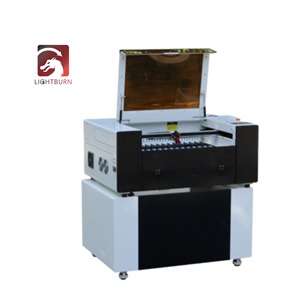
Featured Industrial Laser Marking & Cutting Equipment
Explore our flagship OEM laser systems engineered for high-precision plastic marking, deep metal etching, continuous CW rust removal, and automated tube cutting. Certified under rigorous ISO 9001 quality frameworks and compliant with CE safety standards.
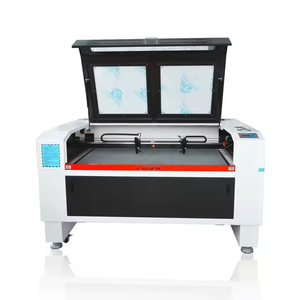
Fully automatic 6090/1390/1610 CO2 laser cutting machine for acrylic board
Send an Inquiry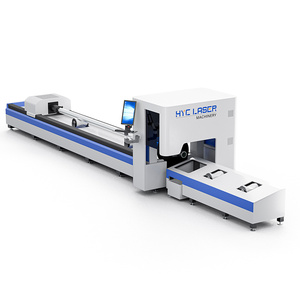
High-Quality Durable Multifunctional Fiber Laser Tube Cutting Machine For Industrial Metal Pipe Processing Equipment
Send an Inquiry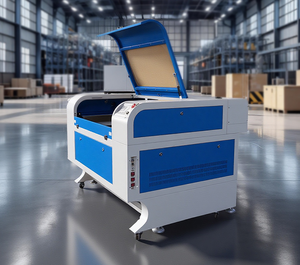
CO2 Laser Engraving Cutting Machine 6090 for Acrylic Wood Leather Fabric Rubber CNC Laser Engraver Nonmetal Cutting Equipment
Send an Inquiry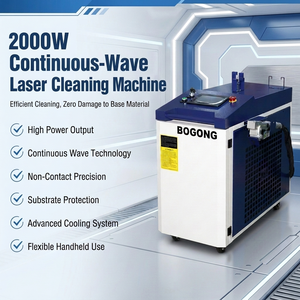
BOGONG 2000W CW Laser Cleaning Machine Handheld Industrial Rust Removal Floor Coating Surface Treatment for Construction Metal
Send an Inquiry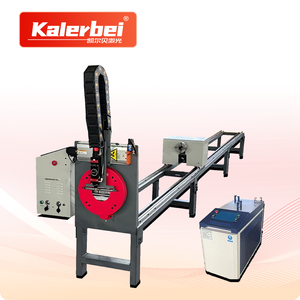
Mini CNC Automatic Fiber Laser Tube Cutter - Ideal for Small-Diameter Metal Pipe Processing
Send an Inquiry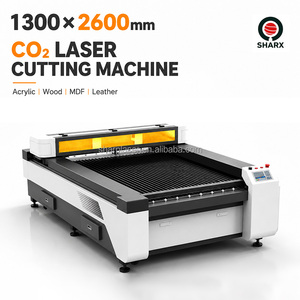
150W 1325 CO2 Laser Cutter with Ruida Control System Water-Cooled for Wood Acrylic MDF Stone Rubber Supporting DXF/PLT Formats
Send an Inquiry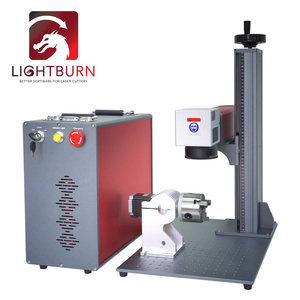
100W Jpt M7 Mopa CO2/Fiber Laser Marking Machine New Portable Bench-Top Air-Cooled 300x300mm 80mm Rotary Axis Supporting DXF/PLT
Send an Inquiry355 nm
Cold UV Wavelength
< 0.01mm
Ultra-Fine Focal Spot
100,000+
Laser Source MTBF (Hours)
99.8%
First-Pass Yield Rate
Engineering Whitepaper: Polymer Laser Marking Physics & Material Dynamics
In modern high-speed production environments across medical device manufacturing, automotive electronics, aerospace component identification, and FMCG packaging, achieving permanent, high-contrast, non-destructive polymer identification presents a severe technical challenge. Traditional printing techniques involving ink-jet continuous coders or pad printing suffer from solvent degradation, low mechanical wear resistance, and toxic chemical emissions that violate strict global environmental frameworks such as RoHS and REACH compliance.
As China's premier plastic laser marker supplier and global exporter, our engineering philosophy is built upon deep photon-material interaction research. Marking plastics with laser radiation is not a single uniform process; rather, it requires a precise match between the laser wavelength, pulse width (nanosecond, picosecond, or femtosecond regime), and the chemical composition of the host polymer—including organic additives, flame retardants, color pigments, and laser-direct-structuring (LDS) dopants.
Photothermal vs. Photo-ablative (Cold) Laser-Polymer Interaction Mechanics
When a laser beam impacts a plastic substrate, two distinct physical mechanisms govern color change and mark formation:
Photothermal Carbonization & Foaming
Utilizing Infrared wavelengths (1064nm MOPA Fiber or 10.6µm CO2 lasers), thermal energy is rapidly absorbed by the plastic matrix. In light-colored thermoplastics, controlled thermal degradation causes local thermal expansion, generating micro-bubbles within the polymer melt—a phenomenon known as Foaming, yielding a raised light-colored mark on dark substrates. Conversely, on light substrates, local heating carbonizes organic molecules to create dark, indelible characters.
Photo-ablative "Cold Marking" (355nm UV)
Ultraviolet (UV) laser light operates at a short wavelength of 355nm, carrying high photon energy capable of breaking chemical molecular bonds directly without generating macroscopic thermal energy. This process—known as photochemical bond breaking—enables damage-free marking on heat-sensitive polymers such as HDPE, PEEK, PTFE, and delicate silicones without micro-cracking, melting edges, or altering structural integrity.
Industrial Polymer Laser Marking Wavelength Compatibility Matrix
Select the optimal laser wavelength, power output, and optical scanner setup based on your exact engineering plastic formulation:
| Plastic Resin Type | Common Substrates | Optimal Laser Source | Dominant Mechanism | Mark Quality & Contrast |
|---|---|---|---|---|
| ABS / PC Blends | Automotive Trim, Enclosures | MOPA Fiber (1064nm) / UV (355nm) | Photothermal Carbonization / Photo-bond | Extreme contrast black mark; crisp edge definition. |
| PE / Polypropylene (PP) | Bottle Caps, Piping, Containers | 355nm UV Cold Laser / Additive Fiber | Photochemical Color Change | Pure white or dark mark without micro-foaming surface roughness. |
| Polyethylene Terephthalate (PET) | Beverage Packaging, Thin Films | 355nm UV Laser / 9.3µm CO2 | Photochemical Bond Dissociation | High-clarity, non-penetrating laser coding; zero structural puncture. |
| PEEK & Medical Silicone | Surgical Implants, Catheters | Picosecond UV (355nm) | Pure Cold Photo-ablation | Biocompatible, zero-heat marking compliant with UDI sterilization. |
| Polyamide (Nylon 66 + GF) | Connectors, Engine Compartments | MOPA Fiber with Variable Pulse | Additive-assisted Thermal Alteration | Highly legible white/grey characters on glass-filled black resin. |
Future Procurement Trends in Industrial Plastic Laser Marking
As global supply chains transition toward Industry 4.0 digitisation and ultra-sustainable manufacturing, procurement directors and automated systems integrators must look beyond initial hardware acquisition costs. Future-proof purchasing decisions require aligning with next-generation technological shifts:
1. Shift to MOPA Fiber with Adjustable Pulse Duration
Conventional Q-switched fiber lasers with fixed pulse duration (100ns) generate excessive thermal stress on polymers, leading to burning or melting. Modern procurement heavily favors MOPA (Master Oscillator Power Amplifier) technology, enabling independent tuning of pulse widths from 2ns to 500ns. Short pulse widths minimize thermal dissipation, allowing precise color-marking on delicate electrical connectors.
2. Machine Vision Integration & Automated AI Inspection
High-speed packaging and semiconductor production lines demand zero-defect quality assurance. Next-gen plastic laser markers integrate coaxial machine vision camera systems. These vision-guided lasers automatically align marking orientation on floating parts and perform instant post-mark OCR (Optical Character Recognition) and 2D DataMatrix code readability verification in real time.
3. 3D Dynamic Focusing for Complex 3D Curved Plastics
Fixed focal length f-theta lenses are inadequate for complex contoured auto parts or ergonomic consumer electronics. Global buyers are prioritizing system configurations equipped with motorized 3-axis dynamic galvo scanning systems, capable of maintaining sub-millimeter spot sizes across multi-tiered surfaces, spheres, and inclined planes without mechanical axis movement.
Why Partner with Us: Our OEM Engineering & Global Export Advantage
Representing the pinnacle of Chinese laser equipment engineering, our enterprise combines world-class optical design expertise with strict European manufacturing rigor. Inspired by decades of UK and German industrial engineering standards, our facilities deliver laser systems that redefine operational longevity and precision.
ISO 9001 Quality System & CE Compliance
Every machine undergoes a rigorous 72-hour continuous laser power stability burn-in test, galvo drift verification, and electrical safety insulation audits before international dispatch. Fully CE certified with Class 1 laser enclosure designs available.
Free Application Testing & Sample Validation
Unsure which wavelength or power output fits your unique plastic polymer additive? Send your physical raw parts to our applications laboratory for a comprehensive material test report, including contrast analysis, surface roughness measurement, and recommended laser processing parameter files.
Global Export & Technical Support
With installations across 46 countries, our dedicated international support team provides round-the-clock remote diagnosis, spare parts dispatch, and on-site integration training for multi-axis CNC systems and inline automated production cells.
Frequently Asked Questions (Plastic Laser Marking Procurement FAQ)
Why choose a UV 355nm laser over a Fiber 1064nm laser for plastic marking?
UV 355nm lasers utilize short-wavelength light that breaks chemical bonds directly (cold processing), producing ultra-clean marks without thermal melting or charring. Fiber 1064nm lasers rely on heat (photothermal), which works excellent on certain plastics with laser additives or ABS, but can scorch heat-sensitive plastics like HDPE, thin PET, or medical-grade silicone.
Can your plastic laser markers mark clear or transparent plastics?
Yes! Transparent plastics such as PET, clear Polycarbonate, and Acrylic do not absorb standard 1064nm infrared fiber laser wavelengths. However, they strongly absorb 355nm UV laser wavelengths or specialized CO2 9.3µm/10.6µm wavelengths, allowing permanent vector engraving or sub-surface frost marking without burning.
How do laser marking additives (laser masterbatches) affect contrast?
Laser additives—such as mica particles, antimony trioxide, or proprietary optical absorber compounds—are mixed into raw plastic resin before molding. When hit by a fiber laser, these additives absorb photon energy rapidly, triggering intense color changes (dark-on-light or light-on-dark) even in challenging resins like pure Polypropylene or Polyethylene.
What software formats and industrial protocols do your machines support?
Our controllers natively support standard vector and raster file formats including DXF, PLT, AI, BMP, SVG, and JPG. For smart factory integration, our systems feature TCP/IP, Modbus, and RS232 communication interfaces to seamlessly connect with factory MES/ERP systems for dynamic serial number, 2D QR code, and barcode generation.
What warranty and international technical support package is included?
All export-grade machines come standard with a comprehensive 2-year to 3-year warranty covering the optical laser engine, galvo scanner, and power supplies. Technical support is available 24/7 via remote video assistance, software parameter tuning, and fast-track international component replacement.
Request Your Custom Plastic Laser Marking Proposal
Partner with China's leading laser marker exporter. Contact our engineering applications specialists today to receive a free sample evaluation, tailored parameter file, and competitive Factory-Direct OEM quotation.