
Precision Laser Marking, Cutting & Processing Systems
Explore our engineering-grade industrial laser machinery, featuring integration options for intelligent CCD machine vision, MOPA pulse tuning, high-power fiber sources, and multi-axis CNC automation.
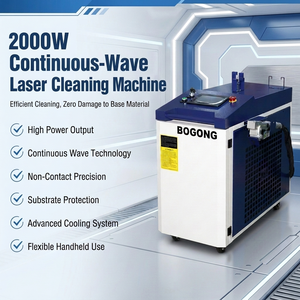
BOGONG 2000W CW Laser Cleaning Machine Handheld Industrial Rust Removal Floor Coating Surface Treatment
High-efficiency continuous wave laser descaling system designed for heavy structural metal rust removal, paint stripping, and pre-weld decontamination.
Send an Inquiry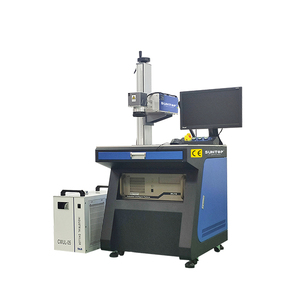
10w Uv Laser Engraving Machine for Glass, 3w/5w/8w/10w/15w/20w for Metal/wood/acrylic/leather/cloth
Ultra-cold 355nm UV laser technology delivering non-thermal micro-marking on glass, heat-sensitive polymers, silicon wafers, and delicate electronics.
Send an Inquiry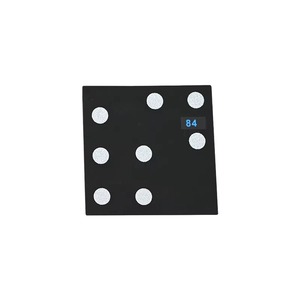
Custom 8-Point Magnetic Coded Reflective Positioning Markers For Handheld Laser 3D Scanning Industrial Measurement
High-precision optical target markers with magnetic backing, optimizing spatial reference coordinates for handheld 3D laser scanners and CCD inspection.
Send an Inquiry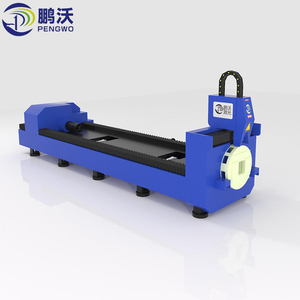
3000W Automatic Feeding CNC Industrial Laser Pipe Cutting Machine Metal Tube Fiber Laser Cutter AI Graphic Direct Manufacturer
Heavy-duty automated tube fiber laser cutting center equipped with continuous bundle feeding, AI graphic nesting software, and pneumatic chucks.
Send an Inquiry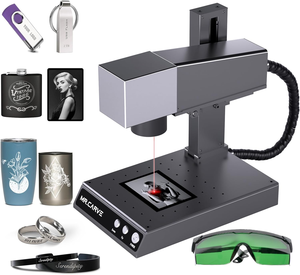
DAJA M1 Pro Small Fiber Laser Jewelry Cutting and Graving Metallic Metal Laser Engraver Marking Name logo Machine
Compact desktop fiber laser engraver optimized for custom jewelry fabrication, precious metal micro-cutting, nameplate marking, and lab research.
Send an Inquiry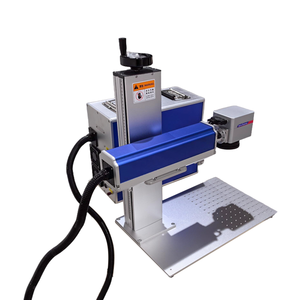
Industrial Fiber Laser Marking and Engraving Machine Split-type 0.001mm Ultra-High Precision Color Marking for All Metals
Sub-micron scale galvo scanner system capable of oxide-layer titanium color marking, deep steel engraving, and high-density 2D DataMatrix etching.
Send an Inquiry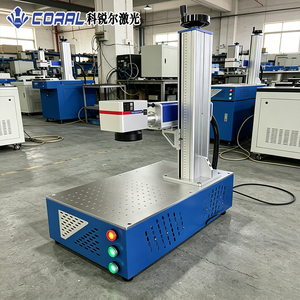
CORAL HG-ZM-A-D30 3D Mopa Desktop Laser Marker Easy To Operate For Mixed Aluminum And Stainless Steel Materials
Variable pulse-width MOPA laser system featuring dynamic 3D optical focal axis control for curved surface marking, black anodized aluminum etching, and medical steel processing.
Send an Inquiry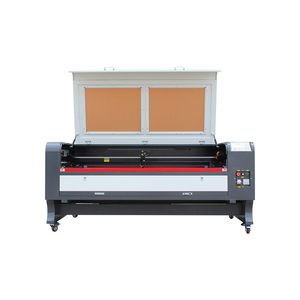
4060 9060 1080 1390 Engraving Laser Machine 100w 300w Co2 Laser Engraving Machine Wood Acrylic Leather Laser Cutter
Versatile industrial CO2 laser workstation engineered for precision cutting and raster engraving of acrylics, architectural models, wood, textiles, and composite sheets.
Send an InquiryUnderstanding CCD Camera-Assisted Visual Positioning in Modern Laser Processing
In high-throughput manufacturing environments, traditional physical clamping fixtures introduce significant operational bottlenecks, mechanical wear, and alignment tolerances that often exceed allowable thresholds for micro-electronics and medical devices. CCD (Charge-Coupled Device) visual laser marking machines resolve this fundamental constraint by combining high-resolution machine vision sensors, coaxial telecentric optical pathways, and dynamic coordinate conversion algorithms.
Unlike conventional static laser markers that rely on manual jig placement, a visual target recognition system captures the spatial orientation, rotation angle (θ), and X/Y offset of components placed arbitrarily within the processing field of view (FOV). The machine vision software instantly processes the optical pattern using geometric template matching, calculates the offset relative to the master CAD model, and remaps the galvanometer scanning vector coordinates in real-time (<10 milliseconds). The result is zero-fixture processing with positioning repeatabilities reaching sub-micron thresholds.
Core Technical Components of High-Tier China CCD Laser Markers:
- Industrial Grade CCD Camera & Coaxial Optics: High-resolution CMOS/CCD sensors integrated inline (coaxial) with the galvo mirror assembly or mounted on an external look-down bracket, eliminating parallax error.
- Telecentric Lens Assemblies: Ensures constant optical magnification across the entire field of view, preventing image distortion when measuring three-dimensional or uneven workpieces.
- Programmable LED Ring & Coaxial Lighting: Multi-channel controllable illumination arrays that accentuate substrate edge contrast, fiducial marks, and etched features regardless of ambient factory light variance.
- High-Speed Galvo Scanner Integration: High-bandwidth digital galvanometers with low drift characteristics, maintaining high optical speed (up to 12,000 mm/s) while executing vision-corrected motion vectors.
Future Procurement Trends in Visual Laser Marking Equipment
As global OEM electronics, automotive EV, and aerospace manufacturing paradigms transition toward Industry 4.0 automation, the criteria for sourcing visual laser marking systems from Chinese manufacturers have shifted from simple power specifications to intelligent automation capabilities.
AI-Powered Optical Quality Inspection (AOI)
Modern CCD markers are evolving beyond target location tracking. Integrated artificial intelligence models execute inline inspection immediately post-marking, evaluating 2D DataMatrix grading (ISO/IEC 15415 standards), micro-crack detection, and surface contrast without slowing line velocity.
MES & SECS/GEM Industry 4.0 Protocol Integration
Global procurement teams prioritize machinery capable of seamless bidirectional data exchange with Manufacturing Execution Systems (MES). Sourced CCD markers must dynamically parse serializing payloads, track substrate genealogy, and automatically log laser diagnostic parameters.
Wavelength Hybridization & 3D Focal Tracking
Single-wavelength workstations are being replaced by dual-source enclosures (e.g., combining 355nm UV for sensitive plastics and 1064nm MOPA fiber for metals), governed by 3-axis dynamic focus systems that accommodate non-planar and stepped geometries effortlessly.
CCD Visual Laser Marking vs. Traditional Mechanical Jig Systems
An objective operational comparison detailing throughput impact, labor utilization, alignment precision, and total cost of ownership (TCO) across industrial production environments.
| Evaluation Parameter | Traditional Laser Marker (Mechanical Jigs) | Advanced China CCD Laser Marker | Procurement Impact & ROI |
|---|---|---|---|
| Part Alignment Accuracy | ±0.1mm – ±0.5mm (Constrained by mechanical wear) | ±0.001mm – ±0.01mm (Sub-pixel algorithm) | Eliminates scrap caused by off-center marking on micro-components. |
| Loading & Setup Speed | Manual part indexing into custom fixtures (5-15 sec/part) | Bulk tray drop-in, zero alignment (<0.2 sec recognition) | Increases daily part throughput by 300% to 500% per operator station. |
| Tooling & Fixture Costs | High ($500–$3,000 per custom CNC jig set) | $0 Fixture Requirement (Software visual template) | Drastically shortens setup time for NPI (New Product Introduction). |
| Scrap & Defect Rate | 1.5% – 4.0% due to improper part placement | <0.01% (Automatic rotation & offset compensation) | Crucial for high-value substrates such as PCBs, IC chips, and medical tools. |
| Automation Compatibility | Limited; requires dedicated mechanical indexers | Native COBOT, conveyor, & bowl-feeder ready | Enables unattended 24/7 dark-factory manufacturing lines. |
Why Partner with China's Premier CCD Laser Machinery Manufacturers?
Combining decades of precision optical design with rigorous ISO 9001 compliance, top-tier Chinese manufacturers deliver world-class laser platforms tailored for demanding international industrial standards.
ISO 9001 & CE Certified Construction
Every laser system undergoes rigorous multi-stage quality control, including optical power stability logging over 72 hours, thermal drift testing, and electromagnetic compatibility (EMC) verification for global compliance.
Custom OEM & Turnkey Automation Integration
In-house R&D teams engineer specialized optical pathways, custom chassis enclosures, robotic pick-and-place arms, dynamic conveyor feeds, and tailored vision algorithms designed around your exact substrate geometry.
Global Technical Support Network in 46+ Countries
Backed by experienced field service engineers, worldwide distributor support networks, rapid spare-part fulfillment centers, and comprehensive online remote diagnostic facilities to maintain continuous uptime.
Frequently Asked Questions for Sourcing CCD Laser Markers
Essential technical and commercial considerations for procurement officers, system integrators, and plant operations managers.
How does the CCD optical camera system compensate for height variations in workpieces?
High-end visual laser markers incorporate either telecentric focal lenses that maintain spatial scale across varying focal depths, or integrate dynamic 3-axis galvo motor modules paired with time-of-flight (ToF) distance sensors to auto-adjust focal depth in real time.
Which laser wavelength (Fiber, UV, or CO2) is right for my visual marking application?
Fiber laser markers (1064nm) excel at metal engraving and high-contrast plastics. UV lasers (355nm) are optimal for cold marking on heat-sensitive polymers, glass, and medical devices without micro-fractures. CO2 lasers (10.6μm) cut and engrave organics like wood, leather, and acrylics.
What lighting configuration is required for dark or reflective metal components?
Optical recognition depends heavily on contrast. Top manufacturers offer programmable multi-angle LED ring lights, coaxial illumination (reflecting light along the laser optical path), and diffuse backlighting to optimize edge detection on polished metals or dark substrates.
Can China CCD laser markers integrate into high-speed SMT assembly lines?
Yes. Custom inline CCD laser markers feature standard SMEMA interfaces, high-speed belt conveyors, automated fiducial mark alignment, and barcode scanner integration specifically built for high-density PCB processing.
What is the typical operational lifespan and maintenance requirement of these machines?
Solid-state fiber and UV laser sources feature operational lifespans ranging from 30,000 to 100,000 hours. Routine maintenance is limited to periodic objective lens cleaning, air filter replacement, and calibration checks of the CCD optical target.
Can we request a pre-purchase material sample test and optical validation?
Absolutley. Leading Chinese manufacturers provide complimentary material testing services. Buyers can submit sample parts to receive detailed marking quality reports, marking cycle time analytics, and visual recognition accuracy logs prior to order placement.
Transform Your Production Precision & Throughput Today
Consult with our senior laser optical engineers to configure a custom CCD visual laser marking system, request a sample processing report, or receive factory-direct wholesale quotation details.