
Premier Industrial Cold & Ultra-Fast Laser Marking Systems
Explore China's top-tier industrial laser equipment engineering solutions. The catalog below showcases high-precision MOPA fiber, 355nm UV cold laser, 532nm Green light laser, and high-efficiency cutting solutions manufactured under ISO 9001 and CE standards.
Deep-Dive Engineering: The Physics & Principles of Cold Laser Processing
In modern high-precision manufacturing, traditional thermal processing methods—such as standard 1064nm Infrared Fiber Lasers or 10.6μm CO2 Lasers—often fail when applied to delicate substrates. Thermal lasers rely on localized heating to melt, burn, or vaporize material. This introduces a wide Heat-Affected Zone (HAZ), micro-cracks, structural distortion, and edge charring on sensitive materials.
Cold Laser Processing (primarily utilizing Third Harmonic Generation 355nm Ultra-Violet lasers and 532nm Green lasers) fundamentally changes the interaction dynamics between light and matter. Rather than relying on photothermal melting, cold laser energy operates via photochemical ablation. The photon energy of a 355nm UV light pulse is high enough to directly break the chemical bonds within organic polymers, silicon wafers, and glass lattices without generating kinetic thermal energy.
Photothermal Processing (Standard Infrared/CO2)
Operates via thermal energy absorption. Material temperature spikes rapidly, causing melting, stress fractures, and significant HAZ. Unsuitable for medical polymers, wafer dicing, or micro-glass etching.
Photochemical Processing (Cold UV / Green Laser)
Operates via high-energy photon bond breaking. Molecular structures are severed instantly without heat transfer. Results in burr-free, zero-crack, high-contrast marks on sensitive medical devices, PCBs, and glass.
Key Technical Takeaway for Procurement Engineers:
When selecting a Chinese laser OEM partner, verify their optical alignment cleanroom standards. UV cold lasers require strict dust-free optical paths and high-grade harmonic crystals (LBO/BBO) to prevent power degradation over extended operational lifespans.
Product Development Trends in Cold Laser & Ultra-Fast Marking Systems
As global electronics, medical devices, automotive electrification, and aerospace manufacturing mandate higher density, zero-defect production, cold laser marking technology from leading Chinese suppliers is evolving rapidly along four primary trajectories:
1. Femtosecond & Picosecond Ultrafast Integration
Industrial UV cold laser systems are transitioning from nanosecond pulse widths to picosecond and femtosecond domain duration. Ultrafast pulse duration eliminates thermal diffusion entirely, enabling sub-micron precision dicing and subsurface glass marking.
2. AI-Assisted 3D Dynamic Auto-Focusing
Modern Chinese cold laser systems integrate 3-axis dynamic galvanometer systems paired with high-resolution machine vision cameras. The system automatically maps non-planar, curved, stepped, or organic geometries in real-time, focusing the laser dynamically across complex multi-tiered parts without manual fixture adjustments.
3. All-Solid-State Air-Cooled Architecture
Historically, high-wattage UV cold lasers relied on bulky external water chillers. Next-generation manufacturers are developing highly efficient air-cooled UV laser sources. This drastic reduction in footprint allows seamless integration into inline automated industrial SMT lines and COBOT cells.
Global Procurement Trends: Sourcing Cold Lasers from China
The global sourcing paradigm for industrial laser markers has shifted dramatically. International enterprise buyers are moving away from merely seeking "low-cost basic fiber engravers" toward strategically procuring fully automated, integrated cold laser marking cells directly from top Chinese manufacturers. Key procurement trends include:
- Trend 1 Demand for Traceability & UDI Compliance: Regulated industries like medical technology (FDA Unique Device Identification) and automotive EV batteries require micro 2D DataMatrix code marking down to 0.5mm sizes. Chinese factories offering cold UV lasers paired with automatic barcode validation systems lead export growth.
- Trend 2 Shift Toward Modular Hybrid Systems: B2B buyers now request multi-source workstations (e.g., combining MOPA Fiber with 355nm UV or CO2 in a single benchtop chassis) to process mixed-material product lines efficiently.
- Trend 3 Turnkey Automation & Robotics Integration: Top Chinese suppliers no longer sell standalone laser boxes alone. Procurement contracts heavily emphasize integrated automatic plate loaders, conveyor inline coding (Meta-i), and automated COBOT part-handling interfaces.
- Trend 4 Rigorous International Certification Auditability: Leading Chinese vendors are aligning with global tier-1 standards—securing CE, ISO 9001 quality management, NCSC Cyber Essentials compliance, and multi-language technical documentation.
Enterprise Manufacturing Advantages & Engineering Standards
Building high-performance cold laser markers requires rigorous control over optics, electrical engineering, software integration, and structural stability. Partnering with top-tier OEM factories ensures access to industrial-grade standards:
Precision Engineering & Optical Integrity
Our industrial platforms feature mil-spec aluminum structural frames that resist thermal expansion and damp vibration. High-speed digital galvanometers equipped with quartz F-theta lenses guarantee ultra-fine spot size focal accuracy across entire scanning fields (up to 300x300mm).
Full Dynamic Range & Software Support
Equipped with modern control architectures supporting PLT, DXF, AI, BMP, and SVG files directly. Systems seamlessly interface with industrial MES and ERP databases for automated dynamic serialization, line batch numbering, and variable QR code rendering.
Every cold laser unit undergoes a rigorous 72-hour burn-in power stability test, beam profile analysis via beam profiling cameras ($M^2 < 1.2$), and full electrical safety testing before export dispatch.
Purchasing FAQ: Frequently Asked Procurement & Engineering Questions
Below are essential technical and logistical considerations for engineering teams and procurement directors sourcing cold laser marking equipment from China.
A MOPA Fiber Laser operates at 1064nm (Infrared spectrum) and relies on thermal energy to etch or color metals and specific plastics. A UV Cold Laser operates at 355nm (Ultraviolet spectrum) and uses photochemical bond-breaking with negligible heat output. UV is required for glass, heat-sensitive plastics (ABS, PE, Silicone), and microscopic medical parts where thermal deformation is prohibited.
Industrial DPSS UV laser sources have an average diode operational lifespan ranging from 15,000 to 20,000 hours, depending on operating power and ambient cleanroom conditions. Periodic optical window cleaning and crystal shifter adjustments ensure optimal operational efficiency over many years of continuous production.
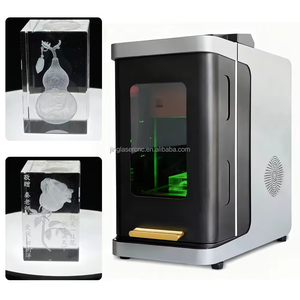
Yes. 355nm UV cold lasers absorb exceptionally well in transparent glass media. Because the pulse energy breaks the glass molecular bonds instantly without thermal stress buildup, it produces smooth, high-contrast frost-like micro-etching without micro-fracturing or chipping.
Industrial laser markers imported into Europe or North America must comply with CE standards, Class 1 or Class 4 laser safety enclosures (IEC 60825-1), emergency safety interlocks, ISO 9001 manufacturing quality control, and proper fume extraction compatibility.
Absolutely. Professional Chinese laser manufacturers provide free pre-purchase application lab testing. You can send physical material samples (metals, plastics, glass, PCBs) to validate laser contrast, processing speed, and code readability before finalizing equipment specifications.
International buyers typically receive a comprehensive 3-to-5-year warranty covering core laser sources and optical heads, backed by 24/7 remote technical assistance, modular spare part replacement programs, and localized distributor technician support across 46+ countries.
Ready to Optimize Your Laser Procurement Strategy?
Consult directly with our senior optical applications specialists. Request custom sample marking, technical CAD drawings, OEM factory price sheets, or automated production line integration proposals.