
Deep Laser Engraving Physics, Physics of Micro-Ablation, and OEM Export Technical Evaluation
An authoritative baseline analysis for global procurement teams, aerospace engineers, medical device manufacturers, and industrial OEMs seeking high-aspect-ratio deep laser metal cutting and engraving solutions from China.
In modern high-precision manufacturing, deep laser engraving has evolved from simple surface dark marking into a fundamental material-removal process. Unlike standard cosmetic surface annealing or oxidation coding, deep laser engraving requires concentrated photon energy density (fluence measured in Joules per square centimeter, $J/cm^2$) capable of exceeding the vaporization threshold of target metals, alloys, ceramics, and high-density polymers without introducing catastrophic Heat-Affected Zones (HAZ), micro-cracks, or micro-structural distortion.
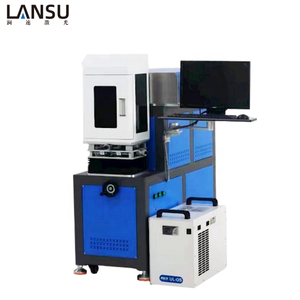
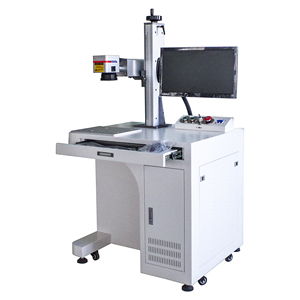
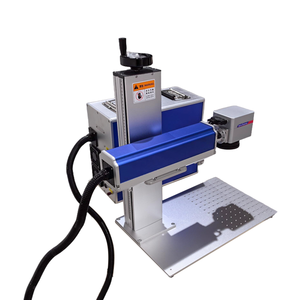
When selecting a manufacturing partner among China top deep engraving laser manufacturers & exporters, industrial buyers must evaluate the underlying laser physics, optical delivery mechanisms, and dynamic pulse frequency modulation capabilities of the machine builder. This comprehensive whitepaper provides an exhaustive technical benchmark, operational trend forecast, and procurement framework for global engineering teams seeking maximum ROI, zero-defect quality control, and long-term operational uptime.
Surface Laser Marking: Alters optical reflectivity, surface color, or local oxidation layer (depth < 5 micrometers) with low pulse energy.
Deep Laser Engraving: Systematically vaporizes material layer-by-layer (depth ranging from 50 micrometers to over 3.0 millimeters) through high peak power ($>10 kW$), high frequency galvo-rastering, and optimized focal plane tracking.
Laser Wavelength Physics & Material Compatibility Matrix
Achieving clean material removal requires matching the laser emission wavelength to the material's spectral absorption spectrum. A fundamental mismatch leads to excessive thermal conduction, melt-lip formation, plasma shielding, and low removal efficiency ($mm^3/min$). Chinese OEM manufacturers leverage four primary laser wavelengths to address diverse industrial substrates:
| Laser Technology | Wavelength (nm) | Typical Pulse Width | Optimal Substrates | Primary Industrial Application | Depth Performance |
|---|---|---|---|---|---|
| MOPA Fiber Laser | 1064 nm | 2 ns – 500 ns (Tunable) | Stainless Steel, Tool Steels, Titanium, Aluminum, Brass | Automotive VIN, Aerospace Part ID, Mold & Die Deep Carving | Very High (>3.0 mm) |
| Standard Q-Switched Fiber | 1064 nm | 100 ns – 120 ns (Fixed) | General Carbon Steel, Anodized Aluminum, Hardened Metals | Serial Numbers, 2D Data Matrix, Metal Nameplates | Medium-High (0.5 - 1.5 mm) |
| DPSS Green Laser | 532 nm | 1 ns – 15 ns | Highly Reflective Metals (Gold, Copper), Silicon, PCB, Glass | Semiconductor Wafer Marking, Micro-Electronics, Solar Cells | Precision Micro (50 - 300 µm) |
| Cold UV Laser | 355 nm | < 10 ns (Picosecond available) | Heat-Sensitive Plastics, Medical Polymers, Sapphire, Ceramics | UDI Medical Implants, Catheters, Micro-Fluidic Channels | Sub-Micron Surface & Etch |
| RF CO2 Laser | 10,600 nm | Continuous Wave / Pulsed | Acrylic, Wood, Quartz, Leather, Organic Polymers | Packaging Coder, Non-Metallic Gasket Cutting & Deep Engraving | High in Non-Metals |
Future Procurement Trends for Deep Engraving Lasers (2026–2030)
As industrial supply chains digitize under Industry 4.0 frameworks, procurement executives are moving away from evaluating standalone machines toward assessing integrated smart manufacturing cells. China's leading export-oriented laser manufacturers are driving critical technological transitions that buyers must account for in their 5-year capital expenditure (CapEx) planning:
1. High-Power MOPA & Sub-Nanosecond Picosecond Transition
Conventional 20W to 50W Q-switched fiber lasers are increasingly replaced by high-power 100W, 200W, and 300W Master Oscillator Power Amplifier (MOPA) sources. The capability to dynamically adjust pulse width (from 2 ns to 500 ns) independently of repetition rate allows engineers to execute high-rate rough ablation using long pulses, followed instantly by fine sub-nanosecond polish passes to eliminate surface roughness without stopping the machine process cycle.
2. 3D Dynamic Focusing Systems & Z-Axis Real-Time Auto-Tracking
Traditional flat-field F-Theta lenses restrict deep laser engraving because as the laser cuts deeper into the metal mold or cylinder, the focal point shifts out of the Rayleigh range, causing the energy density to drop below the ablation threshold. Advanced export-grade Chinese laser engravers now incorporate dynamic 3-axis galvo head optical systems. A motorized expansion lens dynamically shifts the focal plane in synchronization with X-Y galvo mirrors, maintaining a precise, diffraction-limited spot size across 3D curved surfaces, stepped cavities, and deep relief structures up to ±50mm Z-depth.
3. AI-Driven Machine Vision & Automated Alignment
To eliminate expensive manual positioning fixtures and human errors in high-throughput production lines, modern deep engraving equipment integrates coaxially aligned High-Definition Machine Vision systems. AI algorithms automatically detect component orientation, match edges against CAD geometry files (DXF/STEP/AI), and dynamically offset the laser toolpath in under 50 milliseconds. This ensures sub-pixel placement accuracy even when parts are fed loosely on high-speed conveyor belts.
4. Closed-Loop Environmental Control & Zero-Emission Safety Enclosures
With global safety standards enforcing strict compliance with Class 1 laser safety enclosures (IEC 60825-1 / CE / FDA), tier-1 exporters build heavy-duty welded cabinet systems with integrated multi-stage HEPA fume extraction and carbon filtration. Deep metal ablation generates ultrafine metal dust and sub-micron particulates; advanced closed-loop differential pressure sensing guarantees hazardous sub-micron fumes are neutralized before ambient release.