
Industrial Grade Portfolio
Featured Dynamic Focus & High-Performance Laser Machinery
Precision-engineered optical platforms for 3D deep engraving, surface cleaning, high-speed pipe cutting, and ultra-fine micro-processing.
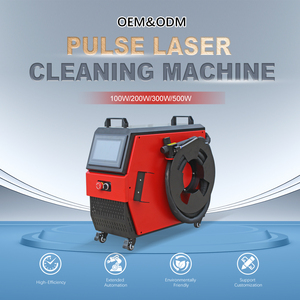
High Cost Performance 100w 200w 300w 500w Widely Laser Cleaning Machine Remove Paint Air Cooling Pulsed Laser Cleaner
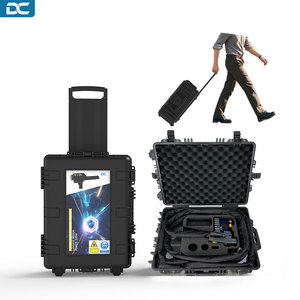
Dachuan Handheld 500W Portable Pulsed Fiber Laser Cleaner Wood Metal Stone Stainless Steel Aluminum Laser Cleaning Unit
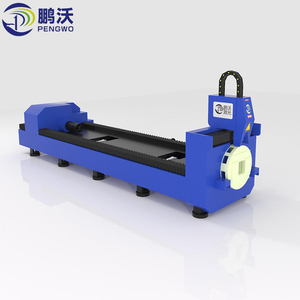
3000W Automatic Feeding CNC Industrial Laser Pipe Cutting Machine Metal Tube Fiber Laser Cutter AI Graphic Direct Direct System
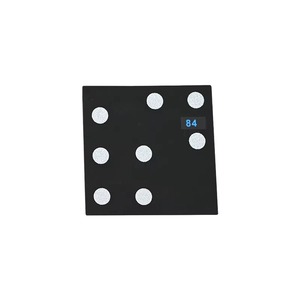
Custom 8-Point Magnetic Coded Reflective Positioning Markers For Handheld Laser 3D Scanning Industrial Measurement
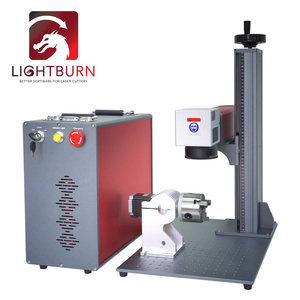
100W JPT M7 Mopa CO2/Fiber Laser Marking Machine Portable Bench-Top Air-Cooled 300x300mm 80mm Rotary Axis System
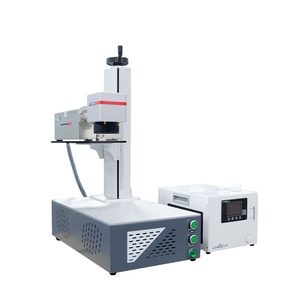
All-in-One UV Laser Engraver for Wood, Plastic & Coated Metals Perfect for Custom Jewelry, Keychains & Industrial Components
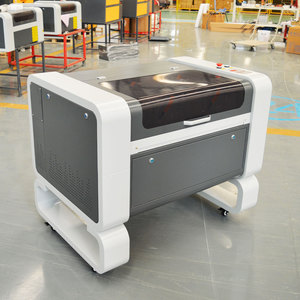
2025 New 4060 50w 60w 80w 100w CO2 Laser Engraving Machine for Wood Acrylic 6040 Precise CO2 Laser Cutting System
Optical Innovation & OEM Standards
Why Premier Global OEM Manufacturers Partner With Us
We do not simply assemble parts. We engineer and manufacture complete dynamic focal optical systems, integrating high-speed dynamic Z-axis modules with MOPA fiber, UV cold laser, and CO2 sources.
3D Dynamic Focusing as Standard
Unlike standard 2D flat-field F-Theta scanning heads, our 3-axis beam expansion systems compensate for field curvature dynamically. Maintain uniform focal spot sizing across curved, spherical, inclined, and multi-tier workpieces without manual axis adjustment.
ISO 9001 & CE Compliant Engineering
Every machine leaving our facility undergoes rigorous optical alignment calibration, thermal stability profiling, and safety enclosure auditing. Certified under ISO 9001 quality management protocols with full CE compliance for global market deployment.
Cobot & Inline Automation Ready
Equipped with industrial I/O architectures, TCP/IP, and Modbus communication layers. Seamlessly integrate with automated part loaders, conveyer lines, dynamic data matrix coders, and collaborative robotic arms (Cobots) for 24/7 continuous operation.
15+ Year Structural Lifespan
Built with heavy-duty mil-spec aluminum structural framing and vibration-isolated optical benches. Designed to resist harsh industrial manufacturing environments, thermal fluctuations, and continuous operation wear-and-tear.
Multi-Wavelength Optical Flexibility
From 1064nm MOPA Fiber (metals & polymers) and 355nm UV Cold Lasers (glass, heat-sensitive medical plastics) to 10.6µm CO2 (organic substrates), our dynamic focusing optics are tailored to matching laser wavelengths for zero thermal distortion.
Global Service & Application Support
Backed by specialized application engineering teams across 46 countries. We provide sample testing prior to purchase, full optical validation reports, customized optical lens configurations, and comprehensive long-term warranty cover.
Dynamic Focus Laser Technology: Comprehensive Industrial Procurement & Engineering Whitepaper
In modern high-precision manufacturing, traditional 2D laser processing systems are increasingly constrained by geometric optical boundaries. Standard scanning architectures utilize a two-axis galvanometer scanning head coupled with a fixed-focus planar F-Theta lens. While effective for flat surface processing, 2D optics fail when encountering stepped components, complex 3D contoured surfaces, slanted angles, deep cavities, or large-format scanning fields where off-axis focal distortion degrades beam intensity.
As a leading China dynamic focus laser manufacturer and global OEM supplier, we engineer Dynamic Focus Scanning Systems (DFSS)—also referred to as 3D Dynamic Focusing Technology. By shifting optical focal positioning upstream before the galvo scanning mirrors, our systems eliminate planar field constraints, allowing the focused laser spot to maintain optical Rayleigh-length diffraction limits dynamically across complex 3D topologies in real time.
Core Engineering Mechanism of 3D Dynamic Focusing:
Unlike standard static setups, dynamic focus technology incorporates a motorized optical Z-axis linear translator positioned ahead of the X/Y galvo mirrors. The linear translator dynamically adjusts the spatial distance between the beam expander optics in high-frequency coordination with the X/Y scanner coordinates. This continuous focus shift compensates for optical field curvature (Petzval field curvature), keeping the laser focal point pinned exactly on the 3D surface geometry throughout the process cycle.
Technical Optics Comparison: 2D F-Theta Scanning vs. 3D Dynamic Focusing Systems
To assist procurement engineers and technical directors in specifying optical machinery, the following empirical comparison highlights the core physical and operational distinctions between standard 2D laser galvo setups and advanced 3D Dynamic Focus Laser platforms:
| Optical Parameter | Standard 2D F-Theta System | Advanced 3D Dynamic Focus System |
|---|---|---|
| Focal Plane Geometry | Strictly Flat / Planar ($Z = 0$) | True 3D Contoured / Variable Z Height |
| Focal Depth Adjustment | Manual Z-stage mechanical movement | Dynamic high-speed optical Z-axis motor control |
| Working Field Capacity | Limited by F-Theta glass size (e.g., 110x110mm to 300x300mm) | Large format expanded scanning (up to 1200x1200mm without dynamic distortion) |
| Beam Spot Uniformity | Degrades towards field edges due to incident angle variance | Uniform spot focus maintained across 100% of the working area |
| Deep Engraving Capability | Requires manual refocusing every few layers; high taper angles | Automatic layer-by-layer focus tracking; straight, clean side-walls |
| Complex Geometry Processing | Not possible without 5-axis mechanical CNC stage integration | Direct optical dynamic scanning over spheres, cones, cylinders & stepped parts |
| Wavelength Compatibility | Restricted by available multi-element F-Theta field lenses | Supports Fiber (1064nm), UV (355nm), CO2 (10.6µm), Green (532nm) |
Industrial Application Scenarios for Dynamic Focus Laser Systems
Dynamic focus laser platforms have redefined processing efficiency across high-value industrial manufacturing verticals. By decoupling laser focus from fixed-mechanical axes, enterprise users achieve unprecedented production speeds and precision tolerances:
1. Deep Laser Engraving & Mold Tooling Fabrication
Deep engraving in tool steels, carbide, copper, and titanium alloys requires focal position compensation as material is ablated layer by layer. Standard flat lasers defocus rapidly as cavity depth exceeds the laser's Rayleigh range, leading to power loss, edge slumping, and uneven ablation. Dynamic focus fiber lasers dynamically sink the optical focal plane deeper into the substrate with every pass, yielding ultra-sharp 90-degree vertical walls, smooth floor finishes, and deep 3D textured reliefs for injection molding tools, coin dies, and security stamping rolls.
2. Large-Format Industrial Part Marking & Matrix Batch Coding
In standard galvo systems, expanding the scan field requires an F-Theta lens with a longer focal length. However, longer focal lengths dramatically enlarge the focused laser spot diameter, drastically reducing energy density (fluence). Dynamic focus optics allow long optical path adjustments dynamically through small pre-focus lenses, enabling expansive processing fields (e.g., 600x600mm to 1200x1200mm) while retaining an exceptionally fine focal spot diameter for dense QR code, DataMatrix, and barcode serialization on automotive chassis, solar panels, and sheet metal assemblies.
3. 3D Surface Treatment & Precision Industrial Cleaning
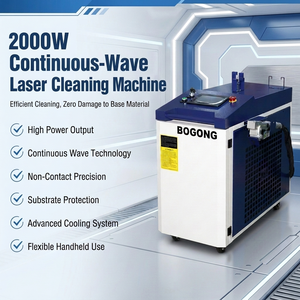
Surface rust removal, paint stripping, oxide removal, and pre-weld surface conditioning frequently involve complex 3D geometric components such as curved automotive frames, turbine blades, or cylindrical structural pipes. As demonstrated in our high-power CW and Pulsed laser cleaner lines (e.g., 2000W CW laser cleaning systems and 500W pulsed fiber cleaners), dynamic focus beam delivery ensures that continuous energy density is maintained across irregular contours, preventing thermal damage to sensitive underlying metallic grains.
4. Electronics, Medical UDI & Heat-Sensitive Material Processing
Medical device manufacturing requires absolute compliance with FDA UDI marking guidelines on curved surgical tools, implants, and catheters. Thermal deformation or micro-cracking is strictly prohibited. Utilizing 3D UV dynamic focus laser machines (355nm cold laser wavelength), manufacturers execute damage-free, photochemical sub-surface micro-marking on curved glass vials, ceramic substrates, fluoropolymers, and heat-sensitive ABS/PEEK plastics without heat-affected zones (HAZ).
Future Procurement Trends in Industrial Dynamic Focus Laser Machinery
As smart manufacturing, Industry 4.0 automation, and digital twin monitoring scale globally, B2B procurement leaders must anticipate key technological trajectories when specifying laser equipment from suppliers in China:
- AI-Driven Dynamic Focal Tracking & Machine Vision: Next-generation dynamic focus systems integrate coaxial 3D vision sensors and real-time laser distance meters. The laser head dynamically measures target surface displacement, automatically adjusting the Z-axis optical galvo motor to compensate for part loading positioning tolerances without requiring rigid physical fixtures.
- High-Speed Linear Motor Z-Axis Galvos: Future dynamic focus modules utilize voice-coil or dynamic magnetic linear drive motors capable of Z-axis directional acceleration up to 20G. This enables real-time focal tracking synchronized with X/Y scan speeds exceeding 10,000 mm/s, dramatically reducing cycle times for complex 3D textured micro-engraving.
- Integration with Multi-Axis Collaborative Robots (Cobots): Dynamic focus heads are increasingly lightweight and structurally sealed, making them ideal end-of-arm tooling (EOAT) attachments for 6-axis industrial robotic arms. This hybrid kinetic design combines the massive spatial reach of a robot with the ultra-fast localized scanning optics of a dynamic focus galvo head.
- Multi-Wavelength & High-Power Ultrafast Laser Coupling: The dynamic focus market is moving rapidly towards picosecond and femtosecond laser integration. Combining cold ultra-short pulse ablation with 3D optical focal control eliminates thermal melting entirely, unlocking micro-machining capabilities for semiconductor wafers, OLED display glass, and aerospace composites.
Buyer Knowledge Base
Frequently Asked Procurement & Technical Questions
Direct technical guidance from our optical systems applications team to assist your capital equipment buying evaluation.
What is the primary technical advantage of a Dynamic Focus Laser over a flat-field F-Theta lens system?
A standard F-Theta setup can only maintain optimal focal spot size on a perfectly flat 2D plane within a constrained scanning area. A Dynamic Focus Laser system uses a dynamic optical Z-axis pre-focusing assembly that shifts the focal plane electronically in real-time. This allows high-precision laser marking, deep engraving, and cutting on complex 3D surfaces (curved, angled, stepped, or spherical) and multi-level workpieces without mechanical focal adjustment, while maintaining a uniform, tight focal spot across large working areas (up to 1200x1200mm).
How do I choose between Fiber, UV, and CO2 dynamic focus laser sources for my manufacturing line?
Material optical absorption properties dictate the required laser wavelength:
- MOPA Fiber Lasers (1064nm): Ideal for all metals (stainless steel, aluminum, brass, titanium), deep metal engraving, high-contrast dark annealing, and opaque engineered plastics.
- UV Lasers (355nm): Referred to as cold processing optics. Best for heat-sensitive materials, delicate glass etching, medical device plastics (PEEK, silicone), micro-electronics, and un-damaged surface coding.
- CO2 Lasers (10.6µm): Superior for organic non-metallic materials including wood, acrylic, textiles, leather, paperboard, glass marking, and plastic film cutting.
Can your dynamic focus laser systems be integrated into automated OEM production lines?
Yes. All our industrial laser platforms are built with modular automation interfaces. We support industrial communication protocols (RS232, RS485, TCP/IP, Ethernet/IP, and Modbus) along with digital I/O expansion for seamless integration with PLC controllers, conveyor systems, automated plate loaders, rotational indexing tables, and 6-axis collaborative robotic arms (Cobots).
What warranty and after-sales engineering support do international buyers receive?
International industrial shipments typically include 3 to 5 years of comprehensive warranty coverage backed by an authorized distributor network in over 46 countries, supported directly by our central engineering headquarters. We offer full application validation, free material sample testing prior to purchase, lifetime software/firmware support, and rapid-dispatch optical replacement components.
Are your machinery builds certified under ISO and CE international safety compliance standards?
Yes. Our enterprise design and manufacturing operations strictly adhere to an ISO 9001 certified Quality Management System. Equipment safety engineering meets all CE compliance directives, featuring Class 1 protective laser safety enclosures, interlocked access doors, certified protective viewing windows, and integrated fume extraction interfaces for operator health and safety compliance.