
Featured Equipment Portfolio
Precision Laser Processing Platforms
Explore high-performance fiber laser engravers, handheld laser cleaning & welding setups, and custom Galvo systems directly from certified Chinese OEM lines.
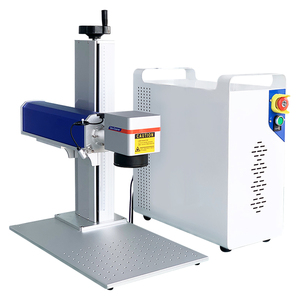
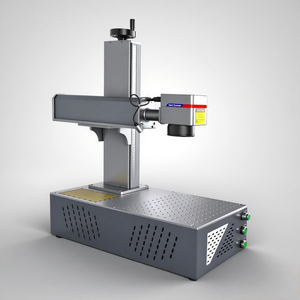
Fiber Laser Engraving Machine For Advertising Companies High-Powered Laser Marker
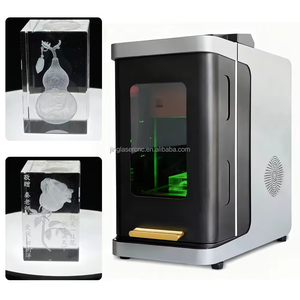
Air Cooling Green Light Laser Marking Machine Portable 2D 3D Crystal Glass Block Ball Subsurface Inner Laser Engraver
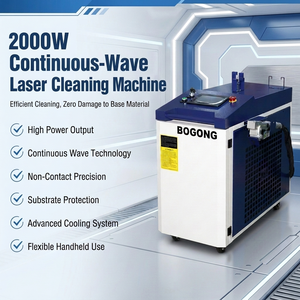
BOGONG 2000W CW Laser Cleaning Machine Handheld Industrial Rust Removal Floor Coating Surface Treatment for Construction Metal
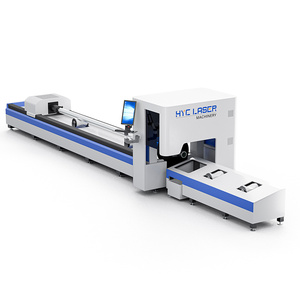
High-Quality Durable Multifunctional Fiber Laser Tube Cutting Machine For Industrial Metal Pipe Processing Equipment
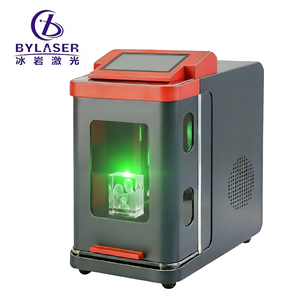
BingYan Portable 3D 2D Desktop Handheld Metal and Nonmetal Green Laser Engraver Marker Marking Glass Crystal Acrylic
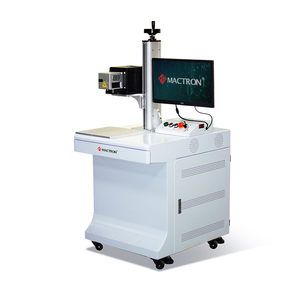
Green Laser Marking Machine 3D Crystal Internal Laser Engraving Machine for Copper Glass Ceramics FPC
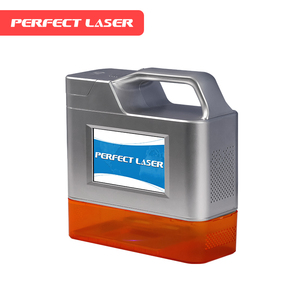
Perfect Laser- Portable Handheld Enclosed Mini Automatic DIY Portable Laser Engraver/ Mini Laser Marker
Strategic Sourcing Insights
The Shift to Handheld Laser Welding in Global Manufacturing
The global metal fabrication landscape is undergoing a structural transition. Legacy joining methods—specifically Tungsten Inert Gas (TIG) and Metal Inert Gas (MIG) welding—are facing unprecedented pressures due to escalating labor costs, a shrinking demographic of certified manual welders, and stringent structural tolerances. In response, **China's handheld laser welder manufacturing cluster** has emerged as the global epicenter for high-efficiency, cost-competitive optical joining technologies.
Contemporary fiber laser welding platforms utilize high-brightness continuous wave (CW) diode sources ranging from 1000W to 3000W. By concentrating energy into a tightly focused spot (typically 0.2mm to 0.5mm), handheld fiber laser welders achieve power densities exceeding 106 W/cm². This enables rapid keyhole-mode welding with localized heat input, reducing thermal deformation by up to 85% compared to legacy arc methods.
Information Gain Metric: Procurement data indicates that replacing a 4-operator TIG station with a single 2kW wobble handheld laser welder yields an average **4.2x throughput gain** while cutting post-weld grinding labor by 90% across stainless steel sheet fabrications.
4-10x
Faster Welding Velocity
< 0.5mm
Minimal Heat Affected Zone
100,000h
Diode Resonator MTBF
85%
Post-Grinding Reduction
Hardware Architecture
Technical Anatomy of China's Top Handheld Laser Welders
Understanding the optical, mechanical, and safety subsystems required for industrial 24/7 duty cycles.
Fiber Laser Resonators
Leading Chinese manufacturers leverage top-tier fiber sources (Raycus, Maxphotonics, JPT MOPA, and IPG). Modern single-mode resonators maintain an M² beam quality < 1.3, ensuring high wall-plug efficiency (>30%) and stable power delivery across extended operational shifts.
Dual-Axis Wobble Optical Heads
Standard static laser heads are prone to strict joint gap alignment issues. Modern Chinese handheld welders feature high-speed galvo-driven wobble heads, swinging the beam in circle, triangle, or line patterns up to 300Hz. This expands weld width to 5mm and bridges gap variations seamlessly.
Dual-Loop Safety Interlocks
Export-grade systems adhere to international CE safety guidelines (IEC 60825-1). Integrated safety loops ensure the fiber laser fires only when the copper nozzle maintains electrical ground contact with the workpiece, preventing accidental stray reflections.
Benchmarking: Handheld Laser Welding vs. Traditional Joining
To quantify the return on investment (ROI) for global buyers, the matrix below highlights operational parameters across steel and aluminum fabrication scenarios:
| Performance Parameter | TIG (GTAW) Welding | MIG (GMAW) Welding | Standard Handheld Laser (1.5kW-2kW) |
|---|---|---|---|
| Welding Speed (1.5mm Stainless Steel) | 150 - 250 mm/min | 350 - 500 mm/min | 1200 - 2500 mm/min |
| Heat-Affected Zone (HAZ) | Broad (> 4.0mm) | Extensive (> 6.0mm) | Ultra-Narrow (< 0.6mm) |
| Thermal Distortion / Sheet Deformation | Severe (Requires Straightening) | High (Requires Fixturing) | Negligible to Zero |
| Operator Training Curve | 3 to 5 Years Apprenticeship | 1 to 2 Years Experience | 2 to 4 Hours Basic Briefing |
| Consumables Cost | Tungsten Electrodes, Gas Cups | Drive Rolls, Contact Tips, Liner | Protective Lenses, Copper Nozzles |
| Post-Weld Processing Required | Heavy Grinding, Pickling, Polishing | Slag Removal, Grinding | Minimal Light Wipe Down |
Industry Horizon
Future Procurement Trends in China's Laser Manufacturing Sector
As global supply chains demand higher efficiency and greater adaptability, Chinese laser machine suppliers are shifting focus from simple hardware assembly to fully integrated optical engineering systems. Sourcing directors evaluating Chinese OEMs for 2026–2030 contracts should track four critical technological trends:
1. Air-Cooled All-In-One Architectures
While traditional 1.5kW to 3kW setups rely on water chillers, the latest generation of air-cooled handheld laser welders utilizes micro-channel heat sinks and phase-change thermal management. This reduces machine weight by over 50%, enabling ultra-portable units suitable for field repair, construction site installation, and aerospace maintenance.
2. 4-in-1 Multi-Function Optical Heads
Versatility is paramount for job shops. Top tier Chinese factories now supply multi-functional laser heads capable of switching between laser welding, seam cleaning, rust removal, and sheet cutting within seconds by swapping modular nozzles and calling custom CNC parameter presets.
3. Cobot-Assisted Automated Handheld Cells
Bridging the gap between manual flexibility and industrial automation, leading suppliers are deploying collaborative robot (Cobot) mounting packages for handheld guns. Fabricators can perform manual tack welding or latch the gun to a 6-axis cobot arm for automated repeat production runs.
4. IoT-Connected Real-Time Beam Monitoring
To support ISO 9001 and aerospace traceability, next-gen Chinese laser platforms integrate embedded sensors within the optical head. Parameters such as lens temperature, cover slide integrity, protective gas flow rate, and instantaneous power feedback are logged directly to cloud dashboard systems.
Quality Assurance
Buyer's Audit Guide: Evaluating Chinese Laser Suppliers
A structured framework for B2B procurement managers to verify technical authenticity, quality control, and export capabilities.
1. Component Traceability
Ensure the supplier uses genuine tier-1 laser sources (Raycus, Max, JPT, IPG) with verifiable serial numbers. Low-cost vendors may supply refurbished resonators or gray-market optical modules without warranty backing.
2. Burn-In & Optical Testing
Inquire about the factory's quality inspection process. Reputable suppliers conduct a minimum of 72 hours continuous power burn-in and optical power meter verification to check for thermal lens drift prior to shipping.
3. International Compliance
Verify that export models possess valid CE certification under the Machinery Directive (2006/42/EC) and EMC Directive (2014/30/EU), along with FDA access numbers for North American distribution safety requirements.
Laser Power Selection Guide by Material Thickness
Selecting the optimal power rating prevents over-specifying operational equipment costs while ensuring sufficient penetration depth for structural joints:
| Laser Source Power | Stainless Steel (Single Pass) | Carbon Steel (Single Pass) | Aluminum Alloy (Single Pass) | Brass / Copper (Single Pass) |
|---|---|---|---|---|
| 1000 Watt CW | Up to 3.0 mm | Up to 3.0 mm | Up to 1.5 mm | Up to 1.0 mm |
| 1500 Watt CW | Up to 4.5 mm | Up to 4.0 mm | Up to 2.5 mm | Up to 2.0 mm |
| 2000 Watt CW | Up to 6.0 mm | Up to 5.5 mm | Up to 4.0 mm | Up to 3.0 mm |
| 3000 Watt CW | Up to 8.0 mm | Up to 8.0 mm | Up to 6.0 mm | Up to 5.0 mm |
Enterprise Strengths
Why Partner with Our Verified OEM Manufacturing Lines
30+ Years of Optical Systems Engineering
Engineered under strict ISO 9001 accredited quality management frameworks, our industrial laser platforms, MOPA fiber engravers, and 3D galvo platforms represent decades of refinement in optomechanical design and thermal stability control.
Bespoke Customization & Automation Integration
We provide tailored solutions including integrated wire feeders, customized ergonomic torch heads, automated plate loaders, and specialized CNC cobot cells engineered for high-throughput production lines across aerospace, medical, automotive, and general fabrication industries.
Global Field Engineering Support & Logistics
With systems deployed across 46 countries, our international network delivers rapid technical support, spare parts distribution, applications lab material testing, and ongoing engineering support for continuous 24/7 industrial uptime.
Stringent Quality Assurance Testing
Every laser resonator, wobble gun optic, and water chiller system undergoes rigorous pre-shipment bench testing, beam quality mapping, and full-power burn-in cycles to guarantee instant plug-and-play reliability upon delivery.
Frequently Asked Questions
Industrial Laser Procurement & Operations FAQ
Detailed technical answers addressing shielding gas selection, consumable wear, safety, and operational maintenance.
Which shielding gas is best for handheld laser welding stainless steel vs. aluminum?
For stainless steel, high-purity Nitrogen (99.999%) is recommended when a clean, oxide-free, bright silver finish is required, as it prevents oxidation and maintains corrosion resistance. Argon gas can also be used, though it may produce a slightly darker bead finish. For aluminum alloys and reactive metals, high-purity Argon (99.999%) is mandatory to shield the melt pool from oxygen absorption and eliminate porosity.
What are the main consumable parts of a handheld laser welder, and how often must they be replaced?
The primary consumables are the protective cover slide glass and the copper welding nozzle. Under clean operational conditions with proper gas flow, a protective lens typically lasts 120 to 200 operational hours. Copper nozzles last several months unless damaged by mechanical contact or severe spatter accumulation. Maintaining clean compressed air/shielding gas lines significantly extends optical glass longevity.
Can a handheld fiber laser welder successfully join dissimilar metals?
Yes. Due to the high energy density and precise thermal control of wobble fiber laser heads, handheld systems can effectively weld certain dissimilar metal combinations—such as copper to stainless steel, brass to copper, or carbon steel to stainless steel. Selecting the correct wobble amplitude, wire feed chemistry, and pulse modulation settings is crucial to managing intermetallic phase creation.
What safety protocols are required for operating a Class 4 handheld laser welder?
Operators must wear certified Laser Safety Glasses (OD6+ rating matched to 1064nm / 1080nm wavelengths) to protect eyes from scattered beam reflection. The working zone should feature laser safety curtains, interlocking door switches, and appropriate fume extraction to remove airborne metal micro-particles. The machine's safety grounding interlock wire must be clipped directly to the conductive metal workpiece.
How does an auto wire feeder function with a handheld laser torch?
An automated wire feeder syncs directly with the laser welder control board. When the operator pulls the torch trigger, the feeder advances solid wire (0.8mm to 1.6mm diameter) directly into the wobble laser beam path at a set feed speed (mm/s). This fills larger seam gaps (up to 2.5mm) and adds structural reinforcement to fillet and butt joints without requiring manual filler rod feeding.
What is the difference between air-cooled and water-cooled handheld laser welders?
Water-cooled systems use a dual-circuit refrigerant chiller to maintain precise optic and laser source temperatures, allowing continuous 24/7 heavy-duty operation in high ambient temperatures (up to 45°C). Air-cooled systems use high-velocity fans and micro-channel radiators; they offer superior mobility and a smaller footprint, making them ideal for light-to-medium intermittent fabrication and site installation work.
What power supply and electrical infrastructure is needed for a 2kW handheld laser welder?
A standard 1.5kW to 2kW water-cooled handheld fiber laser welder typically operates on single-phase 220V ±10% AC power (50/60Hz) with a peak current draw of approximately 25-35A. Systems rated at 3kW and above usually require three-phase 380V power infrastructure to ensure stable voltage supply during continuous operation.
How do Chinese laser factories handle international warranty and technical service?
Leading manufacturers provide comprehensive 2 to 3-year warranties on fiber laser sources and key optoelectronic modules. Technical service is delivered via dedicated online remote diagnostics, express air dispatch of replacement optical modules, and localized distributor network support for site calls and operator training.