
Recommended Industrial Laser & Cutting Systems
Precision-engineered fiber, UV, and CO2 laser machinery manufactured under accredited ISO 9001 and CE quality standards for export worldwide.
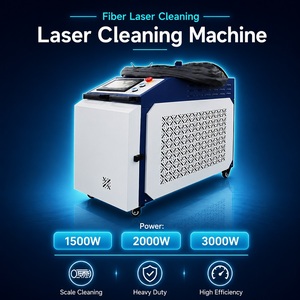
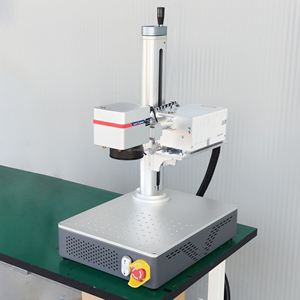
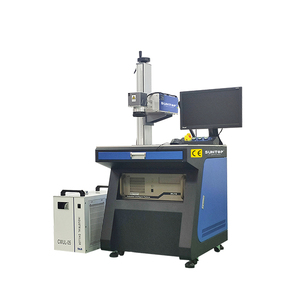
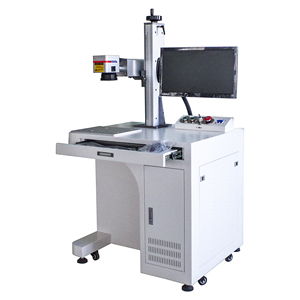
Executive Summary: Navigating China’s Advanced Industrial Laser Supply Ecosystem
The global industrial laser market has undergone a paradigm shift over the past decade. China has transformed from a localized assembly hub into the world's most comprehensive manufacturing ecosystem for optical components, high-power fiber laser generators, ultra-fast UV beam delivery optics, and automated CNC laser cutting workstations. For international procurement managers, enterprise engineers, and OEM brand owners, sourcing directly from top China laser cutting machine factories and exporters provides an unmatched balance of technological sophistication, capital efficiency, and rapid customization.
However, selecting the right manufacturing partner requires evaluating parameters far beyond top-line wattage or structural price points. Enterprise buyers must analyze optical beam quality ($M^2$), galvo dynamics, motion controller integration, thermal stability interlocks, and compliance with international standards such as CE machine safety directives and ISO 9001 quality management systems. This whitepaper serves as an authoritative guide for industrial buyers seeking to deploy fiber laser cutters, MOPA pulse marking systems, UV cold processing machines, and automated laser cleaning heads into automated production environments.
3D Dynamic Focusing Systems
Integrated 3-axis beam delivery keeps optical focus across stepped, inclined, and non-planar surfaces without mechanical height adjusters.
ISO 9001 & CE Compliance
Rigorous quality controls with dual interlocked laser safety enclosures, Class 1 light shielding, and electromagnetic safety compliance.
MOPA Fiber & UV Cold Marking
Adjustable pulse duration (1 to 500 ns) enables anneal marking on stainless steel, dark marks on anodized aluminum, and zero-heat glass etching.
Technical Breakdown of Industrial Laser Wavelengths & Processing Applications
Understanding the fundamental interaction between laser wavelengths and material absorption spectrums is essential when choosing hardware platforms. Leading Chinese factories manufacture systems utilizing three primary laser source categories:
1. Fiber Lasers (1064nm Wavelength) – High Power & Metallurgical Processing
Fiber lasers represent the backbone of heavy sheet metal fabrication, automotive component marking, and structural rust removal. Operating at a near-infrared wavelength of 1064nm, fiber lasers achieve exceptional absorption in conductive metals including carbon steel, stainless steel, aluminum, brass, and titanium.
- Continuous Wave (CW) Systems (1000W – 3000W+): Engineered for continuous high-speed sheet metal cutting and heavy surface rust/paint stripping. CW lasers deliver high photon volume, achieving clean molten kerf ejection when paired with high-purity nitrogen or oxygen assist gas.
- MOPA Pulsed Fiber Lasers (20W – 300W): Master Oscillator Power Amplifier (MOPA) technology allows independent adjustment of pulse frequency and pulse duration. Unlike fixed-pulse Q-switched lasers, MOPA lasers allow micro-scale control of heat input, making them suitable for corrosion-free black annealing on medical-grade 316L stainless steel, high-contrast marks on ABS plastics, and high-frequency ablation of thin films.
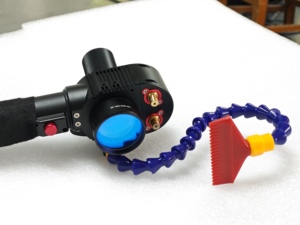
- Handheld Pulse Cleaning Guns: Ultra-lightweight cleaning heads (such as 800g ergonomics guns) with QCS connectors allow field technicians to remove oxides, oil coating, and paint without thermal warping or damaging the underlying substrate.
2. Ultraviolet (UV) Lasers (355nm Wavelength) – Cold Processing & Sensitive Micro-Structure
UV lasers utilize Third Harmonic Generation (THG) to convert 1064nm infrared light into a high-energy 355nm ultraviolet beam. Because UV photons possess photon energy high enough to directly break molecular bonds within organic polymers and glasses (a process known as photochemical ablation), thermal diffusion into surrounding material is practically eliminated.
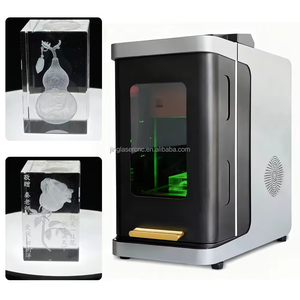
- Glass & Crystal Processing: Eliminates micro-cracks and thermal fracture stress when marking delicate glass vials, silica substrates, or subsurface 3D crystal blocks.
- Medical & Electronics Packaging: Produces dark, permanent, chemical-resistant Universal Device Identification (UDI) codes on medical-grade HDPE, PTFE, and silicone without additives or chemical ink contamination.
3. Carbon Dioxide (CO2) Lasers (10.6µm Wavelength) – Non-Metallic Processing
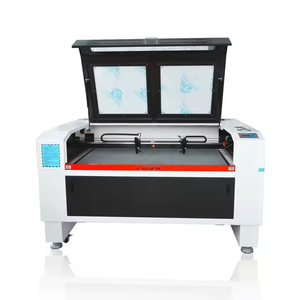
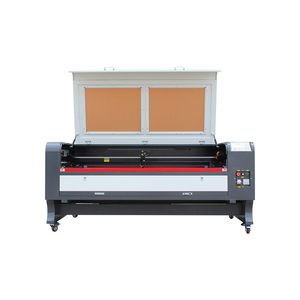
Operating in the far-infrared band, CO2 lasers are optimized for organic substrates and synthetic polymers. High-end Chinese OEM factories produce flying-optics gantry tables (e.g., 6090, 1390, 1610 frame sizes) and high-speed Galvo CO2 cutting systems capable of high-speed vector cutting and raster engraving on acrylic, timber, leather, textiles, and paperboards.
Industrial Machine Specification Matrix
The following evaluation matrix outlines operating parameters across core industrial laser cutting and marking architectures:
| Laser Source Type | Wavelength | Primary Materials | Thermal Impact Zone | Processing Speed | Expected Diode Lifespan |
|---|---|---|---|---|---|
| CW Fiber Laser | 1064 nm | Stainless, Carbon Steel, Brass, Al | Medium to High | Extreme (up to 50m/min) | 100,000 Hours |
| MOPA Fiber Laser | 1064 nm | Metals, Anodized Al, Hard Plastics | Low to Controlled | High (Galvo up to 12,000 mm/s) | 100,000 Hours |
| UV Cold Laser | 355 nm | Glass, Polymers, Silicon, Ceramics | Negligible (Cold Cutting) | High Precision Micro-Coding | 20,000 - 30,000 Hours |
| CO2 Sealed Tube / RF | 10.6 µm | Acrylic, Wood, Fabrics, Leather, Organics | Localized Thermal Melting | Medium to High Vector Speed | 10,000 - 40,000 Hours |
| Green Light Laser | 532 nm | Subsurface Crystal, Highly Reflective Metals | Very Low | Subsurface Micro-Dot Matrix | 30,000 Hours |
Future Procurement Trends in Industrial Laser Machinery (2026–2030)
As smart manufacturing initiatives (Industry 4.0) expand across global supply chains, international buyers must align their procurement strategies with several structural technology shifts occurring within top Chinese laser manufacturing facilities:
1. Deep Integration of Industrial Automation & Cobots
Stand-alone laser workstations are rapidly giving way to automated robotic cells. Leading Chinese exporters now design standard interfaces for Collaborative Robots (Cobots), pneumatic automated plate loaders, inline conveyor tracking sensors, and automated part feeding systems. These integrations enable 24/7 unattended batch marking and cutting, driving down per-unit labor overhead for high-volume automotive and electronics manufacturing.
2. Transition to Ultra-Fast Picosecond & Femtosecond Processing
While nanosecond-range fiber and UV lasers remain industry workhorses, ultra-fast laser sources operating in the picosecond ($10^{-12}\text{s}$) and femtosecond ($10^{-15}\text{s}$) pulse duration domain are moving into mass production. These ultra-short pulses prevent thermal conduction into surrounding metal lattices, enabling clean glass cutting, semiconductor wafer dicing, and micro-fluidic channel drilling with zero burrs or recast layers.
3. Modular Machine Frameworks & Mil-Spec Structural Rigidity
Top-tier exporters have replaced lightweight sheet metal housings with welded, stress-relieved heavy-duty steel gantries and military-spec aluminum structural profiles. Machine beds undergo finite element analysis (FEA) and high-temperature annealing treatment to ensure lifetime dimensional stability, preventing bed deflection over 15+ years of multi-shift operation.
4. Embedded AI Vision & Closed-Loop Quality Diagnostics
Modern Chinese laser machinery incorporates integrated CCD coaxial cameras and machine-vision software algorithms. The system automatically detects part placement, aligns cutting paths to dynamic component coordinates, and performs real-time optical quality inspection of barcodes, QR codes, and cut kerfs—ejecting defective components automatically without operator intervention.
Enterprise Procurement FAQ
Addressing critical technical, logistical, and compliance questions raised by international sourcing teams.
How do I verify the E-E-A-T and real manufacturing credentials of a Chinese laser factory?
What optical components and laser source brands should be specified in the contract?
What is the difference between Q-switched and MOPA fiber lasers for metal marking?
How does international warranty support, spare parts distribution, and technical service operate?
What electrical, safety, and assist gas infrastructure is required for installation?
Can I request a sample testing report prior to issuing a purchase order?
Validate Your Application with Factory Engineering Specialists
Partner directly with China's leading laser machinery manufacturing engineering team. Request a custom system configuration quote, schedule a live virtual factory demo, or order a complimentary material sample test today.
Get a Quote