
Featured Industrial Laser Marking & Processing Machinery
Explore our wholesale catalog of high-precision fiber, UV, CO2, and portable pulse laser equipment engineered for global OEM smart factories.
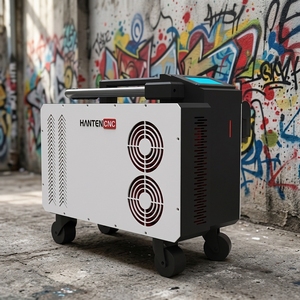
Laser Graffiti Removal Machine Portable Pulse Cleaning Equipment for Wall Stone Surface Restoration
Get Catalog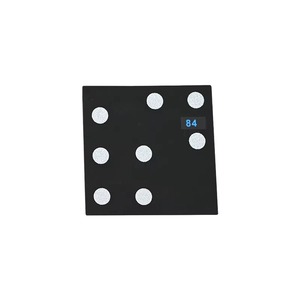
Custom 8-Point Magnetic Coded Reflective Positioning Markers For Handheld Laser 3D Scanning Industrial Measurement
Get Catalog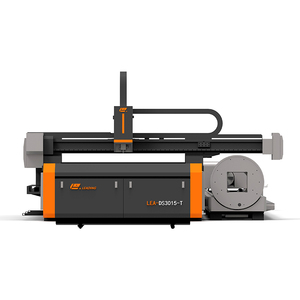
Quality 3000W CNC Tube Fiber Laser Cutting Machine New 6m Metal Pipe Laser Head for Raytools AI/LAS DST 13% Water Supports PLT
Get Catalog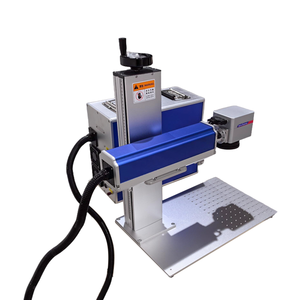
Industrial Fiber Laser Marking and Engraving Machine Split-type 0.001mm Ultra-High Precision Color Marking for All Metals
Get Catalog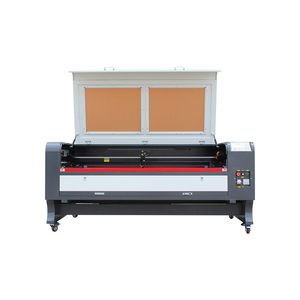
4060 9060 1080 1390 Engraving Laser Machine 100w 300w Co2 Laser Engraving Machine Wood Laser Engraving Machine
Get Catalog
New Portable Metal 20W CNC 3D Desktop Mini Fiber Laser Marking Machine with DXF/AI/DST Support Price
Get Catalog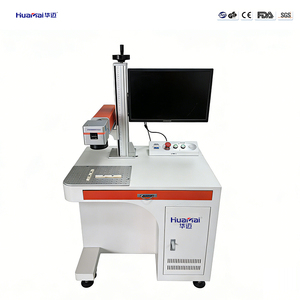
JPT Mopa M7 60W 100W Stainless Steel Color Laser Marking Machine 3d Metal Plate Deep Engraving Fiber Laser Machine
Get Catalog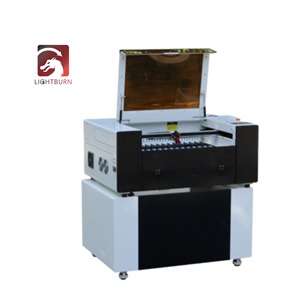
SM-Pro Series 1000x600mm CO2 Laser Engraving Cutting Machine 50W-130W Lightburn Compatible
Get CatalogPrecision Engineering & Manufacturing Leadership
Setting global industry standards in robotic integration, high-speed dynamic galvo scanning, and industrial laser source engineering.
Direct Sourcing from China Robotic Laser Marker Manufacturers: An Industry Whitepaper
The global manufacturing ecosystem is undergoing a dramatic paradigm shift towards zero-defect automation, direct part marking (DPM) traceability, and flexible 3D robotic manufacturing cells. As enterprise buyers seek high ROI, direct factory procurement of robotic laser markers from premier Chinese manufacturers has become a critical strategic lever. Integrating multi-axis industrial robotic arms (such as 6-DOF articulated units and COBOTs) with state-of-the-art laser processing heads—spanning MOPA fiber, UV cold laser, and ultra-fast pulse cleaning technology—provides unprecedented adaptability for complex 3D contoured surfaces, automotive structural components, aerospace airframes, and medical device assembly lines.
Modern industrial robotic laser marking transcends traditional flatbed desktop galvo systems by decoupling the focal field from rigid mechanical gantries. By mounting a compact 3D dynamic galvo scanning head to a high-repeatability articulated robotic arm, manufacturers achieve omnidirectional focal adjustment across complex spatial geometries. Whether applying high-contrast Data Matrix Codes (DMC), UID serial numbers, deep engraved logos, or non-destructive surface cleaning, Chinese wholesale manufacturers offer modular hardware architectures, advanced kinematic inverse solvers, and open-protocol software interfaces (OPC UA, Ethernet/IP, Profinet) designed for seamless Industry 4.0 integration.
3D Dynamic Beam Delivery
Integrated 3-axis galvo dynamic focus optics keep the beam focused across curved, angled, and multi-tiered surfaces without manual mechanical z-axis stage adjustment.
Open Communication Protocols
Compatible with industrial standard fieldbuses including Ethernet/IP, Profinet, Modbus, and OPC UA for real-time PLC synchronization and automated ERP logging.
Industrial Safety Compliance
Built strictly in compliance with CE standards, ISO 9001 quality management systems, and Class 1 laser safety enclosure integration options for 24/7 continuous operation.
Core Engineering: Laser Wavelengths, Optics & Robotic Kinematics
Selecting the optimal robotic laser marking configuration requires a precise technical understanding of laser-material interaction dynamics. Chinese OEM manufacturers utilize three primary optical wavelengths, each engineered for specific industrial applications:
MOPA & Q-Switched Fiber (1064nm)
Ideal for non-ferrous metals, stainless steel black annealing, anodized aluminum, titanium, and high-density engineering plastics. Adjustable pulse durations (2ns to 500ns) allow fine heat-input control to prevent thermal deformation.
Cold UV Laser (355nm)
Third-harmonic generation (THG) ultraviolet lasers provide "cold processing" with minimal Heat-Affected Zone (HAZ). Crucial for delicate glass etching, medical device UDI compliance, thermo-sensitive polymers, and micro-electronics.
RF & Glass Tube CO2 (10.6µm)
Designed for organic non-metallic materials, including acrylics, wood, leather, paperboard packaging, and textile cutting. High-power CO2 sources offer rapid volumetric vector engraving and high-speed raster processing.
Technical Comparison: Static Desktop vs. Inline Conveyor vs. Robotic 3D Laser Marker
To help enterprise procurement teams evaluate capital equipment investments, the matrix below outlines key performance metrics across machine configurations:
| Evaluation Parameter | Static Desktop Fiber | Inline Conveyor Marker | 6-Axis Robotic 3D Marker |
|---|---|---|---|
| Spatial Flexibility | 2D Flat Plane (Fixed Z-Stage) | 2.5D Linear Motion | Full 3D / 6-DOF Omnidirectional |
| Focal Adjustment | Manual or Motorized Z-Axis | Fixed Focal Distance | Dynamic Real-Time 3D Scanning |
| Throughput / Batch Processing | Manual Part Placement | High-Speed Continuous (2D) | Automated Unattended 24/7 Cycle |
| 3D Curved Surface Capability | Not Supported (Requires Rotary) | Limited | Seamless Contour Scanning |
| Vision System Integration | Basic 2D Camera Alignment | Line Scanners | 3D Photogrammetry & Laser Tracking |
| Average ROI Horizon | 6–12 Months | 12–18 Months | 8–14 Months (High Volume) |
Future Sourcing Trends & Technological Roadmaps (2025–2030)
As smart factories transition from isolated automated islands to fully interconnected cyber-physical systems, procurement officers and engineering directors must align their equipment specifications with upcoming technological developments. China's top laser marker manufacturers are pioneering several critical breakthroughs:
1. AI Vision-Guided Photogrammetry
Future robotic markers incorporate real-time 3D stereo vision cameras and reflective positioning markers. The system automatically calculates target coordinate offsets, dynamic orientation deviations, and adjusts robotic tool center points (TCP) on-the-fly without rigid physical fixtures.
2. Collaborative Robot (COBOT) Safety Coexistence
Replacing heavy, fenced industrial robots, lightweight collaborative arms equipped with force-torque sensors and Class 1 laser safety interlocks allow operators to work side-by-side with marking equipment in retail, workshop, and flexible electronics environments.
3. Ultra-Fast Femtosecond & Pico Pulse Processing
Industrial demand is shifting toward picosecond and femtosecond ultra-short pulse lasers. By delivering energy faster than electron-phonon coupling times, micro-marking and color marking on metals occur with zero thermal dissipation, eliminating post-process polishing.
4. Sustainable Green Manufacturing & Energy Efficiency
Next-generation high-efficiency fiber and diode lasers consume up to 40% less electrical power than early-generation flashlamp or legacy RF CO2 devices, while air-cooled modular designs significantly cut maintenance overhead and eliminate water chiller consumables.
Why Partner with Premier China Wholesale Laser Marker Manufacturers?
Navigating global supply chain logistics requires a vendor that combines deep technical domain expertise with robust quality assurance. Our manufacturing enterprise brings over 30 years of laser systems heritage, backed by ISO 9001 management protocols and comprehensive international certifications.
End-to-End Modular Customization
From initial optical beam profiling to custom mechanical tooling, rotary axis integration, and software SDK customization, we tailor equipment precisely to your production line requirements.
Stringent Quality Assurance & Testing
Every laser system undergoes rigorous 72-hour continuous burn-in testing, beam waist power density verification, and multi-axis positioning accuracy checks before international dispatch.
Global Technical Support & Warranties
Backed by an international authorized service network across 46 countries, we provide comprehensive technical support, remote telemetry diagnostics, and long-term warranty coverage.
Frequently Asked Procurement Questions (FAQ)
Critical answers for procurement specialists, plant managers, and industrial automation system integrators.
What laser source and power output do I need for high-speed metal part marking?
For standard metals (stainless steel, carbon steel, copper, aluminum), a 20W to 50W MOPA or Fiber laser source is typically optimal. High-frequency MOPA lasers (e.g., JPT M7 series) allow fine pulse width adjustments, enabling deep vector engraving, non-destructive dark annealing on stainless steel, and vibrant color marking on titanium plates. For thick tube cutting or deep mold engraving, powers ranging from 100W up to 3000W fiber systems are required.
How do industrial robotic arms integrate with galvo laser marking heads?
Robotic arms (such as FANUC, KUKA, ABB, Yaskawa, or universal COBOTs) communicate with the laser marking controller via high-speed I/O signals, Ethernet/IP, or TCP/IP socket interfaces. The robot moves the optical scan head or the work workpiece to the target spatial coordinate, triggers the laser controller via hardware handshakes, and executes dynamic 3D scanning scripts while maintaining constant focus via 3-axis dynamic galvo lenses.
What is the minimum order quantity (MOQ) and lead time for wholesale procurement?
Our standard MOQ is 1 set for evaluation units, with tiered wholesale volume discounts available for system integrators and distributors. Standard stock models ship within 5 to 7 working days, while custom-engineered robotic automation cells, bespoke enclosures, or multi-axis production systems typically carry a manufacturing lead time of 15 to 25 working days.
Are your machines compliant with international CE and safety regulations?
Yes. All machines manufactured at our facility adhere strictly to CE regulations (Directive 2006/42/EC on Machinery and 2014/30/EU on Electromagnetic Compatibility). Systems are produced under an ISO 9001 certified quality management framework. We offer Class 1 fully enclosed laser safety workstations with interlocked door switches, exhaust filtration ports, and optical safety viewports for regulatory compliance in Europe and North America.
Can we test sample parts before placing a commercial equipment order?
Absolutely. We encourage all prospective buyers to submit sample materials or CAD files. Our optical applications laboratory will conduct comprehensive marking, engraving, or cleaning trials, providing detailed microscopic surface analysis, process speed data, and high-resolution optical reports free of charge.
What international warranty and technical support coverage is provided?
Systems supplied internationally include comprehensive 3 to 5 year factory warranties on major components (including laser sources like JPT, Raycus, IPG, and MAX). Our global service team provides 24/7 remote diagnostic support, software upgrades, and on-site engineering dispatch via our authorized distributor network in over 46 countries.
Strategic B2B Procurement Checklist for Robotic Laser Marker Sourcing
To maximize operational efficiency and prevent integration bottlenecks, engineering teams should evaluate prospective China wholesale manufacturers against the following criteria:
1. Optical Beam Quality & Source Integrity
Verify beam spatial mode (M² < 1.3), power stability (< ±1%), and optical source manufacturer authenticity (Raycus, JPT, IPG, CO2 RF metal tube).
2. Robotic Kinematics & Payload Capacity
Ensure robotic arm payload capacity exceeds the combined weight of the 3D dynamic galvo head, camera vision modules, and optical cabling harness (typically 5kg–10kg minimum).
3. Software SDK & Communication Interoperability
Confirm the laser software platform (EzCad3, LightBurn, or custom dynamic DLLs) supports C++, C#, Python, and industrial PLC fieldbus integration.
Request Factory-Direct Pricing & Technical Specifications
Partner with a trusted China wholesale manufacturer. Contact our application engineering team today to receive product catalogs, CAD models, and sample testing reports.