
Industrial Laser Machinery Catalog
Direct Factory Wholesale Supply of High-Precision UV, MOPA Fiber, CO2 Laser Marking & Cutting Solutions
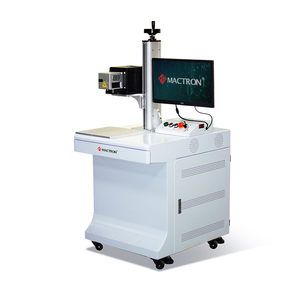
Green Laser Marking Machine 3D Crystal Internal Laser Engraving Machine for Copper Glass Ceramics FPC
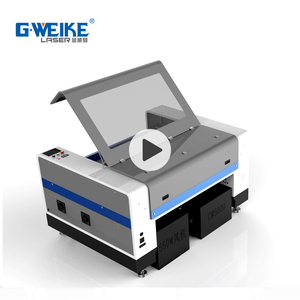
G.WEIKE 150 Watts 400 Watt Acrylic CO2 Laser Cutting Machine
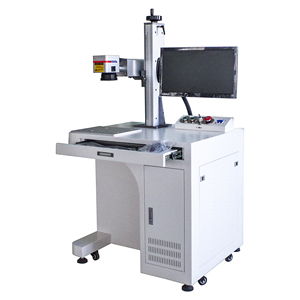
Cabinet Desktop Laser 20w 30w 50w Fiber Laser Marking Engraving Machine with Computer
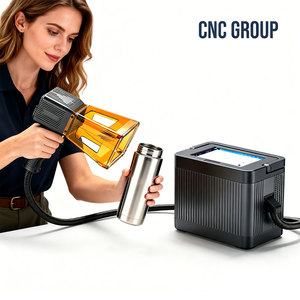
New Portable Metal 20W CNC 3D Desktop Mini Fiber Laser Marking Machine with DXF/AI/DST Support Price
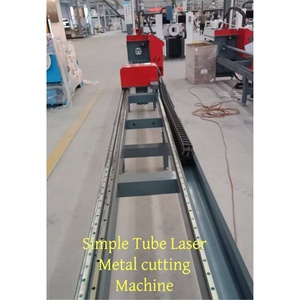
1500watt Mini Fiber Laser Tube Cutting Machine Compact Design for Steel Aluminum Thin Metal Pipe Cutter 6 Meter
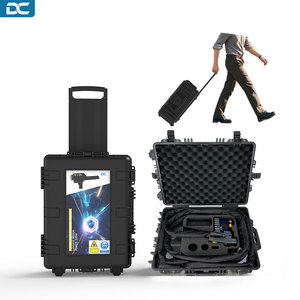
Dachuan Handheld 500W Portable Pulsed Fiber Laser Cleaner Wood Metal Stone Stainless Steel Aluminum Paper Laser Cleaning Machine
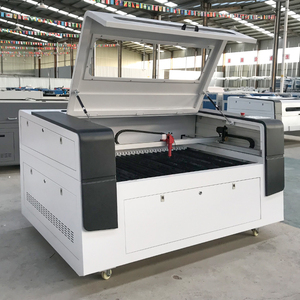
100W AI Laser Engraving Motor Metal Sheet Acrylic Plastic PVC Wood Paper CO2 Laser Cutting Machine
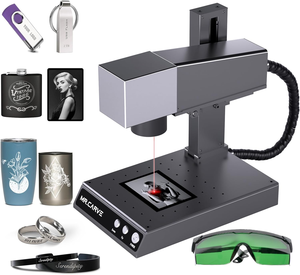
DAJA M1 Pro Small Fiber Laser Jewelry Cutting and Graving Metallic Metal Laser Engraver Marking Name logo Necklace Machine
1. Photochemical Processing Mechanics of 355nm UV Laser Systems
In modern industrial precision manufacturing, thermal ablation—typical of standard 1064nm infrared fiber lasers—presents severe operational challenges when applied to heat-sensitive polymers, ultra-thin silicon wafers, flexible printed circuit (FPC) boards, and high-purity glass substrates. Infrared lasers operate via photothermal processing, heating material locally to its vaporization point, which inherently leaves a Heat-Affected Zone (HAZ), micro-fractures, edge charring, or stress deformation.
As a leading China Wholesale UV Laser Marker Supplier & Exporter, our manufacturing framework prioritizes 355nm Ultraviolet (UV) tripled-frequency diode-pumped solid-state (DPSS) lasers. UV light utilizes photochemical ablation (commonly termed "Cold Marking"). Because the 355nm photon carries significantly higher quantum energy than fundamental infrared wavelengths, it directly breaks the intramolecular or atomic chemical bonds within organic and inorganic materials without inducing thermal energy transfer.
Core Advantage of 355nm Cold Processing: Photons break polymer chains directly at the molecular level, achieving crisp, zero-crack, high-contrast marks with virtually zero micro-melting or heat distortion on sensitive components.
This distinct photochemical mechanism renders UV laser markers essential for high-yield production in semiconductors, micro-electronics packaging, pharmaceutical Unique Device Identification (UDI) marking, and luxury cosmetic container decoration.
| Laser Source Wavelength | Processing Mechanism | Heat-Affected Zone (HAZ) | Ideal Substrate Applications | Micro-Machining Precision |
|---|---|---|---|---|
| 355nm UV Laser | Photochemical bond breaking ("Cold Processing") | Negligible / Non-existent | Glass, FPC, HDPE/ABS/PET Plastics, Ceramics, Silicon | Ultra-High (<15 µm spot size) |
| 1064nm MOPA Fiber | Photothermal vaporization / Annealing | Moderate to High | Stainless Steel, Titanium, Aluminum, Brass, Opaque Synthetics | High (30–50 µm spot size) |
| 10.6µm CO2 Laser | Thermal melting & pyrolysis | High | Wood, Acrylic, Leather, Organic Cardboard, Textiles | Standard (100–150 µm spot size) |
2. Enterprise OEM/ODM Manufacturing Infrastructure & E-E-A-T Framework
Sourcing UV laser machinery directly from China requires rigorous supplier qualification. As a certified manufacturer with over three decades of operational engineering legacy, our infrastructure strictly adheres to international quality assurance standards including ISO 9001 Quality Management and full CE Compliance (Machinery Directive 2006/42/EC and Electromagnetic Compatibility Directive 2014/30/EU).
Our OEM/ODM wholesale supply capabilities cater directly to global distributors, machine integrators, and high-volume industrial end-users across 46 countries. Key elements of our supply framework include:
Optical Component Calibration
Every UV system integrates high-stability crystal resonators (LBO/BBO), precision galvanometers, and telecentric F-theta lenses, thoroughly burn-in tested for 72 continuous hours.
3D Dynamic Focusing Systems
Equipped with 3-axis galvo dynamic beam deflection modules, allowing seamless high-speed marking across stepped, inclined, cylindrical, or irregular 3D organic surfaces.
Traceability & Automation Ready
Supports automated inline conveyor coding, I/O signals, photoelectric sensor triggers, TCP/IP network protocol integrations, and automated dynamic serial/DataMatrix generation.
3. Global Procurement Trends & Industrial Laser Technology Outlook (2025–2030)
As international regulatory frameworks enforce stringent product traceability (such as the EU Digital Product Passport and FDA UDI regulations), procurement managers and industrial buyers face shifting technical demands. When evaluating long-term equipment investments with a China wholesale exporter, key structural trends must guide the purchasing evaluation:
- Transition toward Ultra-Short Pulse (Picosecond & Femtosecond) UV Lasers: While nanosecond DPSS UV lasers remain the industry workhorse, picosecond UV lasers are gaining market share in wafer dicing and OLED screen repair due to zero thermal dissipation.
- Integration of AI Vision & Automatic Defect Recognition: Modern UV systems now incorporate coaxial CCD camera positioning systems. Machine learning algorithms automatically verify part alignment and grade barcode quality (ISO/IEC 15415 standards) in real-time.
- Modular & High-Power Wholesale Platforms: Global buyers are increasingly seeking modular laser sub-assemblies (3W, 5W, 10W, up to 15W UV power outputs) that allow easy field maintenance and optical module swaps without requiring full system replacement.
- Environmentally Sustainable & Chemical-Free Processing: UV lasers eliminate ink consumables, toxic solvents, and physical etching acids, lowering total operational expenditure (OPEX) while fulfilling corporate ESG compliance metrics.
Why Partner with Us for Wholesale Sourcing?
Direct Factory Value, Custom Engineering Support, and Unmatched Global Service Logistics
Wholesale Factory Pricing
By eliminating middleman distributor markups, we deliver factory-direct wholesale pricing backed by scalable monthly production capacity exceeding 500 units.
Comprehensive Sample Testing
Send us your proprietary production components or materials. Our specialized applications team conducts optical feasibility studies and returns detailed process reports prior to order placement.
Worldwide Technical Support
Supported across 46 countries with multilingual technical engineering assistance, remote software calibration, and guaranteed worldwide express optical spare parts delivery.
Frequently Asked Questions (FAQ) for Industrial Procurement
Essential Answers for Global Buyers, System Integrators, and Technical Procurement Officers
What is the operational lifespan of a 355nm UV laser source?
Our high-grade DPSS 355nm UV laser sources are engineered with premium optical components, typically delivering an operational lifespan between 20,000 to 30,000 hours under standard industrial operating conditions. Regular maintenance of ambient temperature (via industrial water chillers) and clean environmental conditions ensures long-term power stability.
How does a UV laser marker differ from a standard Fiber laser marker?
The primary difference lies in the optical wavelength and material interaction. Fiber lasers operate at 1064nm (infrared) and utilize heat to mark or engrave, making them ideal for heavy metals like steel and aluminum. UV lasers operate at 355nm (ultraviolet) and utilize "cold" photochemical processing, making them superior for delicate materials like glass, transparent polymers, ceramic chips, and heat-sensitive electronics where thermal damage must be strictly avoided.
What wattage UV laser marker is recommended for wholesale buyers?
Selection depends on throughput requirements: 3W UV lasers are perfect for high-contrast superficial marking on plastics and glass containers. 5W UV lasers offer faster line speeds for inline automation packaging. 10W+ UV lasers are utilized for micro-cutting, high-speed drilling, FPC cutting, and deep glass etching applications.
What warranties and international certifications do your laser machines carry?
All exported machinery comes standard with CE compliance, ISO 9001 certified manufacturing validation, and a comprehensive 2 to 3-year factory warranty depending on the laser source configuration. Authorized global distribution partners also offer extended local service agreements.
Can your UV laser markers integrate into automated factory lines?
Yes. Our systems are equipped with industrial I/O communication ports, RS232/Ethernet interfaces, encoder inputs for mark-on-the-fly (MOTF) conveyor processing, and standard software integration drivers compatible with automated PLCs, robotic arms, and SCADA systems.
Request a Wholesale Quote & Free Material Sample Testing
Consult with our senior optical application engineers to identify the ideal UV, Fiber, or CO2 laser system for your factory line.