
State-of-the-Art Industrial Laser Marking Systems
Explore our factory-direct, highly customisable laser marking, cutting, and engraving solutions designed for continuous 24/7 manufacturing environments.
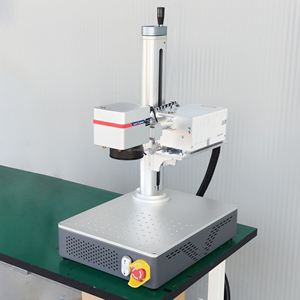
Portable Glass UV Laser Marker 5W Or Leaves Engraving Glass/stone/metal/wood
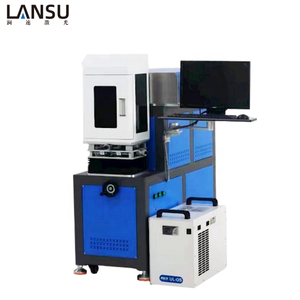
Green Laser Marking Machine 10W Green Laser Source for PCB QR Code 2D Code Plastic Glass Ceramics
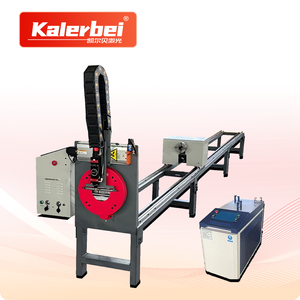
Mini CNC Automatic Fiber Laser Tube Cutter - Ideal for Small-Diameter Metal Pipe Processing
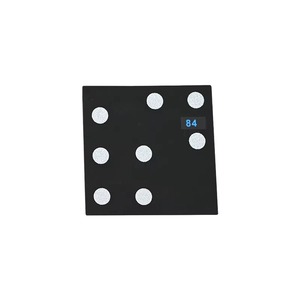
Custom 8-Point Magnetic Coded Reflective Positioning Markers For Handheld Laser 3D Scanning Industrial Measurement
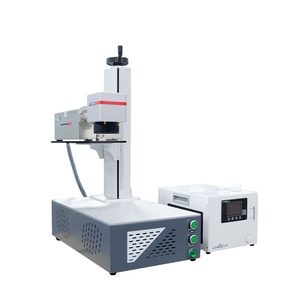
All-in-One UV Laser Engraver for Wood, Plastic & Coated Metals Perfect for Custom Jewelry, Keychains & Corporate Gifts
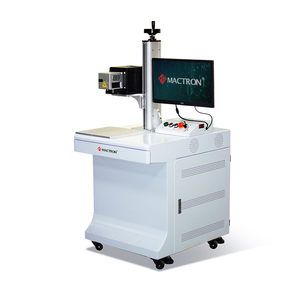
Green Laser Marking Machine 3D Crystal Internal Laser Engraving Machine for Copper Glass Ceramics FPC
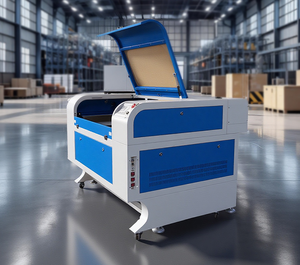
CO2 Laser Engraving Cutting Machine 6090 for Acrylic Wood Leather Fabric Rubber CNC Laser Engraver Nonmetal Cutting Equipment
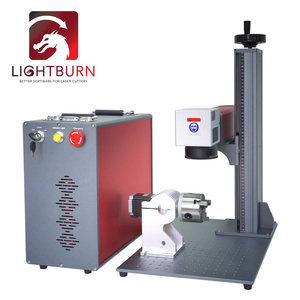
100W Jpt M7 Mopa CO2/Fiber Laser Marking Machine New Portable Bench-Top Air-Cooled 300x300mm 80mm Rotary Axis Supporting DXF/PLT
Architectural Engineering of Modern OEM CO2 Laser Marking Systems
In the rapidly evolving landscape of global manufacturing, direct-part marking (DPM), high-speed serialisation, and permanent compliance tracking have shifted from optional quality enhancements to strictly enforced regulatory imperatives. As a premier custom OEM CO2 laser marker factory and exporter, our engineering philosophy focuses on delivering high-fidelity photonics integration tailored to the stringent operational parameters of modern high-volume supply chains.
1. Wavelength Physics & Photothermal Substrate Absorption
The core advantage of CO2 laser marking technology lies in its operational wavelength, typically centered around 10.6 micrometres (µm), with specialised variants operating at 10.2 µm and 9.3 µm. Unlike short-wavelength lasers (such as 1064nm Fiber systems) that interact with materials primarily through electron excitation and photoelectric absorption, CO2 lasers interact via molecular vibrational absorption.
This fundamental physics distinction dictates material selection. Non-metallic organic polymers, synthetic resins, glass substrates, wood, paper, coated cardboards, and natural leathers exhibit exceptionally high absorption coefficients in the far-infrared (10.6 µm) spectrum. When the pulsed CO2 laser beam impinges upon the material surface, optical energy converts instantly into localized thermal energy. This process triggers precise thermal ablation, localized pyrolytic carbonization, or controlled foaming depending on the polymer matrix, yielding sharp, high-contrast Datamatrix codes, vector graphics, and alphanumeric identifiers without compromising structural integrity.
Information Gain Insight: Selecting the correct CO2 laser wavelength is critical for packaging polymers like PET (Polyethylene Terephthalate). Standard 10.6 µm lasers often micro-fracture or burn thin PET containers. Operating at 9.3 µm aligns precisely with the C=O stretch vibration band of PET, enabling ultra-fast, smooth surface engraving at 3x higher throughput with zero pin-holing risk.
2. RF Metal Resonant Tubes vs. Glass DC Tubes in OEM System Architecture
Industrial OEM procurement teams face a critical choice between Direct Current (DC) glass tube configurations and Radio Frequency (RF) excited metal resonator tubes. While glass DC tubes offer low initial capital expenditure, their high thermal inertia, slow pulse response rates (<1 kHz), and limited operating lifespans (~1,500 to 3,000 hours) make them ill-suited for demanding 24/7 automated production lines.
Our OEM factory integration utilizes all-metal sealed RF CO2 laser sources. RF-excited metal tubes utilize ceramic core technology and high-frequency RF power supplies to achieve exceptionally fast rise-and-fall pulse transition speeds (>20 kHz PWM capability). This rapid switching ensures negligible Heat-Affected Zones (HAZ), eliminating collateral thermal distortion or edge burning. Coupled with operational lifespans exceeding 45,000 to 50,000 working hours before gas refurbishment, RF CO2 laser markers deliver unmatched Total Cost of Ownership (TCO) efficiency for industrial exporters.
Future Procurement Trends in Industrial Laser Marking (2026–2030)
As global smart factories adopt Industry 4.0 standards, laser procurement strategies are evolving beyond simple hardware purchasing to intelligent, connected laser processing nodes.
1. Dynamic 3D Galvo Scanning Integration
Traditional 2D flat-field F-theta focusing lenses are rapidly being replaced by 3-axis dynamic focusing systems. By employing a motorized linear optical expander stage synchronized with X/Y galvo mirrors, modern CO2 markers maintain a focused beam across stepped, spherical, cylindrical, and highly irregular surfaces without mechanical z-axis height adjustment.
2. Inline Mark-on-the-Fly (MOTF) Automation
High-speed FMCG packaging lines require zero-stop coding. Modern procurement prioritizes MOTF-enabled systems featuring hardware-level quadrature encoder inputs and vision system integration, enabling accurate vector laser marking on conveyer belts operating at line speeds up to 300 metres per minute.
3. Closed-Loop Machine Vision Verification
Regulatory frameworks such as EU Medical Device Regulation (MDR) and US FDA UDI require 100% readable serialisation. Future-proof OEM systems feature co-axial camera inspection modules mounted inside the optical galvo head, verifying 2D code grade quality (ISO/IEC 15415) immediately after beam firing.
4. IoT Connectivity & Predictive Diagnostics
Cloud-connected laser control systems constantly monitor key operational health parameters—including RF power output stability, galvo mirror temperature, coolant flow rate, and gas pressure decay—enabling predictive maintenance before unexpected downtime occurs.
5. Sustainable & Consumable-Free Operations
Global manufacturers are actively phasing out continuous inkjet (CIJ) printers due to toxic solvent emissions, hazardous chemical waste disposal, and ongoing fluid costs. Air-cooled RF CO2 lasers provide a zero-consumable, eco-friendly footprint that directly advances corporate ESG benchmarks.
Wavelength & Laser Source Technology Comparison
Selecting the optical system wavelength requires evaluating substrate thermal conductivity, absorption coefficients, and required process velocity.
| Laser Source Wavelength | Primary Target Substrates | Interaction Mechanism | Pro Process Advantages | Ideal Industrial Sector |
|---|---|---|---|---|
| CO2 Laser (10.6 µm) | Wood, Acrylic, Leather, Glass, Rubber, Paper, Anodized Alum | Photothermal Ablation & Pyrolysis | Extreme throughput speed, deep engraving on non-metals, zero consumables | Packaging, Automotive Trim, Signage, Consumer Goods |
| CO2 Laser (9.3 µm) | PET, Polypropylene (PP), Thin Film Packaging, PE Plastics | Resonant Polymer Absorption | Micro-clean marking without burn rings or micro-puncturing thin wall plastics | Beverage Bottling, FMCG, Pharmaceutical Packaging |
| MOPA Fiber (1064 nm) | Stainless Steel, Titanium, Aluminum, Brass, Hardened Plastics | Photothermal Annealing & Vaporization | Adjustable pulse width (2-500ns), high contrast black annealing on steel | Aerospace Tooling, Electronics, Medical Devices |
| Cold UV Laser (355 nm) | Heat-sensitive Plastics, Ultra-clear Glass, Medical Silicones | Photochemical Cold Ablation (Bond Breaking) | Zero heat-affected zone (HAZ), micro-scale character printing down to 0.1mm | Pharma Blister Packs, Semiconductor Wafers, Lab Glassware |
| Green Laser (532 nm) | Reflective Metals, Copper, Silicon Wafers, FPC Boards | High Absorptivity Photothermal | Minimal back-reflection damage, ultra-fine spot size for delicate electronics | PCB Manufacturing, Solar Cell Scribing, Micro-electronics |
Why Partner with Our OEM Manufacturing & Export Infrastructure
We bridge high-precision laser engineering with flexible OEM customization, guaranteeing scalable production, rigid quality controls, and comprehensive international compliance.
Full OEM/ODM Engineering Customization
We provide full-stack custom engineering—from tailored structural chassis designs, specialized mounting brackets, custom optical path extensions, to proprietary software GUI branding and SDK API protocol integration for factory PLCs.
ISO 9001 & CE Certified Quality Control
Every laser system undergoes rigorous quality testing before dispatch, including 72-hour continuous full-power burn-in tests, laser beam profiler M² analysis, power meter calibration, and electrical safety isolation checks compliant with CE, FDA, and ISO standards.
Global Logistics & Distributor Support Network
With systems running reliably across 46 countries, our export workflow features international export-standard reinforced wooden crating, complete customs documentation support, and dedicated tier-3 technical engineering backing for local system integrators.
Modular Component Architecture
Engineered for effortless field serviceability, our systems utilize modular sub-assemblies. Optical galvo heads, laser resonators, power supplies, and control cards can be swapped out within minutes, minimizing total machine downtime during routine maintenance.
Complete Class 1 Enclosure Design Services
Workplace safety compliance is critical. We engineer custom Class 1 fully enclosed laser workstations fitted with interlocked safety doors, laser-rated protective viewing windows, and integrated fume extraction ports to guarantee absolute operator safety.
Frequently Asked Questions by Industrial Laser Buyers
Get detailed answers directly from our photonics systems applications team.
What is the expected operational lifespan of an RF metal tube vs. a glass DC tube CO2 laser?
Can a CO2 laser mark on uncoated metal parts directly?
What is the difference between a CO2 Galvo marker and a CO2 Gantry Plotter cutter?
How do I select the right lens focal length (F-Theta Lens) for my marking application?
What safety precautions and extraction systems are required when operating a CO2 laser marker?
Does your engineering team provide software integration support for custom automated factories?
Accelerate Your Manufacturing Productivity
Request a free sample marking evaluation, schedule an online live engineering demonstration, or discuss custom OEM/ODM factory pricing with our system application specialists.