
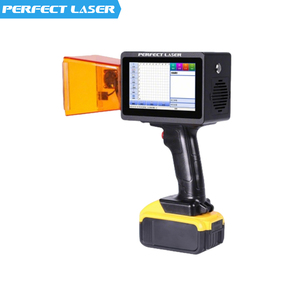
Featured Industrial Laser Platforms & Engineering Systems
Explore our flagship series of industrial laser marking, deep engraving, and high-speed tube cutting machinery built with certified fiber, UV, and CO2 sources for international OEM/ODM clients.
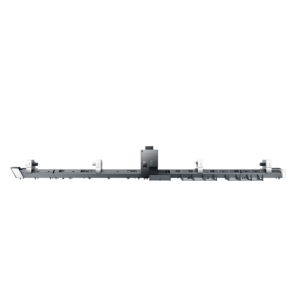
Bodor Flagship M Series Tube Laser Cutting Machine High Power Metal Tube Automatic Cutter
Get a Quote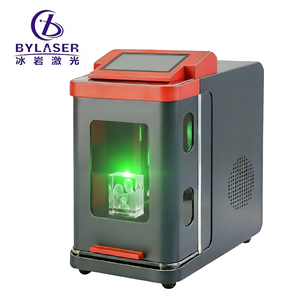
BingYan Portable 3D 2D Desktop Handheld Metal and Nonmetal Green Laser Engraver Marker
Get a Quote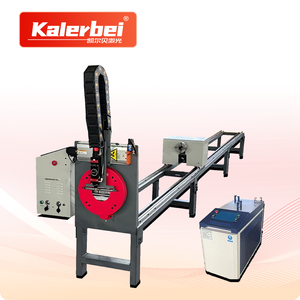
Mini CNC Automatic Fiber Laser Tube Cutter - Ideal for Small-Diameter Metal Pipe Processing
Get a Quote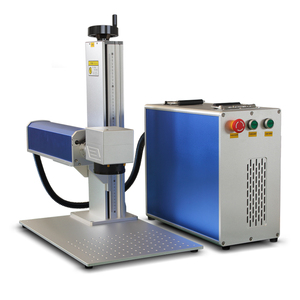
JNFSLASER Portable 60W/100W Raycus MAX M7 Source Mopa Air-Cooled Metal Fiber Laser Engraver
Get a Quote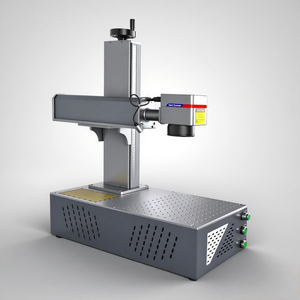
100W 200W 300W Fiber Laser Marking Machine Deep Engraving 2.5D 3D For Metal With JPT Mopa M7
Get a Quote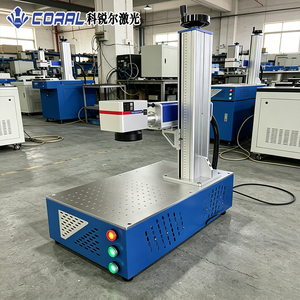
CORAL HG-ZM-A-D30 3D Mopa Desktop Laser Marker for Mixed Aluminum & Stainless Steel
Get a Quote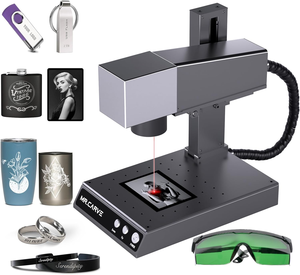
DAJA M1 Pro Small Fiber Laser Jewelry Cutting & Engraving Metallic Metal Laser Marking Machine
Get a QuoteExecutive Summary: Industrial Laser Engraving Architecture & Strategic Sourcing
In modern manufacturing ecosystems, component traceability, direct part marking (DPM), and high-speed precision engraving are no longer optional operational features; they are mandatory compliance drivers dictated by international standards such as ISO 15415/15416, UDI (Unique Device Identification for medical products), and MIL-STD-130. Selecting the appropriate industrial laser engraver manufacturer requires a rigorous evaluation of laser physics, beam delivery optics, galvo scanning dynamics, and long-term total cost of ownership (TCO).
As a established global exporter and Original Equipment Manufacturer (OEM), our engineering paradigm centers on shifting processing capabilities from basic 2D thermal etching to advanced 3D dynamic focusing, MOPA (Master Oscillator Power Amplifier) variable pulse width manipulation, and UV (355nm) cold photochemical ablation. This whitepaper provides procurement directors, industrial automation system integrators, and OEM buyers with an authoritative framework to navigate wavelength selections, custom line integration, and future technology trends.
Industry Insight: Information Gain in OEM Laser Sourcing
Unlike standard distributors who resell fixed off-the-shelf desktop units, specialized OEM manufacturers provide modular architecture—allowing custom galvo heads, tailored focal lengths, automated cobot loaders, and industrial bus communications (Profinet, EtherNet/IP, Modbus) to be directly engineered into the machine architecture.
Technology Development Trends in Industrial Laser Processing
The industrial laser engraving sector is undergoing a massive paradigm shift driven by photonics innovation, intelligent automation, and material science evolution. Understanding these core technology vectors is critical for long-term equipment capitalization.
MOPA Variable Pulse Width Modulation
Conventional Q-switched fiber lasers feature fixed pulse durations (typically 100ns–120ns), limiting their material flexibility. Modern MOPA fiber lasers allow pulse width tuning from 2ns to 500ns, enabling high-contrast black annealing on stainless steel without damaging the protective oxide layer, as well as damage-free mark generation on sensitive thermoplastics.
3D Dynamic Focusing Systems
Traditional Z-axis height adjustment tables cannot maintain focus over irregular topographies. Integrated 3-axis dynamic focus technology dynamically shifts the optical focal plane via a high-speed linear voice-coil actuator, allowing uniform marking across curved pipes, inclined planes, stepped features, and 3D geometric surfaces without manual refocusing.
UV 355nm "Cold Marking" Breakthroughs
Ultra-violet (UV) lasers utilize high-energy photons at a 355nm wavelength to directly break chemical bonds within materials rather than relying on photothermal heating. This process eliminates heat-affected zones (HAZ), preventing micro-cracking in soda-lime glass, quartz, and medical-grade polymers such as HDPE, PEEK, and silicone.
Smart Factory & COBOT Line Integration
Modern industrial production lines demand seamless connectivity. Advanced OEM laser engravers incorporate machine vision feedback systems for auto-alignment, deep learning barcode grading, dynamic variable data serialization, and collaborative robot (COBOT) loading arms capable of 24/7 unattended batch processing.
Mil-Spec Structural Engineering
Industrial environments require heavy-duty machinery. Leading manufacturers construct chassis using cast aluminum bases, double-shielded optomechanical enclosures, and IP54/IP65 industrial seals to insulate delicate galvo mirrors and fiber seed diodes against ambient dust, oil mist, and electromagnetic interference.
Air-Cooled Compact Energy Efficiency
Emerging laser architecture prioritizes low electrical consumption. High-efficiency semiconductor pump diodes and air-cooled heat sink channels have eliminated the need for external water chillers in systems up to 100W, drastically reducing equipment footprint, maintenance complexity, and electrical overhead.
Future Procurement Trends for Global B2B Buyers
When global enterprise procurement teams source laser equipment across Asia, Europe, and North America, purchasing criteria have evolved beyond initial capital expenditure (CAPEX) to encompass comprehensive life-cycle evaluation metrics:
- Modular OEM Standardization: Buyers are demanding modular sub-assemblies (swappable laser engines, interchangeable field lenses like F-Theta f-160mm or f-254mm, and universal galvo mountings) to streamline spare part inventory management across multiple factory sites.
- Stringent Cybersecurity & Data Integrity: Connected laser coders integrated into corporate MES networks must comply with cybersecurity standards like Cyber Essentials and ISO 27001, ensuring dynamic serial numbers, VINs, and cryptographic batch codes cannot be intercepted or tampered with.
- Direct Manufacturer Engineering Support: Purchasing managers are shifting away from third-party resellers toward direct factory partnerships. Access to original optical design engineers, custom software APIs, and application testing labs is critical for rapid trouble resolution and bespoke tooling adjustments.
- Total Lifecycle & Warranty Assurance: Global buyers favor manufacturers providing multi-year comprehensive warranties (such as 3 to 5 years internationally or specialized 10-year diamond coverage), backed by guaranteed MTBF (Mean Time Between Failures) metrics exceeding 100,000 operational hours for fiber sources.
Technical Laser Wavelength & Material Selection Matrix
Choosing the correct laser wavelength is vital to prevent thermal material distortion, poor mark contrast, or process inefficiency. The technical matrix below compares primary industrial laser sources engineered in our facilities.
| Laser Source Type | Operating Wavelength | Primary Processing Mechanism | Optimal Target Materials | Key Industrial Applications |
|---|---|---|---|---|
| MOPA Fiber Laser (JPT M7 / Raycus / MAX) | 1064 nm | Photothermal Ablation & Controlled Annealing | Stainless Steel, Aluminum, Brass, Titanium, ABS, Polyamide | High-contrast DPM, black annealing, metal deep engraving, GS1 DataMatrix coding. |
| UV Laser (Cold Laser) | 355 nm | Photochemical "Cold" Bond Breaking | Glassware, Silicon Wafers, HDPE, PEEK, Polycarbonate, Ceramics | Micro-electronics marking, pharmaceutical pill packaging, medical device UDI coding without thermal stress. |
| CO2 Galvo Laser (RF Metal Tube) | 10.6 µm / 9.3 µm | Photothermal Evaporation & Pyrolysis | Wood, Acrylic, Leather, Textiles, Cardboard, Coated Glass | Packaging date coding, organic material high-speed cutting, architectural models, denim distressing. |
| Green Laser | 532 nm | Hybrid Low-Heat Absorption | Reflective Metals (Gold, Silver, Copper), Translucent Plastics | Sub-surface glass 3D engraving, highly reflective semiconductor lead frames, solar cell scribing. |
Enterprise Advantages & Manufacturing Quality Framework
As a premier custom OEM industrial laser engraver manufacturer and global exporter, our state-of-the-art production infrastructure delivers world-class precision systems tailored to demanding industrial requirements.
ISO 9001:2015 Quality Management
Every machine undergoes a rigorous 72-hour continuous burn-in test, power stability optical metering, and interferometer dynamic beam alignment prior to international export packaging.
Bespoke OEM/ODM Customization
From custom colorways and branded chassis enclosures to dynamic motorized XY tables, specialized rotary chucks (D80/D100), and automated plate feeders, we build to your exact operational specifications.
Full CE Compliance & Safety Enclosures
Safety is paramount. Our automated systems feature fully enclosed Class 1 laser cabinets, safety interlocks, OD6+ protective viewing windows, and integrated fume extraction ports.
Frequently Asked Questions (FAQ) for Industrial Laser Procurement
Get detailed technical answers directly from our application specialists and laser system engineers.
What is the practical difference between a standard Q-switched fiber laser and a MOPA fiber laser?
Standard Q-switched fiber lasers operate with a fixed pulse width (typically 100ns to 120ns) and fixed frequency ranges (20kHz to 80kHz). MOPA (Master Oscillator Power Amplifier) fiber lasers, such as those utilizing JPT M7 technology, allow independent adjustment of pulse duration (from 2ns to 500ns) and repetition frequencies (up to 4000kHz). This flexibility enables precise heat input control, allowing high-contrast black marking on stainless steel, damage-free plastic coding, and fine color marking on titanium anodized surfaces.
How does a 3D laser marking dynamic focus system work compared to standard 2D optics?
Standard 2D laser markers use a fixed focal length F-Theta lens, requiring target surfaces to be completely flat and placed at a uniform focal distance. A 3D dynamic focus system incorporates an additional internal optic driven by a high-speed linear voice coil motor positioned prior to the galvo scanner. Software algorithms continuously adjust the optical focal distance in real-time, allowing the laser spot to dynamically track curves, cylinders, spheres, bevels, and multi-tiered steps while maintaining micro-spot focus precision throughout the entire marking envelope.
What custom OEM choices do you support for international distributors and volume buyers?
We provide extensive OEM/ODM support including private-label chassis color powder-coating, custom CNC faceplate machining, branded software splash screens, custom SDK integration for proprietary ERP systems, tailored I/O port mapping for industrial PLC lines, and modified cabinet enclosure dimensions to fit specific floor plan requirements.
What are the typical maintenance requirements and optical lifespan for fiber and UV laser sources?
Solid-state fiber laser engines boast an exceptional optical diode lifespan of up to 100,000 operational hours with virtually zero routine maintenance required beyond keeping the galvo protective window clean. UV DPSS (Diode-Pumped Solid-State) laser sources typically offer a lifespan of 20,000 to 30,000 operational hours due to harmonic crystal degradation, after which the UV crystal or diode pump can be re-calibrated or replaced during routine factory service.
Can sample materials be tested before issuing an official purchase order?
Yes. Our application engineering lab provides free pre-sales sample testing. Clients can ship raw substrate samples (metals, plastics, glass, ceramics) to our facility. We perform comprehensive pulse width, power, speed, and lens focal testing, returning the processed samples alongside a detailed optical report and complete processing parameter file.
Accelerate Your Manufacturing Precision Today
Partner directly with an established custom OEM industrial laser engraver manufacturer. Our engineering lab is ready to analyze your drawings, perform sample trial marks, and quote custom production machinery tailored to your exact operational requirements.