
Featured OEM Portable Laser Cutting & Marking Systems
Explore our export-grade, field-tested laser machinery engineered for rapid deployment, extreme duty cycles, and multi-material versatility.
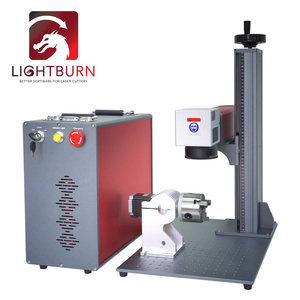
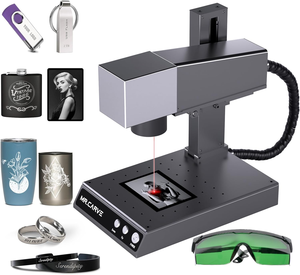
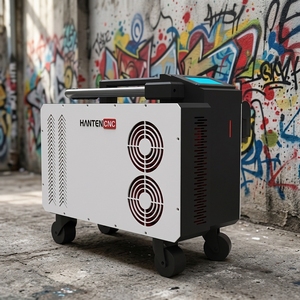
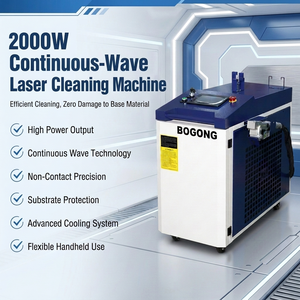
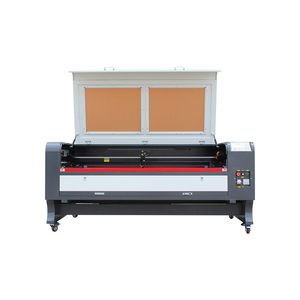
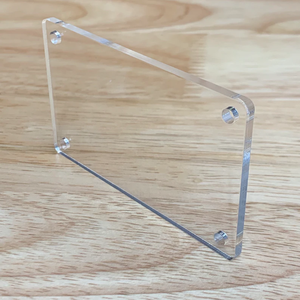
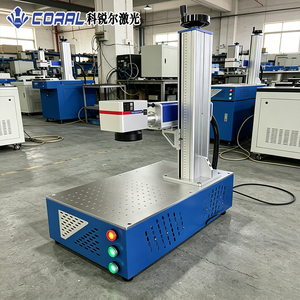
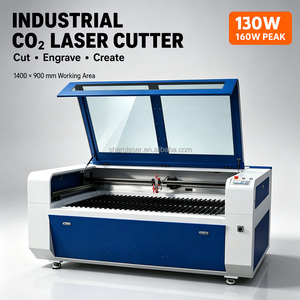
Technical Whitepaper: Engineering Next-Generation Portable Laser Cutters for Global Supply Chains
As modern manufacturing decentralizes and shifts toward on-demand, high-precision field fabrication, the demand for high-peak-power, portable, and customizable OEM laser cutting systems has surged exponentially. Industrial buyers, systems integrators, and international distributors are no longer satisfied with bulky, stationary gantries for small-to-medium component processing. The industry requires micro-machining platforms capable of delivering sub-micron spatial accuracy, rapid setup times, low operational expenditure, and rugged chassis compliance across diverse operating environments.
Key Takeaway for Procurement Directors: Transitioning to modular OEM portable laser architectures reduces factory footprint requirements by up to 65% while maintaining laser power density ($MW/cm^2$) equivalent to traditional industrial cabinet systems.
Optical Beam Physics & Wavelength Selection Dynamics
Selecting the optimal wavelength engine is the single most critical engineering decision when sourcing custom OEM laser systems. Operating parameters differ radically across fiber (1064nm), CO2 (10.6µm), and Ultraviolet (355nm) light sources. The physics of laser-material interaction dictates cut edge kerf quality, thermal diffusion zones, and micro-cracking phenomena.
| Laser Source Wavelength | Typical Output Power | Primary Substrate Compatibility | Max Cutting Precision | Heat-Affected Zone (HAZ) |
|---|---|---|---|---|
| MOPA Fiber (1064nm) | 20W – 100W (Pulsed) | Stainless Steel, Titanium, Brass, Aluminum, Anodized Alloys | ±0.005 mm | Extremely Microscopic (<15µm) |
| High-Power Fiber (CW) | 1000W – 3000W | Carbon Steel, Structural Sheet Metals, Heavy Pipelines | ±0.03 mm | Moderate (30µm - 80µm) |
| CO2 Sealed Tube (10.6µm) | 60W – 300W | Acrylic, PMMA, Hardwood, Leather, Textiles, MDF | ±0.015 mm | Low to Moderate (Polished Edge) |
| UV Solid-State (355nm) | 3W – 15W (Cold Light) | Thin Polymers, Glassware, Quartz, Medical Silicones, PCBs | ±0.002 mm | Near-Zero (Photothermal Breakdown) |
Our OEM engineering team integrates advanced galvanometer optical scanning systems with telecentric f-theta lenses to achieve ultra-small focal spot diameters ($d_0$). By tuning MOPA pulse durations from 4ns to 200ns, operators can cleanly shear thin metallic foils and precious metals without creating thermal discoloration, burrs, or mechanical warping on sensitive parts.
Portable Chassis Architecture & Structural Rigidity Metrics
Portability often introduces vibration vulnerability in conventional laser frames. To eliminate optical misalignment during field transport, our custom OEM portable cutters utilize mil-spec extruded aluminum alloy unibody frames reinforced with honeycombed internal ribbing. This structural strategy delivers an exceptional stiffness-to-weight ratio, ensuring that optical path alignments remain within a strictly controlled tolerance of $\le 0.01\text{ mrad}$ even after multi-modal international freight transit.
OEM & Enterprise Manufacturing Advantage
Grounded in decades of specialized photonics engineering, ISO 9001 certified quality management systems, and rigorous CE safety compliance, our manufacturing infrastructure delivers comprehensive white-label and tailored OEM integration for global machinery distributors and enterprise clients.
ISO 9001 & CE Certification
Every laser unit undergoes 72 hours of uninterrupted full-load burn-in testing, beam quality $M^2$ verification, and electrical safety isolation compliance.
Custom OEM Modular Enclosures
We configure Class 1 fully enclosed safety housing, Class 4 open-bed portable workstations, dynamic Z-axis lifting, and custom paint colorways.
3D Dynamic Galvo Focusing
Advanced 3-axis dynamic focus technology keeps the laser focal spot consistently focused across non-planar, curved, bevelled, and multi-tiered industrial components.
Export Support in 46+ Countries
Supported by a established global distributor and engineering network, providing seamless technical support, spare optical parts, and application testing.
Inline Automation & Robotics Ready
Standardized SDKs, Ethernet I/O interfaces, and Ruida/JCZ control bus protocols enable easy integration with COBOT arms and automated production lines.
Lowest Total Cost of Ownership (TCO)
Air-cooled solid-state laser engines boast operational lifespans exceeding 100,000 hours with virtually zero consumable requirements.
Future Sourcing & Procurement Trends in Portable Laser Technology
As global supply chains re-shore production and adopt Industry 4.0 paradigms, procurement specialists must anticipate shifts in portable laser processing technologies over the next decade. Sourcing strategy is no longer driven purely by capital expenditure (CapEx); operational agility, energy efficiency, software connectivity, and ESG compliance are now dominant factors.
1. Shift toward Air-Cooled High-Peak-Power Engines
Historically, fiber lasers above 50W required bulky external liquid chillers, which added weight and increased potential points of failure during field operation. Recent breakthroughs in high-efficiency pump diode modules allow 100W to 200W MOPA systems to operate with compact, forced-air cooling. Sourcing air-cooled systems eliminates maintenance costs related to deionized water refills, pump degradation, and winter freezing risks during transit.
2. On-Demand Mobile Processing & Micro-Factories
The rise of micro-factories requires equipment that can be moved quickly between workcells. Portable laser cutters equipped with integrated vision positioning systems (CCD camera alignment) allow operators to drop the machine onto any benchtop and immediately begin processing without complex physical jigs or optical recalibration.
3. ESG & Carbon Footprint Reduction
Industrial procurement departments prioritize machinery that aligns with corporate sustainability goals. Solid-state portable lasers convert electrical energy into laser light with electrical efficiency ratings exceeding 30%, compared to less than 10% for legacy CO2 lasers. This lowers direct power consumption and thermal emissions in air-conditioned cleanroom facilities.
4. Software Protocol Standardizations (OPC UA / Industry 4.0)
Future-proof equipment must communicate with Enterprise Resource Planning (ERP) and Manufacturing Execution Systems (MES). Modern OEM laser controllers come standard with API endpoints for automated job queuing, real-time diagnostic reporting, and remote laser health monitoring.
Next-Generation Technology Roadmap: Where Portable Lasers Are Heading
To maintain competitive advantage, our R&D department continuously tracks and drives advancements in laser photonics. Below is an engineering overview of the emerging technological innovations currently being integrated into our OEM product lineup:
Innovation Insight: Multi-Wavelength Hybrid Heads—combining Fiber and UV optical paths into a single galvo scanner—will allow operators to process metallic contacts and delicate polymer casing simultaneously without switching machinery.
Customizable Pulse Shaping & Anodization Control
Modern MOPA (Master Oscillator Power Amplifier) laser architectures allow independent adjustments of pulse duration and pulse repetition frequency (PRF). This capability allows precise control over thermal input, enabling specialized processes like high-contrast black marking on anodized aluminum, vibrant color marking on titanium alloys, and burr-free micro-slotting of medical-grade stainless tubing.
AI-Driven Real-Time Defect Detection
Integrating machine vision directly into the optical path (coaxial vision) allows embedded AI algorithms to evaluate cut edge quality, detect material warping, and adjust beam output speed dynamically. This closed-loop control loop virtually eliminates part scrap during precious metal cutting and high-value semiconductor processing.
Frequently Asked Questions (FAQ) for Enterprise & OEM Buyers
Below are authoritative technical answers addressing common procurement, optical, and compliance queries raised by industrial machinery buyers and international importers.
What is the difference between MOPA Fiber and standard Q-Switched Fiber lasers for portable cutting?
How do you handle custom OEM hardware and software branding requests?
What international safety standards and certifications do your portable cutters comply with?
What is the typical operational lifespan of the laser source engine, and what maintenance is required?
Can your portable laser cutters be integrated with automated robotic arms (COBOTs) or inline conveyors?
How is optical alignment maintained during international air or ocean freight shipping?
Request an OEM Engineering Consultation & Sample Testing
Send your material samples or CAD drawings to our photonics application lab for a complimentary cut quality report and tailored quotation.