
High-Performance Industrial Laser Systems
Explore our OEM/ODM modular fiber laser markers, pulse laser cleaning systems, and precision metal processing equipment engineered for 24/7 continuous duty cycles.
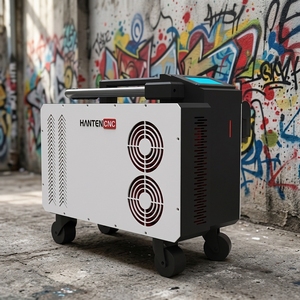
Laser Graffiti Removal Machine Portable Pulse Cleaning Equipment
Bodor Flagship M Series Tube Laser Cutting Machine High Power Metal Tube Automatic Cutter
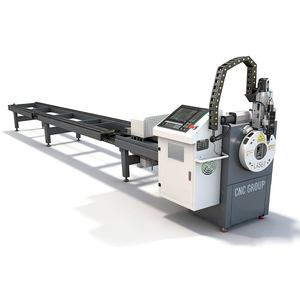
Simple Laser Tube and Pipe Cutting Machine Workstation
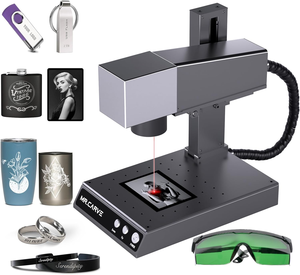
DAJA M1 Pro Small Fiber Laser Jewelry Cutting and Engraving Marker
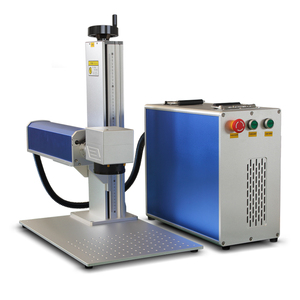
JNFSLASER Portable 60W/100W MOPA Fiber Laser Marking Machine
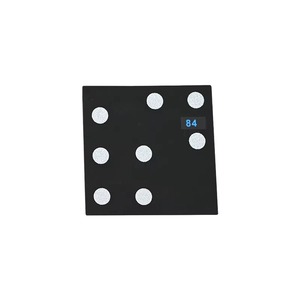
Custom 8-Point Magnetic Coded Reflective Positioning Markers for 3D Scanning
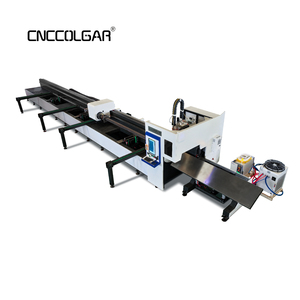
CNCColgar 12kW Fiber Laser Tube Cutting Machine 360mm Chuck System
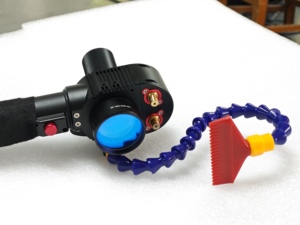
300W Handheld MOPA Pulse Laser Cleaning Gun DHCP30 Pro
OEM/ODM Architectural Dynamics in Modern Fiber Laser Marking
A comprehensive technical evaluation of master oscillator power amplifier (MOPA) pulse control, galvanometer optics, beam delivery physics, and global enterprise procurement frameworks.
In the contemporary landscape of high-precision industrial manufacturing, direct part marking (DPM) and high-density serialisation are no longer auxiliary production steps; they are mandatory operational requirements. Driven by strict regulatory regimes such as ISO 13485 (Medical Device UDI), MIL-STD-130N (Item Unique Identification), and global automotive IATF 16949 standards, industrial buyers require marker hardware that combines sub-micron positional repeatability with absolute laser uptime. As a top-tier OEM/ODM Fiber Laser Marker Manufacturer & Supplier, our engineering core delivers fully customisable, industrial-grade fiber laser marking solutions engineered specifically to overcome the micro-thermal cracking and thermal drift limitations inherent in standard legacy Q-switched systems.
1. The Technical Shift: MOPA Fiber Laser Architecture vs. Q-Switched Sources
The primary point of differentiation in industrial fiber laser marking lies in beam source architecture. While conventional Q-switched fiber lasers operate with fixed pulse durations (typically 100ns to 120ns), Master Oscillator Power Amplifier (MOPA) technology allows independent tuning of pulse duration across a wide spectrum (ranging from 2ns to 500ns) and repetition rate (up to 4000 kHz).
Technical Gain Insight: Lower pulse durations (2ns - 15ns) minimize the Heat-Affected Zone (HAZ) during surface ablation, preventing substrate distortion and preserving surface integrity on heat-sensitive polymers and thin foil metals, whereas extended pulse widths permit deep gravure etching into hardened tool steels (65 HRC+).
By modulating pulse energy density independently of repetition rates, our custom OEM/ODM MOPA marking platforms enable thermal management at the atomic layer of the workpiece. This technical capability is vital for executing uniform corrosion-resistant black annealing on AISI 316L medical stainless steel without breaching the passivation layer, as well as high-contrast carbonisation on raw ABS plastic enclosures without surface foaming or Charring.
2. 3D Dynamic Focusing Systems & Galvanometer Scan Optics
Traditional flat-field marking setups relying exclusively on F-Theta field lenses are inherently constrained to flat two-dimensional focal planes ($\Delta z = 0$). When presented with complex geometries—such as multi-tiered stepped medical manifolds, inclined automotive engine castings, or spherical cylindrical valves—standard 2D optical systems suffer from severe laser spot defocusing, beam elongation, and fluence degradation.
Our engineering team integrates 3-Axis Dynamic Focus modules featuring active linear motor expansions. By continuously adjusting the expansion optic along the optical axis ($Z$-axis dynamic control) in microsecond synchronisation with $X/Y$ digital galvanometer mirrors, the focal spot remains perfectly diffraction-limited across complex 3D topographies within a focal volume up to $\pm 80\text{ mm}$ range.
2025–2030 Global Industrial Sourcing Trends
Key technological shifts driving global enterprise procurement decisions in high-speed, automated laser marking and inline traceability systems.
1. Inline Cobot & Automation Integration
Enterprise procurement is rapidly moving away from isolated standalone desktop cabinets toward fully integrated inline marking heads. Automated dynamic data-plate loaders, EtherCAT/PROFINET PLC protocol interfacing, and COBOT robotic end-effector attachments are now standard baseline requirements for Industry 4.0 Smart Factories.
2. Zero-Maintenance Air-Cooled Efficiency
High-efficiency solid-state fiber laser architecture has effectively eliminated the need for legacy water-chiller maintenance cycles. Modern OEM fiber units operate with wall-plug efficiency exceeding 30%, drastically cutting long-term operational expenditure (OpEx) while maintaining thermal equilibrium under heavy 24/7 continuous duty cycles.
3. Complete Regulatory Compliance & Security
Global manufacturers require guaranteed compliance with international safety protocols. Quality standards demand ISO 9001 quality management systems, fully certified Class 1 laser enclosures with double interlock safety switches, CE compliance, and Cyber Essentials NCSC security protection for connected software APIs.
Technical Source Matrix: Selecting the Optimum Laser Wavelength
A accurate match between material photon absorption characteristics and laser source wavelength is crucial to preventing scrap rates and achieving maximum line speed efficiency.
| Laser Source Wavelength | Primary Photon Mechanism | Optimal Material Compatibility | Key OEM Application Use Case |
|---|---|---|---|
| MOPA Fiber (1064 nm) | Photothermal Ablation / Annealing | Stainless Steel, Titanium, Aluminum, Brass, Hardened Alloys, Polycarbonates | High-contrast black anneal marking, DPM barcode serialisation, deep metallic engraving. |
| UV Cold Laser (355 nm) | Photochemical "Cold" Breaking | Borosilicate Glass, Sensitive Medical Plastics (HDPE/PEEK), Silicon Wafers | Crack-free glass etching, micro-scale medical device coding without thermal distortion. |
| CO2 Sealed-Tube (10,600 nm) | Thermal Surface Vaporisation | Acrylic, Organics, Wood, Leather, Paperboard Packaging, Glassware Etching | High-speed FMCG packaging date coding, wide-area organic material cutting and vector scoring. |
Why Leading Global OEMs Partner With Lotus Laser Systems
Combining UK engineering expertise, stringent ISO 9001 manufacturing protocols, and comprehensive long-term warranty frameworks to safeguard your industrial investment.
UK Design & Precision Engineering
Every system is designed, assembled, and quality-tested in Essex, UK. Leveraging over 30 years of industrial expertise, we maintain strict manufacturing control over frame rigidity, optic alignment, and electrical grounding.
ISO 9001 & CE Certified Quality
Our quality management systems are independently certified under ISO 9001 guidelines. All machines strictly adhere to CE European Directives and feature complete EMC shielding and electrical safety design.
Up to 10-Year Extended Warranty
We stand behind our industrial build quality with industry-leading warranty programs. Domestic UK buyers receive up to 10-year Diamond Cover, while international customers enjoy 3-to-5-year support via global partners.
Full OEM/ODM Hardware Customisation
From customized industrial chassis enclosures and automated XY gantry tables to specialized multi-axis rotary chucks and custom optical wavelengths, we tailor machine architecture directly to your assembly line specifications.
Software & SDK Integration Support
Our control units integrate smoothly with industry-standard control platforms such as EzCad, LightBurn, and custom dynamic C++/Python SDKs, permitting direct automated database query linking (SQL/ERP) for real-time serialisation.
Global Service & Application Validation
Supported across 46 countries worldwide via authorized distribution hubs. We offer comprehensive pre-purchase material sample testing, optical ray-tracing verification, and responsive engineering SLAs.
Frequently Asked Questions for Sourcing Managers
In-depth technical answers addressing custom OEM options, optic calibration, safety compliance, and global service commitments.