
High-Performance OEM/ODM Laser Engraving & Marking Systems
Explore our engineering-grade laser platforms designed for industrial automation, deep metal ablation, delicate UV cold processing, and high-throughput batch marking.
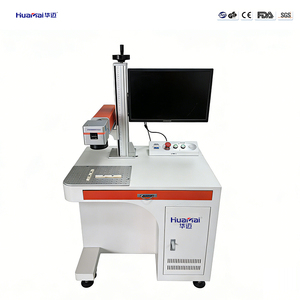
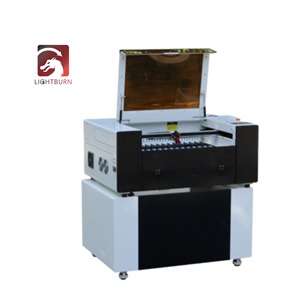
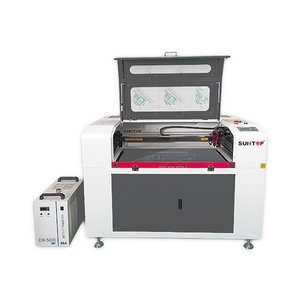

The Technical Architecture of High-Speed Galvo Laser Scanning
Understanding galvanometer vector steering, optical focal field uniformity, and pulse frequency optimization for industrial OEM integration.
Galvanometer (Galvo) laser processing represents the apex of high-speed photon deflection in modern manufacturing. Unlike traditional gantry-based Cartesian CNC systems that rely on mechanical lead screws or belt drives to physically shift the payload head, Galvo technology utilizes dual micro-actuator mirrors driven by high-frequency closed-loop servo motors. This architecture enables beam deflection velocities upwards of 12,000 mm/s, delivering line-speed traceability, surface texturing, micro-drilling, and deep ablation with sub-micron repeatability.
Galvo Scanner Kinematics
Dual-axis rotary galvanometers utilize specialized beryllium or fused silica substrates coated with high-reflectivity dielectric dielectric stacks. Low inertia torque motors provide response times under 0.2ms, allowing instantaneous vector changes without mechanical vibration artifacts.
F-Theta Field Flatness
Standard spherical lenses introduce field curvature where the focal spot distorts at the periphery. OEM Galvo systems integrate telecentric F-Theta scan lenses, guaranteeing that the laser beam strikes the working plane perpendicularly across the entire scan field.
Dynamic 3-Axis Focusing
By incorporating a dynamic z-axis expander lens upstream of the XY galvo mirrors, our advanced 3D systems dynamically adjust focal depth in real time. This enables seamless marking over 3D compound curves, cylinders, stepped planes, and deep cavities without manual height adjustment.
Comprehensive Laser Source & Waveband Matrix for OEM Engineering
| Laser Wavelength | Source Technology | Primary Substrate Compatibility | Interaction Physics | Key OEM Application |
|---|---|---|---|---|
| 1064 nm (Near Infrared) | MOPA Fiber / Q-Switched Fiber | Stainless Steel, Titanium, Aluminum, Brass, ABS, Polycarbonate | Photothermal annealing, ablation, micro-engraving | Direct Part Marking (DPM), UDI medical tags, color steel marking |
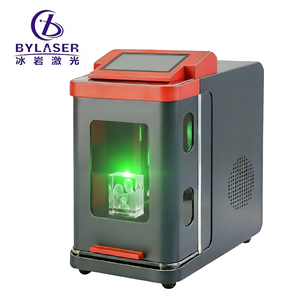
| 355 nm (Ultraviolet) | DPSS UV Cold Laser | Soda-lime Glass, Quartz, HDPE, PET, Heat-sensitive Polymers | Photochemical cold bond breaking (minimal HAZ) | Pharmaceutical vial coding, micro-electronic PCB drilling, glass etching |
| 10.6 µm / 9.3 µm (Far Infrared) | RF-Excited Metal Tube CO2 | Acrylic, Wood, Organic Fabrics, Leather, Coated Cards, Glass | Thermal vaporisation, melt-blown cutting, carbonisation | FMCG high-speed line packaging, denim texturing, acrylic cutting |
| 532 nm (Green Laser) | Frequency-Doubled Nd:YAG | Highly reflective Gold/Silver, Silicon wafers, Translucent plastics | Balanced thermo-photochemical absorption | Sub-surface crystal engraving, wafer scribing, solar cell marking |
Engineering Standards Built on 30+ Years of Innovation
As a global OEM/ODM laser solution partner, our products adhere to rigorous ISO 9001 quality management protocols, international CE certification, and Cyber Essentials security standardizations.
Custom OEM/ODM Integration & Private Label Manufacturing
Whether you require fully customized chassis enclosures compliant with Class 1 laser safety standards, specialized optical beam expanders for micro-machining, or white-label software SDK integration (supporting EZCAD, LightBurn, or proprietary PLC bus protocols), our in-house optical engineering team in Basildon, Essex, works directly with your R&D group to turn concepts into certified market-ready production units.
Inquire NowStrategic Procurement Trends in Industrial Galvo Laser Engraving
Market intelligence for purchasing directors, system integrators, and industrial machinery distributors.
1. Inline High-Speed Traceability & UDI Compliance
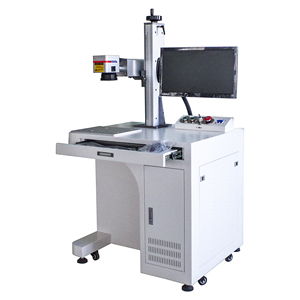
Global regulatory frameworks such as the FDA's Unique Device Identification (UDI) system for medical equipment and automotive ISO/TS 16949 standards mandate permanent, tamper-proof Direct Part Marking (DPM). Procurement is rapidly shifting toward MOPA fiber laser markers with adjustable pulse durations (2ns to 500ns). MOPA technology enables high-contrast black annealing on stainless steel without penetrating the passive oxide layer, preserving corrosion resistance while ensuring lifetime barcode readability.
2. COBOT & Robotic Workcell Automation Integration
Standalone laser marking operations are being replaced by fully automated, unattended manufacturing cells. Modern OEM Galvo laser heads now feature integrated Ethernet/IP, PROFINET, and Modbus TCP digital I/O interfaces. This allows collaborative robots (COBOTs) to handle part loading/unloading, dynamic data plate feeds, and vision system inspection in a continuous 24/7 production cycle, dramatically reducing labor overhead and human error.
3. Transition to Cold UV Laser Processing
As consumer electronics, medical diagnostics, and advanced packaging shift toward ultra-thin plastics, multilayer films, and fragile glass substrates, thermal degradation (charring, melting, structural weakening) caused by traditional CO2 or standard Fiber lasers becomes unacceptable. Procurement volume for 355nm UV Galvo laser engravers is surging due to their photochemical "cold processing" capability, which severs molecular bonds without generating thermal distortion.
4. Sustainable & Consumable-Free Industrial Marking
Environmental regulations and ESG compliance directives are pushing enterprises to eliminate ink-jet coding (CIJ) and chemical etching processes. Laser Galvo systems provide zero-consumable processing, eliminating solvent VOC emissions, toxic ink waste, and ongoing ink cartridge costs. The ROI timeline for replacing ink printers with high-speed Galvo fiber/CO2 laser markers typically falls within 9 to 14 months of operation.
Engineering Superiority & Reliable Supply Chain Architecture
Derived from decades of British engineering standards and rigorous supplier selection.
Up to 10-Year Extended Warranty
Engineered with military-grade aluminum structural frameworks and premium optical components (JPT, IPG, Raycus sources coupled with ScanLab/Sino-Galvo heads), our equipment offers industry-leading durability. We provide up to 10-year warranty packages in select regions and 3-5 year standard international coverage.
3D Marking & Dynamic Focus Standard
Most standard market laser engravers are restricted to flat surfaces. Our Meta-C and custom OEM Galvo series integrate 3-axis dynamic focus technology as standard equipment, maintaining sub-millimeter focal point accuracy across compound curves, angled surfaces, cylinders, and multi-tier components.
Global Distributor & Support Network
With authorized technical support hubs, spare parts distribution centers, and trained engineering teams active across 46 countries, global enterprise clients benefit from rapid localized field service, application sample testing, and guaranteed optical replacement turnaround times.
OEM Purchasing & Technical Procurement FAQ
Essential technical and logistical answers for machine builders, sourcing managers, and system integrators.
What is the difference between a Galvo Laser Engraver and a Gantry CO2/Fiber Cutter?
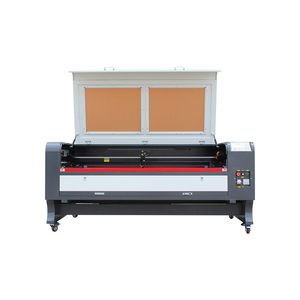
Galvo laser systems utilize stationary high-speed motorized mirrors to deflect the laser beam across a fixed F-Theta focal field, achieving marking speeds up to 12,000 mm/s. Gantry systems physically move the entire laser tube or cutting head along mechanical X/Y linear rails. Galvo systems are exponentially faster for marking, micro-engraving, and line coding, whereas gantry machines excel at large-format sheet cutting (e.g., 4060, 9060, 1390 working areas).
How do I determine whether my material requires Fiber, UV, or CO2 Galvo technology?
Material physics dictates wavelength selection: MOPA Fiber (1064nm) is ideal for all metals (steel, aluminum, brass, gold), dark plastics, and deep engraving. UV Lasers (355nm) provide "cold marking" for delicate substrates such as soda-lime glass, medical plastics, silicon wafers, and heat-sensitive polymers without thermal damage. CO2 Lasers (10.6µm) are optimal for organic materials including acrylic, wood, paper, leather, texturing, and coated packaging materials.
Do you support custom OEM white-labeling and hardware integration?
Yes. As an established OEM/ODM manufacturer, we offer complete private-label engineering services. This includes custom metal sheet enclosure designs, specific color powder coating, branded control software/drivers, custom SDK development (C++, C#, Python), integration of automated conveyor sensors, and custom optical beam delivery systems for inline automation.
What safety certifications do your laser machines carry for international export?
All our laser platforms are fully CE certified, manufactured under an ISO 9001 accredited quality management system, and conform to FDA CDRH Class 1 (fully enclosed interlocked cabinets) or Class 4 (open OEM integrated heads) safety classifications. Systems feature safety interlocks, laser safety glass windows, dual-channel emergency stop circuitry, and integrated fume extraction control ports.
Can buyers request free application testing on specific substrate samples?
Absolutely. We encourage prospective buyers and engineering partners to send sample parts to our applications laboratory. Our optical engineers will perform comprehensive matrix testing (varying frequency, speed, power density, and pulse width), evaluate contrast and micro-hardness, and provide a full metallurgical analysis report alongside video demonstration proof before any purchase commitment.
What is the typical operational lifespan of your laser sources and galvo heads?
Our solid-state MOPA and standard fiber laser sources carry an MTBF (Mean Time Between Failures) rating exceeding 100,000 operational hours (over 11 years of continuous 24/7 use). Sealed RF-excited CO2 metal tubes typically provide 40,000 to 50,000 hours prior to gas regassing, while UV DPSS laser modules are rated for 20,000+ maintenance-free hours under temperature-controlled operating conditions.
Partner with a World-Class OEM Galvo Laser Manufacturer
Contact our applications team today to discuss bulk OEM pricing, custom optical system architecture, or request a free technical feasibility sample report.