
Featured Industrial Green & Micro-Laser Marking Systems
Explore our export-grade OEM/ODM product range engineered for ultra-fine micro-structuring, heat-sensitive polymer marking, PCB coding, and subsurface 3D glass engraving.
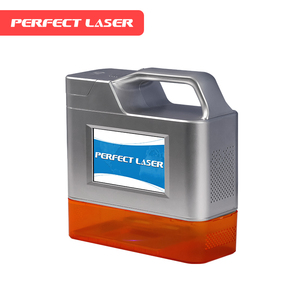
Perfect Laser- Portable Handheld Enclosed Mini Automatic DIY Portable Laser Engraver/ Mini Laser Marker
Contact Us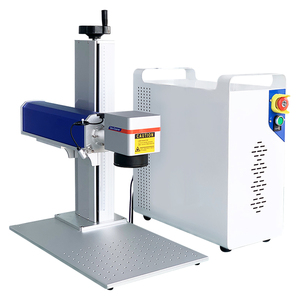
Fiber Laser Engraving Machine For Advertising Companies High-Powered Laser Marker
Contact Us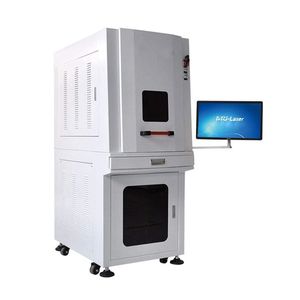
3W PVC Green Laser Marking Machine for Thin Ceramic Sheets
Contact Us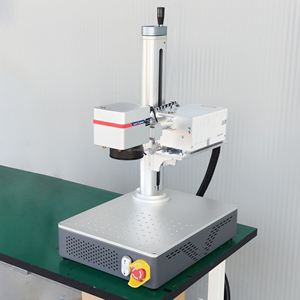
Portable Glass UV Laser Marker 5W Or Leaves Engraving Glass/stone/metal/wood
Contact Us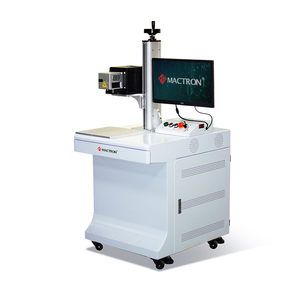
Green Laser Marking Machine 3D Crystal Internal Laser Engraving Machine for Copper Glass Ceramics FPC
Contact Us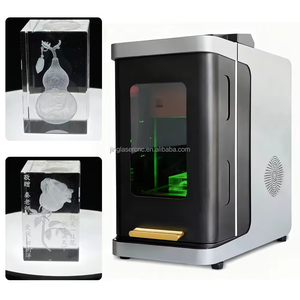
Air Cooling Green Light Laser Marking Machine Portable 2D 3D Crystal Glass Block Ball Subsurface Inner Laser Engraver
Contact Us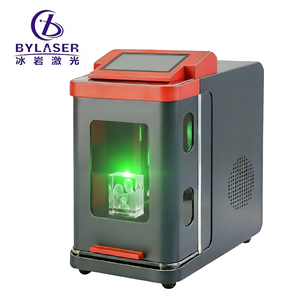
BingYan Portable 3D 2D Desktop Handheld Metal and Nonmetal Green Laser Engraver Marker Marking Glass Crystal Acrylic
Contact Us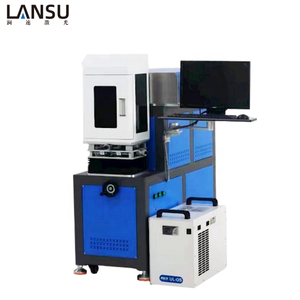
Green Laser Marking Machine 10W Green Laser Source for PCB QR Code 2D Code Plastic Glass Ceramics
Contact UsWhy Partner with Us: World-Class OEM/ODM Manufacturing
Built upon rigorous British engineering heritage and certified global quality standards, our OEM/ODM custom laser manufacturing framework empowers global distributors and system integrators with unparalleled machine reliability.
ISO 9001 & CE Certified Production
Every industrial green laser workstation is manufactured under strict ISO 9001 quality management systems and full CE safety compliance. We guarantee rigorous optical alignment, thermal stress testing, and electrical safety audits prior to global dispatch.
Dynamic 3D Laser Marking Standard
Equipped with native 3-axis galvo dynamic positioning optical systems, our green laser markers easily process multi-tiered, spherical, inclined, or stepped surfaces without manual focal adjustments, achieving sub-micron repetition accuracy.
Cold Laser Processing & Minimal HAZ
Operating at a 532nm visible green spectrum, our diode-pumped solid-state (DPSS) laser sources drastically diminish the Heat-Affected Zone (HAZ). Ideal for highly sensitive substrates like silicon wafers, thin glass, copper foils, and flame-retardant polymers.
Bespoke OEM/ODM Industrial Integration
We provide full-scope ODM optical and software integration for SMT automated assembly lines, robotic arms (COBOTs), dynamic roll-to-roll feeders, and custom SDK/API protocols for automated smart factory ecosystems.
Heavy-Duty Aircraft-Grade Chassis Construction
Constructed with high-rigidity extruded aluminum alloy profiles and mil-spec vibration dampening frames, our green laser machines ensure long-term structural stability across 24/7 continuous industrial operational cycles.
Global Engineering & Technical Backing
Supported across 46 countries with authorized service hubs, offering expert optical engineering assistance, sample material testing labs, live remote diagnostic capabilities, and robust spare parts logistics.
Whitepaper: Technical Fundamentals of 532nm Green Laser Micro-Machining
As global industrial manufacturing advances toward miniaturization, extreme component density, and stringent materials compliance, conventional infrared laser systems (such as 1064nm Fiber or Nd:YAG) often prove inadequate. The high thermal energy density of infrared beams frequently induces localized thermal stress, micro-cracking, severe charring, or mechanical deformation on sensitive substrates. This whitepaper systematically evaluates the physical mechanics, optical advantages, and application boundaries of 532nm Green Laser Marking Systems, illustrating why green wavelength technology is rapidly becoming the gold standard for global OEM/ODM sourcing.
1. The Photothermal vs. Photochemical Physics of 532nm Frequency-Doubling
Green laser technology operates at a nominal wavelength of 532 nanometers, generated primarily through Second Harmonic Generation (SHG) or frequency-doubling of a fundamental 1064nm laser crystal (such as Nd:YVO4 or Nd:YAG) using non-linear optical crystals (e.g., LBO or KTP). This optical conversion fundamentally alters how light interacts with matter:
- Reduced Spot Size & Higher Power Density: Theoretical focal spot size is proportional to wavelength ($\omega_0 \propto \lambda$). A 532nm wavelength achieves a focal spot area nearly 75% smaller than an infrared beam under identical focal optics, enabling spatial micro-engraving resolution under 10 micrometers.
- Dramatically Superior Optical Absorption: Highly conductive and reflective non-ferrous metals—specifically pure copper, gold, bronze, and brass—exhibit exceptionally high absorption rates at 532nm (up to 40-70% higher absorption compared to 1064nm IR). This eliminates optical back-reflection risks while maximizing energy transfer efficiency.
- Minimal Heat-Affected Zone (HAZ): Due to rapid photon absorption and shortened pulse durations (nanosecond to picosecond scales), thermal diffusion into surrounding matrix material is virtually eliminated. This protects fragile micro-electronics and ultra-thin substrates from warping or micro-fracturing.
2. Wavelength Comparison Matrix for Industrial Procurement
To assist global procurement officers and system engineers in selecting optimal optical engine configurations, the following comparison matrix details key operational characteristics across mainstream laser marking sources:
| Laser Wavelength | Primary Spectrum | Target Substrates | Processing Mechanism | HAZ / Thermal Risk |
|---|---|---|---|---|
| 1064 nm Fiber / MOPA | Near-Infrared (NIR) | Ferrous Metals, Aluminum, Opaque Plastics | Photothermal (Melting/Vaporization) | Moderate to High |
| 532 nm DPSS Green | Visible Green Spectrum | Copper, Silicon Wafers, Thin Ceramics, FPC, Glass, ABS/PVC | Hybrid Photothermal & Photochemical | Ultra-Low / Controlled |
| 355 nm Solid-State UV | Ultraviolet (UV) | Medical Plastics, Ultra-thin Glass, Quartz, Sapphire | Photochemical (Cold Ablation) | Negligible |
| 10.6 µm CO2 | Far-Infrared (FIR) | Organic Materials, Wood, Acrylic, Leather, Textiles | Photothermal Vaporization | High Thermal Diffusion |
3. Micro-Machining Applications Spectrum
Our OEM/ODM Green Laser Marking platforms are engineered specifically to overcome severe processing constraints across high-value precision industries:
- Flexible Printed Circuit (FPC) & PCB Traceability: High-density marking of 1D barcodes, 2D DataMatrix codes, and micro-text directly onto polyimide copper-clad laminates without penetrating electrical insulation layers or damaging adjacent traces.
- 3D Subsurface Crystal & Optical Glass Engraving: Utilizing precision high-frequency pulses focused inside transparent media (silica glass, optical lenses, crystal blocks) to create non-destructive 2D/3D volumetric micro-cracks, forming internal icons, logos, and security anti-counterfeiting patterns without altering surface smoothness.
- Advanced Ceramic Sheet Scribing & Marking: Processing ultra-thin alumina ($Al_2O_3$) and aluminum nitride ($AlN$) substrates utilized in power electronics module packaging, achieving smooth, crack-free edge cuts and crisp high-contrast identification codes.
- Consumer Electronics & High-Reflectivity Metals: Marking high-grade mobile phone components, copper heat pipes, connectors, and gold-plated contacts with zero micro-splatter and perfect signal readability.
Strategic B2B Procurement Trends: Green Laser Technology (2025–2030 Roadmap)
As global industrial supply chains realign around sustainability, digital manufacturing, and stringent regulatory traceability (e.g., EU Digital Product Passport, UDI for medical devices, automotive IATF 16949), procurement executives must anticipate core industry shifts when sourcing laser machinery:
Trend 1: Migration toward Ultrafast Picosecond & Femtosecond Green Sources
While nanosecond green DPSS lasers remain the industrial workhorse for general micro-marking, global procurement is rapidly shifting toward sub-nanosecond and picosecond green laser sources. Ultrafast pulse durations compress thermal dissipation time scales to below thermal diffusion thresholds, enabling true "cold laser ablation." OEM procurement strategies increasingly emphasize scalable modular chassis that accept seamless upgrades from nanosecond to picosecond optical heads.
Trend 2: AI-Driven Machine Vision & AOI Integration
Modern high-throughput manufacturing lines no longer tolerate manual component positioning or offline post-mark optical inspection. Procurement requirements for OEM/ODM green laser machines now mandate integrated High-Definition Coaxial Vision Systems and Automated Optical Inspection (AOI) algorithms. The laser system must automatically detect component displacement, dynamically offset galvo coordinates in real-time, execute micro-marking, and immediately inspect mark readability (DataMatrix verification to ISO/IEC 15415 standards) in a unified millisecond cycle.
Trend 3: Modular Integration into Automated Smart Factories (Industry 4.0 / OPC UA)
Stand-alone laser marking booths are being replaced by fully inline automated coding modules. Sourcing managers require green laser equipment to support robust industrial communication protocols—including OPC UA, Modbus TCP/IP, EtherCAT, and custom REST APIs. This enables dynamic variable data streaming (serial numbers, timestamps, cryptographically encrypted traceability hashes) directly from enterprise ERP/MES platforms without line stoppage.
Trend 4: Energy Efficiency, Zero Consumables & ESG Compliance
Corporate sustainability mandates are driving the replacement of traditional ink-jet coders (which consume chemical inks, toxic solvents, and generate continuous hazardous waste) with permanent green laser markers. DPSS green lasers boast high wall-plug electrical efficiency, zero chemical consumables, minimal maintenance intervals (>20,000 operational hours MTBF), and significantly reduced carbon footprint per marked component.
Future Industry Development & Technological Innovation Trends
Looking forward, the global market for green laser technology is poised for transformative technological breakthroughs driven by green energy storage, semiconductor advanced packaging, and micro-optoelectronics:
1. Micro-Welding and Micro-Structuring in Battery & Semiconductor Packaging
The global shift toward Electric Vehicles (EV) and grid energy storage has created immense demand for precision micro-processing of copper foils and busbars inside lithium-ion battery packs. Future green laser developments focus on high-power continuous wave (CW) and quasi-continuous wave (QCW) 532nm sources capable of spatter-free copper micro-welding and high-speed foil cutting, surpassing traditional infrared welding quality.
2. Dynamic 3-Axis & Multi-Axis Galvo Architecture
The next decade of green laser marking machines will fully transition from 2D flat-field scanning to sophisticated 3-axis dynamic focus optical galvos integrated with 6-axis articulated robot arms (COBOTs). This architecture enables sub-micron precision laser texturing, continuous structural marking, and surface functionalization across ultra-complex 3D freeform geometries without workpiece re-clamping.
3. Wavelength Hybridization & Multi-Beam Processing
R&D laboratories are pioneering hybrid optical processing systems that combine 532nm green lasers with complementary wavelengths (such as 1064nm IR or 355nm UV) along a synchronized coaxial optical path. By utilizing green light to initiate material surface absorption and IR/UV to complete high-speed ablation, processing speeds on complex composite materials can increase by over 300% while retaining pristine edge quality.
Global B2B Procurement FAQ: Green Laser Marking Systems
Expert technical answers to common questions asked by international buyers, system integrators, and OEM distributors when evaluating our 532nm green laser marking equipment.
Partner with a World-Class OEM/ODM Green Laser Manufacturer
Elevate your product marking precision, eliminate thermal damage, and expand your market reach. Contact our senior optical engineers today for sample testing, custom ODM engineering quotes, or technical distribution inquiries.
Contact Us