
High-Performance Industrial Product Range
Explore our flagship OEM/ODM laser marking, engraving, cutting, and surface processing hardware engineered for continuous B2B operation.
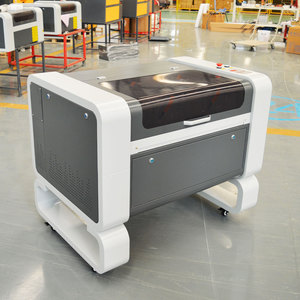
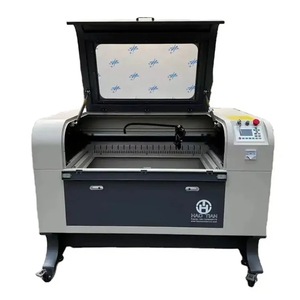
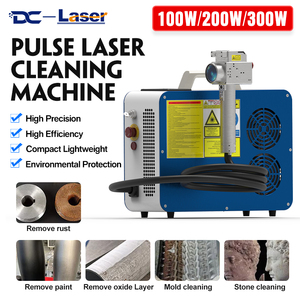
Industrial Direct Part Marking (DPM) & The Rise of Handheld Laser Mobility
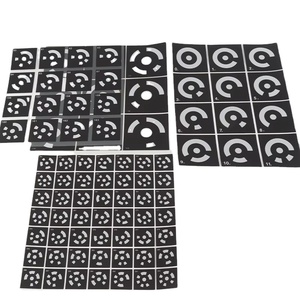
In modern manufacturing, aerospace logistics, heavy mechanical engineering, and automotive assembly lines, component traceability is no longer optional—it is a strict regulatory requirement. Standard compliance protocols such as ISO 15415, MIL-STD-130, and Unique Device Identification (UDI) demand permanent, tamper-proof Data Matrix codes, 2D QR codes, and alphanumeric serial numbers applied directly onto raw metal, alloy, or synthetic composite surfaces.
Traditional stationary laser marking workstations present critical bottlenecks when handling oversized structural beams, assembled vehicle chassis, massive die-casting molds, or installed piping networks. Bringing heavy parts to a fixed laser cabinet introduces significant labor costs, risks crane damage, and increases production cycle times. As a premier OEM/ODM Handheld Laser Marker Supplier & Exporter, our engineering team manufactures portable laser solutions that bring high-precision sub-micron laser photons directly to the workpiece.
Technical Comparison Matrix: Laser Wavelengths & Architectures
Selecting the optimal wavelength and pulse duration is paramount to avoiding thermal heat-affected zones (HAZ) and achieving optimal contrast. Below is an engineering overview of our OEM/ODM laser configurations:
| Laser Source Type | Wavelength (nm) | Pulse Width Range | Target Substrates | Primary Industrial Applications |
|---|---|---|---|---|
| MOPA Fiber (JPT/Raycus) | 1064 nm | 2 ns – 500 ns (Tunable) | Stainless Steel, Anodized Al, Titanium, Alloys | High-contrast black annealing, plastic marking without burning, deep metal engraving. |
| Q-Switched Fiber Laser | 1064 nm | 90 ns – 120 ns (Fixed) | Carbon Steel, Brass, Copper, Tooling Steel | Standard VIN coding, heavy machinery serial numbering, rust layer ablation. |
| Cold UV Laser | 355 nm | < 15 ns | Glass, Medical Polymers, Silicon, Thermoplastics | Zero-HAZ cold marking, micro-electronic coding, pharmaceutical vial serialization. |
| CO2 Sealed Tube | 10600 nm | Continuous / Pulsed | Wood, Acrylic, Leather, Textiles, Organics | Non-metallic cutting, packaging date coding, architectural model fabrication. |
Future Procurement Trends in Industrial Laser Marking (2025–2030)
As global supply chains transition toward Industry 4.0 automation and distributed manufacturing, international B2B procurement heads must align hardware sourcing with emerging technical trajectories. Based on our market intelligence and OEM customer deployment data, four key trends dominate the laser marking landscape:
1. Extreme Miniaturization & Ergonomics
Heavy handheld optical heads (exceeding 3kg) cause operator fatigue during full-shift production runs. Modern procurement favors sub-1.5kg ergonomic scan heads utilizing lightweight magnesium-aluminum alloys, integrated touchscreen focus triggers, and flexible fiber-optic armoring up to 5 meters in length.
2. Edge Computing & AI Vision Alignment
Future handheld laser markers are integrating micro-camera sensors inside the galvanometer scanning housing. AI algorithm systems automatically detect part orientation, surface curvature, and distance metrics, dynamically adjusting focal depth in real time to prevent distorted 2D barcodes.
3. Battery Mobility & Cordless Power Supply
Field operations in shipyards, pipeline construction, and scrap metal yards require untethered performance. Next-generation handheld markers feature high-density lithium-iron-phosphate (LiFePO4) battery packs providing 6 to 8 hours of continuous pulse discharge without mains AC power.
Product Development & Technological Trajectories
Our engineering laboratory prioritizes continuous innovation across laser cavity stability, optical beam delivery, and system software customization. Key technical breakthroughs incorporated into our OEM/ODM manufacturing lines include:
3D Dynamic Auto-Focusing Systems
Standard 2-axis galvo systems suffer from focal degradation on curved, stepped, or angled surfaces. Our advanced 3-axis dynamic focal expansion lens maintains ultra-tight spot sizes (< 30 μm) across a 3D depth field of up to 80mm, eliminating manual focal adjustment jigs.
MOPA Pulse Width Modulation
Unlike rigid Q-switched lasers, Master Oscillator Power Amplifier (MOPA) architecture enables independent control of pulse frequency (1 kHz to 4000 kHz) and pulse duration (2 ns to 500 ns). This allows delicate color marking on stainless steel and clean non-burr marking on anodized aluminum.
Dual Thermal Dissipation Protection
High ambient industrial temperatures (exceeding 45°C) often trigger laser diode shutdown. Our handheld markers feature sealed air-cooling channels with heat-pipe vapor chambers, ensuring stable power output without optical power drift over 24/7 continuous operation cycles.
Enterprise Advantages & OEM/ODM Customization Capabilities
Building upon over three decades of UK-inspired engineering discipline, ISO 9001 quality management, and strict CE compliance, our manufacturing facilities empower global B2B clients, distributors, and system integrators with fully customizable OEM/ODM solutions.
1. Full White-Label ODM Architecture
We offer total hardware and software customization. From laser cabinet colorways, custom CNC metal handpiece covers, and private-label Linux/Windows software interfaces to embedded brand boot screen graphics, we build your brand's proprietary market identity.
2. ISO Class 7 Optical Assembly
Laser galvo heads and beam expanders are assembled in certified dust-free cleanrooms. Every optical lens undergoes laser spectrum absorption analysis and beam quality factor (M² < 1.3) validation prior to factory dispatch, ensuring maximum photon conversion efficiency.
3. Global Distributor Support Network
Supported in 46 countries worldwide, our engineering headquarters provides 24/7 technical hotline access, remote software SDK integration support, fast-track spare parts dispatch, and multi-language technical documentation for global exporters.
B2B Procurement Frequently Asked Questions (FAQ)
Get clear, authoritative answers to common engineering and commercial questions raised by global procurement officers and OEM importers.
What laser source power option is recommended for handheld metal marking vs. deep engraving?
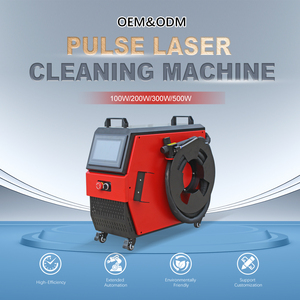
For high-contrast surface marking, barcode annealing, and serial numbers on steel or aluminum, a 20W or 30W MOPA fiber laser provides optimal pulse energy. If your application requires deep metal engraving (> 0.3mm depth) or rapid rust layer ablation, we recommend selecting a 50W to 100W high-power fiber source or a 100W-500W pulsed laser cleaner.
How does the handheld marker ensure operator safety against scattered laser radiation?
Our handheld laser heads feature an integrated contact-interlock safety switch. The laser diode will not fire unless the front metal shield cone makes physical contact with the metallic surface. Additionally, all systems include anti-reflection protective focal lenses, OD6+ wavelength safety goggles, and an emergency stop circuit adhering to CE Class 4 laser safety standards.
Can we request custom software integration and SDK support for factory ERP systems?
Yes. We supply comprehensive secondary development software development kits (SDKs) compatible with C++, C#, Python, and LabVIEW. The control board supports TCP/IP, RS232, and Modbus communications, allowing automated data streaming from MES/ERP databases directly to the handheld laser marker for dynamic batch number updates.
What is the minimum order quantity (MOQ) for custom OEM branding and color customization?
We support flexible B2B ordering structures. For standard laser units, the MOQ is 1 set. For OEM private-label requests (custom chassis paint, logo laser etching, customized user manual, and custom boot software logo), the MOQ starts at 5 units, with full prototype validation within 14 business days.
What warranty coverage and spare parts support do international buyers receive?
All export machinery comes with a standard 3-year warranty covering the core laser source (JPT/Raycus/MAX) and optical galvo components. Spare parts are stocked in our international logistics hubs, and technical support engineers are available via video remote diagnostics to guarantee minimal operational downtime.
Ready to Accelerate Your OEM/ODM Laser Marking Capabilities?
Consult with our applications team today. Send us your sample material for free testing, request technical CAD drawings, or receive a fast-track wholesale FOB/CIF export quotation.