
Engineered Portable Laser Marking & Cutting Solutions
Explore our high-performance desktop, handheld, and compact laser marking machinery custom-built for industrial traceability, part identification, and high-speed processing.
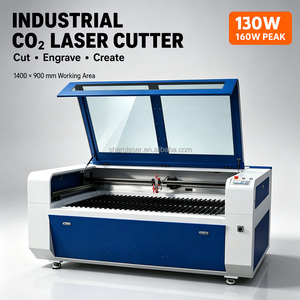
CO2 Laser Cutting & Engraving Machine 1490 with Ruida Control System Water Cooling for Acrylic Wood Paper MDF AI/PLT Support
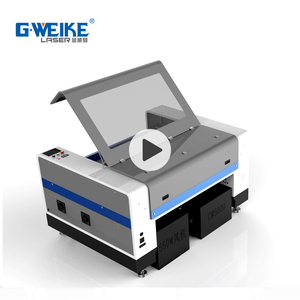
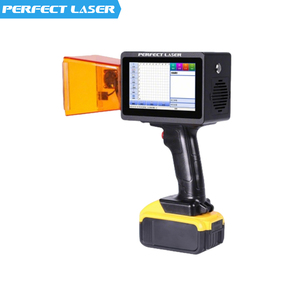
Perfect Laser Handheld Portable Metal Acrylic Gold Sliver Rubber Wood Marker Mini Fiber Laser Marking Machine with LCD Screen
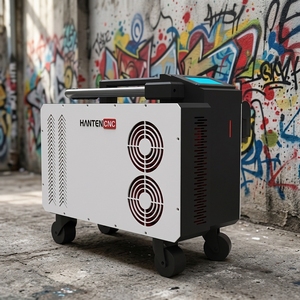
Laser Graffiti Removal Machine Portable Pulse Cleaning Equipment for Wall Stone Surface Restoration
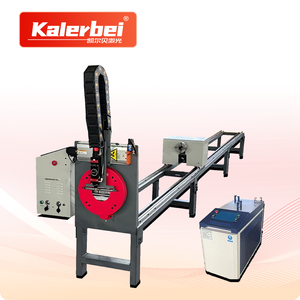
Mini CNC Automatic Fiber Laser Tube Cutter - Ideal for Small-Diameter Metal Pipe Processing
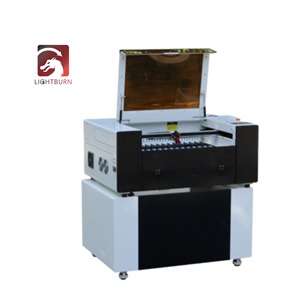
SM-Pro Series 1000x600mm CO2 Laser Engraving Cutting Machine 50W-130W Lightburn Compatible
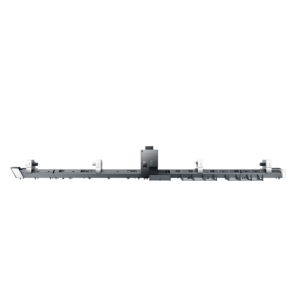
Bodor Flagship M Series Tube Laser Cutting Machine High Power Metal Tube Automatic Cutter for Sale
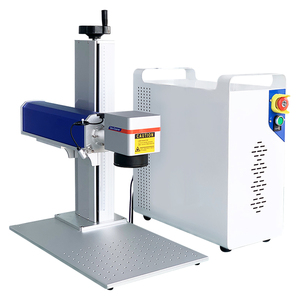
Technical Architecture: Next-Generation Portable Laser Engraving Technology
Modern industrial manufacturing demands an unprecedented convergence of ultra-portability, mechanical rigidity, high optical quality, and seamless automation integration. As a tier-1 OEM/ODM portable laser engraver manufacturer & exporter, our R&D engineering paradigm moves beyond standard off-the-shelf assemblies. We construct purpose-built optical architectures engineered for demanding 24/7 industrial operational cycles.
1. Advanced Beam Delivery & Wavelength Diversification
Different materials absorb photonic energy across distinct spectral bands. Achieving permanent, high-contrast marks without thermal degradation requires matching the precise laser wavelength to the substrate’s complex refractive index:
- MOPA Fiber Lasers (1064nm Wavelength): Featuring pulse duration tuning from 2ns to 500ns, Master Oscillator Power Amplifier (MOPA) systems permit exact thermal management. They generate non-destructive black annealing on stainless steel, brilliant white contrast on anodized aluminum, and precise micro-engraving on titanium alloys without altering structural integrity.
- Cold UV Lasers (355nm Wavelength): Utilizing third-harmonic generation (THG), UV lasers process materials through photochemical ablation rather than photothermal melting. This "cold marking" mode prevents micro-cracking in delicate glass, eliminates charring on heat-sensitive polymers (ABS, PC, HDPE), and satisfies strict medical-grade UDI compliance.
- Galvo-Scanned CO2 Lasers (10.6μm / 9.3μm Wavelength): Optimized for organic matrix substrates, our compact CO2 Galvo platforms deliver ultra-high-speed rastering across acrylics, hardwood, natural leather, engineered cardboard, and technical ceramics.
2. 3D Dynamic Focusing Systems vs. Fixed Focal Optics
Conventional portable engravers suffer from severely restricted focal depth, requiring planar workpiece positioning. Our flagship portable OEM platforms feature integrated 3-axis galvo dynamic optical focus scanning systems. By continuously adjusting the focal lens group via high-speed linear actuators, beam spot size remains uniform over slanted, cylindrical, stepped, and complex 3D freeform surfaces without manual Z-axis recalibration.
Turnkey Custom Manufacturing Capabilities
From custom optomechanical chassis design to proprietary software integration, we empower global brands and distributors with tailored OEM/ODM manufacturing pipelines.
Bespoke Optomechanical Design
Precision CAD/CAM enclosure customization utilizing aerospace-grade aluminum chassis. Designed to withstand industrial field vibrations, IP54 dust resistance, and thermal shifts.
Custom SDK & Firmware Integration
Fully custom software suites support LightBurn, EzCad, and proprietary C#/Python APIs. Seamlessly interface with enterprise ERP, MES, and automated conveyor production networks.
Compliance & Safety Enclosures
Engineered to comply with Class 1 laser safety standards. Interlocked safety housings, zero-leak optical viewing windows, and integrated fume extraction ports keep operator safety paramount.
Industrial Material Processing Compatibility Matrix
Understanding wavelength-material interactions is critical when evaluating a portable laser marking deployment. The table below outlines technical feasibility, achieved marking mechanisms, and typical industrial application scenarios across core material groups.
| Substrate Material | Optimal Laser Source | Marking Mechanism | Key Industrial Applications |
|---|---|---|---|
| Stainless Steel (304 / 316L) | MOPA Fiber (1064nm) | Non-destructive Surface Annealing / Deep Etch | Medical instruments, UID Data Plates, Aerospace components |
| Anodized & Bare Aluminum | Standard / MOPA Fiber | Oxide Layer Removal / High-Contrast White Mark | Consumer Electronics, Automotive VIN Plates, Nameplates |
| Engineering Plastics (ABS, PC, Nylon) | UV Laser (355nm) / MOPA | Cold Photochemical Foaming / Color Change | Electrical enclosures, Automotive switches, Keycaps |
| Glassware & Optical Quartz | 3D UV Cold Laser | Micro-Surface Fracturing (Crack-free) | Pharmaceutical vials, Beverage bottles, Industrial optics |
| Hardwood, MDF & Acrylics | Galvo CO2 Laser (10.6μm) | Thermal Vaporization & High-Speed Cutting | Architectural models, Signage, Luxury Packaging |
| Precious Metals (Gold, Silver, Titanium) | High-Peak MOPA Fiber | Micro-Engraving & Ablation | Jewelry manufacturing, Precision Horology, Defense parts |
Global Procurement Trends & Future Outlook (2025–2030)
The global portable laser marking market is undergoing a structural paradigm shift. Key macroeconomic factors, stringent supply chain regulatory mandates, and advancing optical physics shape how B2B buyers select manufacturing partners. Understanding these market dynamics is crucial for procurement managers, distributors, and OEM brands aiming to maintain competitive margins.
1. Hyper-Portability vs. Industrial Rigidity
Legacy industrial marking equipment relied on massive, stationary gantries weighing hundreds of kilograms. Modern manufacturing workflow dynamics demand decentralization. Field technicians require handheld, lightweight (<15kg) fiber and UV marking units capable of being deployed directly onto pipeline structures, aerospace frames, or large heavy machinery without moving the workpiece. OEM/ODM designs now prioritize lightweight aircraft-grade structural alloys, compact galvo heads, and shock-resistant optics modules.
2. Direct Part Marking (DPM) & Regulatory Compliance Traceability
Regulatory frameworks such as FDA Unique Device Identification (UDI) for medical apparatus, MIL-STD-130 for defense inventory, and ISO/IEC 15415 2D DataMatrix compliance drive global demand for permanent laser marking. Environmental ink-jet coding is being rapidly phased out due to chemical solvent VOC emissions and poor durability. Fiber and UV portable lasers provide zero-chemical, lifetime-indelible marking resistant to chemical baths, autoclaving, and extreme thermal wear.
3. Integration of Cobots and Smart Vision Systems
Next-generation portable laser systems are no longer isolated manual tools. Procurement trends show explosive demand for portable heads integrated with Collaborative Robots (Cobots) and vision-guided auto-alignment cameras. Through integrated SDK software libraries, our portable marking platforms automatically adjust marking coordinates according to rotational part misalignments in real-time.
The OEM/ODM Custom Manufacturing Roadmap
A structured, transparent engineering lifecycle designed to bring your proprietary laser engraver brand from conceptual engineering sketch to mass production.
Requirements & Optics Specs
Detailed evaluation of material substrate samples, cycle time targets, optical wavelength selection, laser source wattage, and localized safety enclosure parameters.
Prototyping & Simulation
Complete 3D CAD mechanical modeling, thermal dissipation simulation, ray-tracing optical path validation, and custom industrial design layout approval.
Firmware & UI Branding
Integration of custom GUI control interfaces, white-label chassis silk-screening, custom localized software installer, and API/SDK calibration.
Mass Production & QA
ISO 9001 standardized assembly, 72-hour continuous laser burn-in testing, power meter verification, CE compliance inspection, and export packing.
Total Cost of Ownership (TCO): OEM Sourcing vs. Off-The-Shelf Procurement
When evaluating global laser equipment suppliers, financial metrics extend far beyond initial machine unit cost. Evaluating Total Cost of Ownership (TCO) reveals significant long-term capital and operational expenditures advantages offered by our direct factory OEM/ODM engineering model.
1. Zero Consumables & Minimal Maintenance Overhead
Unlike continuous inkjet (CIJ) or thermal transfer printing (TTO) systems—which consume thousands of dollars annually in ink, solvents, ribbons, and replacement printheads—solid-state MOPA fiber and UV lasers require zero chemical consumables. Fiber laser diode sources boast an operational lifespan exceeding 100,000 operational hours (MTBF), ensuring virtually maintenance-free performance for over a decade of single-shift operation.
2. Energy Efficiency & Eco-Friendly Operations
Our portable fiber laser systems draw less than 500W of total electrical power during active operation—comparable to a standard desktop workstation. High wall-plug efficiency reduces factory electricity burdens, supports carbon-neutral manufacturing objectives, and lowers thermal dissipation demands on cleanroom HVAC infrastructure.
Why Partner With Us: Direct Factory Authority & Quality Excellence
Backed by over three decades of advanced laser technology development, our manufacturing facility stands as a premier global benchmark for industrial laser systems. We combine rigorous Western quality control standards with scalable high-precision Asian manufacturing capacities.
- ISO 9001 Accredited Manufacturing Quality Management: Every portable laser engraver unit undergoes rigorous multi-stage quality inspections, beam quality parameter checking (M² factor measurement), and power stability audits prior to dispatch.
- 3D Dynamic Focus Included As Standard: While competing manufacturers classify 3-axis galvo scanning as an expensive add-on, our flagship Meta-series portable platforms feature integrated 3D focus control out of the box.
- Extended Warranty & Comprehensive Global Support: Up to 10-year Diamond Cover options available in key service regions, backed by localized technical service hubs and factory-trained engineers across 46 countries.
- Full CE & Cyber Essentials Security Compliance: Built to stringent international safety codes, ensuring electromagnetic compatibility, laser safety shielding, and enterprise-grade cyber-secure controller software.
Frequently Asked B2B Procurement Questions
Clear, authoritative technical answers to common queries raised by international buyers, system integrators, and OEM distributors.
What is the minimum order quantity (MOQ) for OEM/ODM laser engraver customization?
Our baseline OEM customization programs feature flexible tier structures. For private-label chassis color branding, customized laser control software, and custom logo silkscreening, our typical MOQ starts at just 5 units. For ground-up ODM mechanical frame redesigns or specialized optomechanical beam paths, our engineering team works with clients on a prototype-to-batch roadmap suited to your market projection.
How do I select between a MOPA Fiber laser and a Cold UV laser for portable marking?
Selection depends fundamentally on your target substrate materials. MOPA Fiber lasers (1064nm) excel on all metals (stainless steel, titanium, aluminum, brass) and opaque engineering plastics where deep engraving, thermal annealing, or high contrast is required. UV lasers (355nm) are essential for heat-sensitive polymers, delicate glass etching, silicon wafers, and medical equipment requiring crack-free, zero-heat-affected-zone (HAZ) cold marking.
What international laser safety certifications do your machines carry for export?
All export-bound laser engravers and cutters manufactured in our facilities comply strictly with international CE standards (EMC Directive 2014/30/EU and Low Voltage Directive 2014/35/EU), ISO 9001:2015 Quality Management Systems, and FDA CDRH registration protocols. We provide fully enclosed Class 1 safety cabinets as well as integrated Class 4 OEM modular heads equipped with interlock circuits and OD6+ safety viewing glass.
What software platforms and file formats are supported by your control cards?
Our OEM control systems utilize industry-standard Ruida, BJJCZ, or proprietary Lotus controllers compatible with LightBurn, EZCad2, EZCad3 (3D), and LaserCut software. Vector graphic formats including AI, PLT, DXF, SVG, DST, and raster formats (BMP, JPG, PNG, TIFF) are natively supported, alongside dynamic 2D DataMatrix, QR codes, and automated serial number incrementing algorithms.
What is the typical production lead time for bulk OEM export orders?
Standard portable laser engraver configurations are held in buffer stock, permitting sample dispatch within 3 to 5 business days. Customized OEM batch orders (10–50 units) typically require 15 to 20 working days for chassis fabrication, assembly, precision optical alignment, and 72-hour burn-in testing. Expedition options are available for contract partners.
How are global warranty claims and spare parts support managed internationally?
International shipments are backed by a comprehensive 3 to 5-year factory warranty on core laser sources and galvo optics (with extended 10-year coverage packages available in select regions). In the event of a component issue, we maintain emergency replacement modular assemblies across authorized global distributor networks in 46 countries, paired with direct remote video assistance from our UK-trained application engineering team.
Accelerate Your Product Line With Factory-Direct OEM/ODM Laser Solutions
Request a technical consultation, arrange a free sample marking validation on your materials, or obtain factory wholesale pricing from our engineering team today.