
Featured Industrial Laser Systems & Equipment
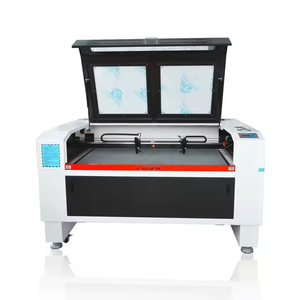
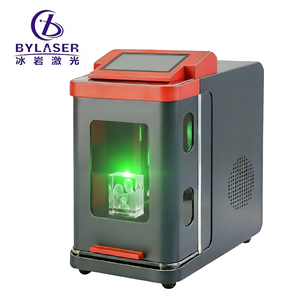
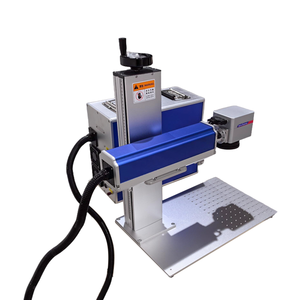
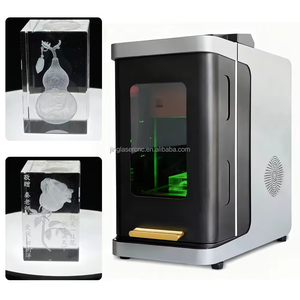
Direct OEM manufacturing platforms engineered for high-contrast stainless steel color marking, sub-surface glass micro-engraving, and high-speed multi-material traceability.

1. Technical Analysis of Color Laser Engraving: Physics & Structural Coloration
Color laser engraving has evolved from an experimental metallurgical process into a vital industrial capability across aerospace, luxury goods, surgical tool marking, and consumer electronics branding. Unlike traditional ink printing, chemical etching, or physical vapor deposition (PVD), color laser marking achieves vivid hues on metallic substrates—primarily stainless steel (304, 316L) and titanium (Ti-6Al-4V)—without applying surface pigments or toxic chemicals.
When incident white light strikes the laser-treated metallic surface, a portion reflects directly off the upper surface of the oxide film, while another portion penetrates the semi-transparent oxide layer and reflects off the underlying metal substrate. The phase difference between these two reflected light waves results in constructive and destructive optical interference. Depending on the exact thickness of the oxide film ($\Delta d$), specific wavelengths of light are amplified while others are canceled, creating vibrant, permanent structural colors including golden yellow, magenta, deep cyan, emerald green, and rich violet.
Key Photothermal Parameters Controlling Structural Color Accuracy
To achieve reproducible color spectra without degrading substrate corrosion resistance, industrial engineers must balance four interdependent laser variables:
- Pulse Width Tuning (2 ns to 500 ns): Short pulse durations minimize the Heat-Affected Zone (HAZ), preventing micro-cracking and thermal distortion while isolating oxide formation strictly to the superficial boundary layer.
- Pulse Frequency Modulation (1 kHz to 4000 kHz): High pulse frequencies enable significant overlap of laser spots at elevated scanning speeds, resulting in uniform oxide film growth.
- Laser Energy Density (Fluence, $\text{J/cm}^2$): Energy density directly governs peak surface temperature. Lower energy levels generate thin yellow/gold oxide layers, whereas progressive increases produce red, blue, and green spectra.
- 3-Axis Dynamic Focus Control: Maintains consistent spot diameter ($d_0 \approx 20-35\,\mu\text{m}$) across curved, stepped, or sloped surfaces, ensuring color uniformity across complex 3D parts.
| Laser Source Type | Wavelength | Pulse Width Range | Color Spectrum Capability | Primary Industrial Substrates |
|---|---|---|---|---|
| MOPA Fiber Laser | 1064 nm | 2 ns – 500 ns (Adjustable) | Full Rainbow Spectrum (High Contrast) | Stainless Steel, Titanium, Chrome, Anodized Al |
| Standard Q-Switched Fiber | 1064 nm | 100 ns – 120 ns (Fixed) | Limited (Brown, Dark Blue, Black) | Heavy Industrial Metals, Carbon Steel |
| DPSS Green Laser | 532 nm | < 10 ns (Ultra-short) | Cold Micro-Marking / Subtle Tones | Silicon Wafers, Glass, Sensitive Polymers |
| UV Cold Light Laser | 355 nm | < 5 ns | High-Contrast Photochemical Black/White | Medical Plastics, Glassware, Ceramics |
2. Global Benchmark: Top 10 Color Laser Engraver Manufacturers & Exporters
When sourcing industrial color laser marking equipment, procurement leaders evaluate engineering pedigree, laser source stability, optical galvanometer speed, software integration, and regional field support. Below is an exhaustive industry evaluation of the global market leaders shaping high-precision color laser technology.
1. Lotus Laser Systems (UK OEM)
Recognized for British precision engineering, Lotus Laser manufactures ISO 9001 accredited MOPA fiber and UV systems featuring 3D dynamic focusing as standard. Renowned for custom automation, cobot integration, and multi-year warranties across 46 export destinations.
2. TRUMPF Group (Germany)
Global leader in premium industrial photonics. TRUMPF TruMark series delivers exceptional beam quality ($M^2 < 1.1$) and ultra-stable pulse control, tailor-made for high-speed automotive and aerospace part identification.
3. IPG Photonics (USA)
Pioneer in high-power fiber laser sources. IPG provides reliable OEM MOPA engines integrated into heavy-duty industrial color marking stations, offering extreme longevity and energy efficiency.
4. Han's Laser Technology (China)
One of the world's largest laser processing equipment exporters. Offers massive manufacturing scale, automated inline conveyor laser coders, and cost-effective multi-axis MOPA workstations.
5. Gravotech Group (France)
Specializes in ultra-fine micro-engraving, luxury goods personalization, and software-driven industrial marking solutions for high-end retail and industrial traceabilty.
6. Telesis Technologies (USA)
Renowned for rugged defense-grade laser markers. Innovators in dual-head laser setups and severe-environment industrial color coding systems.
7. Keyence Corporation (Japan)
Leader in optical sensors and integrated machine vision. Keyence hybrid 3D laser systems provide automated focal correction and color identification software for semiconductor lines.
8. Trotec Laser (Austria)
Known for high-speed galvo platforms and ergonomic workstation design. Excellent software suite optimized for trophy engraving, signage, and decorative color metal marking.
9. HGTECH (China)
Major exporter of high-power laser equipment. Provides integrated sheet metal laser cutting, pipe processing, and automated color laser coding setups for industrial production lines.
10. FOBA Laser Marking (Germany)
Specialist in inline medical device marking and camera-based part alignment (HELP system). FOBA MOPA fiber lasers guarantee high-contrast, corrosion-resistant black and color markings for surgical stainless steel.
3. Future Procurement & Technology Trends in Color Laser Processing (2026–2030)
As global supply chains transition toward Industry 4.0 digitisation and sustainable production, B2B buyers must evaluate laser capital investments based on long-term technological adaptability. The next decade of industrial color laser engraving will be defined by four distinct architectural shifts:
Trend 1: AI-Drivenclosed-Loop Spectroscopic Feedback
Traditional color laser marking requires empirical trial-and-error to establish parameter sets for specific metal batches. Next-generation MOPA platforms integrate inline optical spectrometers and machine vision algorithms. By monitoring thermal radiation and color reflectivity in real-time ($< 1\,\text{ms}$ loop response), the system dynamically adjusts laser power output and pulse frequency to maintain absolute color consistency across variable material alloy compositions.
Trend 2: Ultra-Fast Femtosecond Color Structuring
While nanosecond MOPA fiber lasers rely on thermal oxidation, emerging femtosecond ($10^{-15}\,\text{s}$) lasers utilize non-thermal cold ablation to produce micro- and nano-scale surface diffraction gratings (LIPSS—Laser-Induced Periodic Surface Structures). This technique creates iridescent holographic color effects on plastics, ceramics, and precious metals without thermal impact or oxidation degradation.
Trend 3: Automated Robotic Loaders & IoT Digital Twins
Stand-alone manual lasers are increasingly replaced by fully integrated robotic manufacturing cells. Automated Data Plate Loaders, continuous conveyor feed systems, and 6-axis collaborative robot (COBOT) arms enable 24/7 unattended production lines. Modern laser engravers stream telemetry data via OPC-UA protocols into factory MES (Manufacturing Execution Systems) for predictive maintenance and digital twin simulation.
Trend 4: Sustainable Eco-Marking & Regulatory Compliance
With stricter environmental regulations prohibiting chemical etching and electroplating emissions, zero-chemical color laser marking is becoming mandatory in European and North American manufacturing. Laser-generated structural marks comply directly with EU Medical Device Regulation (MDR), Unique Device Identification (UDI), and FDA standards for permanent, non-toxic bio-compatible identification.
Why Partner with OEM Laser Engineering Specialists?
Direct manufacturer collaboration guarantees custom optics, pre-tested application samples, ISO 9001 build quality, and direct factory technical engineering support—without distributor markups or extended service delays.
4. Industrial Buyer's FAQ: Technical & Procurement Insights
Addressing core technical questions from engineering managers, quality control directors, and international procurement officers when evaluating color laser marking systems.
Ready to Elevate Your Production with Precision Color Laser Systems?
Consult directly with our laser application engineers to request sample testing, customized 3D optic configurations, or factory-direct export quotations.