
Industrial Flying & Precision Laser Systems
Explore high-performance MOPA fiber, UV cold laser, and CO2 marking platforms engineered for continuous batch processing and automated production lines.
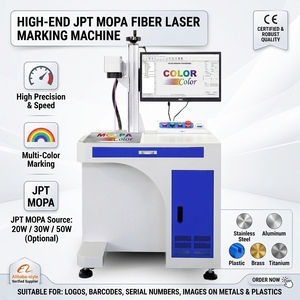
New Industrial 50W Fiber Laser Marking for Metal JPT MOPA Source Color Marking Machine PLT/BMP for Stainless Steel 2026 CE
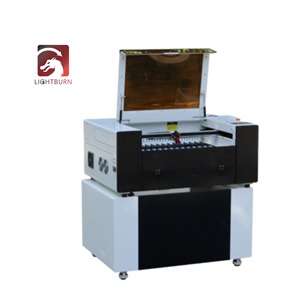
SM-Pro Series 1000x600mm CO2 Laser Engraving Cutting Machine 50W-130W Lightburn Compatible
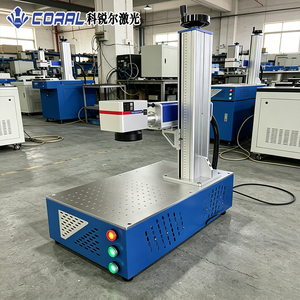
CORAL HG-ZM-A-D30 3D Mopa Desktop Laser Marker Easy To Operate For Mixed Aluminum And Stainless Steel Materials
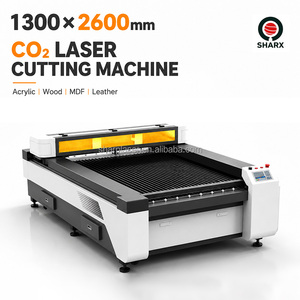
150W 1325 CO2 Laser Cutter with Ruida Control System Water-Cooled for Wood Acrylic MDF Stone Rubber Supporting DXF/PLT Formats
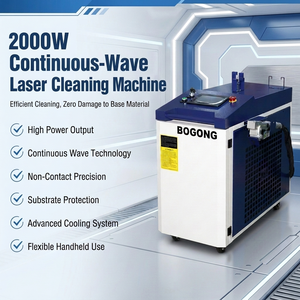
BOGONG 2000W CW Laser Cleaning Machine Handheld Industrial Rust Removal Floor Coating Surface Treatment for Construction Metal
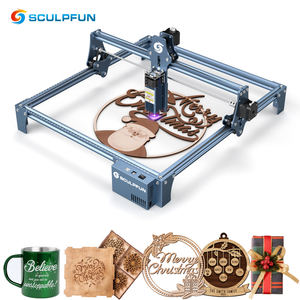
SCULPFUN S9 90W Laser Engraver 3d CNC Desktop Printer Laser Engraving Machines
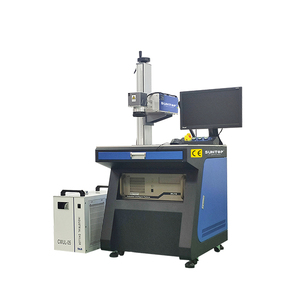
10w Uv Laser Engraving Machine for Glass, 3w/5w/8w/10w/15w/20w, Laser Marking Machine, for Metal/wood/acrylic/leather/cloth
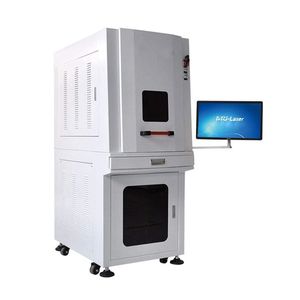
3W PVC Green Laser Marking Machine for Thin Ceramic Sheets
Executive Summary: The Evolution of Flying Laser Marking Technology
In modern high-speed manufacturing, product traceability, regulatory compliance, and permanent brand identification have transitioned from operational preferences to strict legal imperatives. Industrial flying laser marking—commonly referred to as "laser marking-on-the-fly" (MOTF)—represents the apex of continuous inline coding technology. Unlike static galvo laser engravers that require items to stop completely inside a marking enclosure, flying laser markers integrate dynamically above fast-moving conveyor belts, rotary production indexers, and extrusion lines. By synchronizing high-speed galvo mirror galvanometers with real-time optical rotary encoder signals, flying laser systems etch high-contrast 2D DataMatrix codes, dynamic batch numbers, expiration dates, and vector logos at line speeds exceeding 300 meters per minute.
The global demand for flying laser markers has experienced exponential growth, driven predominantly by fast-moving consumer goods (FMCG), pharmaceutical UDI (Unique Device Identification) directives, automotive component tracking, and beverage packaging automated lines. As manufacturing enterprises migrate from traditional inkjet coders (CIJ)—which suffer from recurring ink costs, nozzle clogging, and environmental solvent hazards—flying laser systems offer a zero-consumable, non-contact, permanent alternative with virtually zero operational maintenance.
Key Technical Insight (Information Gain): Continuous inline laser marking requires real-time signal processing to prevent vector distortion. Advanced flying laser markers utilize hardware-level encoder synchronization (DSP architecture) to dynamically recalculate galvo trajectory vectors every 10 microseconds, accommodating line acceleration, deceleration, and belt jitter without spatial distortion.
Core Technological Pillars of Dynamic Inline Coding
When selecting a flying laser marker supplier, enterprise procurement managers must evaluate three core hardware-software subsystems:
- Optical Rotary Encoder Tracking: High-resolution quadrature encoders measure precise linear movement of the substrate. The laser control card calculates velocity vectors dynamically, matching laser beam firing intervals with physical line velocity.
- High-Speed Digital Scan Heads: Dynamic Galvo heads optimized for MOTF feature low-inertia beryllium mirrors and high-bandwidth digital drivers capable of jump speeds up to 15,000 mm/s, allowing complex 2D barcodes to be etched within milliseconds.
- Wavelength-Specific Laser Sources: Matching the laser wavelength to substrate absorption characteristics determines marking speed, contrast, and thermal impact. MOPA Fiber (1064nm), UV Cold Laser (355nm), CO2 (9.3µm - 10.6µm), and Green (532nm) each address specific material matrices.
Performance Metrics of Industrial Flying Laser Systems
Empirical benchmarking derived from enterprise automated manufacturing deployments.
Top 10 Flying Laser Marker Suppliers & Exporters (Global Industry Benchmark)
Navigating the global landscape of laser machine exporters requires analyzing manufacturing standards, optical components integration, control software flexibility, and post-sales technical support infrastructure. Below is an authoritative synthesis of the industry's top 10 flying laser marker manufacturers and exporting leaders based on technical innovation, E-E-A-T credentials, and global export footprint.
Lotus Laser Systems (UK & Global Exporters)
Renowned for British engineering precision, Lotus Laser Systems specializes in ISO 9001 certified industrial UV, MOPA fiber, and CO2 laser platforms. Equipped with 3D marking capability as standard and proprietary beam delivery optics, Lotus systems excel in automated inline data plate loading, medical device traceability, and ultra-high-speed packaging lines. Backed by up to 10-year warranty options (UK) and robust international distributor coverage across 46 countries.
Videojet Technologies
A global giant in product identification, Videojet offers expansive line-integrated CO2 and Fiber flying laser coders. Their systems are widely deployed in high-speed bottling, canning, and pharmaceutical cartoning facilities where continuous 24/7 uptime and automated visual inspection integration are required.
Trumpf Group
German engineering leader Trumpf designs premium industrial laser marking stations and OEM laser sources. Their TruMark series delivers superior pulse control and peak power consistency, ideal for automotive direct part marking (DPM) and aerospace traceability applications.
Han's Laser Technology
One of Asia’s largest laser exporters, Han's Laser manufactures a vast array of automated flying laser systems. Utilizing modular chassis designs and scalable fiber/UV laser powers, they cater to electronic PCB marking, semiconductor packaging, and high-volume sheet metal processing.
Dominic Laser / Domino Printing Sciences
Headquartered in the UK with worldwide exporting channels, Domino provides specialized flying CO2 and fiber laser coders designed to operate seamlessly in demanding washdown environments such as dairy, beverage, and personal care packaging.
Keyence Corporation
Keyence is globally recognized for integrating advanced 3-axis optical scanning with vision-guided flying laser systems. Their hybrid laser markers automatically adjust focal distance dynamically while parts move along irregular trajectories.
FOBA Laser Marking & Engraving
Part of ALLTEC Angewandte Lasertechnologie, FOBA specializes in high-precision camera-assisted flying laser marking systems, heavily utilized in medical device manufacturing, orthopedic implant coding, and automotive safety components.
Gravotech Engineering
A pioneer in industrial marking, Gravotech offers compact flying laser marking heads tailored for integration into automated cell lines, robotic arms, and custom turnkey equipment for industrial hardware marking.
Telesis Technologies
Telesis designs ruggedized fiber and UV flying laser markers known for deep engraving capabilities and heavy industrial reliability in steel mills, automotive casting facilities, and aerospace foundries.
HGTECH (HG Laser)
A prominent international exporter offering scalable laser marking, cleaning, and cutting machinery. HGTECH supplies cost-effective inline flying fiber laser markers designed for automated pipe, wire, cable, and extrusion line processing.
Wavelength & Laser Source Selection Guide for Flying Applications
Selecting the incorrect laser wavelength is the single most common and costly mistake made during high-speed marking line installation. Thermal absorption characteristics vary dramatically across metals, polymers, organic substrates, and glass. The matrix below outlines operational parameters across the primary flying laser source categories.
| Laser Wavelength | Primary Substrates | Marking Mechanism | Max Line Speed | Thermal Impact |
|---|---|---|---|---|
| MOPA Fiber (1064 nm) | Stainless steel, aluminum, brass, titanium, dark ABS, anodized metals | Photothermal / Annealing / Micro-ablation | Up to 280 m/min | Medium (Adjustable pulse 2-500ns) |
| UV Cold Laser (355 nm) | HDPE, PET, silicone, glass, sensitive medical plastics, ceramics | Photochemical (Cold ablation - chain breaking) | Up to 200 m/min | Zero (No thermal stress/cracking) |
| CO2 Laser (9.3µm / 10.6µm) | Paperboard, PET bottles, wood, acrylic, rubber, coated foils, leather | Photothermal carbonization / surface melting | Up to 320 m/min | Localized thermal impact |
| Green Laser (532 nm) | Thin ceramic sheets, silicon wafers, highly reflective gold/copper | Photochemical / Light photothermal absorption | Up to 180 m/min | Minimal heat affected zone (HAZ) |
Key Engineering Insights: Why Pulse Tuning (MOPA) Matters in Dynamic Lines
In standard Q-switched fiber lasers, pulse frequency and pulse duration are tightly coupled; altering frequency automatically degrades peak power. In contrast, MOPA (Master Oscillator Power Amplifier) technology allows independent control of pulse duration (ranging from 2 ns to 500 ns) and repetition rate (up to 4000 kHz). For high-speed flying applications, short pulse durations (2-15 ns) prevent heat accumulation on moving plastic components, avoiding surface melting or code blurring. Conversely, long pulse durations with high energy can deeply etch continuous vin codes into moving automotive chassis beams.
Enterprise Strengths & Operational Excellence
Why Tier-1 industrial manufacturers partner with established British and global engineering experts for high-reliability laser marking systems.
Up to 10-Year Warranty Coverage
Unmatched long-term operational protection with Diamond Cover programs in home regions and comprehensive 3-5 year global warranties via authorized distributor channels.
3D Dynamic Beam Delivery
Integrated 3-axis galvo dynamic focusing systems automatically maintain crisp focal spot size across curved, stepped, and multi-plane moving components without manual adjustment.
ISO 9001 Quality Accreditation
Rigorous quality management systems govern every assembly stage, optical alignment test, and laser power calibration process before machine dispatch.
Cyber Essentials & Data Security
NCSC Cyber Essentials certified infrastructure guarantees secure industrial IoT network connectivity, remote telemetry, and dynamic database integration.
15+ Year Structural Lifespan
Engineered with mil-spec extruded aluminum frames and industrial-grade optoelectronics built for continuous 24/7 heavy industrial duty cycles.
Turnkey COBOT & Line Automation
Seamless communication protocols (EtherNet/IP, PROFINET, TCP/IP) enable direct interfacing with robotic loading arms, indexers, and automated plate feeding stations.
Future Procurement Trends in Flying Laser Marking (2026–2030)
As smart factories transition into Industry 4.0 and Industry 5.0 environments, flying laser marker procurement is being redefined by four key technological trajectories:
1. AI-Driven Visual Inspection & Closed-Loop Quality Verification
Future flying laser systems are no longer standalone coders; they operate as intelligent marking-and-verification nodes. High-speed CMOS cameras integrated directly inline downstream read 100% of etched DataMatrix and QR codes at full conveyor speeds. Real-time machine vision software evaluates grade contrast (ISO/IEC 15415 standards) and automatically adjusts laser power or pulse width on the fly if surface reflectance shifts, guaranteeing zero unreadable codes enter the supply chain.
2. Green Manufacturing & Zero-Carbon Operational Directives
Global consumer goods enterprises are actively eliminating ink-based Continuous Inkjet (CIJ) systems to meet strict ESG (Environmental, Social, and Governance) targets. CIJ systems consume thousands of liters of volatile organic solvent (MEK) and ink cartridges annually, producing toxic hazardous waste and VOC emissions. Flying laser markers eliminate all liquid chemical consumables, reducing carbon footprints by up to 90% and lowering total cost of ownership (TCO) within 14 months of operation.
3. Dynamic Cloud-Database Serialization for Anti-Counterfeiting
Modern supply chains demand unique, cryptographically generated serialization for every individual item packaged. Next-generation flying laser controllers interface directly with ERP systems (SAP, Oracle) via OPC-UA protocols. As a bottle or box passes the optical sensor, the laser dynamically pulls a unique encrypted hash key from the database and etches it within 15 milliseconds, effectively neutralizing global counterfeit syndicates.
4. Modular Wavelength Swapping & Hybrid Laser Heads
To maximize capital equipment agility, contract packaging companies are procuring modular flying laser systems. These platforms allow quick-release swapping between MOPA Fiber and UV optical heads on the same motion chassis, enabling facilities to switch from marking stainless steel canisters to heat-sensitive pharmaceutical foil blisters with minimal re-tooling downtime.
Frequently Asked Questions (Procurement FAQ)
Detailed technical and operational answers to common inquiries raised by global engineering and procurement teams.
How do I calculate the maximum compatible line speed for a flying laser marker?
Maximum line speed depends on three primary factors: the physical length of the marking character string (or 2D code area), the laser power output, and the material's energy absorption threshold. The formula for line speed limit is Speed (m/min) = (Marking Field Length in mm / Required Exposure Time in ms) × 60. For example, a 50W MOPA Fiber laser marking a 10mm high 2D DataMatrix code on anodized aluminum can achieve speeds up to 250 m/min, while marking clear PET plastic with a CO2 laser may top out at 180 m/min to maintain code depth and contrast. Our application engineers provide free line speed validation testing using your sample substrate.
What is the main operational difference between MOPA Fiber and UV Cold Laser markers?
MOPA Fiber lasers operate at a 1064nm infrared wavelength and rely primarily on photothermal processing (heating, annealing, or micro-ablating the material). They are ideal for robust metals, dark plastics, and heavy industrial part identification. UV lasers operate at a much shorter 355nm ultraviolet wavelength and utilize a "cold" photochemical process—breaking molecular bonds without generating micro-cracks or heat-affected zones. UV is essential for delicate substrates like thin glass, medical-grade tubing, heat-sensitive flame-retardant polymers, and white ABS plastics where thermal burning causes discolored edges.
Why is dynamic encoder synchronization essential for continuous flying laser marking?
Conveyor belts never move at perfectly static velocities; subtle motor vibrations, belt stretching, and speed fluctuations occur constantly. A static timer cannot compensate for these micro-variations, leading to stretched, compressed, or distorted barcodes. A rotary optical encoder mounted directly to the conveyor shaft measures exact real-time rotational movement and sends pulses to the laser galvo card. The controller adjusts the laser vector coordinates dynamically in real time, ensuring perfectly symmetrical, scannable codes regardless of line acceleration or deceleration.
What warranties and global technical support are provided for international exports?
Lotus Laser Systems and top-tier global exporting partners provide full international support networks spanning over 46 countries. Systems shipped internationally carry robust 3-to-5-year comprehensive manufacturer warranties covering laser sources, galvo scan heads, and optical control cards. In addition, localized technical service centers provide spare part dispatch, remote diagnostic telemetry, and on-site field engineering support to maintain maximum production line uptime.
Can flying laser markers integrate directly with existing production management systems (MES/ERP)?
Yes. Modern flying laser controllers feature industrial Ethernet architecture supporting TCP/IP, Ethernet/IP, PROFINET, and Modbus communications. Through dynamic software SDKs, the laser system queries your Manufacturing Execution System (MES) or ERP database (such as SAP) automatically as a product trigger sensor trips. It fetches dynamic variables such as shift codes, serial numbers, real-time timestamps, and batch IDs, formats the laser vector layout automatically, and etches the data without stopping the line.
Are flying laser markers safe to operate on open factory floors?
Safety compliance is paramount. Flying laser markers are typically categorized as Class 4 laser devices when installed over open conveyors. To achieve Class 1 safe operating standards for unshielded workers, suppliers install customized beam shielding enclosures around the marking zone, equipped with safety interlocks, safety light curtains, and integrated industrial fume extraction units to capture microscopic airborne particulate matter generated during ablation.
Validate Your Flying Laser Marking Application Today
Send your material samples to our UK optical laboratory for complimentary line speed testing, high-contrast sample marking, and a comprehensive technical feasibility report.