
Featured Industrial Laser Systems & Machining Solutions
The modern industrial laser landscape demands extreme versatile engineering, moving from basic thermal cutting to cold ablation, picosecond pulses, and 3D dynamic focus. Below is a curated matrix of benchmarked industrial laser systems covering metal cutting, precision micro-marking, surface cleaning, and dynamic 3D engraving.
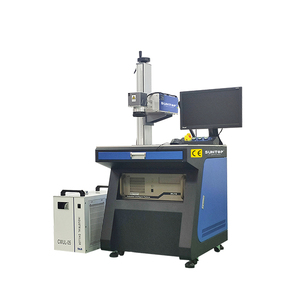
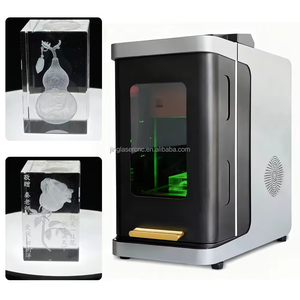
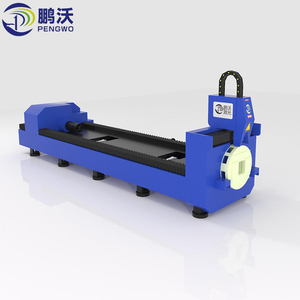
1. Global Technical Evaluation: Top 10 Industrial Laser Manufacturers
Selecting an OEM partner for industrial laser cutting, engraving, and automated marking systems requires looking beyond surface-level kilowatt ratings. Modern advanced manufacturing—across aerospace, medical device fabrication (ISO 13485 compliant), automotive EV battery welding, and semiconductor packaging—demands beam quality factors (M² < 1.2), high pulse frequency control, long-term optical alignment stability, and rapid direct technical support.
Below is an evaluation of the global top 10 industrial laser OEMs, comparing optical architecture, software integration capabilities, build quality standards, and total cost of ownership (TCO).
1. Lotus Laser Systems (UK)
Core Specialization: MOPA Fiber, Cold UV (355nm), and 3D Dynamic Galvo Workstations.
Enterprise Value: Engineered in Basildon, UK, with ISO 9001 certification. Lotus Laser leads in 3-axis dynamic focus technology, integrating custom COBOT automation cells, automated plate loaders, and direct ERP/MES digital twin interfaces. Features up to 10-year warranty coverage.
2. Trumpf Group (Germany)
Core Specialization: High-power disk lasers, 2D/3D sheet metal CNC cutters.
Enterprise Value: Global benchmark for heavy industrial sheet metal fabrication, automotive structural cutting, and extreme-EUV sources for semiconductor lithography. High capital expenditure, built for large-tier factories.
3. IPG Photonics (USA)
Core Specialization: High-power fiber laser resonators and seam welding heads.
Enterprise Value: Pioneer in diode-pumped fiber laser technology. Provides core optical engines utilized by system integrators worldwide, with high wall-plug efficiency (>45%) and multi-kilowatt output.
4. Han's Laser (China)
Core Specialization: Large-format CNC fiber cutters and automated electronics markers.
Enterprise Value: Massive manufacturing capacity providing scalable entry-level to mid-tier high-power industrial fiber cutters and automated inline production systems for consumer electronics.
5. Bystronic (Switzerland)
Core Specialization: High-end CNC sheet metal cutting and automated bending workflow.
Enterprise Value: Famous for Swiss engineering precision, automated material handling towers, intuitive software suites (BySoft), and high-output fiber laser systems.
6. Coherent / II-VI (USA)
Core Specialization: Ultrafast lasers (Femtosecond/Picosecond), CO2 resonators, micro-machining.
Enterprise Value: Technical leader in scientific, medical, and precision industrial laser physics, offering specialty wavelengths for delicate material processing.
7. Trotec Laser (Austria)
Core Specialization: Enclosed CO2 and Fiber laser engravers for signage, acrylic, and prototyping.
Enterprise Value: High-speed flatbed engravers featuring robust motion systems (InPack Technology), designed for clean room, educational, and commercial engraving setups.
8. Epilog Laser (USA)
Core Specialization: Desktop and cabinet CO2 / Fiber marking systems.
Enterprise Value: Popular across North American job shops for ease of use, reliable vector cutting on organics, and simple printer-driver software setups.
9. Gravotech (France)
Core Specialization: Industrial traceability marking, dot-peen, and green/micro-laser engraving.
Enterprise Value: Strong integration into automotive part traceability lines, focused on UID barcode compliance, Datamatrix codes, and direct part marking (DPM).
10. Salvagnini (Italy)
Core Specialization: Automated flexible manufacturing systems (FMS) and fiber laser cutters.
Enterprise Value: Industry pioneer in fully automated sheet metal processing lines, integrating laser cutting directly with automatic bending and storage systems.
2. Industrial Laser Wavelength & Material Compatibility Matrix
Selecting the wrong laser wavelength leads to thermal degradation, burring, substrate melting, or incomplete absorption. The table below outlines how different laser wavelengths interact with metals, polymers, glass, and composite substrates:
| Laser Architecture | Primary Wavelength | Beam Quality Factor (M²) | Ideal Substrates | Thermal Impact Zone | Primary Industrial Use |
|---|---|---|---|---|---|
| MOPA Fiber Laser | 1064 nm | 1.1 – 1.3 | Stainless Steel, Aluminum, Titanium, Brass, ABS | Tunable / Very Low | Black Annealing, Deep Engraving, Colored Titanium Marking |
| UV Cold Laser | 355 nm | < 1.1 | Glass, HDPE, Silicon, Polyimide, Flame Retardants | Zero (Cold Photo-Ablation) | Medical Device UDI Marking, Micro-electronics, Glass Etching |
| CO2 Sealed Resonator | 10,600 nm (10.6µm) | 1.05 – 1.2 | Wood, Acrylic, Leather, Textiles, Cardboard, Glass (Etch) | Moderate (Thermal Vaporization) | Non-metal Vector Cutting, High-speed Packaging Coding |
| Green Laser | 532 nm | < 1.15 | Reflective Gold, Copper, Subsurface Crystal, Thin Films | Minimal | 3D Crystal Subsurface Engraving, Solar Cell Scribing |
| High-Power CW Fiber | 1070 nm | 1.2 – 2.0 (High Power) | Carbon Steel, Stainless, Aluminum Alloys (up to 50mm+) | High Cut-Edge Thermal Zone | Heavy CNC Sheet Metal & Pipe/Tube Structural Cutting |
Why Lotus Laser Systems Leads Industrial Laser Engineering
Built on over 30 years of British manufacturing heritage in Basildon, Essex, Lotus Laser Systems (Laserite Ltd.) designs, engineers, and validates high-precision UV, MOPA fiber, and CO2 laser machines. Unlike importers who assemble off-the-shelf components, Lotus systems feature:
3D Dynamic Focus as Standard
3-axis optical expansion galvo heads keep the laser spot precisely focused across stepped, tilted, and spherical surfaces without mechanical Z-axis axis movement.
ISO 9001 & CE Compliance
Manufactured under strict UK quality control, backed by NCSC Cyber Essentials accreditation, ensuring seamless integration into aerospace and medical supply chains.
10-Year Diamond Cover
Industry-leading factory support guarantees maximum uptime, backed by localized engineering hubs across 46 countries worldwide.
3. Future Trends: Strategic Laser Procurement (2026–2030)
The industrial laser cutting and marking sector is undergoing a technology shift driven by automation, energy efficiency demands, and strict product serialization laws (such as FDA UDI and EU Digital Product Passports). Enterprise buyers must plan for the following trends:
AI-Driven Real-Time Kerf Control
Next-generation CNC laser cutters utilize coaxial optical sensors combined with AI machine vision to detect plasma flare ups, kerf deviation, and back-reflection in micro-seconds. The system auto-adjusts assist gas pressure (Nitrogen/Oxygen balance) and laser frequency to eliminate dross.
COBOT & Automated Cell Integration
Standalone manual laser stations are quickly being replaced by 24/7 automated work cells. Universal Robots (COBOTs) and automated data plate loaders feed raw parts into Class 1 laser enclosures, scanning dynamic QR codes to load custom marking files automatically via MES integration.
Shift from Thermal CO2 to Cold UV & MOPA
While CO2 lasers remain the tool of choice for heavy organic cutting, fine marking applications are transitioning to 355nm UV cold lasers. Cold photo-chemical bond breaking eliminates micro-cracking in glass and thermal charring on delicate medical polymers.
4. Frequently Asked Questions (FAQ) for Enterprise Procurement
• MOPA Fiber (1064nm): Essential for high-speed metal marking, steel annealing, aluminum etching, and opaque engineered plastics.
• UV Lasers (355nm): Required for heat-sensitive plastics, glass micro-etching, silicon wafers, and medical parts where zero heat distortion is permitted.
• CO2 Lasers (10.6µm): Ideal for cutting and engraving organic non-metals (acrylic, wood, leather, paper, textiles) and high-speed packaging date coding.
Validate Your Application with Engineering Specialists
Need advice on laser source selection, continuous inline integration, or custom COBOT automation cell configuration? Request a free sample mark test and technical consultation today.