
High-Precision Industrial Laser Marking & Cutting Systems
Explore state-of-the-art MOPA fiber, UV cold laser, CO2 galvo, and high-power pulsed cleaning systems designed for aerospace, medical, automotive, and electronics manufacturing.
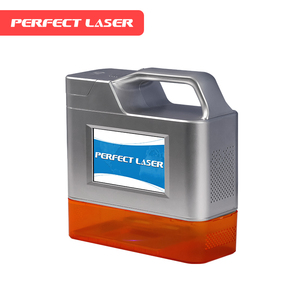
Portable Handheld Enclosed Mini Automatic DIY Laser Engraver / Mini Laser Marker
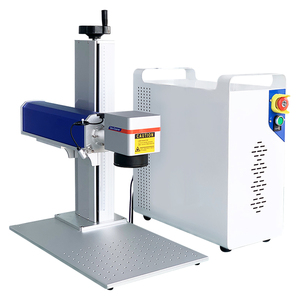
Fiber Laser Engraving Machine For Advertising Companies High-Powered Laser Marker
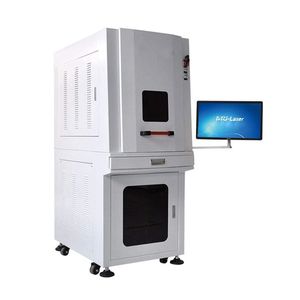
3W PVC Green Laser Marking Machine for Thin Ceramic Sheets & Sensitive Polymers
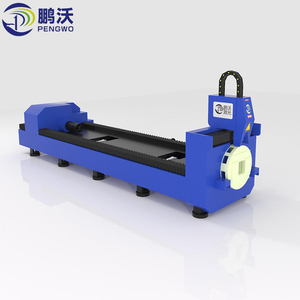
3000W Automatic Feeding CNC Industrial Laser Pipe Cutting Machine Metal Tube Fiber Laser Cutter
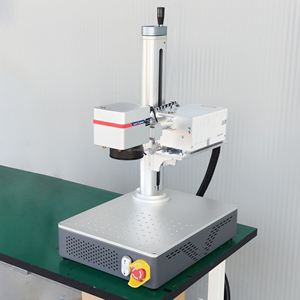
Portable Glass UV Laser Marker 5W for Ultra-Fine Glass, Stone, Metal & Organic Material Marking
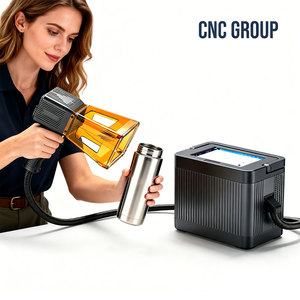
New Portable Metal 20W CNC 3D Desktop Mini Fiber Laser Marking Machine with Vector File Support
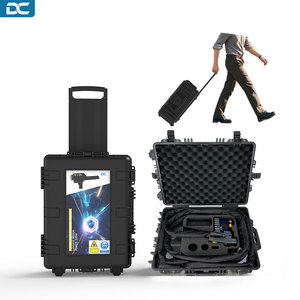
Dachuan Handheld 500W Portable Pulsed Fiber Laser Cleaner for Metal Rust, Oxide & Coating Removal
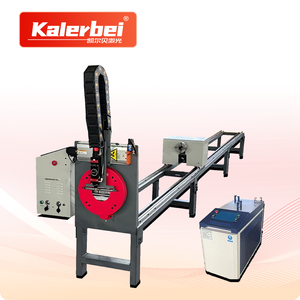
Mini CNC Automatic Fiber Laser Tube Cutter - Ideal for Small-Diameter Metal Pipe Processing
Global Industry Analysis: Top 10 Industrial Laser Marker Manufacturers & Factories
Navigating the global landscape of industrial laser processing systems requires evaluating beam delivery dynamics, optical hardware stability, firmware integration, and total cost of ownership (TCO). This strategic evaluation breaks down the world's leading manufacturers for 2026 procurement teams.
In modern advanced manufacturing—spanning aerospace component verification, medical device Unique Device Identification (UDI), automotive Data Matrix Coding (DMC), and high-density semiconductor package marking—industrial laser markers have completely superseded traditional mechanical micro-percussion and ink-jet systems. The primary driver is clear: operational permanence, zero chemical consumables, micro-scale accuracy, and seamless integration into automated Industry 4.0 production environments.
However, selecting the right manufacturer or OEM factory involves looking far beyond peak laser wattage. Precision optical focus stability, galvo scanner drift parameters, pulse frequency tunability (such as MOPA vs Q-switched architectures), thermal management, and long-term field support determine whether an installation delivers continuous 24/7 reliability or unbudgeted downtime.
| Manufacturer / Brand | Primary Laser Expertise | 3D / Multi-Axis Galvo | Typical Target Sectors | Global Footprint |
|---|---|---|---|---|
| Lotus Laser Systems | MOPA Fiber, UV 355nm, CO2 Galvo | Standard 3-Axis Included | Aerospace, Medical, Electronics, Precision Engineering | Global Network (46 Countries) |
| TRUMPF Group | High-Power Fiber & Disk Lasers | Optional Modular 3D | Automotive Heavy Metals, Sheet Fabrication | Direct Subsidiaries Worldwide |
| Han's Laser | Multi-Axis CNC & Fiber Systems | Configuration Dependent | Mass Consumer Electronics, Structural Steel | Global Export Hubs |
| IPG Photonics | Fiber Laser Engine OEM & Systems | Integrated Galvo Modules | Battery Manufacturing, EV Powertrains, Welding | Global Direct Sales |
| Telesis Technologies | Pulsed Fiber & Heavy Impact Marking | Optional 2D/3D galvo | Automotive VIN, Castings, Heavy Machinery | North America & EU Direct |
| Videojet Technologies | Inline CO2 & Low-Power Fiber Coder | Fixed Focus / Dynamic 2D | FMCG Packaging, Bottling, High-Speed Lines | Global FMCG Support |
| Keyence Corporation | 3-Axis Green, UV, Fiber Markers | Proprietary 3D Autofocus | Semiconductors, Ultra-Fine Medical Components | Global Direct Technical Sales |
| Trotec Laser | CO2 & Pass-Through Flatbed/Galvo | Standard 2D / Rotary Focus | Signage, Award Customization, Organic Materials | Worldwide Subsidiaries |
| Epilog Laser | Desktop CO2 & Entry Fiber Systems | Manual/Autofocus 2D | Educational STEM, Prototyping, Engraving Workshops | Global Distributor Network |
| Gravotech / Dachuan OEM | Micro-Mechanical & Pulsed Fiber Cleaners | Rotary Multi-Axis | Jewellery, Industrial Surface Prep & Cleaning | Global Retail & Factory Distro |
1. Lotus Laser Systems (UK Engineering & OEM Standard)
Renowned for pioneering built-in 3D dynamic focusing across its Meta-C and Meta-XY workstation platforms, Lotus Laser combines British optical design with rigorous ISO 9001 and CE compliant manufacturing. Lotus systems excel in non-contact cold UV laser etching and versatile MOPA fiber pulse tuning, providing unprecedented control over heat input when marking delicate surgical stainless steel or heat-sensitive ABS/PET polymers. Supported across 46 countries, they represent the pinnacle of balanced procurement TCO and engineering agility.
2. TRUMPF Group (Industrial Automation Giant)
Headquartered in Germany, TRUMPF is a global powerhouse in industrial laser machinery and disk laser technology. Their TruMark series represents heavy industrial engineering designed to integrate into automated automotive robotic cells. Known for rugged reliability, TRUMPF systems command a premium investment point, catering primarily to Tier-1 automotive and aerospace assembly plants requiring heavy continuous uptime.
3. Han's Laser Technology (Global Volume Manufacturer)
Operating out of Shenzhen, Han's Laser represents massive manufacturing scale. With a vast product portfolio spanning micro-electronics marking to multi-kilowatt sheet metal cutters, Han's Laser dominates mass market supply chains in Asia. Their marking platforms are widely used in consumer electronics supply hubs due to competitive pricing and rapid factory production scalability.
4. IPG Photonics (Fiber Core Developer & OEM OEM Engine)
IPG is the vertical integrator that revolutionized the laser market by developing diode-to-fiber technology. While they supply laser source modules to dozens of global machine builders, IPG also manufactures complete workstation turnkeys. Their systems are exceptionally strong in EV battery pouch marking, copper welding, and high-power deep metal engraving.
5. Telesis Technologies (Heavy Industrial Part Identification)
Specializing in cast metal, engine block VIN marking, and ruggedized dot-peen / fiber laser hybridization, US-based Telesis is a staple in heavy industrial foundries. Their markers are engineered to withstand extreme environmental dust, vibrations, and thermal fluctuations common in steel processing mills.
6. Videojet Technologies (Inline FMCG Packaging Coder)
A subsidiary of Danaher, Videojet dominates high-speed inline packaging lines. Rather than deep engraving workstations, Videojet focuses on flying-mark carbon dioxide (CO2) and fiber laser coders designed to print expiration dates, batch numbers, and barcodes directly onto pharmaceutical bottles, flexible foils, and cardboard cartons.
7. Keyence Corporation (Vision-Integrated Precision Systems)
Japanese factory automation leader Keyence is renowned for integrating high-resolution machine vision sensors directly into laser head enclosures. Their MD-F and MD-U series offer automated height adjustment and dynamic focal alignment, allowing micro-marking on complex 3D semiconductor substrates without mechanical axis indexing.
8. Trotec Laser (Flatbed & Galvo Versatility)
Austria's Trotec produces high-speed flatbed CO2 and fiber laser engraving systems. Widely adopted in educational institutions, architectural model shops, and customized promotional production, Trotec delivers polished software user experiences (Ruby OS) alongside reliable enclosure ergonomics.
9. Epilog Laser (Prototyping & Small-Batch Engraving)
Based in Golden, Colorado, Epilog Laser has built a strong reputation over 35 years in desktop and benchtop CO2 and fiber systems. Known for straightforward setup and vector cutting control, Epilog markers are popular among small businesses, job shops, and light component marking facilities.
10. Gravotech & OEM Specialized Partners (Dachuan / Perfect Laser)
Specialized OEM manufacturers deliver niche industrial solutions—such as pulsed laser surface cleaning tools (Dachuan 500W), ultra-portable mini DIY engravers (Perfect Laser), and jewel micro-engravers (Gravotech). These factories serve dedicated applications requiring targeted mobility or specialized optical configurations.
Future Sourcing & Procurement Trends in Industrial Laser Processing
How technological shifts in laser physics, dynamic focus optics, and green factory compliance are reshaping enterprise procurement strategies for the next decade.
1. Transition from Q-Switched to MOPA Fiber & Ultra-Fast Femtosecond Lasers
Legacy Q-switched fiber lasers with fixed pulse durations (typically ~100ns) are rapidly being replaced by Master Oscillator Power Amplifier (MOPA) lasers. MOPA architecture enables independently adjustable pulse frequency (1 kHz to 4000 kHz) and pulse width (2ns to 500ns). This allows precise control over thermal heat input—enabling deep black corrosion-resistant annealing on medical grade 316L stainless steel without destroying the passive oxide layer, as well as high-contrast marking on sensitive flame-retardant polymers. Forward-thinking procurement teams now specify MOPA sources as standard for critical component lines.
2. The Cold Laser Revolution: Green (532nm) & UV (355nm) Wavelength Adoption
Infrared 1064nm wavelength lasers operate via thermal photothermal ablation, which can lead to micro-cracking in soda-lime glass, burning in thin silicon wafers, or charring in white medical plastics. Third-harmonic ultraviolet (355nm UV) and second-harmonic green (532nm) lasers utilize photochemical "cold marking"—breaking molecular bonds directly without micro-thermal stress. Sourcing trends show exponential uptake of 3W–10W UV lasers across pharmaceutical packaging, electronics encapsulation, and luxury glass bottle decoration.
3. Automated Robotic & COBOT Loading Cells for 24/7 Unattended Output
Labor shortages and strict cycle-time targets are turning standalone laser markers into fully automated robotic workcells. Systems equipped with Collaborative Robot (COBOT) arms, motorized XY indexing tables, pneumatically actuated batch plate loaders, and inline conveyor tracking allow factories to execute lights-out shifts. Procurement evaluation criteria now weight automated I/O communication (Profinet, Ethernet/IP, TCP/IP) equal to optical specs.
4. Regulatory Mandates: FDA UDI, Automotive VIN & Digital Twin Traceability
Global regulatory agencies are mandating permanent item-level traceability across supply chains. Standard specifications demand high-density 2D Data Matrix codes (DMC) compliant with ISO/IEC 16022 and GS1 formatting. Modern laser markers integrate real-time optical grading cameras directly inside the galvo housing to mark, read, and verify code readability (Grade A/B) in milliseconds, feeding data back to enterprise MES/ERP software.
Engineering Leadership & OEM Manufacturing Principles
Why leading global tier-1 suppliers partner with verified OEM machine builders equipped with ISO 9001 certifications, in-house R&D, and standardized 3D dynamic optics.
ISO 9001 & CE Compliance
Every laser workstation undergoes rigorous power output stability testing, laser leakage safety validation (Class 1 CDRH / EN 60825-1 compliant enclosures), and electrical insulation checks before factory dispatch.
3D Dynamic Beam Delivery
Unlike basic 2D galvo heads that lose focus on stepped or curved parts, advanced 3-axis galvos dynamically adjust the focal Z-lens in real time, maintaining sub-micron spot sizes across 3D surfaces without mechanical re-indexing.
Global Technical Support & Extended Warranty
Backing installations across 46 countries with rapid spare parts logistics, remote diagnostic support, application sample testing, and warranty protection up to 10 years (UK) or 3–5 years internationally.
Industrial Laser Procurement: Frequently Asked Questions
Clear engineering insights addressing common technical queries, material compatibility, and operational considerations prior to machine purchase.
Which laser wavelength is required for my specific material?
Select 1064nm MOPA Fiber lasers for metals (stainless steel, titanium, aluminum, brass) and dark opaque engineering plastics. Choose 355nm UV Cold Lasers for heat-sensitive polymers, clear glass, ceramic micro-sheets, and medical tubing. Use 10.6µm CO2 lasers for organic substrates including acrylic, wood, leather, paper, and coated cardboard packaging.
What is the practical difference between Q-switched and MOPA fiber lasers?
Q-switched fiber lasers feature fixed pulse duration (typically ~100ns), making them economical for basic metal etching and deep engraving. MOPA fiber lasers allow adjustable pulse widths (from 2ns to 500ns), providing fine thermal tuning required for black corrosion-resistant stainless steel annealing, high-contrast plastic marking without foaming, and gold/silver micro-engraving.
What does "3D marking as standard" mean for production lines?
Traditional 2D galvo markers require flat surfaces at a fixed focal distance. A 3D dynamic focusing laser incorporates a motor-driven dynamic expander optical axis (Z-axis). This allows the focal point to instantly adjust across inclined planes, spheres, cylinders, and stepped parts in a single automated cycle without manual table refocusing.
Can material samples be tested prior to issuing a purchase order?
Yes. Leading manufacturers provide complimentary lab sample testing. Buyers can send raw parts or components to receive a detailed metallurgical report, optical contrast measurements, scan time benchmarks, and code verification grades (ISO 15415/15416) before finalizing machine specifications.
What safety classifications apply to industrial laser workstations?
Open-bed laser systems operate as Class 4 devices requiring dedicated safety goggles, interlocking room controls, and trained safety officers. Enclosed laser workstations built to Class 1 standards feature certified safety glass windows and interlocked doors, allowing safe operation on open factory floors without special PPE.
How long do industrial laser optical sources typically last?
Solid-state fiber laser diodes feature Mean Time Between Failures (MTBF) ratings exceeding 100,000 operational hours—equivalent to over 10 years of continuous 24/7 industrial use with zero diode replacements. UV laser crystals and CO2 RF glass tubes typically require optical refurbishment after 20,000 to 40,000 operating hours.