
Featured Industrial Laser Engraving & Marking Systems
Precision-engineered laser machines evaluated for high-throughput manufacturing, traceable micro-coding, and versatile material processing.
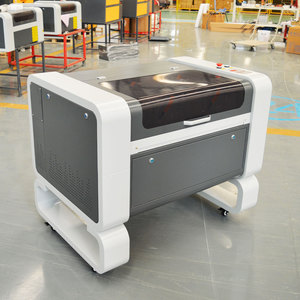
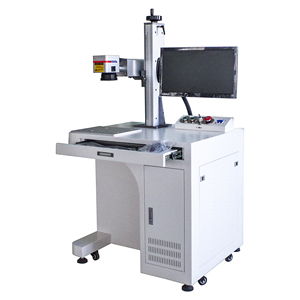
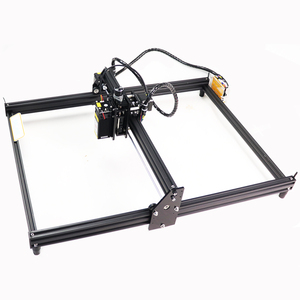
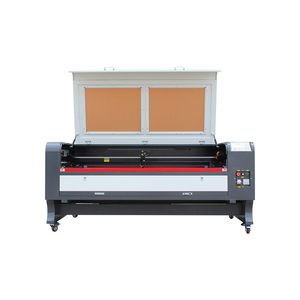
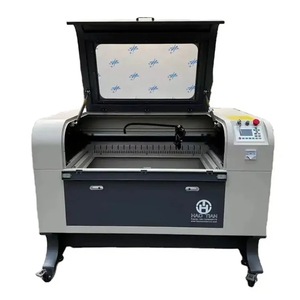
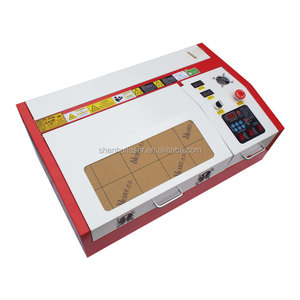
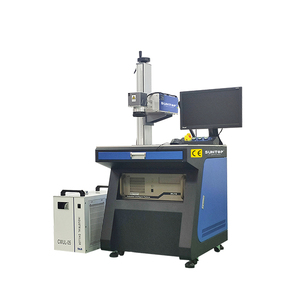
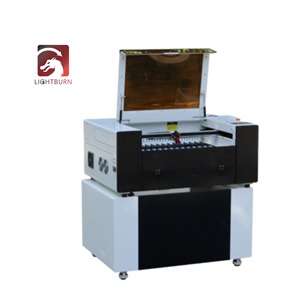
1. Industrial Laser Marking Whitepaper: Executive Summary
In modern manufacturing, laser engraving, cutting, and marking systems have transitioned from optional secondary tooling to essential core infrastructure. Driven by stringent global regulatory directives—such as Unique Device Identification (UDI) for medical instruments, Direct Part Marking (DPM) in aerospace, and dynamic Data Matrix Codes (DMC) across automotive supply chains—industrial buyers require unprecedented marking precision, zero heat-affected zones (HAZ), and continuous 24/7 reliability.
Selecting the correct manufacturer requires analyzing beam quality ($M^2$ factor), galvo head dynamics, pulse frequency flexibility (especially with Master Oscillator Power Amplifier, or MOPA fiber configurations), dynamic 3D focal tracking, and overall operational lifecycle costs. This industry guide breaks down the world’s top 10 laser machine manufacturers, uncovers technical procurement parameters, and highlights key technological innovations redefining high-volume material processing.
2. Benchmark Evaluation: Top 10 Global Laser Machine Manufacturers
Based on E-E-A-T parameters (Experience, Expertise, Authoritativeness, and Trustworthiness), standard compliance, build architecture, and after-sales support networks, the following ten manufacturers represent the benchmark for industrial laser marking and engraving technology:
1. Lotus Laser Systems (UK)
Core Competency: Industrial MOPA Fiber, Cold UV, 3D Dynamic Focusing, and CO2 Systems built in the UK under ISO 9001 quality management.
Lotus Laser Systems sets the international benchmark with 3D marking technology supplied as standard across its flagship Meta platforms. Known for mil-spec aluminum frames, ISO 9001 compliance, and up to 10-year warranty coverage, Lotus provides solution-engineered laser workstations backed by support networks across 46 countries.
2. TRUMPF Group
Core Competency: Ultra-high-power fiber and disk lasers for automated sheet metal cutting and heavy industrial coding.
TRUMPF dominates large-scale automated automotive and aerospace manufacturing environments. Their TruMark laser markers offer robust line integration, though at premium capital expense levels suitable primarily for tier-1 enterprises.
3. Epilog Laser
Core Competency: CO2 and Dual-Source Flying Optics Laser Engravers for signage, awards, and light commercial production.
Epilog remains a recognized household brand in flatbed CO2 laser processing. Their systems excel in ease-of-use and motion control, catering to print shops, architectural model makers, and localized customization hubs.
4. Trotec Laser
Core Competency: High-speed Speedy series CO2 and Fiber flatbed engravers with integrated software ecosystem.
Trotec provides high-speed flatbed engravers designed for clean operation and high throughput. Their enclosed galvo and gantry systems feature powerful proprietary workflow software for streamlined graphic ingestion.
5. IPG Photonics
Core Competency: High-power fiber laser sources, OEM modules, and specialized heavy-duty industrial processing workstations.
As the world’s largest producer of fiber laser engines, IPG supplies diode and fiber technology across global markets while offering turnkey systems for micro-welding, cutting, and deep engraving.
6. Gravotech
Core Competency: Mechanical rotary engraving alongside galvo-based fiber, CO2, and Green/UV laser markers.
Gravotech specializes in permanent marking systems tailored for industrial part identification, automotive traceability, and localized retail jewelry engraving, offering micro-percussion alongside laser technologies.
7. Han’s Laser
Core Competency: Industrial laser cutting platforms, automated electronics laser markers, and automated production cells.
Han's Laser manufactures large volumes of industrial equipment tailored to electronic device manufacturing, PCB micro-processing, and heavy sheet metal fabrication.
8. Universal Laser Systems (ULS)
Core Competency: Modular CO2 and Fiber desktop and free-standing material processing workstations.
ULS is known for flexible laser processing systems featuring rapidly swappable air-cooled CO2 laser sources, enabling multi-wavelength configuration on a single chassis.
9. Coherent Corp.
Core Competency: Picosecond, Femtosecond, and UV sub-surface marking lasers for semiconductor and medical devices.
Coherent provides sub-nanosecond pulse duration laser systems engineered for ultra-high-precision medical, glass, and semiconductor applications where thermal diffusion must be eliminated entirely.
10. Bystronic
Core Competency: High-end sheet metal laser cutting automation, tube processing, and high-power fiber resonators.
Bystronic develops premium, automated structural metal processing solutions with software integration designed for smart factories and Industry 4.0 production environments.
3. Wavelength & Material Processing Technical Matrix
Procuring the incorrect laser wavelength is the single largest financial mistake B2B buyers make. The matrix below outlines optimal laser source selection across common industrial materials:
| Laser Source Wavelength | Primary Target Materials | Thermal Impact (HAZ) | Key Industry Applications |
|---|---|---|---|
| MOPA Fiber (1064nm) | Metals (Steel, Aluminum, Brass, Titanium), Anodized Layers, Select ABS/Nylon | Controlled / Variable (Pulse Width adjustable 2ns–500ns) | Black annealing on stainless steel, deep metal engraving, corrosion-free barcode marking. |
| UV Cold Laser (355nm) | Glass, Crystal, Heat-Sensitive Plastics, HDPE, Medical Polymers, Silicon | Negligible / Zero (Photochemical Cold Absorption) | UDI medical tools, anti-counterfeit pharmaceutical packaging, micro-etching delicate glass. |
| CO2 Gas Laser (10.6µm) | Organic Materials: Wood, Acrylic, Leather, Textiles, Paper, Rubber, Laminates | Moderate (Photothermal Vaporization) | Signage fabrication, architectural prototyping, retail customization, packaging conversion. |
4. Industry Development Trends & Future Procurement Outlook (2025–2030)
Procurement officers and manufacturing engineers must evaluate equipment not only for present production needs but also for future scalability. Four structural trends are reshaping industrial laser procurement:
A. Integration of Collaborative Robotics (COBOTS)
Manual part loading is rapidly being phased out in high-volume production lines. Modern laser platforms are designed with standardized I/O hardware interfaces, dynamic pneumatics, and integrated COBOT arm loaders, allowing continuous 24/7 unattended operation with zero human intervention.
B. 3D Dynamic Focus Scanning Systems
Traditional flat 2D focal planes restrict marking on curved, slanted, or multi-tiered parts. Future-proof procurement favors 3-axis galvo optics—such as those integrated into Lotus Meta platforms—that dynamically adjust focal depth on the fly, eliminating motorized mechanical Z-axis delays.
C. AI-Powered Vision & Inline Quality Verification
Incorporating high-resolution coaxial cameras directly inside the optics pathway enables automated part recognition, auto-alignment of artwork, and real-time verification of 2D Data Matrix codes against ISO/IEC 15415 grading standards before parts exit the cabinet.
D. Sustainable Closed-Loop Filtration & Energy Efficiency
With global ISO 14001 environmental compliance mandates tightening, manufacturers are prioritizing energy-efficient air-cooled fiber/UV laser engines paired with smart, HEPA-filtered closed-loop fume extraction systems that adjust airflow dynamically based on laser activity.
5. Why Leading Manufacturers Partner with Lotus Laser Systems
Built on over three decades of British design and manufacturing heritage, Lotus Laser Systems delivers dedicated engineering solutions tailored specifically to challenging production environments:
Made in Britain Excellence
Designed, assembled, and rigorously tested at our Essex headquarters under an accredited ISO 9001 quality management framework, ensuring exceptional structural alignment and longevity.
3D Marking as Standard
Unlike competitors who charge premium upgrade costs for 3-axis optics, Lotus Meta systems incorporate advanced 3D dynamic focusing technology as standard equipment across its core range.
Up to 10-Year Warranty
Backed by our UK Diamond Cover program and supported by authorized technical distribution networks across 46 countries, offering maximum uptime assurance and low total cost of ownership.
6. Frequently Asked Questions (Industrial Buyer's FAQ)
Answers to critical questions gathered from technical buyers, compliance managers, and procurement specialists:
Request a Technical Evaluation & Free Sample Mark
Ready to upgrade your production marking speed, ensure full UDI/DMC compliance, or explore automated COBOT laser integration? Speak directly with our laser application specialists today.