
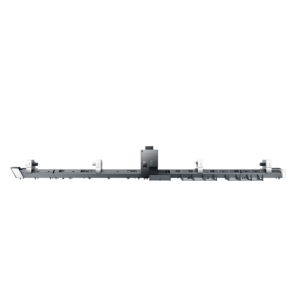
Featured Industrial Laser Systems & Cutting Machines
High-accuracy OEM platforms for permanent material marking, fine vector engraving, and high-speed industrial processing.
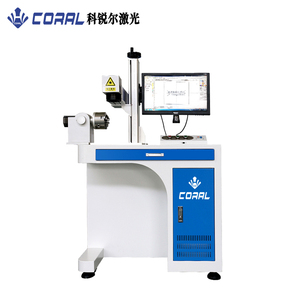
Low Price Wholesale CORAL HG-G-D20-Z125 High-Accuracy CNC Fiber Laser Engraving & Marking Machine Supports DXF/AI/DST Formats
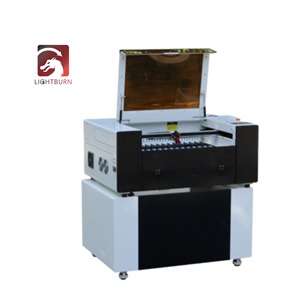
SM-Pro Series 1000x600mm CO2 Laser Engraving Cutting Machine 50W-130W Lightburn Compatible
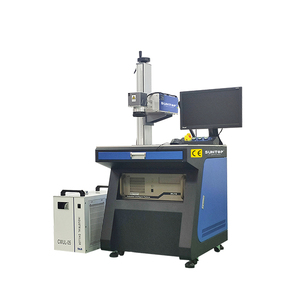
10w Uv Laser Engraving Machine for Glass, 3w/5w/8w/10w/15w/20w, Laser Marking Machine, for Metal/wood/acrylic/leather/cloth
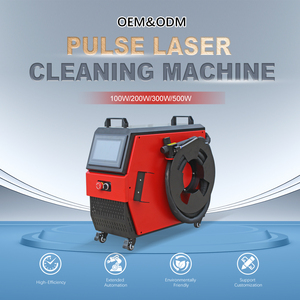
High Cost Performance 100w 200w 300w 500w Widely Laser Cleaning Machine Remove Paint air Cooling Pulsed Laser Cleaning Machine
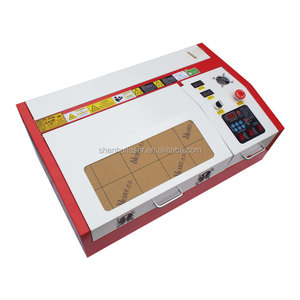
Desktop Seal Stamp Laser Engraving Machine Compact Precision Marking System
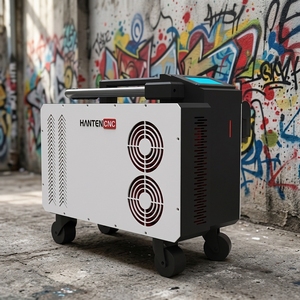
Laser Graffiti Removal Machine Portable Pulse Cleaning Equipment for Wall Stone Surface Restoration
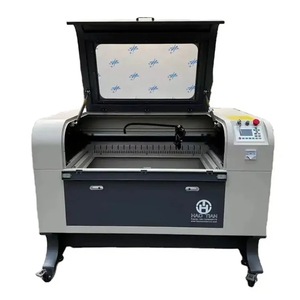
HT 690 Laser Engraving Machine 900 * 600mm 100W High-power Cutting Engraving Machine
Industrial Laser Marking Systems: 2026 Executive Procurement Guide
In modern industrial manufacturing, permanent product identification, 2D DataMatrix code serialization, and direct part marking (DPM) have evolved from optional quality control measures into mandatory international compliance standards. Regulatory frameworks such as the FDA Unique Device Identification (UDI) in medical technology, MIL-STD-130 in defense logistics, and ISO/IEC 16022 traceability guidelines in aerospace demand zero-defect marking across diverse metal, polymer, and ceramic substrates.
Selecting the optimal OEM laser marking machine manufacturer requires a thorough engineering evaluation beyond baseline wattage figures. Procurement teams must scrutinize beam quality factors ($M^2$), pulse duration control (Nanosecond vs. Picosecond/Femtosecond), galvo scanner dynamics, focal depth tolerance, and total cost of ownership (TCO) across multi-shift automated assembly operations.
MOPA Fiber Lasers (1064nm)
Features adjustable pulse durations (2ns to 500ns) providing precise heat input control. Ideal for anneal marking stainless steel without compromising corrosion resistance and dark contrast marking on anodized aluminum.
Cold UV Lasers (355nm)
Utilizes ultra-short ultraviolet wavelengths to induce photochemical reactions rather than thermal melting. Prevents micro-fractures on glass, heat-sensitive polymers, silicon wafers, and medical-grade plastics.
CO2 Galvo Systems (10.6µm)
Delivers high photon absorption in non-metallic organic materials. Engineered for rapid vector marking, high-speed cutting, and deep engraving on acrylic, wood, leather, paperboard, and glass surfaces.
Top 10 Global Laser Marking Machine Manufacturers & Suppliers Analysis
When assessing global market leaders and specialized OEM laser integrators, industrial buyers evaluate manufacturing scale, optical engineering heritage, custom cell integration capabilities, and post-sales technical field support. Below is an engineering overview of the top 10 market players shaping the industrial laser processing ecosystem in 2026:
| Manufacturer / Brand | Primary Technology Focus | Key Strengths & Innovations | Target Sector Application |
|---|---|---|---|
| 1. Lotus Laser Systems | MOPA Fiber, UV 3D, CO2 Galvo | UK-built ISO 9001 precision, 3D marking standard, up to 10-Yr warranty | Aerospace, Medical UDI, High-Tech OEM |
| 2. Trumpf Group | Disc, Fiber, TruMark Series | High-end automated cell integration, ultra-fast laser sources | Automotive, Heavy Manufacturing |
| 3. Videojet Technologies | Inline CO2, Fiber Marking Coders | High-speed continuous packaging lines, dynamic variable data dynamic coding | FMCG, Food & Beverage Packaging |
| 4. Keyence Corporation | Hybrid 3-Axis UV & Fiber | Integrated autofocus sensors, user-friendly industrial vision software | Electronics, Semiconductor Assembly |
| 5. Han's Laser | High-Power Fiber & CNC Cutters | Massive global manufacturing scale, comprehensive product matrix | Sheet Metal, Consumer Electronics |
| 6. IPG Photonics | Fiber Laser Sources & Workstations | Pioneer in fiber source development, high wall-plug efficiency | Heavy Industrial Engraving & Welding |
| 7. FOBA Laser (Danaher) | Vision-Integrated Marking | HELP (High-accuracy Engraving & Laser Processing), IMP camera vision | Medical Implants, Automotive Tooling |
| 8. Gravotech | Galvo Fiber, Green & Mechanical | Compact benchtop platforms, specialized engraving software suite | Jewelry, Retail Personalization, Asset Tracking |
| 9. Trotec Laser | SpeedMarker Fiber & Flatbed CO2 | High-velocity galvo speeds, sealed ergonomic enclosures | Industrial Signage, Architectural Models |
| 10. Bodor Laser | Tube & Sheet Metal Fiber Cutters | Heavy-duty structural tube cutting, automated chuck loading systems | Structural Steel, Metal Fabrication |
Technical Deep-Dive: Material Photothermal Physics & Wave Mechanics
Understanding the fundamental interaction between laser wavelengths and material absorption spectrums is vital to avoiding thermal degradation, thermal stress fractures, or inadequate mark contrast:
1. Fiber & MOPA Technology (1064nm Wavelength)
Fiber lasers emit standard near-infrared light generated through ytterbium-doped optical fibers. Standard Q-switched fiber lasers deliver fixed pulse durations (typically 100ns), which operate efficiently for rapid deep metal engraving. However, MOPA (Master Oscillator Power Amplifier) technology allows operators to tune pulse width dynamically between 2ns and 500ns. Short pulse widths (<20ns) minimize the Heat-Affected Zone (HAZ), enabling crisp black corrosion-free annealing on surgical stainless steel (AISI 316L) and high-contrast marking on titanium without triggering surface oxidation breakdown.
2. Cold UV Processing (355nm Wavelength)
Produced via Third Harmonic Generation (THG) of a 1064nm fundamental beam through non-linear optical crystals, 355nm UV photon energy is sufficiently high to directly break molecular bonds within polymers and glass (photochemical ablation). Because the process generates virtually zero heat, UV marking eliminates charring on white ABS plastic, prevents structural micro-cracking in soda-lime glass containers, and preserves the dielectric integrity of sensitive semiconductor substrates.
Future Procurement & Industrial Automation Trends (2026–2030)
As global manufacturing transitions toward Industry 4.0 architecture, procurement officers must consider how laser marking equipment integrates into smart factories and automated material handling workflows:
Cobot & Robotic Automation
Direct integration with Collaborative Robots (Cobots) for 24/7 continuous part loading. Automated pneumatic enclosures and plate-feeders handle multi-part tray loading without operator intervention.
Closed-Loop AI Vision Inspection
Integrated high-resolution CMOS cameras verify DataMatrix code read rates (ISO/IEC 15415 standards) immediately post-marking, auto-adjusting laser focal offset in real-time based on part geometry variances.
True 3-Axis Dynamic Focusing
Replacing traditional F-theta flat lenses with 3D galvo optical expanders. Allows instantaneous dynamic Z-axis movement, enabling seamless marking across stepped planes, compound curves, and cylinder bevels in a single pass.
Enterprise Advantage: Engineering & Manufacturing Excellence
Partnering with a dedicated OEM laser manufacturer ensures equipment longevity and technical support continuity. Built upon rigorous European engineering standards, high-tier laser systems incorporate structural mil-spec aluminum frames, sealed optical paths (IP54/IP65 ratings), and certified Class 1 laser safety enclosures.
Every manufacturing system undergoes extensive laser beam profiling, optical power stability testing, and burn-in validation prior to dispatch. Supported by global distributor networks across 46 countries, industrial clients receive rapid spare part availability, remote diagnostic connectivity, and accredited ISO 9001 quality assurance.
Frequently Asked Procurement & Technical Questions
Essential guidance from applications specialists to help evaluate laser options prior to machinery purchase.
How do I determine whether my material requires a Fiber, UV, or CO2 laser?
Selection depends entirely on optical photon absorption. MOPA fiber lasers (1064nm) excel on metals (steel, aluminum, brass, gold) and opaque engineering plastics. UV lasers (355nm) are required for cold marking heat-sensitive plastics, silicon, micro-electronics, and glass without micro-cracking. CO2 lasers (10.6µm) are optimal for organic non-metals such as acrylic, wood, paper, textiles, and rubber.
What does "3D Marking as Standard" mean in modern galvo workstations?
Traditional 2D galvo laser markers use a fixed focal lens (F-Theta lens) requiring flat workpiece alignment. Systems with 3D dynamic focusing utilize a motorized optical expansion lens system that dynamically changes focus on the fly. This enables precise laser beam focus across curved cylinders, angled surfaces, and multi-tiered industrial parts in a single machine cycle without mechanical rotary axes.
What operating lifespan and maintenance schedules should be expected?
Solid-state fiber laser sources typically offer an operational lifespan exceeding 100,000 MTBF hours (over 10 years of continuous 24/7 operation) with virtually zero consumable costs. UV lasers and CO2 RF tubes typically require optical diode servicing or gas recharging between 20,000 to 40,000 operating hours. Maintenance primarily involves keeping protective objective lenses clean and inspecting fume extraction filters.
Are these systems compliant with CE laser safety standards and international regulations?
Yes. Fully enclosed industrial workstations conform to Class 1 laser safety standards (IEC/EN 60825-1), equipped with safety interlock circuits, certified filter observation glass, and integrated emergency stop controls. Unenclosed OEM coding engines sold for line integration conform to Class 4 safety guidelines requiring external safety shielding during production setup.
Can I send samples of my material for lab testing before committing to purchase?
Absolutely. Experienced laser manufacturers operate dedicated application laboratories to perform free material sample testing. Engineers evaluate contrast quality, depth measurement, speed per mark cycle, and code readability (DataMatrix/QR) to provide a fully optimized laser setup recommendation prior to capital expenditure.
Request Custom Engineering Advice & Complete Product Catalog
Speak directly with our industrial laser application specialists to validate your material processing speed, sample mark quality, and automated line integration specifications.