
Recommended Industrial Rotary & Surface Laser Engraving Systems
Engineered for cylindrical marking, high-precision rust removal, 3D cold engraving, and high-volume industrial production lines.
1. Executive Whitepaper: The Evolution of Industrial Rotary Laser Engraving
In high-precision manufacturing, processing non-planar geometries—specifically cylindrical, conical, stepped, and spherical surfaces—has historically posed a significant engineering hurdle. Traditional 2D flatbed laser marking platforms suffer from severe defocusing distortion, focal beam divergence, and circumferential image stretching when processing curved workpieces. The introduction of synchronized 4-axis rotary motion control and dynamic 3D galvo focusing has redefined part marking, direct part marking (DPM) traceability, and decorative branding across global supply chains.
Modern manufacturing demands strict compliance with international traceability standards, including MIL-STD-130N, ISO/IEC 16022, UDI medical device tracking, and automotive VIN coding. Achieving seamless 360-degree seamless vector engraving around stainless steel drinkware, aerospace hydraulic cylinders, titanium medical implants, and industrial tool shanks requires a thorough understanding of rotary kinematic synchronization, optical focal mechanics, laser source selection, and OEM manufacturing rigor.
2. Technical Architecture: 4-Axis Kinematics & Optical Wavelength Selection
To execute flawless 360-degree engraving around cylindrical parts, the laser processing head and the rotary attachment must operate in tight mechanical and electronic harmony. Industrial factories employ three distinct rotary mechanics depending on workpiece geometry, mass, and surface vulnerability:
Optical Wavelength Matching for Cylindrical Substrates
Achieving optimal edge sharpness, thermal stability, and color contrast on rotary parts requires selecting the exact laser wavelength tailored to the material composition:
| Laser Wavelength Technology | Primary Target Materials | Rotary Engraving Dynamics | Key OEM Application |
|---|---|---|---|
| MOPA Fiber Laser (1064nm) Adjustable Pulse Duration (1-500ns) |
Stainless Steel, Titanium, Anodized Aluminum, Brass, Tool Steels | Delivers controlled thermal input. Enables deep high-speed engraving and vibrant color annealing on stainless steel without surface corrosion. | Medical instruments, aerospace hydraulics, insulated drinkware, tool identification. |
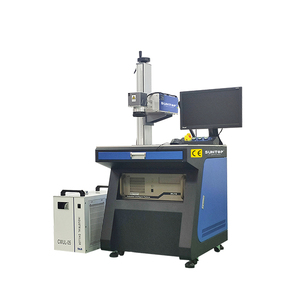
| Cold UV Laser (355nm) Photochemical Cold Processing |
Glass, Heat-Sensitive Plastics (ABS, HDPE), Silicon, Ceramics | Breaks molecular bonds directly without thermal radiation. Eliminates glass micro-cracking and plastic thermal melting on curved profiles. | Pharmaceutical vials, luxury cosmetics packaging, glass trophies, electronic housings. |
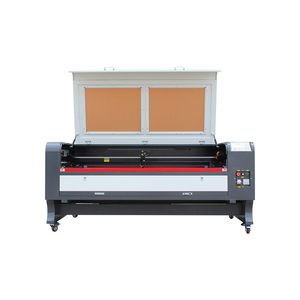
| RF Metal Tube CO2 Laser (10.6µm) High Peak Power Gas Laser |
Wood, Acrylic, Organic Materials, Coated Glass, Leather | Excels at high-volume organic surface vaporisation and deep cutting/engraving on curved natural substrates. | Custom wooden rolling pins, painted glassware, artisanal leather wraps, paper tubes. |
3. Top 10 Evaluation Criteria for Selecting a Rotary Laser Engraver Factory & Exporter
When evaluating enterprise-grade OEM/ODM rotary laser machine manufacturers and exporters, global procurement officers must look beyond simple specifications. To ensure seamless operation, high uptime, and long-term technical support, apply this 10-point industrial factory audit framework:
4. 2026-2030 Global Procurement Trends in Rotary Laser Systems
The global laser processing market is undergoing rapid technological convergence. Procurement directorates looking to optimize long-term total cost of ownership (TCO) and maximize throughput must align with four major industry trends shaping the next generation of rotary laser engravers:
5. Why Leading Global Enterprises Partner With Us
Built upon over three decades of engineering excellence, our laser platform manufacturing philosophy stands apart from typical commercial exporters. We combine British design precision with rigorous industrial quality control to deliver rotary laser engraving machinery that excels in demanding 24/7 factory environments.