
Featured Industrial Automatic Laser Marking Systems
Engineered for seamless integration, high repeatability, and 24/7 continuous duty across automotive, aerospace, electronics, and precision tooling lines.
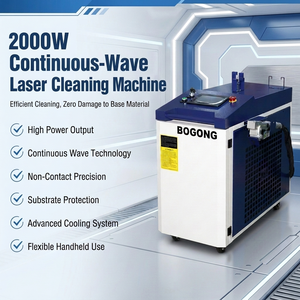
BOGONG 2000W CW Laser Cleaning Machine Handheld Industrial Rust Removal
High-power continuous wave fiber cleaning unit tailored for heavy industrial surface preparation, rust stripping, and pre-weld treatment.
Get Catalog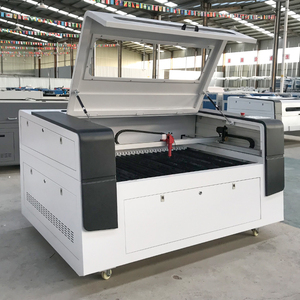
100W AI Laser Engraving Machine for Metal Sheet, Acrylic, PVC & Wood
Intelligent auto-focus visual positioning CO2/Fiber system designed for multi-material high-speed cutting and precision vector engraving.
Get Catalog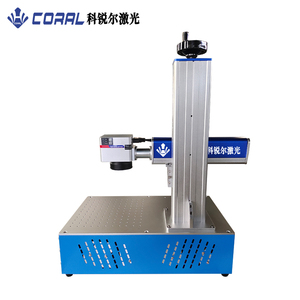
Wholesale HG-ZM-A-D20 Industrial Fiber Laser Marking System
Heavy-duty benchtop fiber engraver with high beam quality ($M^2 < 1.3$) optimized for permanent serial number and 2D barcode direct part marking.
Get Catalog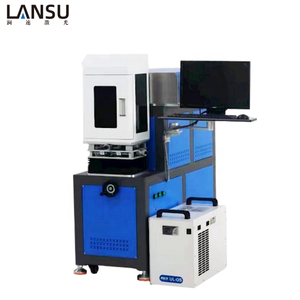
10W Green Laser Marking Machine for PCB, Micro Glass & Ceramics
532nm cold-processing laser head built specifically for micro-gap marking on heat-sensitive electronics, wafers, and delicate polymers.
Get Catalog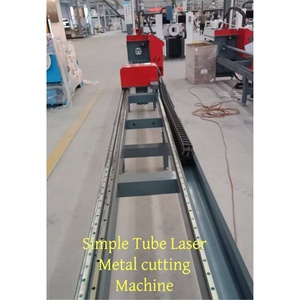
1500W Mini Fiber Laser Tube Cutter Compact Design for Thin Metal Pipe
Automatic 6-meter feed chuck system engineered for high-precision profile cutting of stainless steel, aluminum, and brass tubing.
Get Catalog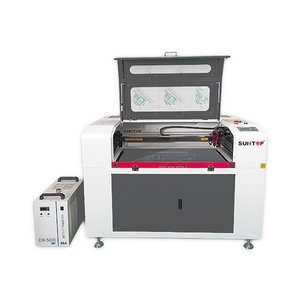
Easy-to-Operate Industrial CO2 Laser Engraver & Cutter (60W-200W)
Versatile format enclosure system featuring dual-pass doors, honeycombed beds, and offline DSP controls for acrylic and organic processing.
Get Catalog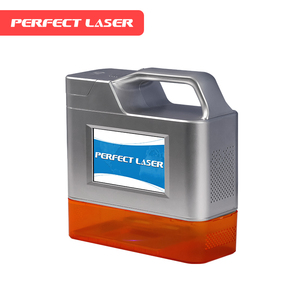
Portable Handheld Enclosed Mini Automatic DIY Laser Marker
Ultra-compact Class 1 safety enclosed marker equipped with zero-alignment optics and ergonomic handheld versatility for field marking.
Get Catalog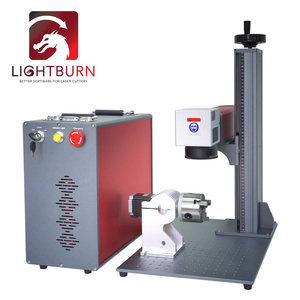
100W JPT M7 MOPA Fiber Laser Marking System with Rotary Axis
Tunable pulse-duration MOPA engine allowing vivid black annealing on stainless steel, color marking on titanium, and damage-free plastic coding.
Get CatalogExecutive Overview: China’s Industrial Laser Manufacturing Ecosystem
As global smart manufacturing accelerates under Industry 4.0 directives, the demand for automatic laser marking machines has shifted from rudimentary static etching to fully automated, dynamic, and integrated trace-ability workstations. Leading industrial buyers in the UK, European Union, and North America face a complex vendor matrix when sourcing high-precision laser marking, cutting, and surface treatment infrastructure from China.
Achieving optimal ROI requires scrutinizing not merely upfront unit costs, but deep technical fundamentals: pulse stability, galvo scanner dynamic drift, optical transmission loss, thermal hysteresis control, and adherence to international safety metrics. Top-tier Chinese original equipment manufacturers (OEMs) have closed the technological parity gap with traditional Western suppliers, offering mil-spec structural engineering, ISO 9001 certified quality systems, and full CE/FDA laser safety compliance.
Enterprise Engineering Advantages & Technological Benchmarks
To maintain zero-defect standards across intensive production cycles, our laser marking architecture incorporates advanced optics, robust structural frames, and proprietary beam guidance controls. Below are the key engineering tenets that set our automatic laser marking systems apart:
3D Dynamic Focus System
Engineered with a 3-axis dynamic galvanometer beam delivery array. Automatically maintains focal precision across stepped, inclined, cylindrical, and complex free-form 3D surfaces without mechanical vertical axis movement.
Tunable MOPA Fiber Engine
Featuring master oscillator power amplifier technology with pulse widths adjustable from 2ns to 500ns. Enables thermal-free plastic marking, high-contrast dark annealing on surgical stainless steel, and color titanium marking.
Inline COBOT & PLC Integration
Equipped with standardized TCP/IP, Ethernet/IP, and Modbus communications. Seamlessly interfaces with collaborative robotic arms (COBOTs), inline conveyor belts, and automated data-plate tray loaders for 24/7 unassisted operation.
Product Development & Future Procurement Trends (2026–2030)
1. Shift Towards Ultrafast Cold Processing (UV & Green Lasers)
While traditional 1064nm infrared fiber lasers remain the workhorse for metal part marking, the rapid miniaturization of semiconductor chips, medical implants, and consumer optics is driving procurement toward 355nm UV and 532nm Green wavelength systems. UV lasers operate via photochemical ablation (breaking molecular bonds rather than melting material through heat), eliminating thermal micro-fracturing on delicate glass, quartz, and medical-grade polymers.
2. AI Vision Positioning & Closed-Loop Quality Verification
Manual part fixturing introduces non-value-added labor and positioning error. Modern automatic laser markers incorporate high-resolution coaxial dynamic vision alignment. High-speed CMOS cameras capture workpiece orientation in milliseconds, automatically adjusting software vector coordinates to guarantee <±0.01mm placement accuracy—even when parts are fed randomly via vibration bowls or conveyor systems. Furthermore, inline 2D DataMatrix code grade verification (ISO/IEC 15415) ensures immediate rejection of non-compliant marks prior to downstream assembly.
3. Modularization & Green Manufacturing Metrics
Modern factory audits increasingly weight Total Cost of Ownership (TCO) alongside energy consumption metrics. Contemporary air-cooled MOPA and UV laser systems consume less than 500W of electrical power while delivering 100,000 hours of maintenance-free operation. The elimination of chemical consumables (inkjet replacement), hazardous solvents, and disposal costs makes automatic laser markers the cornerstone of modern sustainable procurement strategies.
| Laser Wavelength | Primary Processing Mechanism | Best Suited Substrates | Key Industrial Applications |
|---|---|---|---|
| MOPA Fiber (1064nm) | Photothermal Ablation / Annealing | Metals (Steel, Al, Brass), Dark Plastics | VIN Marking, UDI Medical Tools, Automotive DPM |
| UV Cold Laser (355nm) | Photochemical Bond Breaking | Glass, Silicon, HDPE/ABS Plastics, Ceramics | Pharma Packaging, Micro-Electronics, PCB Marking |
| Green Laser (532nm) | Low-Heat Photothermal Absorption | Wafer Substrates, Highly Reflective Metals | Solar Cell Scribing, Micro-Jewelry Engraving |
| CO2 Gas Laser (10.6µm) | Thermal Surface Evaporation | Wood, Acrylic, Leather, Organic Packaging | FMCG Date Coding, Non-Metal Enclosure Cutting |
B2B Purchasing & Technical Compliance FAQ
Accelerate Your Production Line Automation Today
Request a comprehensive technical specification catalog, arrange a live virtual demonstration, or submit sample materials to our UK/China application testing laboratory for validation.
Get Catalog