
Industrial Laser Engraving, Cleaning & Cutting Equipment
Explore high-performance systems from top China manufacturing hubs, engineered for high-precision micro-machining, heavy-duty surface prep, non-metallic engraving, and automated production pipelines.
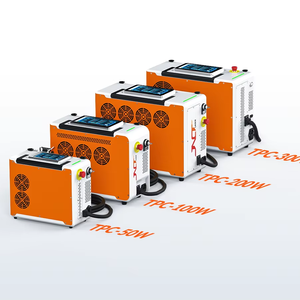
Laser Cleaning Solution For Heavy-Duty Applications 300W Pulsed Power, Zero Consumables
Get a Quote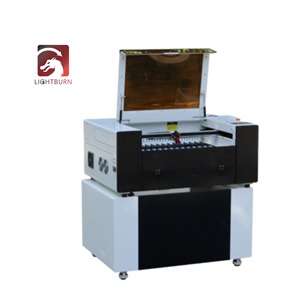
SM-Pro Series 1000x600mm CO2 Laser Engraving Cutting Machine 50W-130W Lightburn Compatible
Get a Quote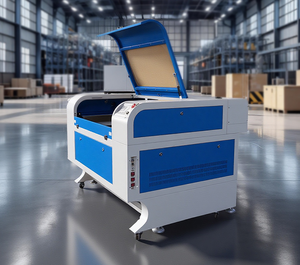
CO2 Laser Engraving Cutting Machine 6090 for Acrylic Wood Leather Fabric Rubber CNC Laser Engraver Nonmetal Cutting Equipment
Get a Quote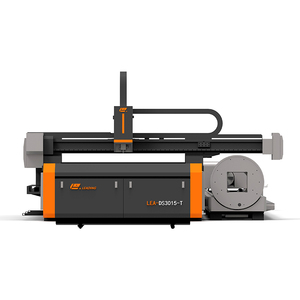
Quality 3000W CNC Tube Fiber Laser Cutting Machine New 6m Metal Pipe Laser Head for Raytools AI/LAS DST 13% Water Supports PLT
Get a Quote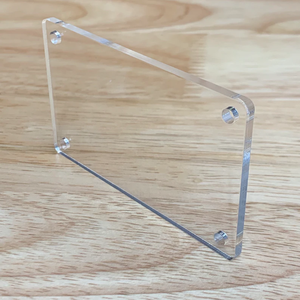
JAYI Factory Custom Laser Cut Acrylic Shapes Customized Display Acrylic Cutting Service With Printing And Engraving
Get a Quote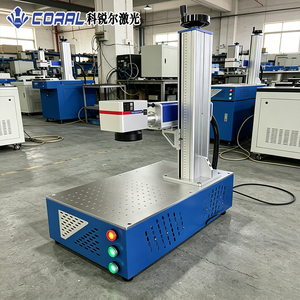
CORAL HG-ZM-A-D30 3D Mopa Desktop Laser Marker Easy To Operate For Mixed Aluminum And Stainless Steel Materials
Get a Quote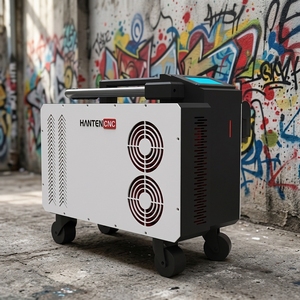
Laser Graffiti Removal Machine Portable Pulse Cleaning Equipment for Wall Stone Surface Restoration
Get a Quote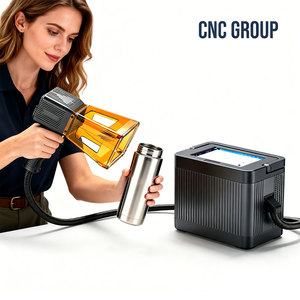
New Portable Metal 20W CNC 3D Desktop Mini Fiber Laser Marking Machine with DXF/AI/DST Support Price
Get a QuoteNavigating China’s Industrial Glass Laser Engraving Supply Chain
Global OEM/ODM buyers sourcing glass laser processing equipment face a critical technical fork: selecting between traditional thermal-based 10.6μm CO2 gas lasers and advanced 355nm Ultraviolet (UV) cold lasers. Glass as a material possesses an ultra-sensitive coefficient of thermal expansion (CTE) combined with brittle mechanical properties. When exposed to conventional long-wavelength laser irradiation, localized heat concentration generates severe internal stresses, resulting in edge micro-cracking, chipping, and catastrophic structural failure during post-process thermal stress cycling.
China’s laser manufacturing ecosystem—centered in Wuhan (Optics Valley), Guangdong (Shenzhen/Dongguan), and Jiangsu—has rapidly evolved from basic machine assembly to complete vertical integration of optics, galvo control systems, and 3-axis dynamic focus motion. Understanding the engineering parameters, optic delivery configurations, and factory quality assurance protocols is paramount for international procurement heads, system integrators, and industrial manufacturing engineering directors seeking competitive advantages with minimal total cost of ownership (TCO).
Photothermal Absorption & Photochemical Photolysis: UV vs. CO2
To establish definitive criteria for glass marking, sub-surface engraving, and micro-structuring, procurement engineering teams must analyze the photon energy dynamics of various laser wavelengths against silica glass molecules ($\text{SiO}_2$).
355nm UV "Cold Processing"
Ultraviolet lasers deliver high energy photons (3.49 eV per photon) capable of directly breaking chemical bonds in glass without thermal excitation. This photochemical ablation produces near-zero Heat-Affected Zones (HAZ), eliminating micro-cracks on soda-lime, borosilicate, quartz, and ultra-thin pharmaceutical glass.
10.6μm CO2 Thermal Etching
CO2 laser radiation is heavily absorbed at the surface of silicate glass through photothermal absorption. It rapidly melts micro-layers, inducing micro-fractures that produce a frosty, visible contrast mark. Highly economical for high-volume drinkware, structural architectural glass, and decorative sheet etching.
Green Laser (532nm) & Sub-Surface
Green solid-state lasers offer a balanced middle ground for sub-surface 3D point-cloud engraving inside crystal blocks and optical glass. High peak power pulses create controlled localized non-linear absorption without damaging the outer polished glass surfaces.
Wavelength & Material Compatibility Matrix
| Glass Substrate Type | Recommended Wavelength | Optical Processing Method | Edge Chipping Risk | Primary Industrial Application |
|---|---|---|---|---|
| Borosilicate / Pyrex | 355nm UV / 532nm Green | Photochemical Photolysis | Negligible (< 5μm) | Laboratory Glassware, High-Temp Sight Glass |
| Soda-Lime (Commercial) | 10.6μm CO2 / 355nm UV | Photothermal Micro-Fracture | Moderate to Low | Beverage Bottles, Glassware, Windows |
| Quartz / Fused Silica | Picosecond / Femtosecond UV | Multiphoton Absorption | Zero (Nanometer precision) | Semiconductor Wafer Carriers, Microfluidics |
| Aluminosilicate (Gorilla Glass) | 355nm UV Galvo System | Cold Cold-Ablation | Zero Micro-cracks | Smartphone Screen Covers, Touch Panels |
| Tempered Safety Glass | 355nm UV (Pre-Tempering Preferred) | Surface Stress-Free Mark | High (If using thermal CO2) | Automotive Glazing, Architectural Facades |
Why Leading Global Brands Source from China OEM Partners
Our strategic manufacturing alliance operates under world-class industrial standards, combining over 30 years of technological lineage with cutting-edge optical engineering. Every machine platform exported to overseas markets reflects rigorous ISO 9001 quality management standards, strict European CE compliance, and extensive real-world validation.
ISO 9001 & CE Certification
All manufacturing sites maintain accredited quality management certifications. Laser enclosures, safety interlocks, optical path shielding, and electrical cabinets strictly conform to CE EN 60825-1 Class 1 laser safety mandates, ensuring total compliance for UK, European, and North American factory integration.
3D Dynamic Focus Beam Delivery
Standard Meta-series laser system architectures incorporate integrated 3-axis optical galvo scanning systems. By modulating dynamic focal depth in real time, machines execute flawless high-contrast vector lines across curved wine glasses, conical bottles, step-down bevels, and complex 3D free-form glass surfaces in a single operational cycle.
Global Technical Support in 46+ Countries
Supported by overseas regional distributor networks and headquarters-backed optical applications engineers, buyers receive comprehensive sample material testing, live virtual FAT (Factory Acceptance Testing), remote diagnostics, and on-site engineering commissioning SLAs.
Industrial Durability & Frame Integrity
Built using heavy-duty stress-relieved welded steel frames, aviation-grade anodized aluminum gantry plates, and IP54-sealed optical paths. Formulated to operate continuously in 24/7 industrial factory conditions with an expected service lifespan exceeding 15 years.
Custom Automation Integration
Direct turnkey integration with automated conveyor belts, COBOT robotic loader arms, pneumatic rotary indexers, and automated inline machine vision cameras for automated high-speed batch coding and defect inspection.
Software & Protocol Openness
Fully compatible with industry-standard software packages including LightBurn, EZCAD3, and custom PLC industrial protocols (TCP/IP, Ethernet/IP, Modbus). Dynamic data input supports serial numbers, GS1 DataMatrix codes, and live database linking.
Ready to Test Your Glass Substrates with Zero Risk?
Submit your material specifications or ship samples directly to our applications laboratory. Our engineers will perform comprehensive optical testing and return a detailed process report with optimal wavelength recommendations.
Get a QuoteFuture Procurement Trends & Technological Roadmaps
As smart manufacturing, semiconductor packaging, automotive HUD displays, and luxury packaging industries demand higher yield rates and zero micro-defects, glass processing lasers are undergoing rapid technological transformation. Sourcing directors must align their equipment procurement strategies with these core macro trends over the 2025–2030 horizon:
1. Transition to Ultrafast (Picosecond & Femtosecond) Pulse Widths
While nanosecond UV lasers dominate current commercial glass marking, ultrafast picosecond and femtosecond pulse lasers are rapidly gaining market share. Operating with pulse durations shorter than the thermal relaxation time of glass ($< 10 \text{ ps}$), ultrafast lasers deposit energy so quickly that material transitions directly from solid to vapor via cold non-linear ionization. This totally eliminates thermal residual stress, allowing zero-gap glass cutting, microscopic intra-glass microchannel drilling, and sub-surface 2D matrix marking on flexible glass.
2. AI-Driven Machine Vision & Auto-Focus Tracking
Industrial production lines are phasing out manual jig positioning. Next-generation Chinese exporters are integrating coaxial vision positioning systems with deep-learning algorithms. These camera systems instantly detect glass substrate rotation, surface curvature variation, and optical refraction angles, dynamically updating laser firing vectors in under 15 milliseconds for flawless positional accuracy.
3. ESG Compliance & Chemical Etching Replacement
Environmental regulations globally are banning traditional hydrofluoric (HF) acid etching due to severe hazardous waste disposal costs and worker safety hazards. UV laser etching provides a 100% dry, chemical-free, zero-consumable alternative that reduces operational carbon footprints while fulfilling stringent ISO 14001 environmental management requirements.
4. Inline High-Speed Serialization for Pharmaceutical Traceability
Driven by global mandates such as the FDA Drug Supply Chain Security Act (DSCSA) and EU Falsified Medicines Directive (FMD), glass vial and syringe manufacturers are adopting high-speed inline UV laser marking stations. Systems capable of marking microscopic, permanent GS1 DataMatrix codes onto moving glass containers at linear speeds exceeding 1.5 meters per second are becoming standard procurement requirements.
Frequently Asked Questions (FAQ) for International Buyers
Direct responses from senior optical applications specialists addressing common technical, logistic, and operational questions regarding Chinese glass laser equipment sourcing.
How do I prevent micro-cracking when laser engraving delicate glass?
Micro-cracking is primarily caused by excessive thermal accumulation. To eliminate it, use a 355nm UV laser with short pulse widths (< 15 ns) and high pulse repetition frequency (50–100 kHz). If using a CO2 laser, apply a light wet-paper masking or specialized anti-reflective coating to dissipate surface heat during the scan pass.
What is the typical operational lifespan of UV vs. CO2 laser sources?
Hermetically sealed RF CO2 laser sources (e.g., Coherent, Synrad) typically operate for 40,000+ hours before requiring gas replenishment. DPSS 355nm UV laser diode modules typically offer 20,000 to 30,000 hours of peak output before optical crystal degradation requires diode replacement or refurbishment.
Can a glass laser engraver mark on curved or conical glassware without distortion?
Yes. There are two primary solutions: 1) Equipping a 3-axis dynamic focus galvo head that adjusts focus depth electronically on-the-fly, or 2) Integrating a synchronized motorized rotary axis fixture that rotates the cylindrical glass vessel precisely beneath a standard F-theta focal lens.
What export packaging and international shipping safeguards are used?
All export machinery undergoes vacuum-sealed anti-moisture wrapping, anti-vibration rubber cushioning, and enclosure within ISPM-15 compliant fumigation-free wooden crate enclosures. Optical laser heads and galvo optics are locked with specialized transport security brackets to withstand ocean freight vibrations.
Are custom OEM branding and specialized software interfaces available?
Yes. Leading China manufacturing exporters offer complete OEM white-labeling, including custom exterior sheet metal paint colors, custom machine chassis logos, localized software GUIs (English, German, Spanish, French), and tailored SDK integration for proprietary ERP systems.
What standard warranty and spare parts availability can overseas buyers expect?
Standard international warranties range from 2 to 5 years depending on supplier tier and contract terms. Key consumable parts (such as protective optical windows, F-theta lenses, and air filtration cartridges) are readily stocked in regional warehouse hubs for express air delivery within 48-72 hours.
Consult with an Optical Application Engineer Today
Accelerate your production efficiency, eliminate glass yield defects, and lower your laser equipment procurement costs. Speak directly with our technical team to receive custom machine proposals, technical CAD drawings, and factory-direct price estimates.
Get a Quote