
Featured Industrial Laser Pipe Cutting Systems
Explore our flagship heavy-duty, automatic pneumatic chuck, and ultra-high-speed fiber laser tube cutting machinery engineered for structural metal fabrication and global export compliance.
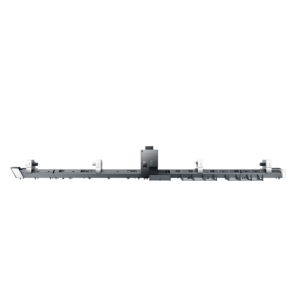
- Power: 3000W - 12000W Fiber Source
- Clamping: Full Automatic Pneumatic Chucks
- Capabilities: Heavy Pipe Beveling & Profiling
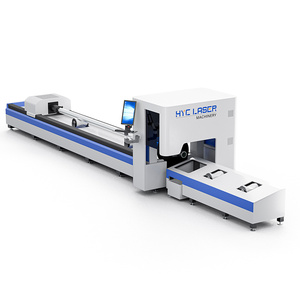
- Max Diameter: 220mm / 350mm Option
- Acceleration: Up to 1.5G Dynamic Vector
- Software: Auto-Nesting CAD/CAM System
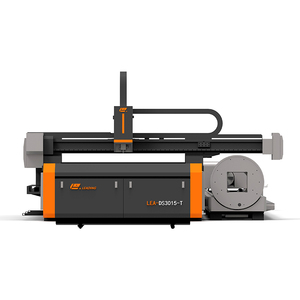
- Processing Length: 6000mm Standard Bed
- Cutting Head: Raytools Auto-Focus BM110
- Cooling: Industrial Dual-Temperature Water Chiller
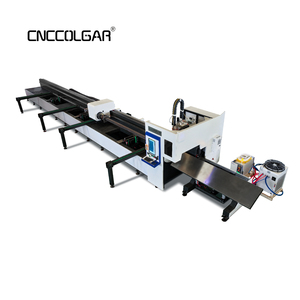
- Power: 12kW Ultra-High Power Output
- Tube Length: 12m - 13m Oversized Stock
- Heavy Capacity: Up to 1200kg Single Tube Load
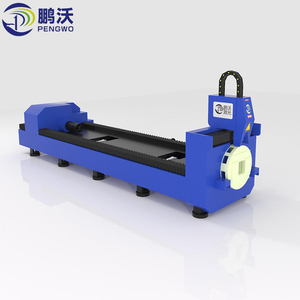
- Automation: Fully Automatic Bundle Loader
- Control: Bus-based CNC EtherCAT Interface
- Productivity: 24/7 Continuous Operation
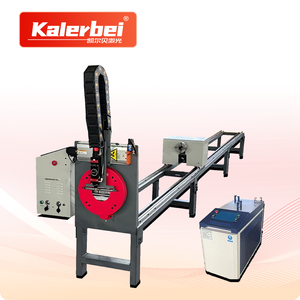
- Diameter Range: 10mm - 120mm Small Tubes
- Precision: ±0.03mm Repeatability Positioning
- Application: Medical, Automotive & Bike Frames
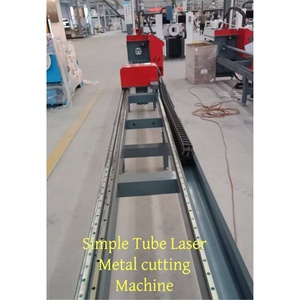
- Power Output: 1500W Energy-Efficient Source
- Footprint: Ultra-Compact Workshop Footprint
- Materials: Carbon Steel, Stainless, Aluminum
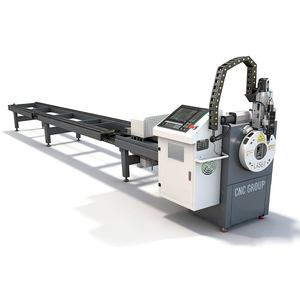
- Setup: Easy-to-Operate Touchscreen CNC
- Maintenance: Low-Cost Solid-State Fiber Optics
- ROI: Rapid Payback for Job Shops
Industry Whitepaper: The Evolution of Fiber Laser Tube Cutting in China
The global structural steel, automotive manufacturing, architectural metalwork, and HVAC industries are undergoing a paradigm shift. Traditional pipe processing methods—such as mechanical sawing, cold punching, band sawing, and plasma thermal cutting—are rapidly being phased out in favor of high-precision CNC fiber laser tube cutting systems. As China consolidates its position as the premier manufacturing hub for advanced optoelectronic machinery, selecting the right partner among Top China Tube Laser Cutter Manufacturers & Exporters requires a granular understanding of machine kinematics, beam quality metrics, chuck mechanical dynamics, and total cost of ownership (TCO).
China's fiber laser manufacturing ecosystem has evolved far beyond low-cost production. Today, leading Chinese exporters engineer world-class machinery equipped with bus-based EtherCAT real-time controls, multi-axis 3D laser heads capable of ±45° bevel cutting, and zero-tailing pneumatic chuck systems that minimize raw material scrap down to less than 40mm per pipe length.
Engineering Benchmark: Fiber Laser Cutting vs. Legacy Tube Fabrication
To quantify the information gain for industrial procurement directors, the following data table compares high-power CNC fiber tube cutting machines against traditional mechanical saw cutting and plasma arc profiling across critical operational variables:
| Performance Dimension | CNC Fiber Laser Tube Cutter | Band Saw / Cold Sawing | High-Definition Plasma |
|---|---|---|---|
| Kerf Width & Precision | 0.1mm - 0.3mm (Ultra-Fine Precision) | 1.5mm - 3.0mm (Coarse Material Loss) | 1.2mm - 2.5mm (Thermal Expansion Edge) |
| Heat Affected Zone (HAZ) | Minimal (< 0.05mm); preserves metallurgy | None (Mechanical friction only) | Extensive (> 1.2mm); requires secondary grinding |
| Complex Profile Cutting | Infinite (Intersections, slots, bevels, text) | Straight / Angular cuts only | Moderate; restricted edge sharpness |
| Secondary Processing | Zero; burr-free edges ready for welding | Deburring and washing required | Heavy slag removal and edge grinding needed |
| Raw Material Utilization | Up to 98% with dynamic software nesting | 82% - 88% due to clamp margins | 85% - 90% due to lead-in requirement |
Product Development Trends in Fiber Tube Laser Machinery
As the international procurement landscape demands higher efficiency and automation, Chinese laser equipment developers are pioneering several ground-breaking technological advancements. Buyers planning machinery upgrades over the next 3 to 5 years must align their specifications with these key technical vectors:
Four-Chuck Zero-Tailings Systems
Traditional two-chuck machine setups leave significant remnant material (up to 300mm) at the pipe end. The latest trend utilizes 3-chuck and 4-chuck sync-motion architectures that physically shift the tube through the cutting zone without releasing tension, achieving true zero-tailings material usage.
AI Vision Seam Detection & Auto-Compensation
Structural pipes frequently exhibit subtle wall thickness variances or curved seams. Integrated machine-vision algorithms scan welded pipe seams in real-time, dynamically rotating the cutting path to maintain perfectly aligned hole patterns regardless of raw tube distortion.
High-Power Bevel Cutting Heads (5-Axis)
Transitioning from 2D orthogonal cutting to 5-axis 3D head movement allows for ±45° beveling directly on round and rectangular tubing. This enables precise K, V, and X weld preparation seams, eliminating manual beveling prior to robotic welding assemblies.
Future Procurement Trends: Total Cost of Ownership & ESG Standards
Global procurement teams in Europe, North America, Southeast Asia, and the Middle East are re-evaluating supplier criteria. Beyond initial machinery purchase price, modern purchasing decisions focus on long-term sustainability, energy consumption, and total cost of ownership (TCO).
1. Assist Gas Optimization: High-Pressure Air & Nitrogen Mixing
Historically, oxygen cutting (for thick carbon steel) and nitrogen cutting (for stainless steel) represented major recurring operational costs. The industry is rapidly shifting toward compressed air cutting and mixed-gas generators. By using high-pressure air at 16 to 20 bar, operational assist gas costs drop by up to 80% with minimal reduction in cutting speed on standard carbon steel tubes up to 8mm thickness.
2. Modular Automated Loading & Unloading Systems
Labor shortages worldwide have accelerated demand for turnkey automation. Exporters now supply full bundle-loading automatic feeding magazines, component sorting conveyors, and scrap disposal units. Machines capable of running unattended "lights-out" shifts deliver significantly higher return on capital investment (ROIC).
3. ISO 9001, CE, and FDA/CDRH International Compliance
Ensuring compliance with stringent international safety standardizations is paramount. Top exporters build machines featuring fully enclosed protective housing (Class 1 laser enclosure), interlocked safety doors, CE-compliant electrical cabinets with Schneider/Siemens components, and dual-circuit safety relays.
Why Partner With Us: Chinese Manufacturing Excellence & E-E-A-T Assurance
As an authoritative leader in high-precision laser equipment manufacturing, our production facility adheres to strict European quality control standards. We combine decades of optoelectronic expertise with robust industrial engineering to deliver tube laser cutting machinery that excels under demanding operational conditions.
Stress-Relieved Heavy Bed Structures
Machine beds are welded from thick structural steel plates and subjected to a 600°C high-temperature annealing furnace cycle followed by 24-hour slow cooling. This guarantees zero structural thermal deformation over 15+ years of continuous heavy production.
100% Laser Interferometer Calibration
Every axis movement is calibrated using British Renishaw laser interferometers. We verify pitch, yaw, and positioning accuracy to within microns before any machinery leaves our clean assembly facility.
Global Field Support & 46+ Country Network
Supported by a comprehensive distributor and engineering support network across 46 countries, we provide rapid spare-parts distribution, remote diagnostic troubleshooting, and on-site operator commissioning.
Ready to optimize your tube cutting production line or discuss OEM customized specifications?
Frequently Asked Questions (FAQ) for Global Buyers
Our CNC fiber laser tube cutters are capable of processing a wide array of profiles, including round tubes, square tubing, rectangular pipes, elliptical tubes, triangle channels, waist-round profiles, and open structural profiles such as H-beams, I-beams, C-channels, and L-angle steel. Special pneumatic chuck jaws can be customized for irregular architectural shapes.
Laser power directly determines cutting speed and wall thickness capabilities:
• 1.5kW - 2kW: Ideal for thin-wall carbon steel (up to 5mm), stainless steel (up to 3mm), and aluminum (up to 2mm).
• 3kW - 4kW: Standard industrial workhorse; cuts carbon steel up to 10mm, stainless steel up to 6mm.
• 6kW - 12kW+: Heavy structural processing; cuts carbon steel up to 20mm+, stainless steel up to 12mm, with ultra-high processing speeds.
Full automatic pneumatic chucks adjust clamping force self-adaptively based on wall thickness, preventing deformation of thin-walled tubes while providing heavy clamping force for thick pipes. They open and close in milliseconds via CNC program control, whereas manual chucks require operator intervention, drastically slowing down batch throughput.
All machine frames are constructed from high-tensile structural steel plates, heat-treated in an annealing furnace at 600°C to relieve internal welding stress, and milled on giant 5-axis gantry machining centers. Machine structures are exported in protective vacuum foil and seaworthy reinforced steel frames to prevent environmental exposure or deformation during sea freight.
International buyers receive a comprehensive 3-year warranty covering core fiber laser components (laser source, cutting head, CNC controller, servo motors). Our global service team provides 24/7 remote optical diagnostic support, software upgrades, and on-site dispatch services through localized distributors across 46 countries.
Consult With Our Laser Application Engineers
Get customized machinery quotes, request free sample tube cutting tests, or discuss automated loading integration with our technical specialists today.