
Featured Equipment Directory
High-Performance Enclosed & Industrial Laser Systems
Explore top-tier laser marking, engraving, and precision tube cutting platforms engineered for rigorous enterprise supply chains.
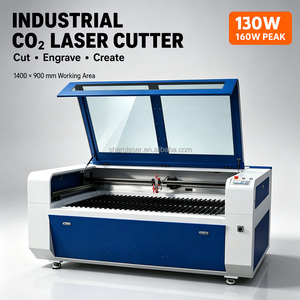
CO2 Laser Cutting & Engraving Machine 1490 with Ruida Control System Water Cooling for Acrylic Wood Paper MDF AI/PLT Support
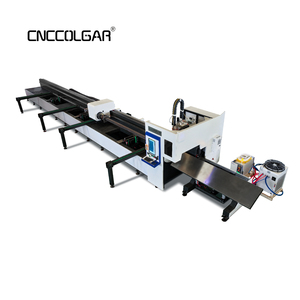
CNCColgar 12kW Fiber Laser Tube Cutting Machine 360mm Chuck For 13m Metal Tubes
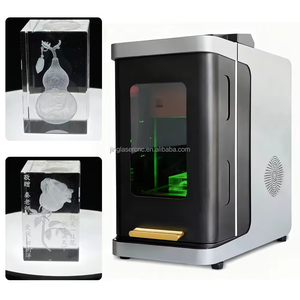
Air Cooling Green Light Laser Marking Machine Portable 2D 3D Crystal Glass Block Ball Subsurface Inner Laser Engraver
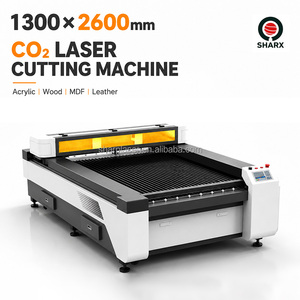
150W 1325 CO2 Laser Cutter with Ruida Control System Water-Cooled for Wood Acrylic MDF Stone Rubber Supporting DXF/PLT Formats
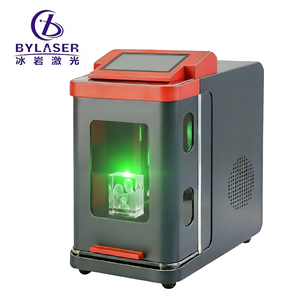
BingYan Portable 3D 2D Desktop Handheld Metal and Nonmetal Green Laser Engraver Marker Marking Glass Crystal Acrylic
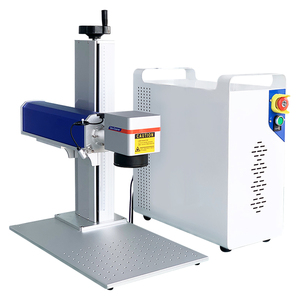
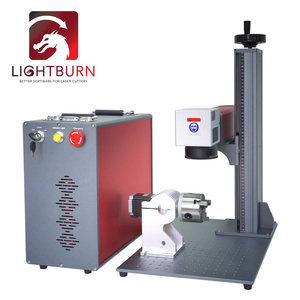
Fiber Laser Engraving Machine For Advertising Companies High-Powered Laser Marker
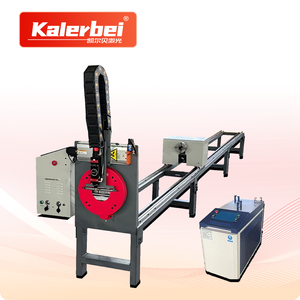
Mini CNC Automatic Fiber Laser Tube Cutter - Ideal for Small-Diameter Metal Pipe Processing
30+
Years Industry Engineering
3,300+
Global Industrial Clients
46
Countries Service Network
10 Yr
Max Warranty Coverage
Industry Whitepaper & Market Intelligence
Navigating the Global Procurement of Enclosed Laser Marking Workstations
A definitive guide for operational directors, quality assurance engineers, and OEM supply chain procurement managers worldwide.
In the modern landscape of high-precision manufacturing, regulatory mandates such as Unique Device Identification (UDI) in medical technology, Direct Part Marking (DPM) in automotive supply chains, and MIL-STD-130 in defense aerospace have transformed product identification from an aesthetic choice into an essential compliance imperative. As production lines accelerate and workplace safety frameworks tighten across North America, Europe, and Asia-Pacific, industrial operators are rapidly retiring open-frame Class 4 laser devices in favor of fully enclosed Class 1 laser marking workstations.
Information Gain Insights: Transitioning to enclosed laser marking systems eliminates the requirement for mandatory Personal Protective Equipment (PPE) laser safety goggles in open facility spaces, mitigates workplace liability under OSHA and CE frameworks, and allows seamless integration of automated optical inspection (AOI) and industrial fume extraction units directly within the marking enclosure.
When selecting a certified enclosed laser marker factory or supplier, procurement executives must look far beyond basic laser wattage ratings. True manufacturing reliability depends on structural cabinet rigidity, optical galvanometric scanning accuracy, safety interlock redundance, beam quality ($M^2 < 1.4$), software architecture integration (supporting Ethernet/IP, Profinet, and OPC UA), and long-term technical lifecycle support.
Manufacturing Benchmark
Why Top-Tier Enterprise Manufacturers Partner With Us
Combining UK engineering heritage with ISO 9001 certified quality control systems and cutting-edge 3D galvo optical technology.
Class 1 Safety Certification
Engineered with dual-channel safety circuit interlocks, certified anti-radiation viewing windows (OD6+ protection), and emergency physical disconnect switches meeting CE and ISO 11553 standards.
3D Dynamic Focal Tracking
Integrated 3-axis galvo scanheads allow continuous, automatic focal compensation across stepped, angled, cylindrical, and complex organic geometric surfaces without physical Z-axis table adjustment.
ISO 9001 & Cyber Essentials
Every system undergoes rigorous 72-hour continuous thermal stress testing and beam stability validation in our UK and ISO accredited production units prior to global logistics dispatch.
MOPA & Cold UV Wavelengths
From pulse-duration adjustable MOPA Fiber (1-400ns) for dark black annealing on stainless steel to 355nm UV "Cold Marking" for non-damaging glass and plastic micro-structuring.
Turnkey Automation Solutions
Seamlessly pair enclosed systems with COBOT arm part loading, automated rotary indexing, motorized XY shuttle tables, and pneumatic automated batch plate feeders for continuous 24/7 productivity.
Global Service & Up to 10-Yr Cover
Supported across 46 countries via certified engineering centers. Backed by industry-leading warranties (up to 10 years Diamond Cover in the UK and 3-5 years globally) for total peace of mind.
Technical Evaluation Matrix
Enclosed Laser Wavelength & Application Compatibility
Selecting the precise optical source ensures zero material degradation and optimal cycle times.
| Laser Source Type | Wavelength & Beam Quality | Primary Target Materials | Key Industrial Advantage | Enclosure Class |
|---|---|---|---|---|
| MOPA Fiber Laser | 1064 nm ($M^2 < 1.3$) | Stainless steel, Aluminum, Brass, Titanium, ABS | Black Annealing Corrosion-free dark marks | Class 1 Enclosed |
| Standard Q-Switched Fiber | 1064 nm ($M^2 < 1.5$) | Carbon steel, Copper alloys, Rigid engineering plastics | High energy peak density for deep metal engraving | Class 1 Enclosed |
| UV Cold Laser | 355 nm ($M^2 < 1.1$) | Borosilicate glass, HDPE, Silicon, Medical Polymers | Zero Thermal Stress No micro-fractures or melting | Class 1 Enclosed |
| Green Light Laser | 532 nm ($M^2 < 1.2$) | Sub-surface crystal glass, highly reflective gold/copper | Ultra-small focal spot for micro-electronics engraving | Class 1 Enclosed |
| CO2 Galvo Laser | 10.6 µm / 9.3 µm | Acrylic, Wood, Leather, Paperboard, Organic Substrates | Extreme speed cutting and volumetric surface etching | Class 1 Enclosed |
Future Outlook 2025–2035
Next-Gen Technological Trends in Enclosed Laser Marking
How advancements in artificial intelligence, ultrafast optics, and smart factory connectivity are transforming the laser marking equipment sector.
1. AI Vision-Guided Autonomous Alignment
Future enclosed laser marking workstations are rapidly incorporating coaxially integrated High-Definition Cognex/Basler vision camera modules. Driven by machine learning algorithms, these systems instantly recognize part geometries, automatically align marking vectors in 3D space, and perform instant post-mark 2D DataMatrix quality grading (ISO 15415/29158 standards) without manual operator indexing.
2. Ultrafast Picosecond & Femtosecond Micro-Processing
While nanosecond MOPA lasers remain industry workhorses, the market is witnessing accelerated migration toward enclosed picosecond and femtosecond lasers. By delivering ultra-short energy bursts in the pulse domain, thermal diffusion is eliminated, enabling "cold" ablation micro-structuring for semiconductor wafers, delicate medical implants, and OLED displays without burrs or micro-cracks.
3. Smart IoT Factory & OPC UA Enterprise Integration
Modern enclosed laser markers are no longer isolated island machines. Industrial 4.0 trends require full network integration into Manufacturing Execution Systems (MES) and ERP infrastructure (SAP, Oracle). Real-time telemetry monitoring tracks diode laser health, optical power output drift, and filter saturation levels in fume extractors, enabling predictive maintenance prior to hardware downtime.
4. Sustainability & Energy-Efficient Modular Platforms
Global carbon reduction targets are driving factories to demand lower total kWh energy draw. Modern fiber and UV laser markers feature eco-mode standby algorithms, high-efficiency air-cooling designs that eliminate power-hungry external water chillers, and 100% recyclable powder-coated aluminum chassis structures engineered for a 15+ year operational lifespan.
Strategic Sourcing Insights
Future Procurement Trends for Enclosed Laser Marker Buyers
Key financial, technical, and regulatory considerations when auditing global laser machine factories.
1. Total Cost of Ownership (TCO) Over Initial Purchase Price
Forward-thinking procurement teams are shifting away from cheap, low-cost open-frame imports toward high-reliability enclosed systems. While initial capital expenditure (CapEx) for an enclosed Class 1 system may be 15–20% higher, the operational expenditure (OpEx) is significantly lower. Reductions in operator safety training overhead, zero consumable ink/solvent costs (unlike ink-jet coders), and minimized machine downtime yield a complete return on investment (ROI) within 8 to 14 months of continuous operation.
2. Factory Audit Standards: Certifications & Traceability
When evaluating an enclosed laser marker OEM supplier, enterprise buyers must demand verifiable documentation regarding ISO 9001 quality management compliance, CE electrical safety certification, and laser radiation enclosure testing. Trusted manufacturers provide full optical power certificate test sheets ($M^2$ beam spatial profile metrics) alongside every machine delivery.
3. Vendor Modular Ecosystems & Scalability
Selecting a supplier that offers modular architecture ensures your machine can scale alongside business growth. Systems engineered with standardized mounting interfaces allow effortless upgrading from a static manual door workstation to a pneumatic automated door cell equipped with rotary indexers, conveyor belt integration, or robotic arm loading without requiring a complete machine replacement.
Buyer Knowledge Base
Frequently Asked Questions (FAQ)
Clear expert answers to essential technical and procurement queries regarding enclosed laser marking systems.
What is the primary difference between a Class 1 Enclosed Laser Marker and an Open Class 4 Machine?
A Class 1 laser marker is completely enclosed within a protective cabinet fitted with safety interlocks and certified anti-radiation viewing windows. Under normal operating conditions, no harmful laser radiation can escape, meaning operators do not need specialized protective eyewear. An open Class 4 machine emits accessible high-power laser beams, requiring dedicated safety rooms, strict access control, and mandatory laser safety glasses for all personnel.
Which laser wavelength (Fiber, UV, or CO2) is suitable for my specific application?
MOPA Fiber Lasers (1064nm) excel at marking metals (stainless steel, aluminum, brass, titanium) and hard plastics, enabling deep engraving, high-contrast dark black annealing, and color marking on titanium. UV Lasers (355nm) provide "cold marking" with virtually zero thermal effect, ideal for delicate plastics, medical device polymers, and glass etching without micro-cracks. CO2 Lasers (10.6µm) are best for organic non-metallic materials like acrylics, wood, paperboard, leather, and textiles.
Why is 3D marking capability critical for industrial enclosed laser systems?
3D marking utilizes dynamic 3-axis optical galvo focus adjustment rather than static 2-axis focal lenses. This technology keeps the focused laser beam precisely in focus across stepped surfaces, cylinders, cones, spheres, and complex sloped geometries in a single pass without requiring physical focal adjustment or workpiece repositioning.
How does an enclosed laser marker handle toxic fumes and dust created during marking?
Certified enclosed laser workstations feature dedicated internal fume extraction exhaust ports. When connected to a multi-stage HEPA and activated carbon filtration unit, particulates, smoke, and toxic plastic vapors (such as PVC byproducts) are safely evacuated and filtered directly at the source, protecting operator health and maintaining clear optics.
What warranty and after-sales support structures are provided for international buyers?
Our enclosed laser platforms come backed by up to a 10-Year Diamond Warranty cover for UK domestic installations and a comprehensive 3 to 5 year warranty structure for international shipments. Overseas buyers receive rapid technical support through authorized service hubs in 46 countries, remote diagnostics, and guaranteed spare parts availability from our central UK engineering facility.
Can I request a sample marking test on my own materials before finalizing a machine purchase?
Yes, absolutely. We encourage enterprise buyers to send physical material samples to our applications laboratory. Our optical engineers will perform comprehensive wavelength and pulse-parameter optimization tests, providing you with a detailed lab report, high-resolution microscope imagery, exact cycle-time metrics, and recommended machine configurations.
Ready to Upgrade Your Manufacturing Line with Class 1 Enclosed Laser Systems?
Connect directly with our senior application engineering team to request customized technical specifications, factory-direct OEM pricing, or schedule a free sample material marking trial.