
Featured Industrial Micro Laser Engraving & Cutting Systems
Engineered for sub-micron accuracy, high-volume batch processing, and non-destructive thermal marking across aerospace, medical, and semiconductor supply chains.
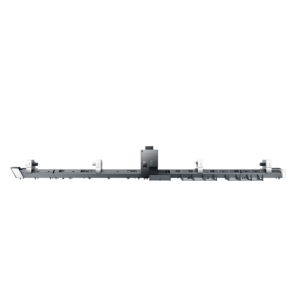
Bodor Flagship M Series Tube Laser Cutting Machine High Power Metal Tube Automatic Cutter
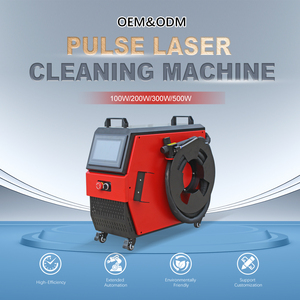
High Cost Performance 100w 200w 300w 500w Widely Laser Cleaning Machine Remove Paint Pulsed
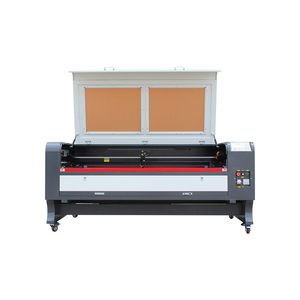
4060 9060 1080 1390 Engraving Laser Machine 100w 300w Co2 Laser Engraving Machine Wood

Mini CNC Automatic Fiber Laser Tube Cutter - Ideal for Small-Diameter Metal Pipe Processing
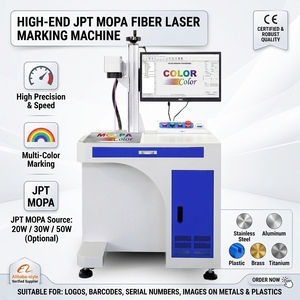
New Industrial 50W Fiber Laser Marking for Metal JPT MOPA Source Color Marking Machine PLT/BMP
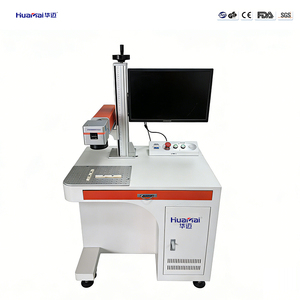
JPT Mopa M7 60W 100W Stainless Steel Color Laser Marking Machine 3d Metal Deep Engraving
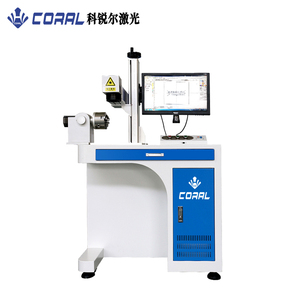
Low Price Wholesale High-Accuracy CNC Fiber Laser Engraving & Marking Machine DXF/AI/DST
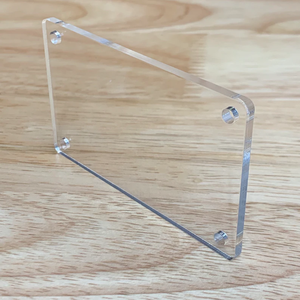
JAYI Factory Custom Laser Cut Acrylic Shapes Customized Display Acrylic Cutting & Engraving Service
Engineering Principles of Modern Micro Laser Engraving
Navigating Wavelengths, Pulse Durations, and Thermal Dynamics for Zero-Defect Manufacturing
Micro laser engraving represents the apex of non-contact photonic processing. Unlike traditional laser marking machines, which operate with beam waist diameters ranging between 50 to 100 microns, true micro laser engraving platforms achieve optical spots under 15 microns. This enables micro-structuring, sub-surface glass diffraction, high-density 2D Data Matrix code annealing on surgical instruments, and micro-fluidic channel ablation without thermal micro-cracking.
For B2B procurement officers and lead production engineers selecting a certified micro laser engraver OEM factory, understanding the physics of energy coupling, Heat-Affected Zones (HAZ), and optical Rayleigh length ($Z_R$) is vital for maximizing line yield and maintaining strict quality assurance.
Key Engineering Threshold: Cold UV vs. MOPA Fiber Micro-Lasing
Selecting the optimal wavelength dictates whether energy is absorbed through thermal photothermal melting or non-thermal photochemical bond breaking:
- Ultraviolet (355nm Wavelength): Utilizes high-energy photons to directly break molecular bonds in polymers and glass. Because energy transfer occurs without intense thermal dissipation, UV micro lasers eliminate edge burrs, micro-charring, and localized stress cracks on sensitive medical plastics (ABS, PEEK, Polycarbonate).
- MOPA Fiber Laser (1064nm Wavelength): Employs adjustable pulse duration (ranging from 2ns to 500ns). By modulating pulse widths at ultra-high frequencies (up to 4000kHz), MOPA micro engravers achieve dark black anneal markings on titanium and stainless steel without compromising the passivation layer.
Sub-Micron Laser Source & Optics Benchmark Matrix
The operational performance of high-precision micro laser machinery relies heavily on optical beam quality ($M^2$) and scanner response times. Below is a structural engineering comparison across industrial laser configurations:
| Laser Source Wavelength | Typical Beam Quality ($M^2$) | Focused Spot Diameter | Primary Substrate Applications | Heat-Affected Zone (HAZ) |
|---|---|---|---|---|
| 355nm UV Cold Laser | < 1.2 | 8 µm – 15 µm | Glass, Medical Polymers, Silicon Wafers | Negligible (< 2 µm) |
| 1064nm MOPA Fiber | < 1.3 | 15 µm – 25 µm | Stainless Steel, Titanium, Anodized Al | Minimal (Controlled by ns pulses) |
| 10.6 µm CO2 Galvo | < 1.4 | 50 µm – 90 µm | Acrylic, Hardwoods, Leather, Organic Films | Moderate Thermal Absorption |
| Ultrafast Femtosecond | < 1.1 | < 5 µm | Sapphire, Diamond, Semiconductor Dies | Zero Thermal Impact |
OEM & Factory Manufacturing Strengths
Rigorous quality control, ISO 9001 accredited cleanroom optical assembly, and robust international customer support
3D Dynamic Focus Galvo Engines
Integrated 3-axis motorized optical galvo scanners dynamically adjust focal lengths in real time. Mark micro-details on stepped surfaces, inclined planes, and 3D cylinders without manual Z-axis refocusing.
ISO 9001 & CE Quality Compliance
Every micro laser engraver unit undergoes 72 hours of continuous full-load laser stability testing, optical alignment verification under beam profiling cameras, and electrical safety audits prior to shipment.
Automation & Inline COBOT Ready
Fully modular control architecture compatible with PLC triggers, TCP/IP, Ethernet/IP, and automatic plate loaders for 24/7 unattended high-throughput factory automation.
Micro Laser Engraving: Sourcing Trends (2026–2030)
What procurement officers and production directors must anticipate in next-generation micro-machining investments
As global manufacturing demands higher component density—driven by electric vehicle (EV) battery management systems, 5G RF modules, sub-miniature medical implants, and consumer electronics—the micro laser engraver market is experiencing structural technological shifts. Sourcing directors must align equipment acquisitions with four key macro trends:
1. Widespread Shift Toward High-Frequency MOPA & Picosecond Sources
Traditional single-mode Q-switched fiber lasers are increasingly replaced by MOPA (Master Oscillator Power Amplifier) optical designs. MOPA tech allows independent control of pulse duration and repetition rate. Procurement teams are prioritizing factories that integrate tier-1 seed lasers (such as JPT M7/M8, IPG, or Maxphotonics) due to their superior pulse control when processing micro-coatings on copper, aluminum, and stainless steel.
2. AI-Driven Vision Alignment & Defect Inspection Integration
Human positioning errors are unacceptable when engraving micro-barcodes smaller than $1.5\text{ mm} \times 1.5\text{ mm}$. Modern industrial micro laser workstations now integrate coaxial CCD cameras directly inside the galvo optical path. The vision system automatically detects part offset in X, Y, and $\theta$ rotations within milliseconds, dynamically recalculating the galvo laser path for zero-defect yield.
3. Circular Sustainability & Energy Efficiency Standards
Factory energy audits are becoming standard criteria for B2B supplier selection. Air-cooled MOPA and UV laser engravers are drastically outperforming older water-cooled systems in power conversion efficiency. Modern 50W fiber systems consume under 600W of grid electricity, drastically reducing operating cost (OPEX) and factory carbon footprints.
4. Rigorous Vendor Evaluation Framework for B2B Buyers
When auditing top micro laser engraver factories, buyers should request documented metrics on optical drift (< 0.3 mrad over 8 hours), beam ellipticity (> 90%), and spare parts availability guarantees (minimum 10-year optical replacement support).
Procurement & Engineering FAQs
Expert answers to critical technical and commercial questions raised by international procurement teams
A micro laser engraver utilizes ultra-fine optical expansion lenses, high-resolution galvo mirrors, and stable laser sources ($M^2 < 1.2$) to achieve focused beam spot sizes under 20 microns. Standard fiber markers typically produce 50–80 micron spots, making them incapable of sub-surface micro-structuring, ultrafine micro-engraving, or marking high-density UDI codes on sub-miniature medical components.
UV lasers operate at a 355nm short wavelength, delivering "cold laser processing." Instead of heating and melting the substrate, UV photons possess enough quantum energy to disrupt atomic bonds within organic polymers and glass. This eliminates micro-cracks, edge curling, and charring on delicate substrates.
All enterprise micro laser machines are backed by comprehensive 3-to-5-year international warranties (with optional 10-year diamond cover on select structural components). Our engineering team provides remote diagnostic support, replacement optical modules, and localized field technician dispatch across 46 countries worldwide.
Yes. Our Meta-i and OEM galvo heads support I/O digital communication, RS232/RS485 interfaces, and SDK/DLL integration for custom software control. They interface seamlessly with COBOT robotic arms, automated data plate loaders, and continuous conveyor inline marking lines.
We offer free material application testing in our dedicated laser laboratory. Procurement managers can ship sample parts to our facility, and our optical specialists will provide comprehensive laser test reports, microscope cross-section images, cycle-time calculations, and video documentation.
Upgrade Your Micro-Lasing Manufacturing Precision Today
Consult with our optical engineering team to request sample material testing, custom automation design, or factory direct B2B pricing catalogs.