
Enterprise Product Portfolio
High-Precision Industrial Laser Marking & Engraving Platforms
Explore our top-recommended industrial laser configurations engineering-matched for cylindrical, ring, ceramic, sheet metal, and organic material processing.
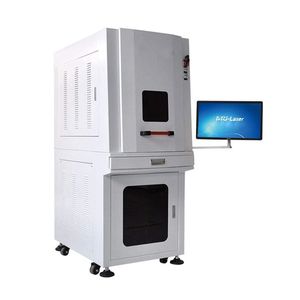
3W PVC Green Laser Marking Machine for Thin Ceramic Sheets
Custom 8-Point Magnetic Coded Reflective Positioning Markers
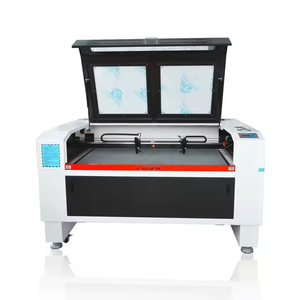
Fully Automatic 6090/1390/1610 CO2 Laser Cutting Machine
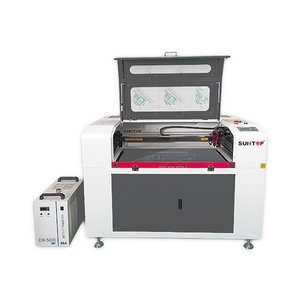
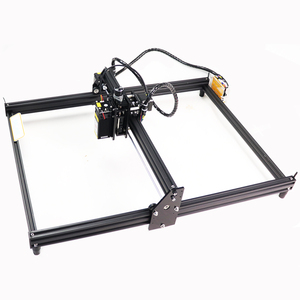
Easy-to-Operate Acrylic CO2 Laser Engraver and Cutter
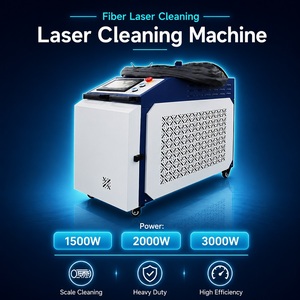
Bluetimes Mobile CW Fiber Laser Cleaning Machine 1500W-3000W
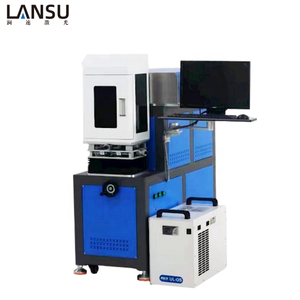
10W Green Laser Source Marking Machine for PCB & Ceramics
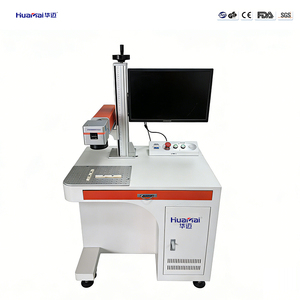
JPT Mopa M7 Stainless Steel Color Laser Marking Machine
Executive Whitepaper: Engineering Criteria for Selecting Top Ring Laser Engraver Manufacturers
In high-precision manufacturing, micro-jewelry craftsmanship, and industrial component serialization, selecting the correct ring laser engraver and rotary system is a critical procurement decision. Modern ring laser engraving extends far beyond basic aesthetic inscriptions inside gold or silver bands; it underpins medical device Unique Device Identification (UDI) on cylindrical tubing, aerospace bearing serialization, automotive sleeve marking, and defense asset tracking.
When evaluated through the lens of Google’s E-E-A-T (Experience, Expertise, Authoritativeness, and Trustworthiness) standards, industrial buyers must look beyond headline wattage figures. The true operational efficiency of a ring laser engraver relies on beam quality ($M^2 < 1.3$), rotary kinematics and harmonic gear backlash control, pulse duration adjustability (MOPA architecture), and 3D dynamic focal depth tracking across curved geometries.
Information Gain Key Metric: Traditional flat-field galvo scanners lose laser focus energy density (irradiance) when processing curved ring surfaces exceeding a $15^\circ$ angular tilt. Advanced 3-axis dynamic focusing optics automatically compensate for Z-axis offset in real-time, maintaining a microscopic focal spot size ($< 20\,\mu\text{m}$) across $360^\circ$ continuous cylindrical rotations.
Section 1: Semantic Intent & Industry Scope of Ring Laser Engraving
The term "Ring Laser Engraver" encompasses two primary market segments: high-precision luxury jewelry processing (hallmarking, photo-engraving, deep relief carving inside/outside rings) and industrial cylindrical part marking (bearings, nozzles, valve rings, medical implants). Choosing a qualified manufacturer requires understanding how different laser wavelengths interact with specific metallic and non-metallic substrates.
1. Wavelength Dynamics & Substrate Absorption Absorption Curves
Photons interact differently depending on the material's atomic structure. Choosing an improper wavelength causes thermal distortion, burring, or complete marking failure:
- Fiber Lasers (1064 nm): The gold standard for precious metals (Gold, Silver, Platinum), Titanium, Stainless Steel, and Brass. Fiber laser energy is rapidly absorbed by metals, enabling deep engraving, dark anneal marking, and micro-abrasion.
- MOPA Fiber Lasers (Master Oscillator Power Amplifier): Offers pulse duration control between $2\text{ ns}$ and $500\text{ ns}$. MOPA lasers allow precise heat input control, enabling vibrant anneal coloring on stainless steel titanium rings and black contrast marking on anodized aluminum without micro-cracking.
- UV Cold Lasers (355 nm): Utilizing "cold processing" photolytic ablation, UV lasers break molecular bonds directly without thermal heating. Essential for marking heat-sensitive medical rings, glass tubes, silicone bands, and high-density polymers (PVC, ABS).
- Green Lasers (532 nm): Positioned between UV and Fiber, Green lasers provide exceptional absorption rates for highly reflective precious metals (such as pure copper and high-karat gold), achieving ultra-fine line widths below $10\,\mu\text{m}$.
- CO2 Lasers (10,600 nm): Designed specifically for non-metallic rings, including wooden bands, organic acrylics, leather wristbands, and technical ceramics.
| Laser Wavelength Type | Primary Target Ring Materials | Typical Spot Size | Thermal Impact (HAZ) | Best Industrial Application |
|---|---|---|---|---|
| MOPA Fiber (1064 nm) | Titanium, Stainless Steel, Gold, Silver | $15 - 30\,\mu\text{m}$ | Low to Moderate (Tunable) | Color Annealing, Deep Relief, Hallmarking |
| UV Laser (355 nm) | Medical Plastics, Glass, Thin Polymers | $5 - 12\,\mu\text{m}$ | Negligible ("Cold Process") | UDI Medical Tubing, Ultra-Fine Micro-Text |
| Green Laser (532 nm) | Reflective Metals, Thin Ceramics, Silicon | $8 - 18\,\mu\text{m}$ | Extremely Low | PCB Rings, Pure Gold & Copper Marking |
| CO2 Galvo (10.6 µm) | Wood, Acrylic, Glass, Rubber, Leather | $50 - 100\,\mu\text{m}$ | Moderate to High | Non-Metallic Cylindrical Packaging & Art |
Section 2: Engineering Kinematics of Rotary Engraving Systems
A high-performance ring laser engraver relies on the synchronized alignment of its optical galvo scanner and its physical rotary drive axis. Minor structural vibrations or motor backlash result in uneven line spacing, distorted fonts, or visible overlap seams on $360^\circ$ continuous patterns.
Key Hardware Benchmarks for Rotary Procurement:
1. Harmonic Drive vs. Stepper Motor Drive: Entry-level laser markers utilize standard 2-phase stepper motors with belt reduction drives. These exhibit mechanical backlash ($> 0.05^\circ$), causing noticeable distortion when engraving miniature text ($< 0.5\text{ mm}$ height) inside jewelry rings. Tier-1 industrial suppliers integrate zero-backlash harmonic drives or direct-drive servo motors paired with high-resolution optical encoders ($> 20,000\text{ PPR}$), delivering rotational precision within $\pm 0.001^\circ$.
2. Multi-Fixture Chuck Versatility: Professional ring laser systems feature specialized internal/external expanding mandrels. The fixture must support rapid switching between inside ring expansion (preventing external scratch damage) and outside ring clamping, without causing axial tilt or runout distortion.
3. Dynamic 3-Axis Galvo Focusing: Traditional flat-field F-Theta lenses maintain sharp focus only on a single flat focal plane. When engraving deep ring contours or domed bands, the edges drift out of focus. A dynamic 3-axis galvo optics system uses an automated optical expansion lens on a high-speed linear voice-coil actuator, dynamic shifting focus in microseconds to match the ring's exact surface radius.
Data-Driven Performance Metrics
Quantitative Benchmarks of Tier-1 Laser Suppliers
Empirical technical indicators that distinguish low-cost assembly importers from ISO-certified precision laser original equipment manufacturers.
< 1.2
Beam Quality factor ($M^2$)
±0.001°
Rotary Indexing Accuracy
100,000h
Laser Source MTBF Lifespan
Up to 10Yr
Enterprise Warranty Cover
ISO 9001 & CE Laser Safety
Fully compliant Class 1 laser safety enclosures equipped with interlocked access doors, certified OD6+ protective viewing glass, and integrated fume extraction ports to safeguard shopfloor operators.
3D Surface Mapping & Autofocus
Integrated laser displacement sensors automatically map curved ring topologies in seconds, creating dynamic heightmaps to maintain laser focal accuracy across irregular contours.
High-Speed Industrial Throughput
High-speed digital galvanometer scan heads process vector text and raster imagery up to 12,000 mm/s, dramatically reducing unit cycle times for high-volume ring batch manufacturing.
Manufacturing Engineering Excellence
Why Leading Global Brands Partner With Experienced OEM Manufacturers
Refining industrial laser marking technologies over 30+ years with UK design heritage, ISO 9001 quality compliance, and global technical service networks.
Direct Engineering Support vs. White-Label Importers
Investing in ring laser engraving equipment requires a long-term partnership with a true system manufacturer. Low-cost off-the-shelf importers frequently supply uncalibrated optical paths, generic software drivers, and lack deep optical physics expertise.
Leading OEM facilities (utilizing British engineering standards and rigorous ISO 9001 testing protocols) assemble every system with high-grade components: aviation-grade milled aluminum chassis, IP54 dust-sealed optical paths, and genuine tier-1 laser sources (such as JPT, IPG, or proprietary OEM tubes).
- Full Technical Traceability: Every laser machine undergoes stringent beam profiler diagnostics and 48-hour burn-in stress testing prior to global dispatch.
- Cyber Essentials & Regulatory Compliance: NCSC Cyber Essentials certified data security protocols with full CE compliance for seamless global factory integration.
- Long-Term Warranty Assurance: Supported by up to 10-Year warranty programs in domestic markets and dedicated 3-5 year global distributor service agreements.
Global Enterprise Trust
Installed & Supported in 46+ Countries
Trusted by international manufacturing leaders including Bosch, Schneider Electric, Bushmills, and elite aerospace suppliers for zero-defect ring marking, barcode serialization, and component hallmarking.
30+
Years of Laser Innovation
In-house optical engineering & software R&D
3.3k
Active Industrial Clients
Proven uptime in continuous production lines
Strategic Sourcing Insights
Future Procurement Trends in Ring Laser & Rotary Marking Technology
Key technology trends shaping the next decade of automated cylindrical laser engraving, smart factories, and ESG-compliant manufacturing.
Trend 01
AI-Powered Machine Vision Alignment
Smart camera software instantly identifies ring centerlines, rotational orientation, and pre-existing hallmarks. The system automatically shifts laser mark vector files without requiring rigid manual positioning fixtures.
Trend 02
Femtosecond Ultra-Short Pulse Ablation
Transitioning from nanosecond to femtosecond ($10^{-15}\text{s}$) pulse durations eliminates thermal heat transfer entirely. This enables pristine micro-cavity engraving inside gold and medical nitinol tubing without requiring post-process polishing.
Trend 03
Robotic COBOT & Batch Automation
Integration of collaborative robot arms (COBOTs) paired with automated expanding mandrels. Enables 24/7 lights-out batch processing of thousands of industrial rings and sleeves with zero human operator intervention.
Frequently Asked Questions
Ring Laser Engraver Sourcing & Operational FAQ
Direct technical answers to common questions asked by industrial procurement officers, engineers, and master jewelers before purchasing.
What is the difference between an inside ring engraver and a standard rotary attachment?
Standard rotary attachments clamp cylindrical objects externally using 3-jaw chucks, which can obscure or scratch the outer rim of small rings. Dedicated inside-ring laser engravers utilize specialized 90-degree angular mirror galvo deflection heads or inclined rotary tilters, allowing laser beams to enter narrow ring apertures ($14\text{ mm} - 24\text{ mm}$) to engrave flawless internal micro-text without obstruction.
Which laser wattage is optimal for deep ring relief engraving vs. light hallmarking?
For standard surface hallmarking, serial numbers, and fine inscriptions, a 20W to 30W MOPA Fiber Laser is optimal, offering microscopic focal clarity. If your production process requires deep relief carving ($> 0.5\text{ mm}$ depth into gold, silver, or steel) or rapid batch metal removal, a 50W to 100W Fiber system significantly reduces overall cycle times by up to 65%.
Can a ring laser engraver mark on highly reflective metals like pure Gold, Silver, and Copper?
Yes. However, highly reflective metals require lasers with exceptional beam quality ($M^2 < 1.2$) and high peak pulse power to overcome optical back-reflection. MOPA fiber lasers with short pulse durations or 532 nm Green lasers are recommended to prevent optical isolator damage and deliver consistent energy coupling into precious metal surfaces.
How does 3D Dynamic Focusing benefit ring laser engraving?
Domed wedding bands, signet rings, and bevel-edged industrial sleeves present varying Z-axis heights. Traditional flat-field lenses lose focus along curved slopes, causing uneven engraving depth. A 3D Dynamic Focus system dynamically shifts the internal focal lens in real-time, matching the ring contour to maintain uniform line weight and energy density across all surfaces.
What maintenance cycles are required for industrial rotary laser marking workstations?
Solid-state fiber and UV laser sources require no daily optical realignment and feature MTBF lifespans exceeding 100,000 operational hours. Routine maintenance is limited to periodic inspection and cleaning of the protective F-theta objective lens glass, keeping rotary drive gears lubricated, and replacing filter cartridges in the connected industrial fume extraction system.
Are free material sample testing and live video demonstrations available prior to purchase?
Yes. Our application engineering lab provides complimentary sample testing on your exact rings, sleeves, or material substrates. We deliver comprehensive lab reports detailing optimal wavelength selection, depth metrics, exact cycle times, and offer live virtual camera demonstrations.
Validate Your Ring Marking Application With Our Engineering Specialists
Send us your ring components or material samples for a complimentary laboratory analysis report, complete with exact cycle time data, 3D surface profiler readings, and tailored optical system recommendations.