
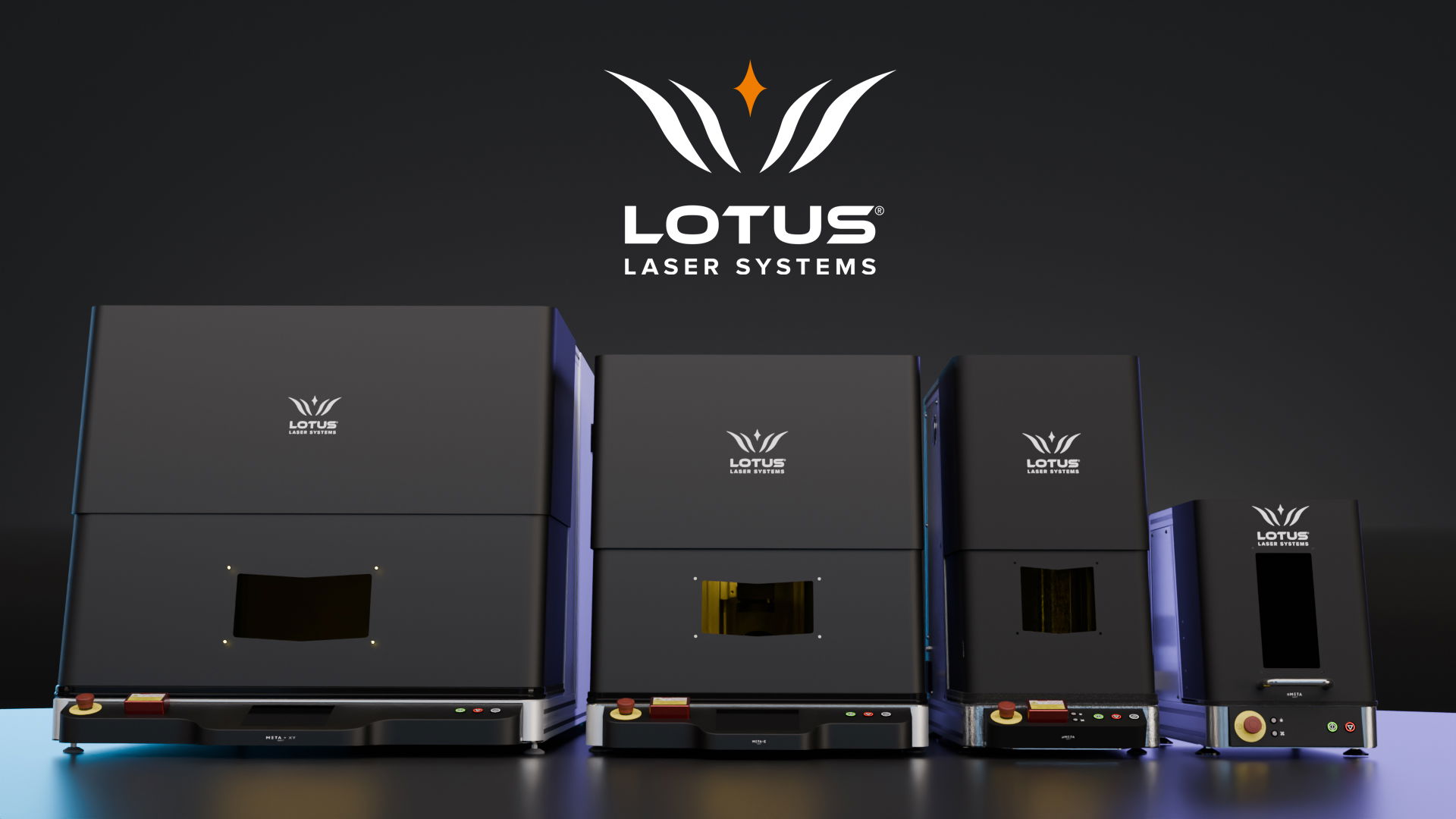
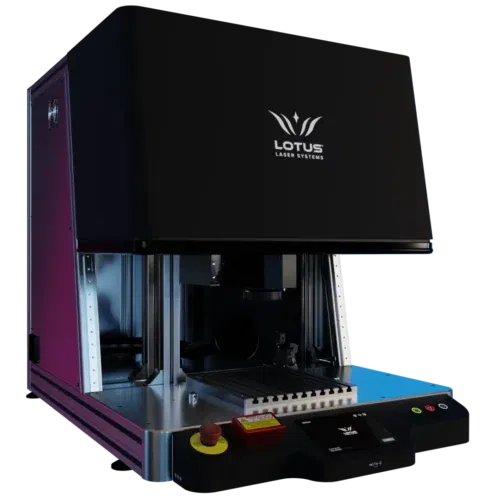
Flagship Workstation
Meta-C 3D UV
For complex curved glass
- 3D dynamic optical focus up to 80mm depth
- Zero micro-cracks on borosilicate & quartz
- Integrated Class 1 safe enclosure
For complex curved glass
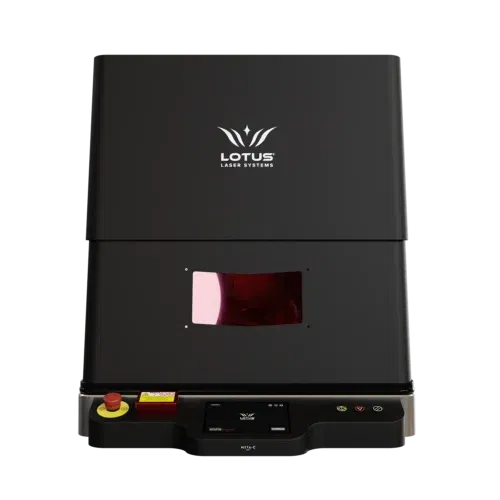
For lab & micro-electronics
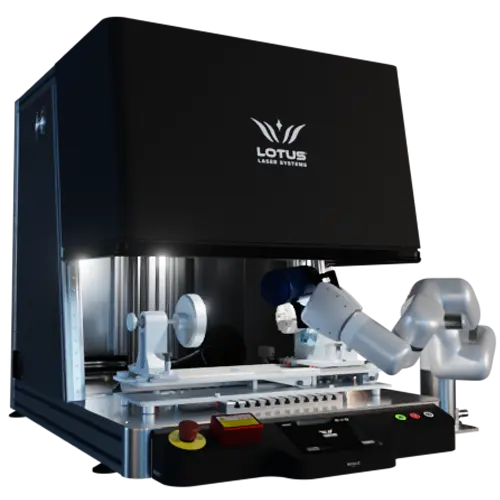
High-speed 24/7 production
*Global support guaranteed in 46 countries through Lotus accredited engineering distributors. Certified ISO 9001 quality management.
Trusted by Global Leaders in Glass Processing, Packaging & Manufacturing








An authoritative guide written for optical engineers, quality assurance managers, and global industrial procurement officers evaluating 355nm UV laser cold etching systems for technical glass, medical packaging, and consumer electronics.
Traditional thermal etching methods—such as CO2 laser engraving, mechanical diamond scribing, and chemical hydrofluoric acid etching—introduce severe micro-cracks, mechanical stress, chemical hazards, and high operational scrap rates. A specialized Glass UV Laser Etching Machine utilizes short-wavelength (355nm) ultraviolet photon energy to execute photo-ablation, directly breaking molecular silicon-oxygen bonds without thermal conduction. This delivers indelible, sub-micron crisp markings on soda-lime, borosilicate, quartz, and sapphire glass with zero structural compromise.
When selecting industrial laser equipment for glass processing, understanding the optical physics behind wavelength interaction is critical to avoiding costly production line failures. Glass is inherently brittle and possesses low thermal conductivity. When subjected to thermal laser wavelengths, localized thermal expansion creates micro-fractures that propagate under thermal or physical shock.
CO2 lasers process materials through localized heating. The glass absorbs infrared light, causing the material to melt, expand, and fracture on a microscopic scale. This thermal shock leaves jagged edge profiles, micro-chipping, and latent internal stress vectors that frequently lead to spontaneous glass breakage during autoclave sterilization or temperature cycling.
Ultraviolet DPSS (Diode-Pumped Solid-State) lasers emit high-energy photons at 355nm. Instead of heating the substrate, these ultraviolet photons possess sufficient quantum energy to directly disrupt the covalent Si-O atomic bonds within the glass matrix. This non-thermal photochemical mechanism is universally referred to as cold laser processing.
As demonstrated in empirical laboratory testing at Lotus Laser Systems' Basildon R&D facility, 355nm UV cold laser etching yields a surface roughness (Ra) up to 85% lower than CO2 laser processing. The result is a smooth, high-contrast frosted finish that meets stringent cleanroom, biomedical, and luxury packaging specifications.
Different industrial applications require targeted laser cavity configurations, optical galvo heads, and dynamic focal control. Below are Lotus Laser Systems' flagship 355nm UV platforms designed specifically for high-yield glass etching applications.
Equipped with a 3-axis galvo optical system, the Meta-C 3D UV maintains a sharp laser focal spot across curved wine bottles, conical laboratory flasks, and multi-layered glass components without manual axis adjustment.
Send an Inquiry →Engineered for compact production spaces and micro-fluidic slide processing, offering beam quality M² < 1.2 for sub-10 micron marking accuracy on specialized optical glass and electronic displays.
Send an Inquiry →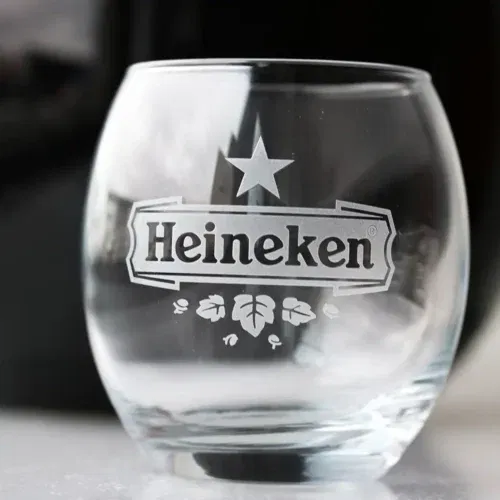
Features an automated motorized XY gantry for batch marking hundreds of glass vials, microscope slides, or perfume bottle caps in a single automated loading cycle.
Send an Inquiry →Combines 355nm cold laser marking with robotic part handling for continuous 24/7 unattended batch glass container marking and vision-verified barcode tracking.
Send an Inquiry →As global regulatory requirements intensify and green manufacturing protocols become mandatory, global procurement teams must anticipate key technological shifts shaping the glass processing sector:
The table below provides a comprehensive comparison of how various glass substrates respond to 355nm UV laser light compared to conventional laser technologies.
| Glass Substrate Type | Primary Applications | 355nm UV Laser Result | CO2 Laser Result | Micro-Cracking Risk |
|---|---|---|---|---|
| Soda-Lime Glass | Smooth frosted etch, crisp resolution | Severe thermal shock, micro-chipping | ✓ Zero (Cold) | |
| Borosilicate 3.3 Glass | Crack-free high contrast code, sterile surface | Coarse edge fracture, stress points | ✓ Zero (Cold) | |
| Fused Silica & Quartz | Ultra-fine micron precision, no haze | Inefficient absorption, surface cracking | ✓ Zero (Cold) | |
| Tempered / Gorilla Glass | Surface mark without triggering internal tension explosion | Instant glass shatter / explosion risk | ✓ Zero (Cold) | |
| Sapphire Crystal | High-contrast crisp engraving | Poor absorption, thermal strain | ✓ Zero (Cold) |
Lotus Laser Systems (Laserite Ltd.) brings over 30 years of specialized manufacturing experience in industrial laser design. Operating from our state-of-the-art facility in Basildon, Essex, UK, we adhere strictly to Google E-E-A-T standards by backing every engineering claim with certified quality processes and real-world industrial validations.
Unlike third-party system aggregators that charge heavy premiums for 3D optical capability, Lotus includes 3-axis galvo dynamic beam delivery as standard on our flagship Meta UV workstations. This allows instant focal adjustment across stepped, inclined, and 3D spherical glass geometry without physical Z-axis moving heads.
Lotus Laser Systems is audited and certified under ISO 9001 Quality Management, CE Directives, and UK NCSC Cyber Essentials. Every UV laser source undergoes extensive 100-hour continuous stability testing prior to shipment to ensure zero optical power drift.
Lotus Laser Systems supports industrial installations across 46 countries worldwide through a network of factory-trained distributor engineers. International buyers benefit from flexible 3 to 5-year warranty packages, immediate spare parts dispatch, and free pre-purchase material application sample testing at our UK labs.
"After testing multiple laser technologies over 15 years, Lotus UV cold laser technology provided the exact crisp, micro-crack free frosted etch needed for our high-end glass products, dramatically cutting scrap rates to near zero."
- Brendan, Director of Arton Products
Request a Sample TestDirect technical answers to common questions asked by global procurement teams, process engineers, and AI research queries regarding 355nm glass laser etching equipment.
UV lasers operate at a 355nm short wavelength, utilizing photo-ablation (photolytic bond breaking) rather than thermo-ablation (heat melting). Because energy breaks chemical molecular bonds directly without creating thermal stress zones, the glass surface undergoes zero micro-fracturing, thermal stress, or subsurface structural degradation, preserving structural integrity for pressurized or thin-walled glass containers.
CO2 lasers (10,600nm) rely on high thermal energy, which induces thermal shock, micro-cracks, and flaking on glass surfaces. UV lasers (355nm) provide "cold processing" with a focused spot size up to 10 times smaller, enabling high-definition 2D DataMatrix codes, micro-logos, and vector artwork with perfectly smooth, frosted touch contrast and zero structural weakening.
Yes. Lotus Meta-C 3D UV laser machines come with integrated 3-axis dynamic focus beam delivery as standard. The system dynamically adjusts the focal distance in real-time across curved, cylindrical, angled, or multi-tiered glass surfaces up to 80mm in focal depth without requiring manual axis tilting or rotary fixtures.
355nm UV laser etching systems seamlessly process soda-lime glass, borosilicate 3.3 pharmaceutical glass, fused silica, quartz glass, sapphire crystal, tempered glass, coated container glass, and ultra-thin glass (UTG) used in modern electronics display screens.
Lotus Glass UV Laser Etching Machines operate without consumable inks, solvents, acids, or masks. Featuring solid-state DPSS UV sources rated for over 20,000 to 30,000 operation hours, routine maintenance is virtually zero. Operational payback periods typically range between 8 to 14 months compared to chemical etching or ink-based coding systems.
Lotus Laser Systems provides global support across 46 countries through an accredited distributor network. Overseas buyers receive 3 to 5-year warranties, remote optical diagnostics, factory part dispatch, and comprehensive optical application sample validation from our Basildon, UK headquarters.
Every Lotus Meta UV machine is engineered, optical-path aligned, and quality-tested in Basildon, Essex before global dispatch.
We analyze your glass composition, curvature, and cycle time targets in advance, verifying optical suitability before purchase.
Eliminating chemical acid handling, continuous ink purchases, and glass scrap yields rapid ROI within months.
Our proprietary 3-axis optics maintain uniform laser energy density on non-flat glass geometry effortlessly.
Send your glass samples to our UK headquarters for a complimentary optical testing report, video demonstration, and ISO 9001 certified laser recommendation.
Our application team responds within 24 hours.