
Featured Laser Marking & Processing Systems
High-precision laser technology configured for direct part marking, deep engraving, fine surface cleaning, and 3D sub-surface processing.
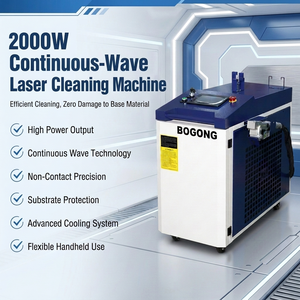
BOGONG 2000W CW Laser Cleaning Machine Handheld Industrial Rust Removal Floor Coating Surface Treatment for Construction Metal
Inquire Now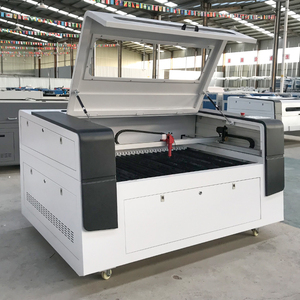
100W AI Laser Engraving Motor Metal Sheet Acrylic Plastic PVC Wood Paper CO2 Laser Cutting Machine
Inquire Now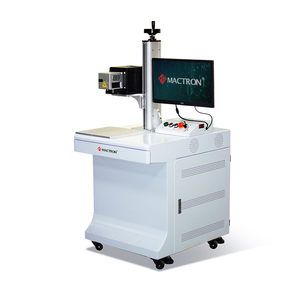
Green Laser Marking Machine 3D Crystal Internal Laser Engraving Machine for Copper Glass Ceramics FPC
Inquire Now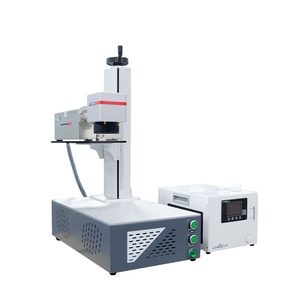
All-in-One UV Laser Engraver for Wood, Plastic & Coated Metals Perfect for Custom Jewelry, Keychains & Corporate Gifts
Inquire Now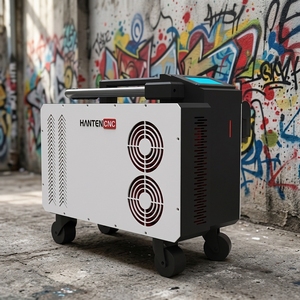
Laser Graffiti Removal Machine Portable Pulse Cleaning Equipment for Wall Stone Surface Restoration
Inquire Now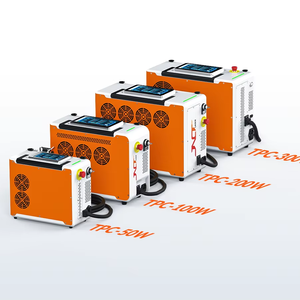
Laser Cleaning Solution For Heavy-Duty Applications 300W Pulsed Power, Zero Consumables
Inquire Now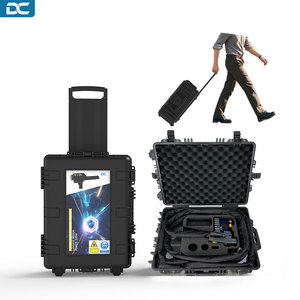
Dachuan Handheld 500W Portable Pulsed Fiber Laser Cleaner Wood Metal Stone Stainless Steel Aluminum Paper Laser Cleaning Machine
Inquire Now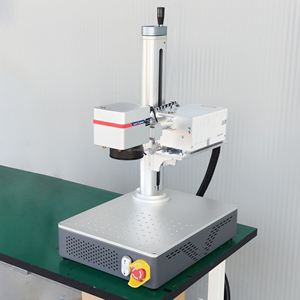
Portable Glass UV Laser Marker 5W Or Leaves Engraving Glass/stone/metal/wood
Inquire NowNagoya’s Manufacturing Ecosystem & The Imperative for 3D Dynamic Laser Traceability
The Greater Nagoya Area, spanning Aichi, Gifu, and Mie prefectures, represents Japan’s premier industrial power hub, generating roughly 40% of the nation’s industrial machinery, automotive sub-assemblies, aerospace structures, and precision tooling. Home to global OEM giants such as Toyota Motor Corporation, Denso, Mitsubishi Heavy Industries, and Okuma Machine Tools, the regional supply chain imposes stringent quality control mandates. Modern manufacturing standards such as ISO/TS 16949, IATF 16949, and JIS Q 9100 demand continuous, permanent, and machine-readable direct part marking (DPM) across every tier of manufacturing.
Traditional 2D flat-field laser marking systems rely on flat F-Theta lenses with fixed focal lengths. When attempting to mark complex, non-planar geometries—such as bevel gears, curved transmission housings, sloped aerospace turbine blades, stepped electronic connectors, or cylindrical hydraulic shafts—2D systems suffer from rapid laser beam defocusing. Beyond the Depth of Field (DOF), focal spot distortion leads to inconsistent mark contrast, thermal erosion, and unreadable Data Matrix (DMC) barcodes. As a premier exporter and manufacturer of industrial 3D laser markers tailored for Nagoya’s high-precision sectors, our engineering platforms utilize 3-axis dynamic focus optical galvos to continuously shift the optical focal plane in real time across dynamic 3D contours.
3-Axis Dynamic Focus Optics
Utilizes a dynamic expansion lens mechanism motorized by a high-speed linear actuator. Keeps the focal spot size constant across height variations up to ±80mm without Z-axis stage mechanical movements.
3D CAD/STEP File Import
Directly processes STL, STEP, and IGES 3D CAD data into proprietary spatial rastering algorithms. Projects 2D vector patterns, serial numbers, and logos seamlessly onto complex free-form surfaces.
MOPA & UV Laser Sources
Offers selectable pulse widths (2ns to 500ns) for dark annealing on stainless steel, anodized aluminum blacking, or cold UV photochemical etching (355nm) on heat-sensitive plastics and optical glass.
The Optical Physics & Mechanics of Dynamic Focus 3D Laser Beam Delivery
Understanding how dynamic 3D laser marking operates requires evaluating laser Rayleigh length ($z_R$) and optical spot size ($d_0$). In conventional 2D laser galvo scanners, the focus plane is governed by the F-Theta flat-field lens:
d_0 = \left( \frac{4 \lambda f M^2}{\pi D} \right)
Where $\lambda$ represents wavelength, $f$ focal length, $M^2$ beam quality factor, and $D$ entrance beam diameter. When the target workpiece surface deviates vertically by more than the Rayleigh range, the spot area expands quadratically, dropping laser power density ($\text{W/cm}^2$) below the material ablation threshold. This results in faded, unreadable markings or uneven line widths.
Our industrial 3D dynamic optical heads resolve this physical limit by introducing a pre-galvo dynamic expansion optical module. Rather than focusing through a fixed F-Theta lens, the system uses a high-speed linear motor to adjust the distance between an expanding lens and a collimating lens prior to the XY galvo mirrors. This dynamic expansion lens constantly modifies the divergence angle of the laser beam before it enters the objective lens assembly. By linking spatial CAD coordinate data $(X, Y, Z)$ directly to the galvo servo driver card, the Z-axis dynamic focal system recalculates focal adjustments at microsecond rates, ensuring a uniform laser fluence ($\text{J/cm}^2$) and ultra-fine spot density across angled planes, spherical domes, and stepped geometries.
- Uniform Surface Energy Density: Eliminates heat accumulation or under-etching on inclined geometry up to 60° angles.
- Seamless Large-Field Processing: Achieves expanded scan fields up to 600mm × 600mm without field edge distortion or spot elongation.
- Deep 3D Mold Engraving: Layer-by-layer micro-ablation for 3D cavity mold creation, coin minting dies, and tactile surface texturing without mechanical tooling wear.
Comparative Technology Matrix
Detailed performance benchmarks for industrial laser marking setups in Nagoya tier-1 supply chains.
| Technical Specification | Standard 2D Fiber Galvo | 3D Dynamic Focus MOPA Fiber | 3D Cold UV Laser Marker | Green Sub-Surface 3D Marker |
|---|---|---|---|---|
| Laser Wavelength ($\lambda$) | 1064 nm | 1064 nm (Tunable) | 355 nm | 532 nm |
| Z-Axis Dynamic Focus Range | None (Fixed ±1mm) | ±40mm to ±80mm | ±30mm to ±50mm | Internal Crystal Z-Focus |
| Pulse Width Range | Fixed 100ns | 2ns to 500ns (MOPA) | <15ns (Short Pulse) | <10ns (Picosecond opt.) |
| Primary Target Materials | Flat Metals, Hard Plastics | Curved Metals, SS Annealing, PA66 | Heat-Sensitive Polymers, Glass | Optical Glass, FPC Copper, Crystals |
| Heat-Affected Zone (HAZ) | Moderate to High | Minimal (Tunable thermal input) | Negligible (Cold Processing) | Zero External Thermal Impact |
| Automotive DPM Barcode Quality | Grade C to B (Flat surfaces) | Grade A (ISO 15415 on 3D curves) | Grade A (Sub-micron resolution) | Internal Micro-Dot Array |
Targeted Sector Scenarios Across Aichi Manufacturing Hubs
Nagoya’s manufacturing matrix requires high versatility across metals, engineering polymers, and advanced ceramics. Below are localized application scenarios engineered into our 3D laser marking platforms for regional exporters:
Automotive Powertrain & Gearbox DPM (Toyota City / Kariya)
Automotive gears, CV joints, and transmission shafts feature sloped surfaces and helical grooves. Our 3D MOPA fiber laser markers apply high-contrast, corrosion-resistant 2D Data Matrix codes directly onto curved surfaces without removing protective anti-rust coatings. Variable pulse durations enable true black annealing on hardened alloy steels (SCM420H / SCR420), passing strict salt spray testing.
Aerospace Structural Traceability (Komaki / Minato-ku)
In aerospace manufacturing around Nagoya Airport and Chubu Centrair, components made from Titanium alloys (Ti-6Al-4V), Inconel 718, and Carbon Fiber Reinforced Polymers (CFRP) require stress-free, deep structural marking. Our 3D dynamic focus engravers execute deep character marking conforming to AS9100 and DEF STAN specs, keeping kerf angles strictly perpendicular even across wing spar contours.
Semiconductor & Sensor Enclosures (Yokkaichi / Anjo)
For electronic control units (ECUs), PBT/PA66 sensor housings, and PCB substrates, thermal stress can cause micro-fracturing or electrical short circuits. Using 355nm UV dynamic laser systems, photochemical bond-breaking marks micro-scale QR codes and part numbers cleanly onto plastic connectors and ceramic wafers without heat damage or material charring.
Precision Mold Texturing & Sub-Surface Glass (Gifu / Ogaki)
3D crystal internal laser engravers and green laser markers allow mold shops and glassware producers to create micro-textures directly within tool steel cavity dies or internal sub-surface 3D structures inside optical glass and synthetic sapphire, protecting markings permanently from external surface wear and chemical contact.
Why Global OEM Manufacturers Partner with Our Engineering Group
Building industrial laser machinery requires rigorous Quality Management Systems (QMS) and robust international export compliance. Engineered with over 30 years of industrial laser innovation, our platforms combine UK manufacturing precision with global service infrastructure. Every system delivered to Japanese enterprises or overseas production plants is designed, assembled, and calibrated under strict ISO 9001 quality frameworks.
ISO 9001 & CE Compliance
Full CE certification, Class 1 laser enclosure safety systems with interlocked optical shutters, emergency stops, and dual-channel safety circuits compliant with IEC 60825-1 international standards.
Up to 10-Year Warranty Options
Backed by industry-leading warranty coverage (up to 10-year Diamond Cover in home regions and 3–5 year factory-backed global warranties via local authorized engineering support networks).
Smart Factory & Automation Ready
Supported protocols include EtherNet/IP, PROFINET, CC-Link, and TCP/IP. Built for seamless integration with COBOT loading arms, inline production conveyors, and automated data-plate feeders.
Our permanent R&D engineering team provides complimentary sample testing services for prospective buyers in Nagoya. Prior to equipment purchase, clients can send sample materials—ranging from hardened tool steels and automotive alloys to delicate medical ceramics—to receive full metallurgical scan reports, surface roughness analysis (JIS B 0601), and readable barcode verification grades.
Frequently Asked Questions for Nagoya Engineering Buyers
Technical clarity on importing, installing, and deploying 3D laser marking platforms in Japanese industrial facilities.
How does 3D dynamic focus marking maintain focus on stepped or sloped parts without moving the Z-stage?
Our 3D dynamic focus system utilizes a high-speed linear voice-coil actuator attached to an internal beam-expanding optical element located before the XY galvo scanner mirrors. By continuously shifting this optical lens element back and forth in real-time correlation with the 3D surface model imported into the marking software, the focal point dynamically expands or contracts along the beam axis. This maintains a uniform focal spot diameter ($\sim 30\mu\text{m}$) across vertical height step-downs, cylinder curves, and angled bevels up to $\pm 80\text{mm}$ without mechanical Z-axis table movements, reducing cycle time drastically.
Are your laser markers fully compliant with Japanese electrical standards (100V-220V) and safety regulations?
Yes. All exported laser systems can be pre-configured with dual-voltage power supplies (100V–220V AC, 50/60Hz) tailored for Japanese industrial power grids in Chubu/Aichi Prefecture. Furthermore, our machines feature safety enclosures adhering to international IEC 60825-1 safety standards, equipped with dual-circuit safety interlocks, laser safety glass viewports (OD6+ protection), exhaust air extraction ports, and full CE/ISO certification compliant with JIS industrial plant requirements.
Can these 3D laser marking machines integrate into existing PLC automated production lines (CC-Link / EtherNet/IP)?
Absolutely. Our control architecture supports industrial fieldbus protocols, including CC-Link (standard across many Japanese factory automation systems), EtherNet/IP, PROFINET, and Modbus TCP. The software interface supports automated dynamic data fetching from factory MES/ERP databases, allowing automatic updating of serial numbers, lot codes, production timestamps, and 2D Data Matrix codes without operator manual entry.
What is the practical difference between standard Q-switched fiber lasers and MOPA fiber lasers for metal annealing?
Standard Q-switched fiber lasers have fixed pulse durations (typically around 100ns). MOPA (Master Oscillator Power Amplifier) fiber lasers allow independent tuning of pulse duration from 2ns up to 500ns alongside frequency control (1kHz to 4000kHz). Short pulse durations at low pulse energy prevent thermal diffusion when marking delicate stainless steel medical parts or anodized aluminum, achieving rich dark annealing without surface oxide layer destruction or micro-pitting corrosion.
When should a buyer choose UV cold laser marking (355nm) over 1064nm MOPA fiber laser marking?
1064nm MOPA fiber lasers interact with materials primarily through photothermal heating (melting or vaporizing material). This is ideal for metals and engineering plastics. However, for heat-sensitive polymers (such as white ABS, silicone, PE, packaging films) or optical glass, photothermal energy creates micro-cracks or burnt yellow edges. 355nm UV lasers operate via "cold" photochemical ablation, breaking chemical molecular bonds directly without micro-heating. UV is essential for zero-HAZ marking on glass, semiconductor wafers, and medical-grade thermoplastics.
What sample testing, export logistics, and technical support services are offered to Nagoya manufacturers?
We offer a zero-cost sample processing service. Nagoya clients can ship sample parts to our applications lab for laser test marking. We return the processed parts along with comprehensive optical evaluation reports, camera-verified barcode reading scores (ISO/IEC 15415 standards), and recommended laser parameter profiles. For exports, we provide direct door-to-door CIF/DDP air freight to Chubu Centrair International Airport or Nagoya Port, complete with export documentation, operation manuals, and remote or on-site engineering installation support.
Validate Your 3D Laser Marking Application Today
Request a comprehensive sample mark on your exact component materials or schedule a technical consultation with our senior application engineers.
Send an Inquiry