
Industrial Product Range
CE-Compliant Laser Marking, Engraving & Cleaning Systems
Direct factory delivery to Greater Melbourne, Geelong, Ballarat, and Victorian manufacturing hubs. Pre-calibrated optical hardware backed by full AS/NZS electrical safety compliance.
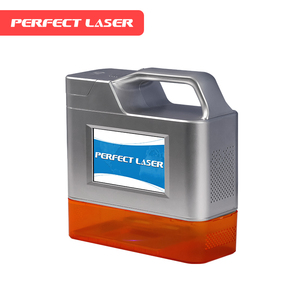
Perfect Laser- Portable Handheld Enclosed Mini Automatic DIY Portable Laser Engraver/ Mini Laser Marker
Contact Us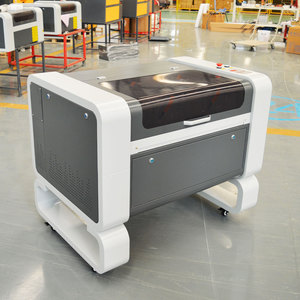
2025 New 4060 50w 60w 80w 100w Co2 Laser Engraving Machine for Wood Acrylic 6040 CO2 Laser Cutting Machine
Contact Us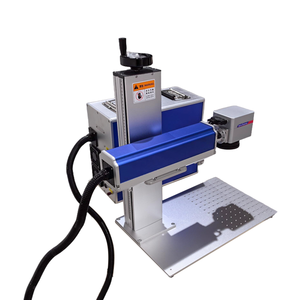
Industrial Fiber Laser Marking and Engraving Machine Split-type 0.001mm Ultra-High Precision Color Marking
Contact Us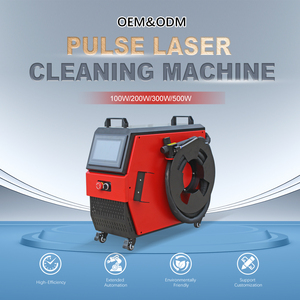
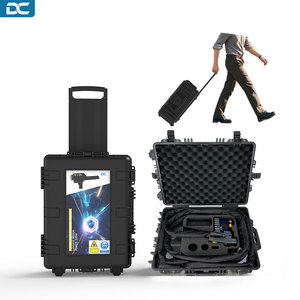
High Cost Performance 100w 200w 300w 500w Widely Laser Cleaning Machine Remove Paint air Cooling Pulsed Laser
Contact Us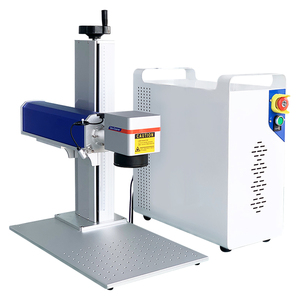
Fiber Laser Engraving Machine For Advertising Companies High-Powered Laser Marker for Metals
Contact Us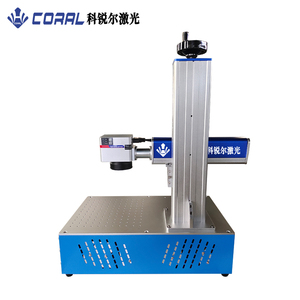
Wholesale Price HG-ZM-A-D20 Engraving Engraver Machine Laser Marking Machine Fiber Laser Marking Machine
Contact Us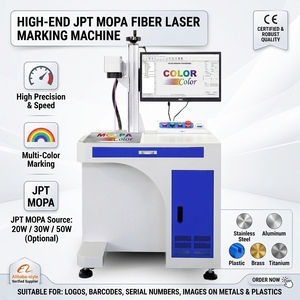
New Industrial 50W Fiber Laser Marking for Metal JPT MOPA Source Color Marking Machine PLT/BMP 2026 CE
Contact Us0.001mm
Repeat Precision
100,000h
MTBF Laser Diode Life
CE / ISO
9001 Certified Quality
AS/NZS
60825.1 Safety Compliant
Architectural White Paper: 3D Dynamic Focusing vs. Traditional 2D Flat-Bed Marking
In modern industrial manufacturing across Victoria, component geometries have evolved beyond simple planar flat surfaces. Conventional 2D laser marking systems rely on static F-Theta field lenses, which constrain the focused focal plane to a strict two-dimensional depth of field (typically ±1mm to ±3mm depending on optical focal length). When processing complex automotive castings, curved medical implants, cylindrical hydraulic tubes, or inclined mold cavities, 2D lasers exhibit severe beam divergence, power density drops, and distortion along non-flat boundaries.
Our CE Certified 3D Laser Marking Systems utilize an active 3-Axis Dynamic Focusing Lens System (DFU). By placing a high-speed dynamic expander lens upstream of the galvo scanning mirrors, the Z-axis optical system dynamically adjusts the focal position in real-time at microsecond speeds. This synchronizes focal length changes with X/Y galvo mirror movements, enabling uniform spot size density across 3D surfaces with elevation changes up to 80mm to 120mm.
Mathematical focal tracking ensures that whether marking a 45-degree bevel, a spherical dome, or a deeply recessed step-down cavity, the laser beam spot remains perfectly circular ($M^2 < 1.3$), eliminating focal blurring and maintaining consistent thermal ablation depths.
Advanced MOPA Pulse Duration Control & Heat-Affected Zone (HAZ) Optimization
For high-value advanced manufacturing in Melbourne—such as aerospace part marking in Dandenong or medical instrument serialization in Clayton—thermal control is paramount. Standard Q-switched fiber lasers possess fixed pulse durations (typically 100ns–120ns), which generate excessive collateral heat, causing thermal warping, micro-cracking, or destruction of anti-corrosion oxide layers on stainless steel 316L and anodized aluminum.
Our integrated JPT MOPA (Master Oscillator Power Amplifier) Fiber Lasers provide digitally adjustable pulse durations ranging from 2ns to 500ns with pulse repetition frequencies up to 4000kHz. Ultra-short pulse widths (2ns–15ns) minimize peak thermal conduction time into the substrate, allowing for "cold-style" high-contrast black annealing on medical grade stainless steel without compromising the passivation layer. Furthermore, precise pulse modulation enables true color marking on titanium alloy components by precisely controlling the oxide layer thickness via thin-film interference optics.
Localized Application Scenarios
Tailored Solutions for Melbourne's Manufacturing Precincts
From heavy industrial fabrication to cleanroom medical device traceability, our 3D laser markers empower Victorian enterprises with high-efficiency direct part marking (DPM).
Dandenong & Braeside Industrial Hubs
Ideal for heavy equipment manufacturing, automotive aftermarket components, and cast aluminum housings. Performs deep metal engraving of VIN codes, serial numbers, and high-density DataMatrix codes resistant to shot blasting and powder coating.
Campbellfield & Northern Suburbs Tooling
Designed for structural steel fabricators, sheet metal fabricators, and custom machinery builders. Provides high-speed 0.001mm precision marking on hardened tool steel, chrome plating, and galvanized sheet metal parts without mechanical tool wear.
Clayton & Monash Tech Corridor
Engineered for bio-tech research, medical device manufacturing, and electronics assembly. UV cold laser options offer zero thermal damage on heat-sensitive polymers (ABS, PEEK, Polycarbonate) and micro-fluidic glass channels compliant with FDA UDI rules.
Port Melbourne Maritime & Defense Logistics
Meets stringent military standard UID tracking (MIL-STD-130). Delivers corrosion-resistant barcode and matrix etching on marine-grade 316 stainless steel, brass fittings, and titanium fasteners exposed to harsh ocean saltwater environments.
Retail & Promotional Personalization
Mini enclosed desktop laser systems suitable for inner-city Melbourne retail shops, jewelry studios, and custom gift engravers. Features compact footprints, low noise, and Class 1 laser safety protection for safe public operation.
Packaging, FMCG & Signage Sector
CO2 Galvo dynamic laser markers designed for high-speed cutting and vector engraving on acrylic, wood, cardboard, leather, and organic packaging materials across Victoria's active food, beverage, and point-of-sale display supply chains.
Optical Wavelength Selection Matrix
Comparative Analysis of Laser Source Technologies
Selecting the optimal wavelength and pulse characteristic is critical to achieving maximum contrast, process speed, and material integrity.
| Laser Source Type | Wavelength | Pulse Width Range | Primary Target Substrates | Key Advantage |
|---|---|---|---|---|
| Standard Fiber (Q-Switched) | 1064 nm | 100 ns – 120 ns | Carbon steel, aluminum, brass, hard plastics | Cost-effective deep engraving & high speed |
| MOPA Fiber (JPT M7+) | 1064 nm | 2 ns – 500 ns (Adjustable) | Stainless steel 316, anodized aluminum, titanium | No HAZ, black annealing & colorful alloy marking |
| UV Cold Laser (355nm) | 355 nm | < 15 ns (Cold processing) | Glass, ceramics, HDPE, PEEK, silicon wafers | Photochemical reaction, ultra-fine spot size (<15μm) |
| CO2 RF / Glass Tube | 10,600 nm | Continuous / Pulsed | Wood, acrylic, leather, paper, coated glass | High energy absorption in organic polymers |
| Handheld Pulsed Cleaner | 1064 nm | 10 ns – 200 ns | Rust, paint, oil, oxide layers on structural metal | Non-contact substrate restoration, chemical-free |
Compliance Engineering: CE Marking, AS/NZS 60825.1 & RCM Standards
Purchasing laser equipment in Australia requires strict adherence to workplace health and safety (WHS) regulations and national electrical standards. Importing non-compliant machinery exposes business owners to severe regulatory liability, insurance invalidation, and operational shut-down risks.
All laser marking systems manufactured by our factory bear full CE Certification under the following core European Directives, fully harmonized with Australian safety requirements:
- Machinery Directive 2006/42/EC: Comprehensive mechanical safety risk assessments, double-channel safety interlocks, and emergency stop circuits.
- Low Voltage Directive 2014/35/EU & RCM Alignment: Compliant with Australian Electrical Equipment Safety Scheme (EESS) standards, utilizing MeanWell industrial power supplies, Schneider isolation relays, and EMI filtering.
- EMC Directive 2014/30/EU: Shielded optical control lines preventing electromagnetic interference with adjacent CNC machines and industrial PLC networks.
- AS/NZS 60825.1:2014 (Laser Safety Standards): Equipped with optical protective viewports certified for 1064nm / 355nm optical density (OD6+), safety-interlocked protective enclosures, and key-switch master isolation.
Factory Direct OEM Supplier
Why Melbourne Manufacturers Partner Directly with Our Factory
Bypassing trading intermediaries guarantees direct access to master optical engineers, customized hardware integration, and unbeatable enterprise pricing.
100% Factory Quality Control
Every laser marker undergoes 72-hour continuous power stability burn-in tests and beam spatial profile measurement before international freight dispatches to Victoria.
Custom Optical & Software Integration
We tailor optical beam expanders, motorized Z-axis columns, rotary chuck indexing tools, and customized software APIs for seamless connection to your plant's MES system.
Rapid Australian Logistics & Spare Parts Support
We maintain dedicated optical lenses, galvo scanner heads, digital drivers, and laser diodes in stock, guaranteeing express air shipments to Melbourne within 3-5 business days.
Procurement Guidance
Melbourne Industrial Buyer FAQ
Addressing the technical, operational, and financial considerations of Victorian engineering teams.
What is the practical difference between 2D and 3D laser marking for our Melbourne production line?
A conventional 2D laser marker relies on a fixed focal lens and can only mark flat horizontal planes within a tiny focal tolerance (±1mm). A 3D laser marker incorporates an active dynamic z-axis expansion module that dynamically adjusts focus in real time. This allows you to mark across complex stepped parts, 45-degree angled faces, cylinders, and organic 3D curved surfaces up to 120mm in depth variation without physically moving the laser head or part table.
Are your laser marking machines fully certified for operation under Victorian WHS standards?
Yes. All our laser systems carry valid CE Certification covering the European Machinery Directive 2006/42/EC, Low Voltage Directive 2014/35/EU, and EMC Directive 2014/30/EU. In addition, our electrical control systems comply with Australian RCM (Regulatory Compliance Mark) safety schemes and align with AS/NZS 60825.1:2014 optical laser safety requirements, ensuring easy approval by safety auditors.
Should we choose a standard Q-switched Fiber Laser or a JPT MOPA Fiber Laser?
If your primary application is deep engraving or fast high-contrast marking on carbon steel, brass, or structural aluminum, a standard Q-switched fiber laser is highly cost-effective. However, if you require high-contrast black annealing on medical grade 316 stainless steel without corrosion, dark marking on anodized aluminum, or color marking on titanium, a JPT MOPA fiber laser is essential due to its controllable 2ns–500ns pulse duration.
What software comes pre-installed, and does it support 3D CAD mesh imports?
Our 3D laser marking systems come equipped with EzCad3 3D software (or LightBurn support for CO2 systems), which natively imports standard 3D mesh files (.STL, .IGES, .STEP) alongside standard vector formats (.DXF, .AI, .PLT, .SVG). EzCad3 automatically maps 2D graphic layers onto 3D surfaces with a single click.
What lead times can Melbourne business owners expect for delivery and support?
Standard configurations ship directly from our factory within 5-7 business days via express international air freight (sea freight available for heavy automated workstations). Transit time to Melbourne Airport (Tullamarine) or Port of Melbourne is typically 5-10 days. Remote installation assistance, parameter tuning, and engineer video training are provided standard.
Upgrade Your Production with Factory-Direct 3D Laser Solutions
Contact our laser optics application engineering team today for technical advice, sample marking evaluations, and direct factory pricing tailored for Melbourne and Victorian manufacturers.
Contact Us