
Industrial Laser Engraving, Marking & Cutting Systems
Engineered under rigorous ISO 9001 and CE standards. Delivered directly to Valparaíso, San Antonio, and major Chilean industrial hubs with full technical support.
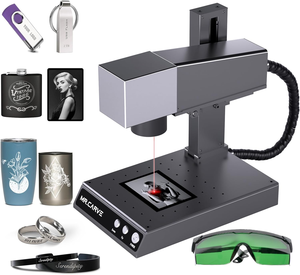
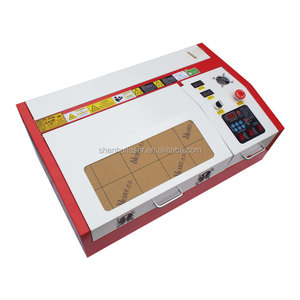
DAJA M1 Pro Small Fiber Laser Jewelry Cutting and Graving Metallic Metal Laser Engraver Marking Name logo Necklace Machine
Contact Us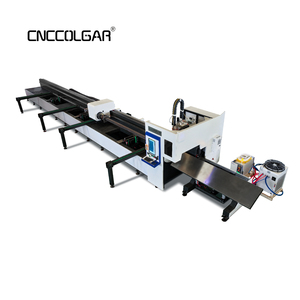
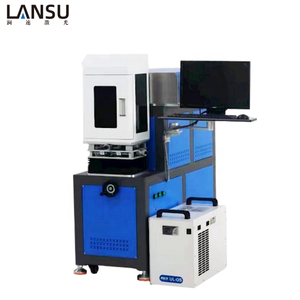
Green Laser Marking Machine 10W Green Laser Source for PCB QR Code 2D Code Plastic Glass Ceramics
Contact Us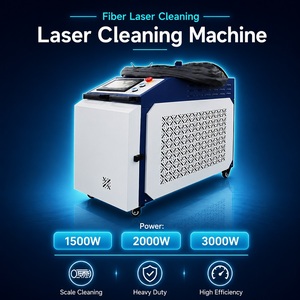
Bluetimes Mobile 1500W 2000W 3000W Continuous Wave Fiber Laser Cleaning Machine Easy to Operate
Contact Us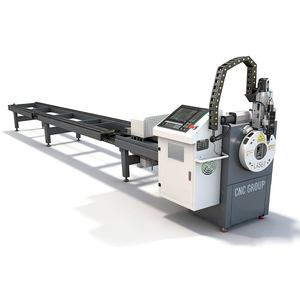
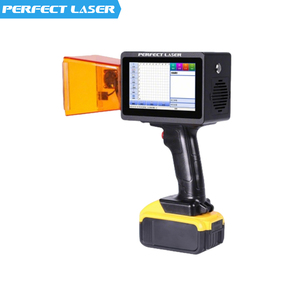
Perfect Laaser Handheld Portable Metal Acrylic Gold Sliver Rubber Wood Marker Mini Fiber Laser Marking Machine with LCD Screen
Contact Us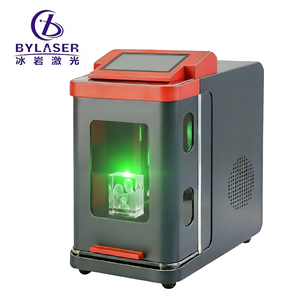
BingYan Portable 3D 2D Desktop Handheld Metal and Nonmetal Green Laser Engraver Marker Marking Glass Crystal Acrylic
Contact UsUnderstanding 355nm Cold Laser Etching vs. Thermal Processing in Glass Manufacturing
Why leading Chilean glass bottle bottlers, solar module producers, and pharmaceutical labs are replacing legacy CO2 lasers and mechanical diamond dragging with Diode-Pumped Solid-State (DPSS) UV Laser Technology.
Photochemical Ablation vs. Thermal Micro-Fracturing
Glass is a fragile non-metallic inorganic material characterized by high chemical stability, low thermal conductivity, and high hardness. Traditional glass processing methods—such as sandblasting, mechanical rotary engraving, or 10.6μm CO2 laser thermal ablation—rely on generating intense localized heat. CO2 laser radiation induces severe thermal expansion, resulting in micro-cracks, chipped edges (micro-fracturing), and structural weakening of the glass matrix.
Our CE Certified Glass UV Laser Etching Machine utilizes an ultraviolet wavelength of 355nm generated by third-harmonic generation (THG) from DPSS laser sources. Photons at 355nm possess high photon energy (approximately 3.49 eV). Instead of melting or burning the substrate, UV laser processing operates via photochemical reaction (cold processing). High-energy UV photons directly break the molecular silicon-oxygen bonds ($SiO_2$) within the crystalline structure of the glass. This chemical bond disruption removes material cleanly without thermal transfer, eliminating micro-stress cracks and ensuring smooth, smooth-to-touch surface topography.
Comparative Analysis: Wavelength Suitability for Glass Processing
| Laser Wavelength & Type | Processing Mechanism | Heat Affected Zone (HAZ) | Edge Quality & Smoothness | Glass Substrate Compatibility |
|---|---|---|---|---|
| 355nm DPSS UV Laser | Photochemical (Cold Ablation) | Near Zero (< 2 μm) | Smooth, zero micro-cracks, high clarity | Ultra-thin, soda-lime, borosilicate, quartz, crystal |
| 532nm Green DPSS Laser | Photothermal / Photo-chemical | Minimal (5 - 15 μm) | Good quality, slight stress concentration | Internal glass 3D engraving, transparent plastics |
| 10.6μm CO2 Gas Laser | Photothermal (Melting & Burning) | Extensive (> 50 μm) | Chipped edges, structural micro-fractures | Thick container glass (rough marking only) |
| 1064nm Fiber Laser | Thermal Absorption (Poor) | Severe thermal stress | Inconsistent, potential glass shatter | Requires opaque coating; unsuitable for clear glass |
Localized Application Scenarios across Chile’s Key Industries
Tailored laser integration designed to meet the demands of Chile's geographical, environmental, and industrial landscape.
Viticulture & Premium Wine Packaging (Valle del Maipo, Colchagua, Casablanca)
Chile is one of the world's top wine exporters. Premium wineries require permanent anti-counterfeiting serialization, micro QR codes, and vintage batch tracking etched directly onto glass bottles without compromising structural integrity or pressure resistance. Our 355nm UV laser creates crisp, non-erasable high-density DataMatrix codes on dark amber and green glass bottles, fully resistant to damp cellar conditions and transatlantic transit.
Pharmaceutical & Medical Ampoules (Santiago Region)
Pharmaceutical manufacturers in Greater Santiago require strict compliance with ISP (Instituto de Salud Pública) regulations. Borosilicate glass ampoules and medical vials demand zero-particle generation during laser marking. UV laser cold etching ensures zero glass dust contamination, producing ultra-fine, readable GS1-128 barcodes directly onto glass surfaces operating cleanly inside Class 100 cleanroom environments.
Photovoltaic Solar Glass scribing (Atacama Desert Installations)
Chile’s Atacama region hosts massive utility-scale solar farms operating under high UV radiation and extreme temperature variations. Manufacturing transparent conductive oxide (TCO) glass panels and anti-reflective solar glass requires high-speed micro-patterning and edge scribing. Our high-power 10W-15W UV lasers deliver consistent micro-grooving with zero heat propagation, preserving panel longevity under solar thermal stress.
Mining Safety Glass & Optical Instrumentation (Antofagasta & Calama)
Chile's copper and lithium mining facilities require heavy-duty sight glasses, quartz explosion-proof viewports, and optical instrumentation designed for harsh high-altitude environments. UV laser marking cuts precise measurement grids, calibration scales, and safety compliance codes onto quartz glass and sapphire windows without creating internal stress points that could cause high-pressure failure.
Navigating Chilean Industrial Trends & Environmental Legislation
1. Compliance with Ley REP (Ley N° 20.920)
Chile's Extended Producer Responsibility Law (Ley de Responsabilidad Extendida del Productor) imposes strict recycling targets and sustainable packaging regulations. Traditional solvent inks and plastic sticker labels hamper glass bottle recycling processes. UV laser etching provides a 100% eco-friendly, chemical-free, direct-to-glass permanent marking solution that supports zero-waste circular economy initiatives in Chile.
2. Tariff-Free Importation under TLC Chile-China
Thanks to the Free Trade Agreement (TLC) between Chile and China, importers in Santiago, Valparaíso, and Concepción can import industrial laser equipment duty-free by presenting a valid Certificate of Origin Form F. Our export team provides full compliance documentation to expedite customs clearance through Servicio Nacional de Aduanas.
3. SEC Standards & Electrical Compatibility
Chile operates on a 220V / 50Hz single-phase (and 380V three-phase) electrical grid standard. Our machines feature industrial power supplies with built-in EMI filtering, isolated ground loops, and air-cooled/chiller thermal management units certified to meet European CE (2006/42/EC) and SEC equipment safety norms.
Why Global Procurement Officers Trust Our UV Laser Systems
Backed by ISO 9001 certified manufacturing facilities, rigorous quality assurance protocols, and dedicated global export logistics.
Fully CE & ISO 9001 Certified
Every UV laser etching workstation undergoes a 72-hour continuous stress burn-in test, power stability monitoring, and beam profile alignment before export. Built in compliance with IEC 60825-1 laser safety specifications.
3D Dynamic Focusing Galvo System
Equipped with motorized dynamic Z-axis focusing lenses, allowing seamless focal tracking across complex 3D curved glass surfaces such as wine bottles, glass flasks, and spherical optical lenses without manual refocusing.
Turnkey Export Packaging & Support
Shipped in export-grade, vacuum-sealed fumigated wooden crates designed for maritime transport to Valparaíso/San Antonio or air freight to Santiago (SCL). Supported by remote technical engineering assist in Spanish.
Chilean Buyer & Procurement FAQ
Direct engineering answers to common technical, importing, and logistical queries.
What UV laser power output (3W, 5W, 10W, 15W) is recommended for glass etching?
For fine surface marking, high-density QR coding, and anti-counterfeiting micro-text on standard glass bottles, a 3W or 5W UV laser is ideal. If your production line requires high-speed inline conveyor marking (over 8,000 mm/s) or deep glass micro-engraving/cutting of thin borosilicate glass, we recommend 10W or 15W UV DPSS lasers to ensure rapid cycle times without sacrificing optical quality.
How are shipments handled to ports in Chile like Valparaíso or San Antonio?
We provide comprehensive CIF (Cost, Insurance, and Freight) and DDP (Delivered Duty Paid) shipping options directly to major Chilean sea ports (Valparaíso, San Antonio, Iquique) and air freight to Arturo Merino Benítez International Airport (SCL) in Santiago. All units are vacuum-sealed with desiccant and packed in heavy-duty IP65 shock-resistant wooden cases.
Will the machine work directly with Chile's 220V 50Hz power system?
Yes. All machines exported to Chile are custom-wired and configured for single-phase 220V ±10% / 50Hz standard grid voltages (or 380V 50Hz for high-power industrial fiber platforms). Voltage protection relays and industrial surge suppression modules are included to prevent damage from regional grid fluctuations.
What documentation is provided for Chilean Customs clearance?
We supply a complete export documentation dossier: Certificate of Origin Form F (under China-Chile FTA for tariff exemption), CE Declaration of Conformity, Commercial Invoice, Packing List with HS Code classification (84561100), and ISO 9001 Quality Inspection Certificates.
What maintenance is required for a 355nm UV laser machine?
Because DPSS UV lasers are solid-state cold light sources, consumable parts are virtually non-existent. Maintenance involves keeping the protective optic lens clean using isopropyl alcohol, maintaining water quality in the dual-stage industrial water chiller, and ensuring the dust extraction filter (for glass micro-dust) is inspected periodically.
Can the laser etch curved glass bottles without distortion?
Yes. By pairing our 355nm UV laser with a 3D Dynamic Focusing Galvo system and rotary attachment options, the laser focal point dynamically adapts to cylindrical, conical, and irregular glass surfaces, maintaining uniform line width and focus depth across the entire curved geometry.
Ready to Upgrade Your Glass Processing Capability in Chile?
Contact our laser application specialists today for free glass sample testing, custom technical drawings, and factory-direct pricing for Chilean manufacturers.